
Dachshund Allergy Signs: Itching, Ears and Food Clues
Quick Answer
- Dachshund allergy signs most often show as itching, red or irritated skin, paw licking, ear redness or odour, and sometimes soft stools or stomach upset.
- Common triggers include seasonal pollen, dust, household products, flea bites, and certain food ingredients, and the same dog can react to more than one trigger.
- Track what you see, when it starts, and what changed at home or in the food bowl, because patterns help a veterinarian narrow down the cause.
- Allergies are managed, not cured at home: gentle skin care, a steady diet, and veterinary guidance control symptoms, while sudden swelling or breathing trouble needs urgent care.
Contents
- 1. What Dachshund Allergies Look Like Day to Day
- 2. Itching, Hot Spots, and Skin Clues
- 3. Ears: Redness, Odour, and Head Shaking
- 4. Food Clues: What the Bowl May Be Telling You
- 5. A Calm Plan: Tracking, Home Care, and Vet Visits
- Allergy Signs Comparison Checklist
- Common Mistakes
- When to Call Your Vet
- Pin This: Allergy Signs Checklist
- Frequently Asked Questions
- Conclusion
An itchy Dachshund can make an apartment feel restless. The dog scratches at night, licks its paws after a walk, shakes its head, or rubs its face along the sofa. Owners often wonder whether the cause is food, the season, dust in the flat, or something in the garden. The honest answer is that allergies in dogs rarely announce a single cause, and guessing usually wastes weeks while the dog stays uncomfortable.
This guide explains the most common allergy signs in Dachshunds, how skin, ear, and food clues differ, and how to keep a simple record that actually helps a veterinarian. It is general information, not a diagnosis. Only a veterinarian who examines the dog can identify the cause, rule out infections or parasites, and choose safe treatment. What you can do at home is observe carefully, keep routines steady, and act early when symptoms change.
1. What Dachshund Allergies Look Like Day to Day
Allergies happen when the immune system overreacts to something ordinary, such as pollen, dust mites, a cleaning product, or a food ingredient. In dogs, that overreaction usually shows on the skin and in the ears rather than as sneezing, which is why owners sometimes miss it. A Dachshund may scratch its belly, chew its paws, rub its face, or develop red patches where the skin is thin, such as the groin, armpits, and inside the ears.
Timing gives useful clues. Signs that appear in spring or autumn, worsen after walks in long grass, or flare when windows are open may point toward seasonal or environmental triggers. Signs that stay steady all year, or that follow a food change within days, may point toward something in the home or the diet. Neither pattern proves a cause on its own, because infections, fleas, and dry skin can look very similar, and a dog can have two problems at once.
Dachshunds add one more reason to take itching seriously. A dog that scratches hard, twists to reach its back, or jumps off furniture to scratch can strain its long back. Keeping the dog comfortable is therefore not only about the skin; it also protects the spine. The guide to coat and skin care at home covers gentle grooming habits that support the skin between vet visits, and the same calm, regular routine helps an allergic dog too.
2. Itching, Hot Spots, and Skin Clues
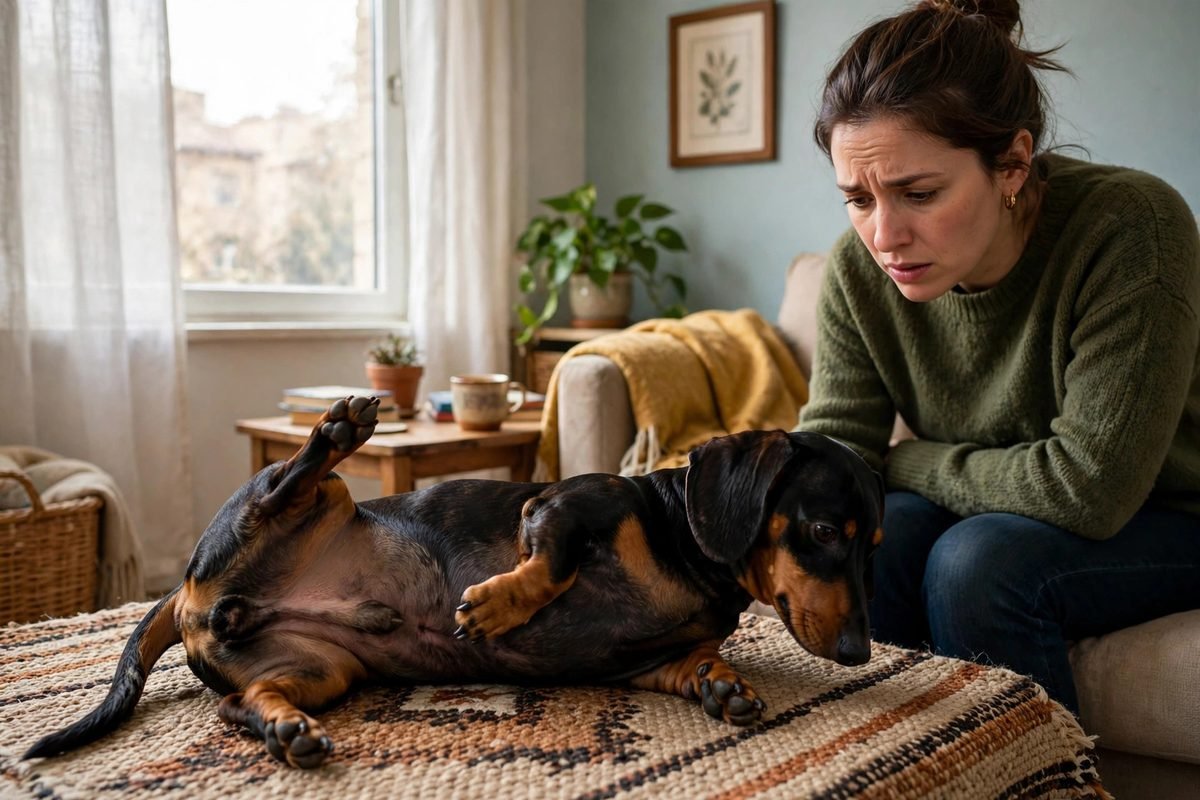
Itching is the most common allergy sign, and it often starts in specific places: the paws, belly, groin, armpits, and around the face and ears. Watch for licking or chewing at the paws, especially after walks, rubbing the face on furniture or carpet, and scratching that interrupts sleep or play. Redness, small bumps, flaky patches, or hair thinning in the same spots suggest the skin is irritated rather than simply dry.
Repeated scratching can create hot spots: raw, moist, painful patches where the skin has been broken. These areas can become infected quickly, so a hot spot that spreads, smells, oozes, or causes pain needs veterinary attention rather than home creams. Do not apply human anti-itch creams, antiseptics, or oils unless a veterinarian advises them, because many human products are unsafe for dogs and licking can make the problem worse.
Simple home care helps while you wait for vet advice. Rinse muddy paws with plain water after walks, dry them gently, and keep bedding clean and dry. Avoid strong shampoos, scented sprays, and new cleaning products on the dog’s bedding and floor until the cause is known. Bathe only as often as a veterinarian advises, because over-bathing strips natural oils and can dry the skin further. Note where the itching happens and how intense it is, on a simple scale from one to five, so change over time is visible.
3. Ears: Redness, Odour, and Head Shaking
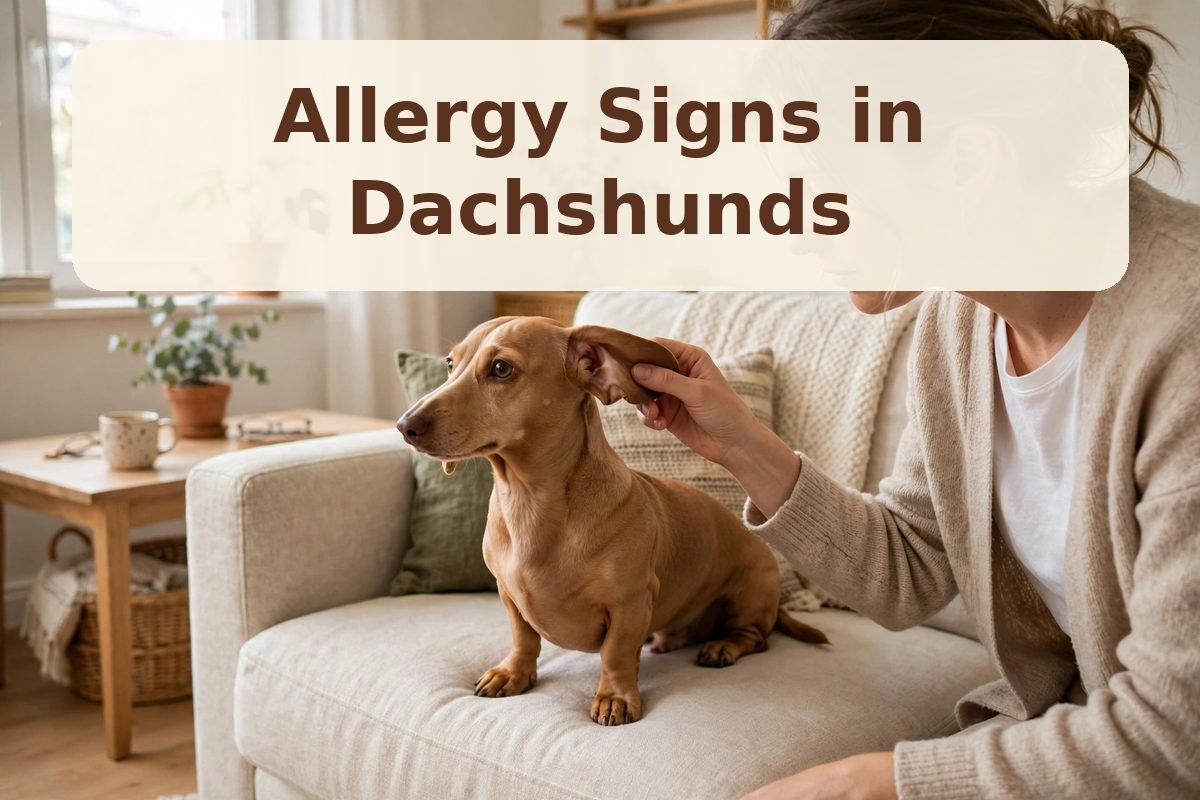
Dachshund ears are long and floppy, which traps warmth and moisture, so ear problems are common and allergy often shows there first. Look for redness inside the ear flap, a yeasty or unpleasant odour, dark or waxy discharge, head shaking, ear scratching, or the dog holding one ear lower than the other. One ear may be worse than the other, and the problem may come and go with the seasons.
Ear irritation and ear infection look alike from outside, and they often occur together. An allergy can inflame the ear canal, and that inflammation then allows yeast or bacteria to grow. That is why cleaning alone rarely solves a recurring ear problem: the underlying allergy keeps bringing it back. Never push cotton buds, fingers, or homemade solutions deep into the ear canal, and never use ear drops meant for people, because the ear canal is delicate and easily damaged.
At home, check the ears once a week in good light, gently lifting the flap and looking for redness, swelling, or discharge. Wipe only the visible outer ear with a clean, damp cloth if a veterinarian has shown you how, and keep ears dry after baths and rainy walks. If head shaking is frequent, the dog cries when the ear is touched, or discharge appears, book a vet visit rather than waiting for it to pass. A vet can look inside the canal, identify infection, and treat both the infection and the underlying cause.

4. Food Clues: What the Bowl May Be Telling You
Food allergies and food sensitivities are less common than environmental allergies, but they are often the first thing owners suspect. The signs overlap: itching, especially around the face, ears, and paws, plus stomach clues such as soft stools, gas, occasional vomiting, or a change in appetite. A food problem usually affects the dog year-round, while a seasonal problem comes and goes, but the overlap makes testing by guesswork unreliable.
The most important rule is not to change foods rapidly or try many new diets in a row. Frequent switching upsets the stomach, hides patterns, and can make a food trial impossible to read. If a food link is suspected, keep the current diet steady, note exactly what the dog eats, including treats, table scraps, and chews, and discuss an elimination diet with a veterinarian. A proper food trial uses one controlled diet for several weeks, with no other foods, and it needs veterinary supervision to stay nutritionally complete.
When a food change is needed, it should be gradual, with the new food mixed into the old food over a week or more, so the stomach can adjust. The guide to changing a Dachshund’s food safely explains that slow transition step by step, and the same patience applies here. Keep a simple food diary during any change: the food name, the amount, treats given, and any itching, ear, or stool changes that follow. That record is far more useful to a vet than a memory of what might have changed.
5. A Calm Plan: Tracking, Home Care, and Vet Visits
A tracking notebook turns vague worry into useful information. Each day, note itching level, any ear redness or head shaking, stool quality, appetite, and anything new: a different treat, a new cleaning product, a walk in a new park, or a change in the weather. After two to three weeks, patterns often appear, such as worse itching after grass walks or calmer skin on rainy weeks. Bring that notebook to the vet visit, because it saves time and guides testing.
Home care during this period should stay simple and steady. Keep the diet unchanged unless a vet advises otherwise, wash bedding weekly in a mild, unscented detergent, vacuum and damp-dust the flat regularly, and wipe paws after outdoor walks. Avoid new shampoos, sprays, air fresheners, and lawn products around the dog. Small, consistent steps reduce the total load on the skin and make it easier to see which change, if any, helps.
Veterinary care may include skin scrapings, ear swabs, flea checks, and blood or skin testing, depending on the signs. Treatment often combines medication for itching or infection with long-term management, such as a controlled diet, regular ear care, or allergy treatment planned by the vet. Dachshunds also carry a higher risk of disc problems, and general information from the Animal Medical Center on intervertebral disc disease is a reminder that a dog in pain from its back can also scratch, rest, or move differently, so back signs should always be reported to the vet alongside skin signs. Follow the vet’s plan exactly, finish any prescribed course, and return for review rather than stopping treatment when the dog looks better.

Allergy Signs Comparison Checklist
| Sign | May suggest | First step |
|---|---|---|
| Itchy paws after walks | Environmental contact trigger | Rinse paws, track walk routes |
| Red, smelly ears | Allergy plus ear infection | Vet ear check, no home drops |
| Year-round itch and soft stools | Possible food link | Food diary, vet-guided trial |
| Seasonal itch, worse outdoors | Pollen or grass trigger | Track season, wipe coat after walks |
| Sudden face swelling | Acute allergic reaction | Urgent vet care at once |
Common Mistakes
- Changing foods every few days and losing the pattern.
- Using human creams, drops, or antihistamines without vet advice.
- Cleaning ears with cotton buds pushed into the canal.
- Treating a hot spot at home while it spreads or smells.
- Stopping vet treatment early because the dog looks better.
- Ignoring ear signs until head shaking becomes constant.
- Blaming food without checking fleas, season, or home products.
When to Call Your Vet
Contact a veterinarian promptly for itching that interrupts sleep, hot spots, ear redness, odour or discharge, frequent head shaking, hair loss, vomiting, diarrhoea, or any sign that does not improve within a few days. Seek urgent veterinary care at once for sudden face or muzzle swelling, hives, vomiting with collapse, breathing difficulty, or a dog that cannot settle and seems distressed, because these can signal a severe allergic reaction. This article gives general information only and does not diagnose any condition. A veterinarian can examine the dog, rule out infection or parasites, and plan testing and treatment. Do not delay veterinary help while trying home remedies for a worsening problem, and always report back signs, weakness, or wobbliness alongside skin signs in this breed.
Pin This: Allergy Signs Checklist
- Watch paws, belly, face, and ears for itching and redness.
- Check ears weekly for redness, odour, or discharge.
- Track itching, food, treats, walks, and new products daily.
- Rinse paws after walks and keep bedding clean.
- Change food only slowly and only with vet guidance.
- Never use human creams or ear drops on a dog.
- Call the vet for hot spots, ear infection, or sudden swelling.
Frequently Asked Questions
What is the most common allergy sign in Dachshunds?
Itching is the most common sign, usually on the paws, belly, groin, and ears. Ear redness, head shaking, and face rubbing are also common, and stomach upset sometimes appears alongside skin signs.
How can I tell if my Dachshund’s itching is caused by food?
You cannot tell from itching alone, because food and environmental allergies look alike. A food link is more likely when signs are year-round and include stomach upset, but only a vet-guided elimination diet can confirm it.
Can I give my Dachshund human allergy medicine?
No, not without veterinary advice. Doses and products that are safe for people can be unsafe for dogs, and the wrong medicine can hide signs a vet needs to see. Always ask a veterinarian first.
Why do my Dachshund’s ear problems keep coming back?
Allergy often inflames the ear canal, which then allows yeast or bacteria to grow, so treating the infection without managing the allergy brings the problem back. A vet can treat both the infection and the underlying cause.
Should I bathe an itchy Dachshund more often?
Only as often as a veterinarian advises. Over-bathing can dry the skin and make itching worse, while a vet may recommend a specific shampoo and schedule for the dog’s condition.
Conclusion
Dachshund allergy signs usually appear on the skin and in the ears: itching, redness, paw licking, head shaking, and sometimes stomach upset. Careful tracking, steady routines, and prompt veterinary care turn those clues into a plan, and a calm, consistent home routine keeps the dog comfortable while the cause is found.





2 Comments