Dachshund Food Storage and Freshness Guide for Homes
Quick Answer
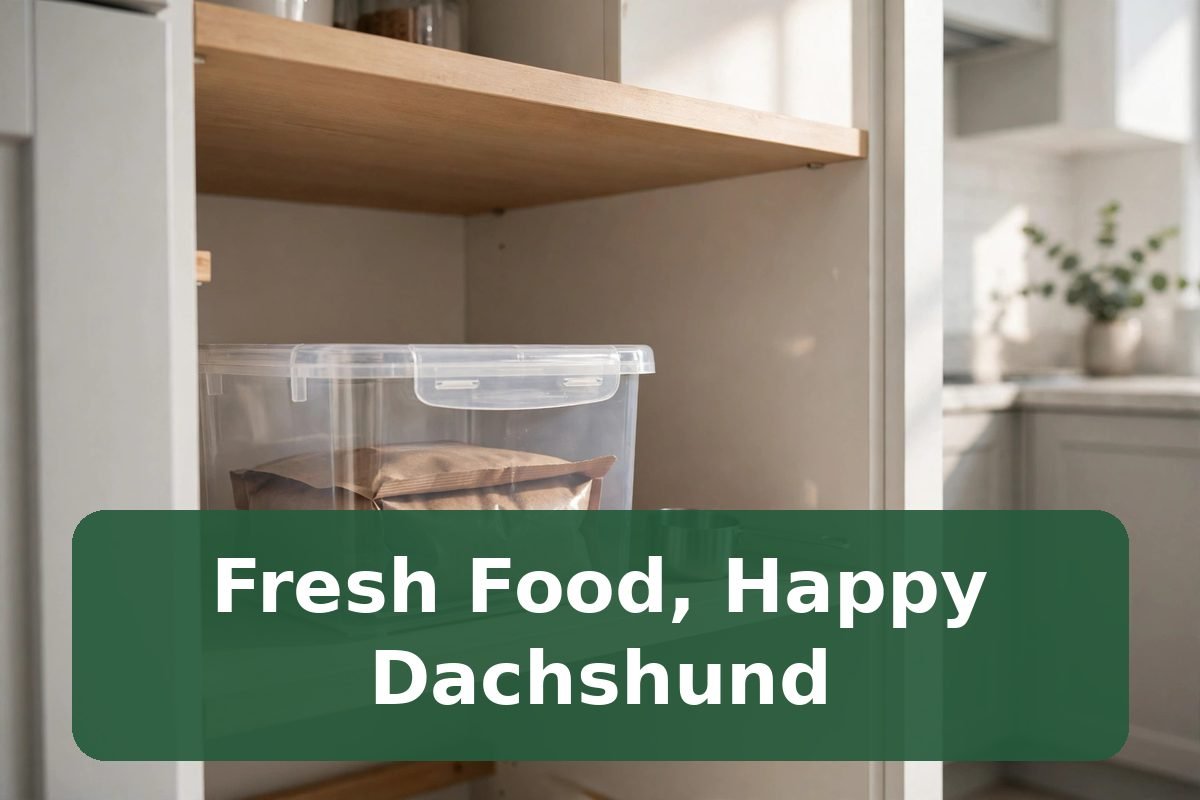
- Store dry food in its original bag inside a sealed, food-safe container, in a cool, dry place away from heat, light, and moisture.
- Use opened wet food within two to three days in the fridge, and throw away fresh food left out for more than two hours.
- Check every bag and tin before serving: look at the date, smell the food, and watch for dampness, clumps, mould, insects, or a rancid smell.
- Keep treats sealed and dated, store food out of the dog’s reach, and wash bowls and scoops daily to stop stale residue building up.
Contents
- 1. Why Freshness Matters for a Small Dog
- 2. Storing Dry Food the Right Way
- 3. Wet Food, Fresh Food, and Leftovers
- 4. Treats, Chews, and Training Rewards
- 5. Spotting Stale Food and Building a Safe Routine
- Food Storage Comparison Checklist
- Common Mistakes
- When to Call Your Vet
- Pin This: Food Storage Checklist
- Frequently Asked Questions
- Conclusion
Food storage sounds like a small detail until a bag of kibble goes stale, a tin sits open in the fridge for a week, or a treat goes soft in a warm kitchen. For a small dog such as a Dachshund, a stale or spoiled meal is not a minor matter: a small body eats a small portion, so even a little spoiled food can upset the stomach, and a dog that refuses a meal may miss a meaningful share of its daily food.
This guide explains how to store dry food, wet food, fresh food, and treats in an apartment, how to spot food that is no longer fresh, and how to build a simple routine that keeps every meal safe. It covers storage only. It does not recommend brands or recipes, and it does not replace veterinary advice about what a particular dog should eat. If a dog has a health condition, follow the veterinarian’s diet advice first.
1. Why Freshness Matters for a Small Dog
Dry food goes stale slowly, and wet food spoils quickly, but both lose quality over time. Fats in dry food can turn rancid when exposed to air, heat, or light, and rancid food smells sharp or stale and can upset the stomach. Moisture invites mould and bacteria, which is why a damp bag, a wet scoop, or a container stored near a steamy kitchen can cause problems even before the printed date passes.
A Dachshund’s size makes freshness more important. A mini Dachshund may eat only a small cup of food a day, so a large bag can stay open for weeks, giving air and moisture plenty of time to work. Buying smaller bags more often, sealing food well, and keeping portions measured all help a small dog eat fresher food. Freshness also affects appetite: many dogs eat less eagerly when food smells stale, and a dog that eats less may lose weight or miss nutrients.
Good storage also protects the home. Food left in open bags attracts insects, absorbs kitchen smells, and tempts a clever dog to help itself. A Dachshund that climbs onto a low shelf or noses open a bag can eat far too much at once, which risks stomach upset and, over time, weight gain that strains the back. The guide to feeding schedules, portions, and timing explains measured meals, and safe storage is what makes those measured meals possible.
2. Storing Dry Food the Right Way
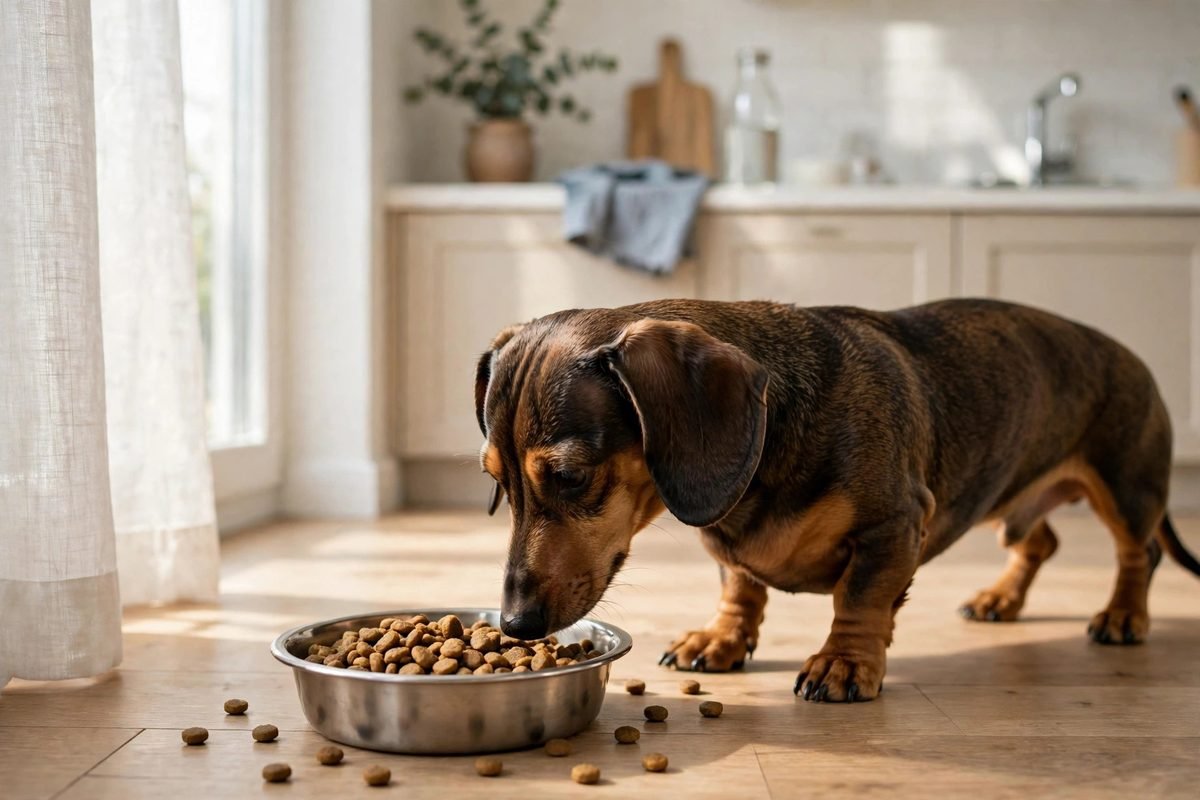
Keep dry food in its original bag, folded closed or clipped shut, inside a clean, dry, food-safe container with a tight lid. The bag matters: it is designed to protect the food from air and light, it carries the batch number and expiry date, and it can be lifted out for cleaning. Pouring kibble straight into a plastic tub hides the date, traps old crumbs at the bottom, and lets fats build up on the tub walls.
Store the container in a cool, dry place, away from radiators, cookers, sunny windows, and damp corners. A kitchen cupboard or a hall shelf works well in most apartments, as long as it stays dry and out of the dog’s reach. Avoid the garage or balcony, where temperature swings and damp are common, and avoid storing food on the floor, where spills and pests reach it first.
Buy a bag size the dog can finish within four to six weeks of opening, and write the opening date on the bag with a marker. Use a clean, dry scoop, never a wet hand or a scoop left in the food, and wash the scoop and container between bags. When a bag is finished, empty the container completely, wash it with warm soapy water, dry it fully, and only then open the next bag. Old crumbs at the bottom of a container are often the first thing to go stale.
3. Wet Food, Fresh Food, and Leftovers
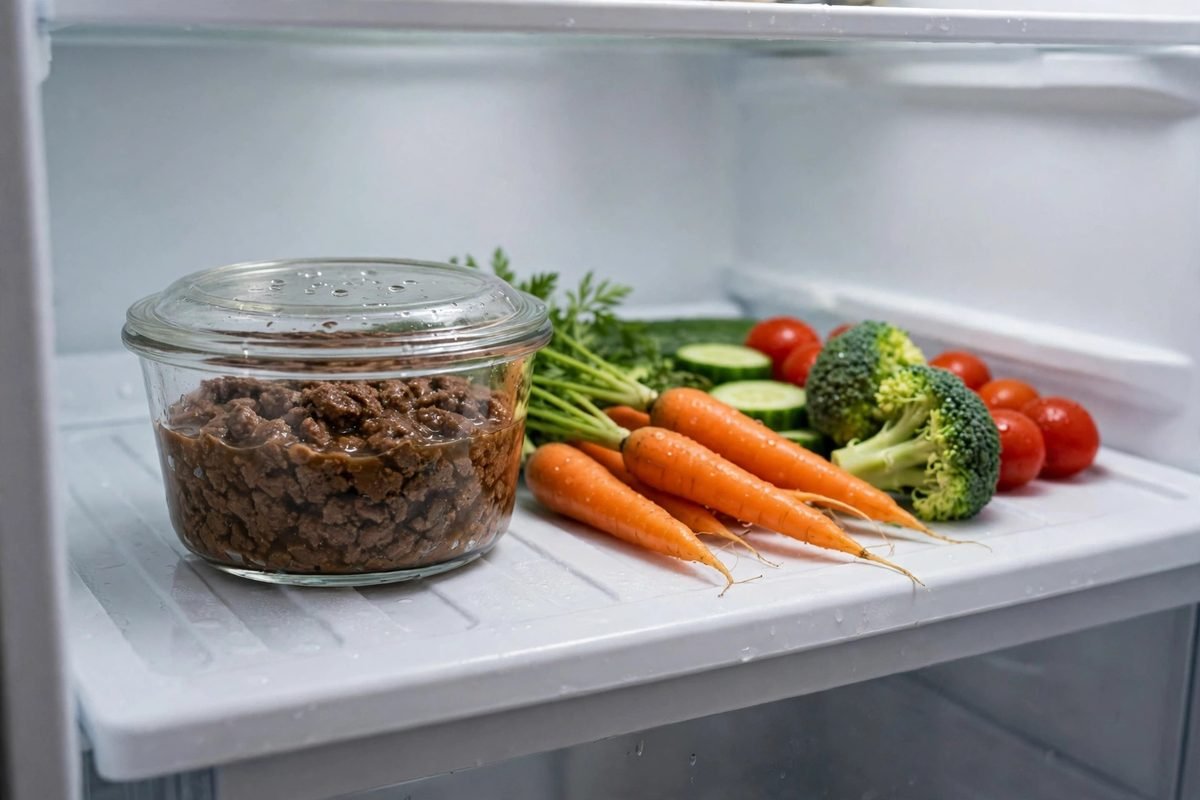
Wet food needs the fridge as soon as it is opened. Cover the tin or transfer the food to a clean, sealed container, label it with the date, and use it within two to three days. If the food smells sour, looks discoloured, or has a slimy surface, throw it away, even if it is within the date. Never serve wet food straight from the fridge in large cold portions to a dog with a sensitive stomach; let the portion reach room temperature first, and return the rest to the fridge promptly.
Fresh food and home-prepared meals follow the same rules as any fresh food in the home. Cooked meat, rice, and vegetables should be cooled quickly, stored in sealed containers in the fridge, and used within two to three days. Raw ingredients need separate handling, clean boards and bowls, and careful hygiene, and any raw feeding plan should be discussed with a veterinarian first, because it carries its own safety and nutrition risks.
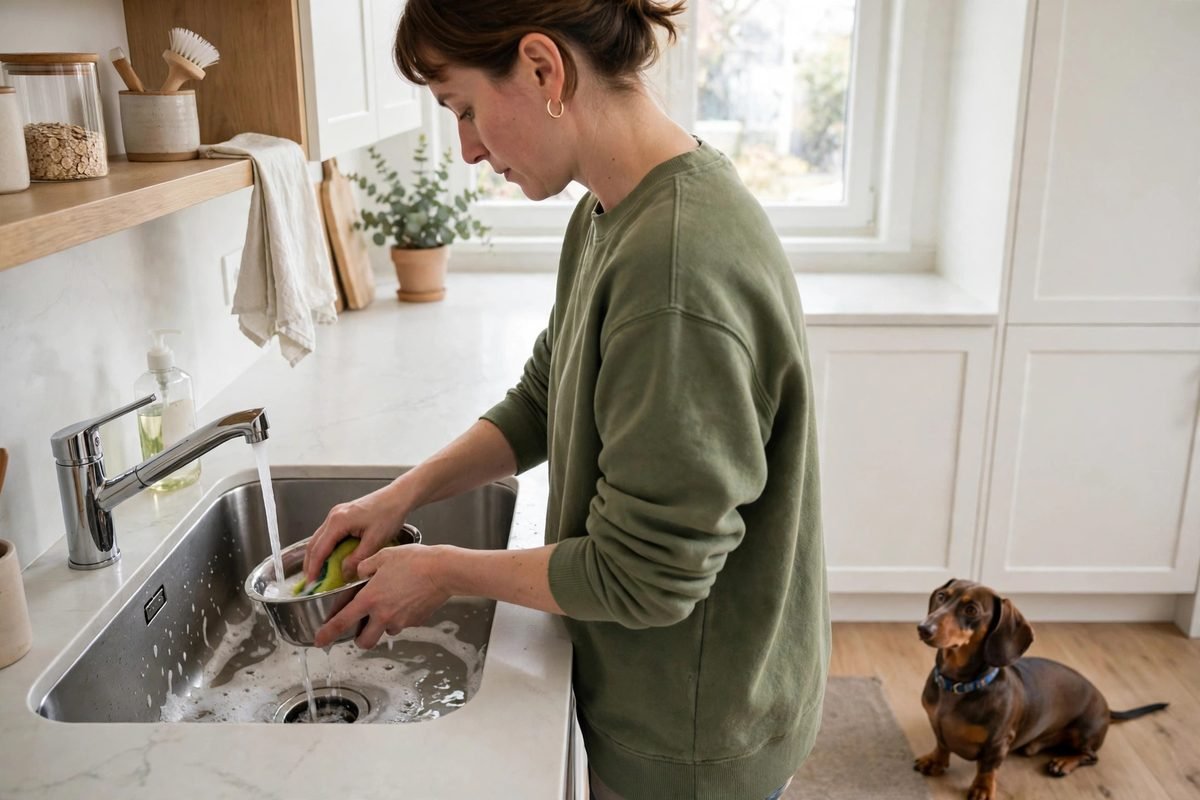
Food left in the bowl is the most common freshness mistake. Fresh or wet food left out for more than two hours, or one hour on a hot day, should be thrown away, not saved for the next meal. Dry food left in the bowl can be kept for the day if it stays clean and dry, but it should be replaced with a fresh portion at the next meal. Wash food and water bowls daily with warm soapy water, rinse well, and dry them, because old residue can turn rancid and put a dog off its food.
4. Treats, Chews, and Training Rewards
Treats go stale just like main meals, and stale treats are often the first thing a dog refuses. Keep treats in their original sealed packaging or in a clean, airtight jar, away from heat and light, and write the opening date on the pack. Soft treats dry out and harden, while hard biscuits can go soft in damp air, so check texture as well as smell before giving one. Throw away treats that smell stale, look mouldy, or have been open for months.
Chews need extra care. Keep them dry, sealed, and out of reach, and check them for mould, cracks, or a sour smell before offering one. A chew that has been left on the floor, carried outside, or dropped in water should be thrown away rather than given back. Supervise chewing, take the chew away when it becomes small enough to swallow, and store the rest safely so the dog cannot help itself to more.
Training rewards deserve the same attention, because they are given often. Keep a small, sealed pouch of fresh treats for walks and training, refill it daily from the main sealed pack, and empty and clean it at night. Old crumbs in a training pouch go stale quickly, especially in warm weather, and a stale reward is less motivating and less fresh. The guide to everyday safe food choices helps owners choose what to offer, and fresh storage keeps those choices safe to eat.
5. Spotting Stale Food and Building a Safe Routine
Use your senses before every meal. Look at the food for dampness, clumps, mould, insects, or colour change. Smell it for a sharp, sour, or rancid odour, which is different from the normal smell of the food. Touch dry food to check for dampness or stickiness. If anything seems wrong, throw the food away. The cost of a portion of food is small compared with a vet visit for stomach upset, and a dog cannot tell you the food was off until it is already unwell.
Watch the dog as well. A dog that suddenly refuses food, eats slowly, sniffs and walks away, or develops soft stools, gas, or vomiting after a new bag or tin may be reacting to stale food, a food change, or an unrelated illness. One refused meal is not an emergency on its own, but repeated refusal, vomiting, diarrhoea, or lethargy needs veterinary advice. Keep the packaging when a problem appears, because the batch number and date help a vet or a shop trace the issue.
Build a weekly routine that takes five minutes. Check dates on open bags and tins, smell the dry food, clean the scoop and container lid, wash the bowls, and throw away anything stale or out of date. Rotate stock so the oldest food is used first, and keep a small note of opening dates on the cupboard door. A steady routine means freshness is checked before a problem appears, not after the dog has already eaten a stale meal.
Food Storage Comparison Checklist
| Food type | How to store | Use within |
|---|---|---|
| Dry kibble, opened | Original bag in sealed container, cool and dry | Four to six weeks |
| Wet food, opened | Covered container in the fridge | Two to three days |
| Fresh cooked food | Sealed container in the fridge | Two to three days |
| Treats and chews | Sealed pack or airtight jar, cool and dry | Check date and smell first |
| Food left in the bowl | Throw wet or fresh food away | Two hours, or one hour when hot |
Common Mistakes
- Pouring kibble straight into a tub and losing the date.
- Keeping a large bag open for months until it goes stale.
- Leaving wet food open in the fridge for a week.
- Saving food left in the bowl for the next meal.
- Using a wet scoop or wet hands in the dry food bag.
- Storing food near heat, sun, or damp.
- Keeping stale treats because they look fine.
When to Call Your Vet
Contact a veterinarian if a Dachshund refuses food for more than a day, vomits repeatedly, has diarrhoea, seems lethargic, or shows signs of stomach pain after eating. Seek urgent care for repeated vomiting, bloody stools, collapse, severe lethargy, or suspected eating of spoiled or mouldy food in large amounts. This article gives general information only and does not diagnose any condition. A veterinarian can examine the dog, advise on diet and hydration, and check for other causes of appetite or stomach changes. Do not delay veterinary help while waiting to see if a stomach upset passes, and always mention what the dog ate, when, and how the food was stored.
Pin This: Food Storage Checklist
- Keep kibble in its bag inside a sealed container.
- Write the opening date on every bag and tin.
- Use opened wet food within two to three days.
- Throw away food left out for more than two hours.
- Wash bowls and scoops daily.
- Check smell, texture, and date before every meal.
- Store all food cool, dry, and out of dog reach.
Frequently Asked Questions
How long does opened dry dog food stay fresh?
About four to six weeks if it is kept in its original bag inside a sealed container in a cool, dry place. Heat, light, moisture, and air all shorten that time, so buy a bag size the dog can finish within that window.
Can I store kibble in a plastic container on its own?
It is better to keep the kibble in its original bag inside the container. The bag protects the food, keeps the batch number and date visible, and stops old fats building up on the container walls.
How long can opened wet food stay in the fridge?
Two to three days in a covered, sealed container. After that, or sooner if it smells sour or looks discoloured, throw it away.
Is it safe to leave dry food in the bowl all day?
Dry food left clean and dry in the bowl can stay for the day, but it should be replaced with a fresh portion at the next meal. Wet or fresh food left out for more than two hours should be thrown away.
What should I do if my Dachshund eats stale or mouldy food?
Watch for vomiting, diarrhoea, lethargy, or refusal to eat, keep the packaging with its batch number, and contact a veterinarian for advice. Seek urgent care for repeated vomiting, bloody stools, or collapse.
Conclusion
Fresh Dachshund food starts with simple storage: sealed bags, dated tins, clean bowls, and a quick smell and date check before every meal. That small routine keeps meals appetising, protects a small stomach, and stops stale food from becoming a vet visit.