

Dachshund Puppy Food in the First Year: Feeding Guide
Quick Answer
- Feed a Dachshund puppy a complete food made for puppies, in three to four small meals a day at first, then move to fewer meals as the puppy grows.
- Measure every meal, follow the food guide as a starting point only, and adjust portions by body condition and veterinary advice, not by appetite alone.
- Introduce new foods slowly over about a week, keep treats small and counted, and track weight and body shape every two weeks.
- Contact a veterinarian promptly for vomiting, diarrhea that persists, refusal to eat, or slow growth, rather than changing food repeatedly on your own.
Contents
- 1. Choose a Complete Puppy Food and Learn the Label
- 2. Set Portions by Body Condition, Not by the Bowl
- 3. Build a Feeding Schedule That Fits Apartment Life
- 4. Transition Foods Slowly and Handle Upset Stomachs
- 5. Track Growth, Weight, and the Move to Adult Food
- Common Mistakes
- When to Call Your Vet
- Pin This: Your Puppy Feeding Checklist
- Frequently Asked Questions
The first year shapes a Dachshund puppy’s growth, bone development, and eating habits for life. Puppies grow quickly, need more energy per kilogram than adult dogs, and also need nutrients in the right balance for developing bones and muscles. At the same time, a small breed puppy in an apartment can gain weight easily if portions are guessed, treats are uncounted, and meals are left out all day. A calm, measured feeding plan avoids both underfeeding and overfeeding, and it gives the household a clear routine that the puppy can learn. This guide covers choosing a puppy food, setting portions, building a schedule, changing foods safely, and tracking growth through the first year.
Every puppy is different. Breed size, activity level, health history, and growth rate all affect how much food suits a particular puppy, so a feeding guide on a bag is a starting point, not a prescription. The household’s job is to measure carefully, watch the puppy’s body and energy, keep notes, and check in with a veterinarian at routine visits and sooner if anything changes. Steady, small adjustments beat sudden changes. A puppy that eats calmly, grows steadily, passes normal stools, and stays at a healthy weight is showing the signs of a plan that is working.
1. Choose a Complete Puppy Food and Learn the Label
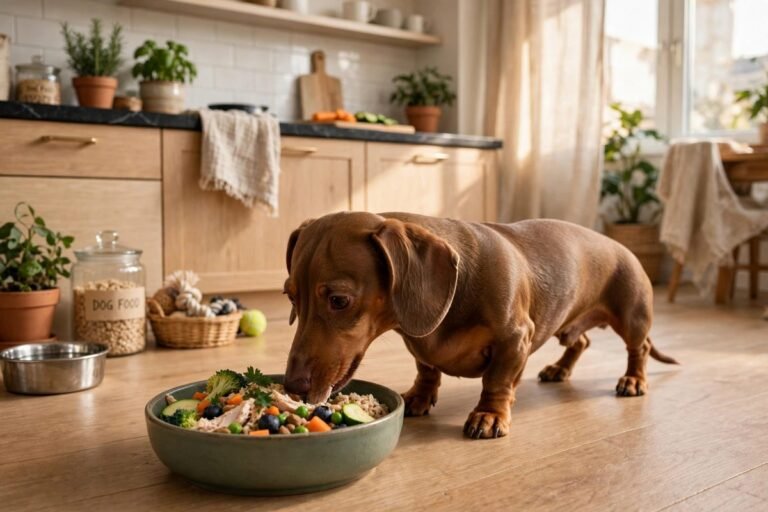
Choose a food labeled as complete and balanced for puppies or for all life stages, with feeding guidance for puppies on the label. A complete food is formulated to provide the nutrients a growing dog needs in each meal, which removes the guesswork of building a diet from separate ingredients. Puppy food differs from adult food in energy density and in nutrients that support growth, so a puppy should not simply eat an adult dog’s food for the whole first year unless a veterinarian advises it. When comparing products, look first at the life-stage statement and the feeding guide, then at the ingredient list for a named animal protein near the top. Avoid choosing a food only because of a picture on the bag, a claim on the front, or a recommendation based on taste alone.
Wet food, dry food, and a mix of both can all suit a puppy, provided the total diet is complete and portions are measured. Dry food is easy to measure, stores well, and suits many apartment routines. Wet food can help a reluctant eater and adds moisture, but it is easy to overfeed because a pouch or tin looks small. If both are used, count both toward the daily total rather than treating one as an extra. Fresh water must always be available, and the bowl should be washed daily. Ask a veterinarian about any supplement before adding one, because a complete puppy food already contains balanced nutrients, and extra calcium or vitamins can disturb that balance rather than improve it. Keep the diet simple in the early weeks, and change only one thing at a time so any reaction can be traced to its cause.

2. Set Portions by Body Condition, Not by the Bowl
Portion size starts with the feeding guide, the puppy’s current weight, and the puppy’s age, and it is then adjusted by body condition. A healthy puppy should have ribs that can be felt with light pressure under a thin layer of fat, a visible waist when viewed from above, and a tucked abdomen when viewed from the side. If ribs are hard to feel, portions are probably too large. If ribs, spine, and hip bones are sharply visible, portions may be too small or another problem may be present. Weigh the puppy every two weeks on the same scale, at the same time of day, and write the weight down. A steady upward trend that matches the expected growth pattern is more informative than any single weighing.
Measure food with a standard measuring cup or kitchen scales, not by eye and not by filling the bowl to a familiar level. Small differences matter for a small breed puppy, and an extra handful each day adds up quickly over weeks. Divide the daily total into the day’s meals, and count treats within that total. A useful habit is to set aside the day’s treats from the daily food allowance, so training rewards do not become extra calories on top of full meals. If the puppy always seems hungry, check the portion, the feeding schedule, and the treat total before increasing food, and discuss persistent hunger with a veterinarian. Hunger alone is not a reliable measure, because many puppies eat eagerly regardless of need. Steady weight control also supports long-term back health, and the Cornell page on chondrodystrophy and intervertebral disc disease explains why this breed needs attention to disc health across its life.
3. Build a Feeding Schedule That Fits Apartment Life
Young puppies do best with three to four small meals a day, spaced evenly, because small stomachs handle small amounts better and blood sugar stays steadier. As the puppy grows, meals can move to three a day, then to two a day in later puppyhood, following veterinary guidance and the puppy’s growth. Keep meal times consistent from day to day, and keep the feeding spot calm and free from foot traffic. Put the bowl down, allow about fifteen to twenty minutes for eating, and then pick up any uneaten food. This teaches a clear meal pattern, makes appetite changes easy to notice, and avoids food sitting out all day in a small apartment.
Fit meals around walks, play, and rest rather than stacking them together. Feed after a calm walk or play session, not immediately before vigorous activity, and allow a rest period after eating. In an apartment, a short toilet trip before a meal often helps a young puppy settle to eat, and a calm period after a meal helps digestion. The detailed feeding schedule for apartments shows how portions and timing can be arranged around work hours, walks, and sleep, and it is a useful companion to this guide. If the household schedule changes, keep meal times as stable as possible and change only one part of the routine at a time. Puppies learn quickly from repetition, and a predictable schedule reduces begging, scavenging, and mealtime excitement.

4. Transition Foods Slowly and Handle Upset Stomachs
Food changes should be gradual, over about seven days, even when the new food looks better on paper. Start with mostly the old food and a small amount of the new food, then increase the new food share every couple of days until the change is complete. A sudden switch often causes loose stools, gas, or refusal to eat, which then makes it hard to tell whether the new food suits the puppy at all. During a transition, keep treats, chews, and table scraps to a minimum, so the stomach has only one change to handle. Note the stool quality, appetite, and energy each day, and slow the transition down if stools become loose.
Mild, brief stomach upset sometimes settles with a slower transition and a return to the previous food for a few days, followed by a slower retry. Persistent vomiting, diarrhea lasting more than a day or two, blood in the stool, lethargy, or refusal to eat needs veterinary advice promptly, because puppies can become dehydrated quickly. Never start a new food, a new treat, and a new chew on the same day, and never use a stomach upset as a reason to try several foods in quick succession. Keep a short food diary during the first months: the food name, the daily amount, treats given, and any reaction. That diary turns a vague worry into clear information for a veterinary visit, and it helps the household avoid repeating a change that already caused a problem.
5. Track Growth, Weight, and the Move to Adult Food
Growth tracking in the first year is simple and powerful. Weigh the puppy every two weeks, check body condition at the same time, and note height, energy, coat condition, and stool quality in a few words. Photographs from the same angle every month can show growth that is hard to notice day by day. Bring the weight record to veterinary visits, because a growth curve tells a clearer story than a single weight. If growth slows, stalls, or jumps suddenly, or if body condition moves away from healthy, adjust portions in small steps and seek veterinary guidance rather than making a large change based on one weighing.
The move to adult food usually happens near the end of the first year, but timing depends on size, growth, and veterinary advice, not on a birthday alone. Miniature Dachshunds often mature earlier than larger breeds, yet individual puppies vary. Transition to adult food using the same slow, seven-day method used for any food change, and adjust portions to the adult feeding guide and the dog’s new activity level. Keep treats small and counted through this change, using guidance such as the best treats without extra weight guide to choose rewards that do not unbalance the daily total. After the change, keep weighing monthly for a while, because energy needs often fall as growth slows, and portions that suited a growing puppy can quickly become too much for a young adult.

Common Mistakes
- Leaving food out all day, which hides appetite changes and makes portions impossible to track.
- Guessing portions by eye instead of measuring, so small daily extras add up to weight gain.
- Counting treats as free extras rather than part of the daily food total.
- Switching foods suddenly, then switching again when stools loosen, instead of slowing one transition down.
- Adding supplements to a complete puppy food without veterinary advice.
- Moving to adult food on a fixed date without checking growth, weight, and veterinary guidance.
When to Call Your Vet
Contact a veterinarian promptly for persistent vomiting or diarrhea, blood in vomit or stool, refusal to eat for more than a day, rapid weight loss, a swollen abdomen, lethargy, or growth that stalls or falls behind. Also seek advice if the puppy eats eagerly yet loses weight, if body condition cannot be kept in a healthy range despite measured portions, or if a food transition repeatedly causes stomach upset. A veterinarian can check for parasites, infections, and other causes that home feeding changes cannot address, and can set a portion and growth plan for the individual puppy. This article provides general information only and is not a substitute for veterinary advice. It does not diagnose any condition, and no feeding plan can be presented as a treatment for illness. The Animal Medical Center page on intervertebral disc disease in dogs is useful background on back signs to watch for separately, including reluctance to move or jump, because back pain can also change appetite and activity and deserves prompt veterinary attention when it appears.
Routine veterinary visits in the first year are also the right time to review food, portions, and growth together. Bring the weight record, the food name and daily amount, and a note of treats and any reactions. Ask whether the current portion still fits the puppy’s growth stage, when to reduce meal frequency, and when to plan the move to adult food. A veterinarian who sees the record can adjust the plan in small, safe steps, and the household can keep feeding with confidence between visits.
Pin This: Your Puppy Feeding Checklist
- Choose a complete puppy food and read the life-stage statement and feeding guide.
- Measure every meal and count treats within the daily total.
- Feed three to four small meals a day at first, then reduce frequency as the puppy grows.
- Keep meal times consistent and pick up uneaten food after about twenty minutes.
- Transition any new food slowly over about seven days.
- Weigh every two weeks and check ribs, waist, and abdomen each time.
- Keep fresh water available and wash the bowl daily.
- Contact a veterinarian promptly for persistent vomiting, diarrhea, refusal to eat, or stalled growth.
Frequently Asked Questions
How many meals should a Dachshund puppy eat each day?
Young puppies usually eat three to four small meals a day. As the puppy grows, meals can move to three a day, then to two a day in later puppyhood, following veterinary guidance and steady growth.
Should puppy food be measured or left out all day?
Measure it. Measured meals make portions, appetite changes, and weight trends visible, while food left out all day hides all three and makes overfeeding easy.
How long should a food transition take?
About seven days is a sensible plan: mostly old food at first, then a gradually larger share of new food every couple of days. Slow down if stools become loose, and keep other foods and treats steady during the change.
Are treats allowed for a puppy?
Yes, in small amounts, counted within the daily food total. Small, soft treats work well for training, and setting aside the day’s treats from the daily allowance prevents training rewards from becoming extra calories.
When should a puppy move to adult food?
Usually near the end of the first year, depending on growth, size, and veterinary advice. Transition slowly over about seven days and adjust portions to the adult guide, because energy needs often fall as growth slows.
Conclusion
Feeding a Dachshund puppy in the first year works best as a measured, predictable routine: a complete puppy food, portions set by body condition, consistent meal times, slow food changes, and regular weight checks. Each step is small on its own, and together they support steady growth without the weight gain that can burden a small breed later. Start with the next practical step today, whether that is measuring meals properly, starting a weight record, or setting consistent meal times, and keep the routine steady as the puppy grows. A calm feeding pattern in the first year becomes a healthy eating habit for adult life.




3 Comments