Dachshund Teething and Safe Chewing for Puppies at Home
Quick Answer
- Dachshund puppies start teething at around three to four weeks, lose their baby teeth from about twelve weeks, and usually have all adult teeth by six to seven months.
- Teething makes gums sore and itchy, so puppies chew more, drool, and may eat less, and a safe chew gives that urge a proper outlet instead of furniture, shoes, or hands.
- Offer chews made for puppies, sized for a small mouth, supervised at all times, and rotate them so the puppy stays interested without chewing the same hard object for hours.
- Contact a veterinarian if a puppy has a retained baby tooth, a broken tooth, bleeding gums, refuses food, or chews and swallows pieces of a toy or chew.
Contents
- 1. Teething Stages: What Happens and When
- 2. Signs a Puppy Is Teething
- 3. Safe Chews for a Dachshund Puppy
- 4. Chews and Toys to Avoid
- 5. A Daily Chewing Routine That Protects Gums and Back
- Teething and Chewing Comparison Checklist
- Common Mistakes
- When to Call Your Vet
- Pin This: Teething and Chewing Checklist
- Frequently Asked Questions
- Conclusion
A Dachshund puppy does not chew furniture out of naughtiness. It chews because its mouth hurts, its gums itch, and chewing is the only relief it knows. Teething is a normal part of growing up, but it is also a time when a puppy can hurt its gums, break a tooth, swallow something dangerous, or learn to chew everything in the home.
This article explains the teething stages, the signs to watch for, which chews are safe for a small puppy mouth, and how to build a daily routine that protects sore gums, furniture, and a growing back. It is general information only, not a diagnosis, and it does not replace veterinary advice. A puppy with a broken tooth, a retained baby tooth, or a swallowed object needs a veterinarian.
1. Teething Stages: What Happens and When
Dachshund puppies are born without teeth, and the first baby teeth, also called milk teeth, start to appear at around three to four weeks of age. By six to eight weeks, a puppy usually has all twenty-eight baby teeth: small, sharp, needle-like teeth that are good for nibbling but not for hard chewing. These baby teeth are temporary, and they start to fall out at around twelve weeks, as the adult teeth push up from below and loosen the roots.
The main teething period runs from about twelve weeks to six months, and it is the stage most owners notice. The puppy loses baby teeth, often swallowing them without anyone seeing, and the adult teeth come through in stages: first the incisors at the front, then the canine teeth, then the premolars at the back. A puppy may lose several teeth in one week, and the gums can look red and swollen where a new tooth is pushing through. By six to seven months, most Dachshunds have all forty-two adult teeth, and the intense chewing urge usually eases, although young dogs still enjoy chewing as a normal activity.
Each stage brings a different chewing need. A very young puppy with baby teeth needs soft chews it can gnaw without hurting its mouth, while a puppy in the main teething stage needs something with a little more give, to press against sore gums. Watching which stage the puppy is in, and matching the chew to the stage, prevents sore gums and broken teeth.

2. Signs a Puppy Is Teething
The clearest sign is more chewing, and chewing on more things. A puppy that was content with its toys may start chewing chair legs, skirting boards, shoes, hands, and anything it can reach, and it may chew with more urgency than before. Drooling often increases, the gums look red or slightly swollen, and the puppy may paw at its mouth or rub its face along the floor or a cushion. Small spots of blood on a toy or a chew are common when a tooth is loosening, and they are usually nothing to worry about, although bleeding that does not stop needs a veterinarian.
Eating habits often change during teething. A puppy may eat more slowly, drop kibble, prefer soft food, or eat less at a meal, because chewing hurts. These are normal responses to sore gums, and they usually pass as the new teeth settle. A puppy that refuses food for a whole day, or that cries in pain when it opens its mouth, needs a veterinarian, because that is more than ordinary teething discomfort.
Check the mouth gently once a week during teething. Lift the lip, look at the gums and the teeth, and note any baby tooth that stays in place after the adult tooth has come through beside it, which is called a retained baby tooth. Retained teeth are common in small breeds, including Dachshunds, and they can trap food, crowd the adult teeth, and cause gum problems, so a vet should look at them. Also look for a tooth that looks cracked, discoloured, or broken, and for gums that are very red, swollen, or bleeding, because those are signs to mention at the next vet visit, or sooner if the puppy is in pain.
3. Safe Chews for a Dachshund Puppy
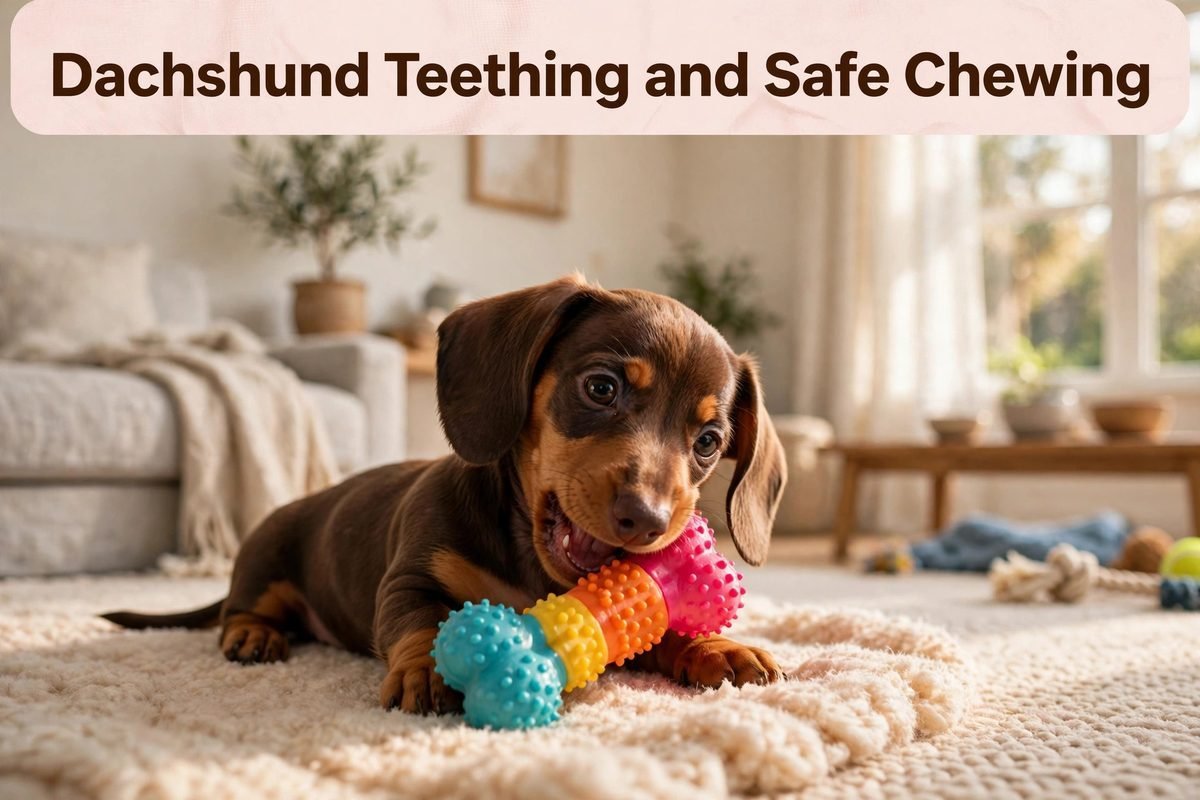
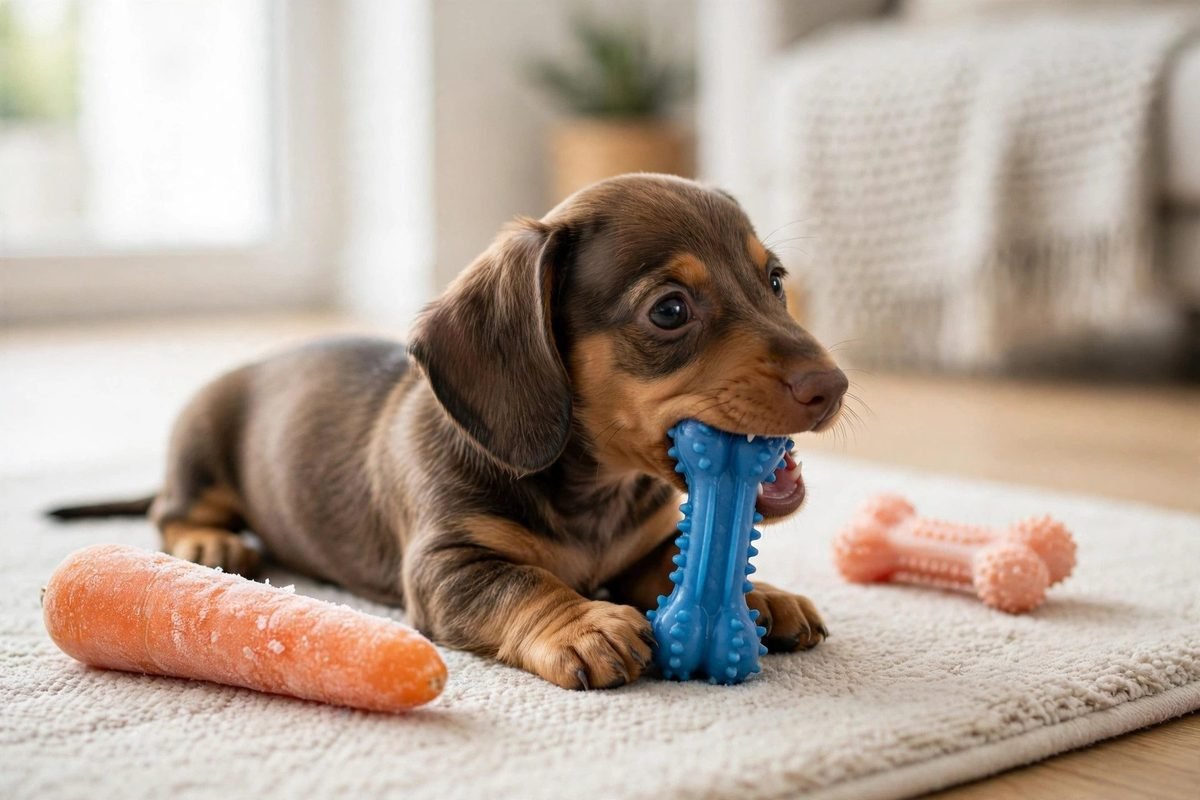
Safe chews for a puppy share three qualities: they are made for puppies, they are sized for a small mouth, and they give under pressure instead of staying rock hard. A rubber chew made for puppies is a good starting point, because it is soft enough for sore gums, it can be stuffed with a little soft food, and it can be chilled in the fridge, which soothes the gums. A frozen carrot, or a damp cloth twisted and frozen, can also help, because the cold numbs the gums while the puppy chews, but both should be given supervised, and taken away once they soften or break into pieces.
Edible chews made for puppies can work well, but they need care. Choose a chew that is sized for a small breed, that softens as the puppy chews, and that does not splinter or break into hard chunks. The guide to a safe chewing routine at home for Dachshunds covers chew sizes, supervision, and rotation in more detail, and the same rules apply to puppies, with extra care because a puppy mouth is smaller and less experienced.
Rotate chews so the puppy stays interested. Offer two or three different chews across the day, rather than leaving the same chew out all the time, and put chews away between sessions, so they stay novel and the puppy does not chew one hard object for hours. A chew session of ten to fifteen minutes, two or three times a day, is enough for most puppies, and it gives the gums relief without tiring the jaw. Always supervise chewing, especially with a new chew, and check the chew after each session for damage, cracks, or missing pieces.
4. Chews and Toys to Avoid
Hard chews are the biggest risk for a teething puppy. Cooked bones, antlers, hard nylon bones, and very hard sticks can crack a tooth, and a cracked tooth is painful and may need veterinary treatment. A simple test helps: if a chew does not give at all when pressed with a thumbnail, it is too hard for a puppy. Real bones, even raw ones, can splinter or break teeth, and cooked bones are worse, because cooking makes them brittle. Avoid them entirely for a puppy, and ask a veterinarian before offering any bone to an adult dog.
Small, soft, or easily torn toys are a different risk: they can be swallowed. A puppy that chews a soft toy into pieces may swallow stuffing, fabric, or a squeaker, and a swallowed object can block the gut, which is an emergency. Check toys every day for tears, loose parts, and missing pieces, and throw away any toy that is damaged.
Also avoid chews that are too large, too small, or meant for another purpose. A chew made for a large dog is too big for a Dachshund puppy to hold safely, and it can strain the jaw and the neck as the puppy wrestles with it. A chew that is too small can be swallowed whole. Sticks from the garden can splinter, and rawhide can swell in the stomach and cause a blockage, so both are best avoided. When in doubt, choose a chew made for puppies, sized for a small breed, from a maker that states the size and age range clearly, and supervise every session.
5. A Daily Chewing Routine That Protects Gums and Back
Build chewing into the day at set times, so the puppy knows when to expect it and does not chew furniture in between. A short chew after a meal, a chew during a quiet afternoon rest, and a chew in the evening before bed covers the main chewing urges, and each session should last ten to fifteen minutes. Offer the chew on a mat, in the puppy’s usual resting spot, so the puppy chews lying down, calmly, rather than running around with the chew in its mouth.
Protect the puppy’s back during chewing as well as its teeth. A Dachshund puppy should chew lying down or sitting, on a flat surface, not standing on hind legs to reach a chew, jumping off furniture with a chew in its mouth, or tugging hard on a toy held high. Tug games that pull the head up and back can strain a long neck and spine, so keep tug gentle, low, and short, or skip it during teething. The Animal Medical Center explains intervertebral disc disease in dogs, and disc problems are a known risk for this breed, with disc degeneration in short-legged breeds able to begin in the first year of life, so a puppy’s back deserves care from the start.
Match food to the teething stage too. A puppy with sore gums may prefer its kibble softened with a little warm water, or a smaller kibble that is easier to chew, and it may eat better in small, frequent meals rather than one large bowl. The puppy food guide for the first year covers feeding amounts and food choices for growing Dachshunds, and the same guide helps with choosing a food that suits a teething puppy. Cornell’s information on chondrodystrophy and disc disease explains why this breed’s discs are vulnerable, and a puppy that eats well, chews safely, and moves calmly is building the habits that protect it later.

Teething and Chewing Comparison Checklist
| Chew or stage | Best for | Limit to watch |
|---|---|---|
| Puppy rubber chew, chilled | Sore gums, safe to gnaw | Check for damage after each session |
| Frozen carrot or cloth | Cold soothes gums | Supervise, remove when soft or torn |
| Puppy edible chew, small breed | Longer chew, keeps puppy busy | Take away when small enough to swallow |
| Hard antler or cooked bone | Not suitable for puppies | Cracks teeth, splinters, avoid entirely |
| Soft toy with loose parts | Not suitable for chewing | Swallowed stuffing or squeaker, avoid |
Common Mistakes
- Giving a puppy a hard antler or bone to chew.
- Leaving a puppy alone with a chew unsupervised.
- Ignoring a retained baby tooth beside an adult tooth.
- Letting a puppy chew shoes, socks, or cables.
- Pulling hard in tug games during teething.
- Feeding only hard kibble when the gums are sore.
- Keeping the same chew out all day until the puppy is bored.
When to Call Your Vet
Contact a veterinarian if a puppy has a baby tooth that stays in place after the adult tooth has come through, a broken, cracked, or discoloured tooth, gums that bleed and do not stop, or a puppy that refuses food for a whole day. Contact a veterinarian also if the puppy swallows part of a toy or chew, vomits, strains, or shows signs of pain when opening its mouth. This article gives general information only and does not diagnose any condition. A veterinarian can examine the mouth, check for retained teeth or damage, and advise on safe chews for that individual puppy. Do not delay veterinary help for a puppy that has swallowed something, or that is in pain.
Pin This: Teething and Chewing Checklist
- Expect teething from twelve weeks to six months.
- Offer puppy-sized chews that give under pressure.
- Chill a rubber chew or freeze a carrot for sore gums.
- Supervise every chew, and check for damage after.
- Avoid hard bones, antlers, and toys with loose parts.
- Keep chew sessions to ten to fifteen minutes.
- Call a veterinarian for retained teeth or swallowed pieces.
Frequently Asked Questions
When do Dachshund puppies start teething?
Baby teeth appear at around three to four weeks, and the main teething stage, when baby teeth fall out and adult teeth come through, runs from about twelve weeks to six months. Most Dachshunds have all forty-two adult teeth by six to seven months, and the intense chewing urge usually eases after that.
Is it normal for my puppy to drool and chew more?
Yes, drooling, chewing more, and rubbing the face are normal signs of teething, as the gums feel sore and itchy. Red or slightly swollen gums are common too. A puppy that refuses food for a whole day, or cries in pain when opening its mouth, needs a veterinarian.
What is the safest chew for a teething puppy?
A rubber chew made for puppies, sized for a small mouth, is a good starting point, especially chilled in the fridge. Whatever the chew, supervise every session and check it for damage afterwards.
Should I worry about a baby tooth that does not fall out?
Yes, mention it to a veterinarian. A retained baby tooth beside an adult tooth can trap food, crowd the adult teeth, and cause gum problems, and small breeds, including Dachshunds, are prone to them. A vet can check the mouth and advise whether the tooth needs removing.
Can my puppy chew bones while teething?
No, cooked bones, antlers, and very hard chews can crack a puppy tooth, and real bones can splinter. If a chew does not give when pressed with a thumbnail, it is too hard for a puppy. Choose a puppy chew made for small breeds instead, and supervise every session.
Conclusion
Teething is a normal, if uncomfortable, stage for every Dachshund puppy, and a good chewing routine makes it easier for the puppy, the furniture, and the owner. Match the chew to the teething stage, keep sessions short and supervised, avoid hard bones and toys with loose parts, and check the mouth weekly for retained or broken teeth. A puppy that chews safely grows into a dog that chews calmly, with healthy teeth and a protected back.