
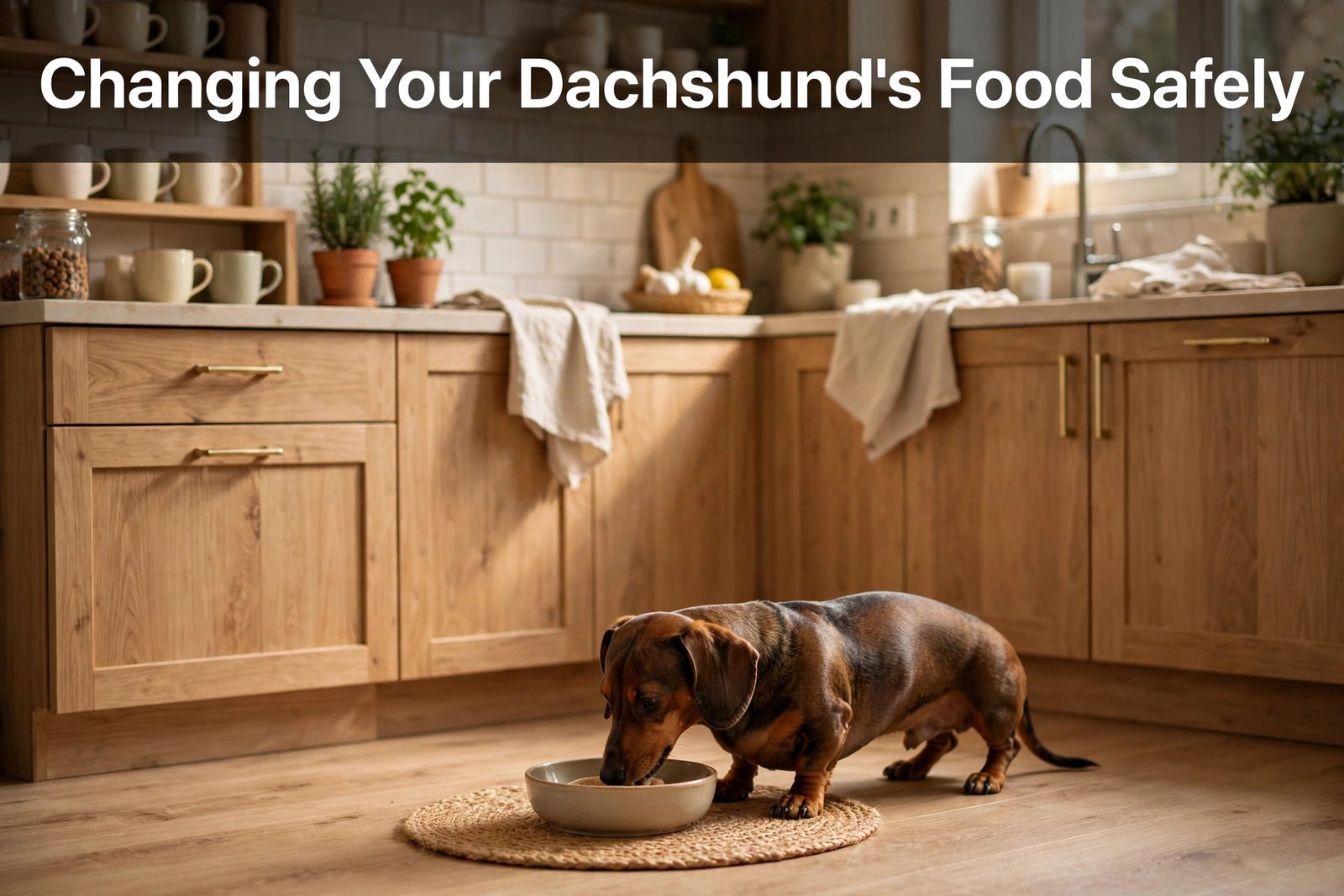
Changing a Dachshund’s Food Safely: A Slow Transition
Quick Answer
- Change a Dachshund’s food gradually over about a week, mixing a little more of the new food into the old food each day, rather than switching in one meal.
- Keep the measured portion and the feeding schedule the same during the transition, so only one thing changes at a time.
- Watch appetite, stool, energy, and comfort during the change, and slow down or pause the transition if digestive upset appears.
- Contact a veterinarian before changing food for a puppy, a senior dog, or a dog with a health condition, and promptly if vomiting, diarrhoea, or food refusal lasts more than a day.
Contents
- 1. Why a Sudden Food Change Causes Trouble
- 2. Planning the Change: Food, Portions, and Timing
- 3. The Gradual Transition, Day by Day
- 4. Treats, Table Food, and Household Consistency
- 5. Watching Appetite, Stool, and Comfort After the Change
- Food Change Comparison Checklist
- Common Mistakes
- When to Call Your Vet
- Pin This: Food Change Checklist
- Frequently Asked Questions
- Conclusion
Food changes happen for ordinary reasons. A puppy grows into adult food, a senior dog needs a different formula, a veterinarian suggests a change, or a household simply needs a food that is easier to buy consistently. Whatever the reason, the dog’s digestive system needs time to adjust. A sudden switch, even to a food that suits the dog well in the long term, can cause a stomach upset in the short term, and that upset often makes owners doubt a change that would have worked with a slower start.
A gradual transition is a simple habit: mix the foods, shift the balance a little each day, and watch the dog. It takes about a week, uses no special equipment, and fits an apartment routine easily. This guide covers why sudden changes cause trouble, how to plan a change, what a gradual transition looks like day by day, and which signs mean slowing down or contacting a veterinarian. It does not recommend a specific food, because food choice depends on the dog’s age, weight, health, and veterinary advice.
1. Why a Sudden Food Change Causes Trouble
A dog’s digestive system adapts to the food it eats regularly. The gut becomes used to a particular balance of ingredients, and a sudden change introduces new ingredients all at once. The result is often soft stool, gas, stomach gurgling, or a reduced appetite for a day or two. These signs are uncomfortable for the dog and worrying for the owner, and they can make it hard to tell whether the new food itself is a problem or whether the speed of the change is the problem.
Small dogs feel these effects quickly, because a small change in portion or ingredient balance is a larger share of their daily intake. Dachshunds, with their long backs, also feel the wider effects of digestive upset more keenly: a dog that is uncomfortable may move less, strain more, or become reluctant to walk, which is unhelpful for back health and weight control. A calm digestive system supports a calm daily routine, and a calm routine supports everything else.
Another reason sudden changes cause trouble is that they hide information. If a dog is switched to a new food, given new treats, and moved to a new feeding schedule all in the same week, and then develops soft stool, no one can tell which change caused it. Changing one thing at a time, slowly, keeps the cause clear. If a problem appears during a gradual transition, the owner knows exactly what changed and can slow down or return to the previous food while seeking veterinary advice.
Weight is part of the picture too. Different foods have different energy densities, so the same scoop of a new food may not equal the same amount of food energy as the old food. That is why portion guidance for the new food, and veterinary advice where weight is a concern, matter during a change. General background on disc disease and weight helps explain why steady weight matters for this breed: the Animal Medical Center explains intervertebral disc disease in dogs, and Cornell information on chondrodystrophy and intervertebral disc disease describes added disc risk in this breed group. Those sources are background on the breed, not guidance on food choice.
2. Planning the Change: Food, Portions, and Timing
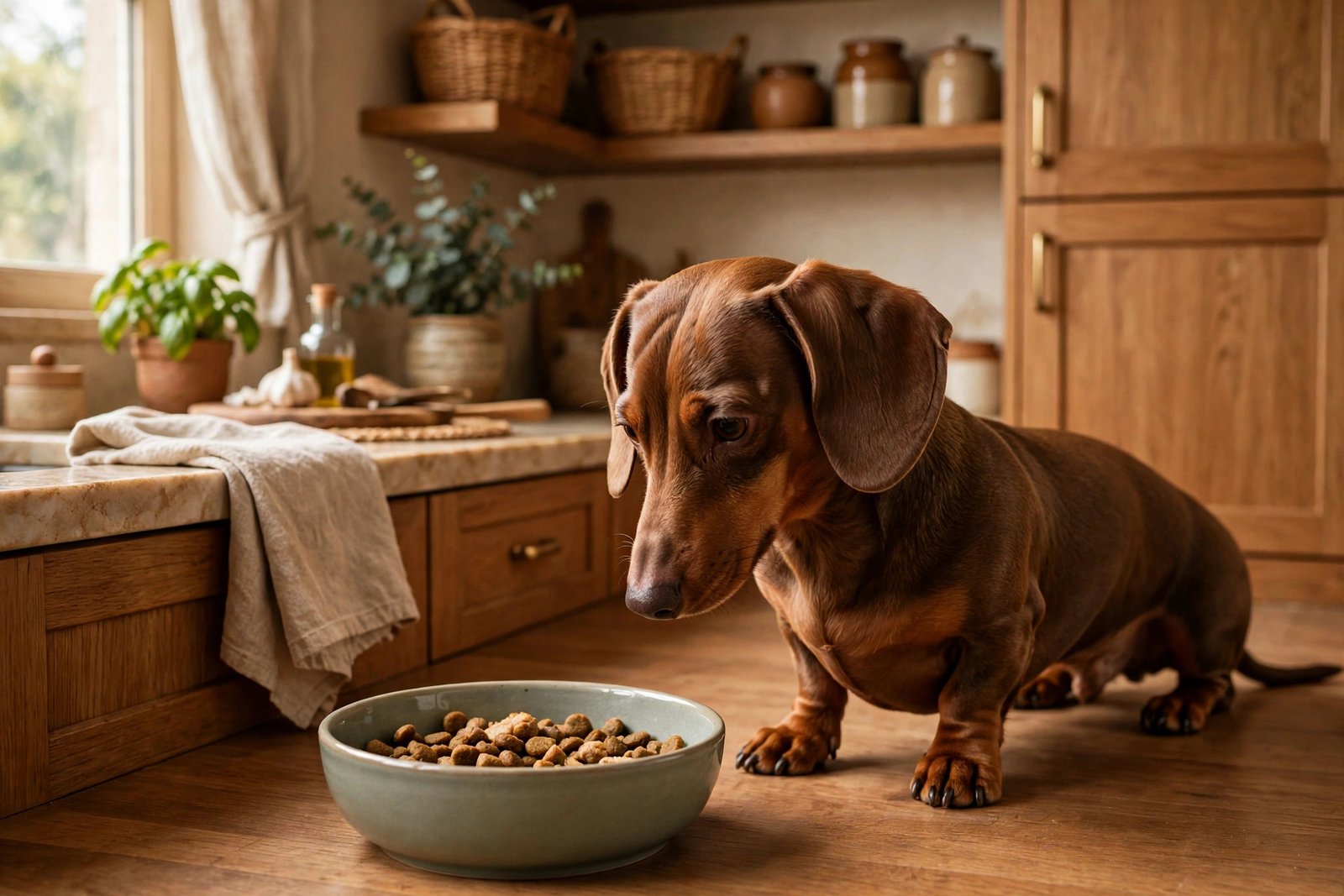
Start by choosing a calm week for the change, if the change is planned rather than urgent. Avoid starting a food transition in the same week as a move, a holiday, a vet visit for another issue, or a major change in routine, because stress alone can upset digestion and muddy the picture. If a veterinarian has advised an urgent change, follow that advice and its timing, and mention any digestive signs promptly.
Buy enough of both foods to cover the transition, plus a little extra of the old food in case the transition needs to slow down or pause. Running out of the old food halfway through forces a sudden switch, which defeats the purpose of planning. Store both foods as directed, keep them dry, and label the containers clearly if they look similar, so no one in the household mixes up the two foods.
Check the feeding guidance for the new food, and ask a veterinarian about portion size where weight, age, or health is a factor. Do not assume the same scoop equals the same portion. Measure portions with a scoop or kitchen scale, and write the portion down where everyone who feeds the dog can see it. A written note prevents the common problem of different family members feeding different amounts during a change.
Keep the feeding schedule the same during the transition: the same times, the same place, the same bowl, and the same number of meals per day. The guide to Dachshund feeding schedule for apartments covers portions and timing in detail, and its central point applies here too: consistency makes it possible to see what a change actually does. Only the food mixture should change, day by day, while everything else stays steady.
3. The Gradual Transition, Day by Day
A gradual transition usually takes about a week. The exact pace can be adjusted for the dog, and a slower pace is always safer than a faster one. The pattern below is a common starting point: a small amount of new food mixed into the old food at first, with the new share growing a little each day until the old food is gone.
On the first two days, the bowl is mostly the old food, with only a small share of the new food mixed in. This lets the dog taste and smell the new food without a sudden change in what its stomach receives. Watch appetite and stool during these days. If the dog eats normally and stool stays normal, the transition can continue. If soft stool or reduced appetite appears, stay at this stage for an extra day or two before moving on.
Over the next few days, the balance shifts gradually: roughly equal parts old and new food in the middle of the week, then mostly new food toward the end. The shift should feel uneventful. A dog that eats eagerly, has normal stool, and stays comfortable is a sign the pace is right. A dog that picks out only the old food, leaves the new food, or develops digestive signs needs a slower pace, not a bigger jump.
By the end of the week, the bowl is fully the new food, and the old food is finished. Keep watching for a few more days after the transition ends, because some digestive changes appear after the switch is complete rather than during it. If signs appear at this stage, note when they started and contact a veterinarian rather than switching foods again immediately. Repeated rapid switches make the picture harder to read, not clearer.

4. Treats, Table Food, and Household Consistency
Treats count during a food change, even more than usual, because they are another variable. Keep treats the same during the transition week, in the same small amounts as usual, and count them in the daily plan. Do not introduce a new treat, a new chew, or table food in the same week as a food change, because a digestive upset then could come from any of the new items.
Table food deserves special care during a transition. A small extra from one family member, repeated by another, can add up quickly for a small dog and can upset digestion on its own. Agree as a household that no table food is given during the transition week, or that table food is limited to a single agreed item in a small amount. A written feeding note on the fridge helps everyone stay consistent, especially in a busy apartment.
Training treats also need a plan. If training is part of the daily routine, use the dog’s usual treats in the usual small amounts during the transition, rather than switching to a new training treat at the same time. If training must pause for a day because the dog is uncomfortable, that is better than pushing through with new treats that add another variable. Training can resume once digestion is settled.
For puppies, the same consistency matters, with extra care. A puppy’s digestive system is still developing, and food changes during the first year should follow veterinary guidance. The guide to Dachshund puppy food in the first year covers measured portions, meal times, and growth checks for puppies, and its advice on slow transitions and veterinary guidance applies with particular force to young dogs. When in doubt about a puppy’s food change, ask a veterinarian before starting.
5. Watching Appetite, Stool, and Comfort After the Change
Watch four things during and after a food change: appetite, stool, energy, and comfort. Appetite should stay broadly normal, with the dog eating its meals willingly. A dog that suddenly refuses food, eats only part of a meal, or picks out one food and leaves the other is giving useful information, and the transition should slow down while that information is considered.
Stool is the clearest early signal. Normal stool for that dog, in its usual firmness and frequency, means the transition is going well. Soft stool, very frequent stool, or stool with an unusual color should slow the transition down, and persistent changes should prompt a veterinarian contact. A brief, mild softening that settles when the pace slows is common; a change that worsens or lasts more than a day or two is not something to push through.
Energy and comfort matter too. A dog that stays playful, walks normally, and settles comfortably after meals is adjusting well. A dog that becomes lethargic, restless after meals, gassy, or reluctant to walk may be uncomfortable, even if stool looks normal. Note when signs appear in relation to meals, because that timing helps a veterinarian understand the pattern.
Keep a short note during the transition week: the date, the food mixture, appetite, stool, and any signs. That note is useful if a veterinarian is contacted, and it is useful for the next food change, because it shows what pace worked for that dog. Dogs differ, and a pace that suited one dog may be too fast for another. The note turns a one-off change into knowledge for the future.

Food Change Comparison Checklist
| Approach | What happens | Risk |
|---|---|---|
| Sudden switch | New food in one meal | Soft stool, gas, reduced appetite |
| Gradual transition | New share grows over about a week | Mild, brief softening if pace is too fast |
| Slow transition | Extra days at each stage | Lowest risk, needs more old food on hand |
| Multiple changes at once | New food, treats, and schedule together | Cannot tell which change caused a problem |
| Repeated switching | New food again after each upset | Digestive picture stays unclear |
Common Mistakes
- Switching food in one meal because the old food ran out.
- Changing treats, table food, and feeding schedule in the same week as the food.
- Assuming the same scoop of a new food equals the same portion.
- Speeding up the transition when the dog seems to like the new food, before digestion has adjusted.
- Switching foods again immediately when soft stool appears, instead of slowing down.
- Changing a puppy’s or a senior dog’s food without veterinary guidance.
When to Call Your Vet
Contact a veterinarian promptly if vomiting, diarrhoea, or food refusal lasts more than a day, if stool contains blood, if the dog becomes lethargic or shows signs of pain, or if digestive signs worsen during the transition. Also contact a veterinarian before changing food for a puppy, a senior dog, or a dog with a known health condition, and before starting any restricted or special feeding plan. This article gives general information only and is not a diagnosis. A veterinarian can advise on food choice, portion size, transition pace, and whether a digestive sign needs examination. Do not keep switching foods at home while signs persist, and do not add supplements or remedies to fix a food transition without veterinary advice.
Pin This: Food Change Checklist
- Plan a calm week, and keep enough old food on hand.
- Keep portion, schedule, bowl, and treats the same during the change.
- Mix a little new food in at first, growing the share over about a week.
- Slow down or pause if soft stool or reduced appetite appears.
- Watch appetite, stool, energy, and comfort, and note changes briefly.
- Contact a veterinarian if signs last more than a day or worsen.
Frequently Asked Questions
How long should a food transition take?
About a week is a common starting point, with extra days at any stage where digestive signs appear. A slower pace is always safer than a faster one.
What if the dog picks out the old food and leaves the new food?
Slow the transition down and mix the foods more thoroughly, so the new food cannot be separated easily. If refusal persists, contact a veterinarian rather than switching foods again.
Should treats change during a food transition?
No. Keep treats the same, in the same small amounts, so only the main food changes. New treats add another variable that makes digestive signs harder to interpret.
Can a puppy’s food be changed the same way?
The gradual principle is the same, but puppy food changes should follow veterinary guidance, because a puppy’s growth and nutritional needs differ from an adult dog’s.
What if soft stool appears during the transition?
Slow down or pause at the current mixture for an extra day or two. If soft stool persists, worsens, or is joined by vomiting or food refusal, contact a veterinarian.
Conclusion
A slow, steady food change gives a Dachshund’s digestive system time to adjust and gives the owner clear information about what works. Plan a calm week, keep everything else the same, and shift the mixture a little at a time.


2 Comments