Dachshund Puppy Growing Spine Back Care: Full Guide
Quick Answer
- A Dachshund puppy’s spine is still growing, so gentle handling in the first year builds the habits that protect the back for life.
- Lift the puppy with two hands, chest and hips, back level, and never let it jump off furniture or down stairs.
- Keep walks short and flat, play gentle and low to the ground, and give the puppy plenty of sleep in a warm, supportive bed.
- Feed the puppy its normal measured meals, keep its weight steady, and ask your vet about the right food for the first year.
- Contact a veterinarian if the puppy yelps, limps, refuses to move, or shows weakness in the back legs.
Contents
- 1. How a Dachshund Puppy’s Spine Grows
- 2. Lifting and Carrying a Puppy Safely
- 3. Walks, Play, and Exercise for a Growing Spine
- 4. Sleep, Rest, and the Puppy’s Bed
- 5. Food, Weight, and Steady Growth
- Puppy Spine Care Checklist: What to Do and When
- Common Mistakes
- When to Call Your Vet
- Pin This: Puppy Spine Care Checklist
- Frequently Asked Questions
- Conclusion
1. How a Dachshund Puppy’s Spine Grows
A Dachshund puppy is born with a long body and short legs, and that shape grows fast in the first year. The bones lengthen, the muscles build up, and the discs between the bones develop, and all of that growth happens while the puppy is learning to walk, run, play, and climb. A puppy’s body is softer and more flexible than an adult dog’s, which is a good thing for learning, but it also means the spine is easier to strain. A fall off a sofa, a jump down a step, or a rough game with a bigger dog can load a growing spine in ways that an adult spine would handle more easily.
Disc degeneration in short-legged breeds can begin in the first year of life, so the first year is not too early to care for the spine; it is the most important year to care for it. The habits built now become the dog’s normal life: a puppy that is always lifted correctly grows into a dog that expects a good lift, and a puppy that is never allowed to jump off furniture grows into a dog that waits to be lifted down. The owner does not need to wrap the puppy in cotton, and the puppy still needs to play, explore, and build strength, but the play and the exercise should suit a growing body, not an adult one.
Growth is not even. A puppy may grow fast for a few weeks, then slow down, and its coordination lags behind its size, so a puppy that was steady last week may be clumsy this week. That clumsiness is normal, and it is one more reason to keep the home safe: low furniture, no high jumps, and a clear floor. The guide to back pain signs in a Dachshund puppy explains what to watch for if something does go wrong, and knowing those signs early is part of good puppy care, not something to worry about every day.

2. Lifting and Carrying a Puppy Safely
Lift the puppy the same way an adult Dachshund should be lifted: two hands, one under the chest behind the front legs, and one under the hips in front of the back legs, with the back kept level between them. Bring the puppy close to your body and hold it there, with its legs tucked underneath and its spine straight. Puppies wriggle more than adult dogs, so hold the puppy firmly but gently, and keep the lift short: pick the puppy up, move it where it needs to go, and set it down on all four paws. Do not lift a puppy by its front legs alone, by the scruff, or with one hand around the middle, because all three leave the back end dangling.
Carry the puppy up and down stairs until it is old enough and strong enough to manage them safely, and ask your vet when that is, because the right age varies from puppy to puppy. Until then, carry the puppy, or use a stair gate to keep it off the stairs. Lift the puppy on and off the sofa, the bed, and the car, every time, without exception. A puppy that is lifted down a hundred times learns to wait for the lift, and that waiting habit is worth more than any single careful lift, because it protects the spine for years.
Teach everyone in the home the same hold, including children. Show a child how to sit on the floor with the puppy in their lap, instead of picking the puppy up and carrying it around the house. A puppy that is carried at chest height by a small child can slip, fall, and land badly, and a fall from that height is a real risk for a growing spine. The rule for the whole family is simple: two hands, back level, set down gently, and if the puppy is wriggling, wait for a calm moment before lifting.
3. Walks, Play, and Exercise for a Growing Spine
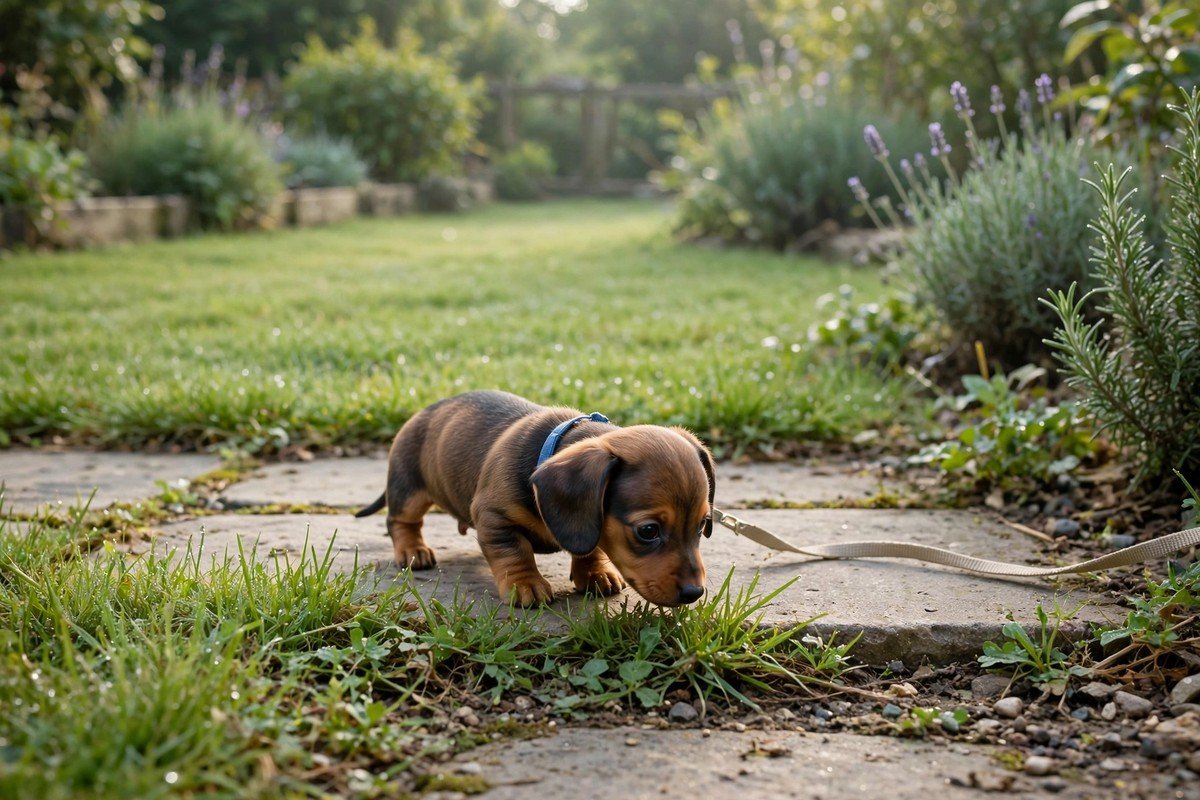
A puppy needs exercise to build strong muscles, but the exercise should be short, gentle, and flat. A good guide is five minutes of walking per month of age, twice a day, on flat ground, so a three-month-old puppy walks for about fifteen minutes at a time. Keep the lead loose, let the puppy sniff and explore, and stop when the puppy slows down or starts to lag. Puppies do not know when they are tired, and they will keep playing long past the point where their legs are ready to rest, so the owner has to be the one who ends the play.
Play should stay low to the ground. Rolling a ball along the floor, gentle tug with a soft toy, and sniffing games are all good for a puppy, because they build strength without jumping or twisting. Avoid fetch that makes the puppy sprint and stop suddenly, avoid stairs and steep slopes, and avoid rough play with much bigger dogs that can knock the puppy over. A playpen or a gated area gives the puppy a safe space to play without furniture to climb on, and a few short play sessions through the day are better than one long, wild session.
Watch how the puppy moves after play. A puppy that is tired will walk more slowly, lie down sooner, and sleep deeply, and that is normal. A puppy that limps, yelps, or refuses to move after play needs a quiet rest and, if it does not recover quickly, a veterinarian.
4. Sleep, Rest, and the Puppy’s Bed
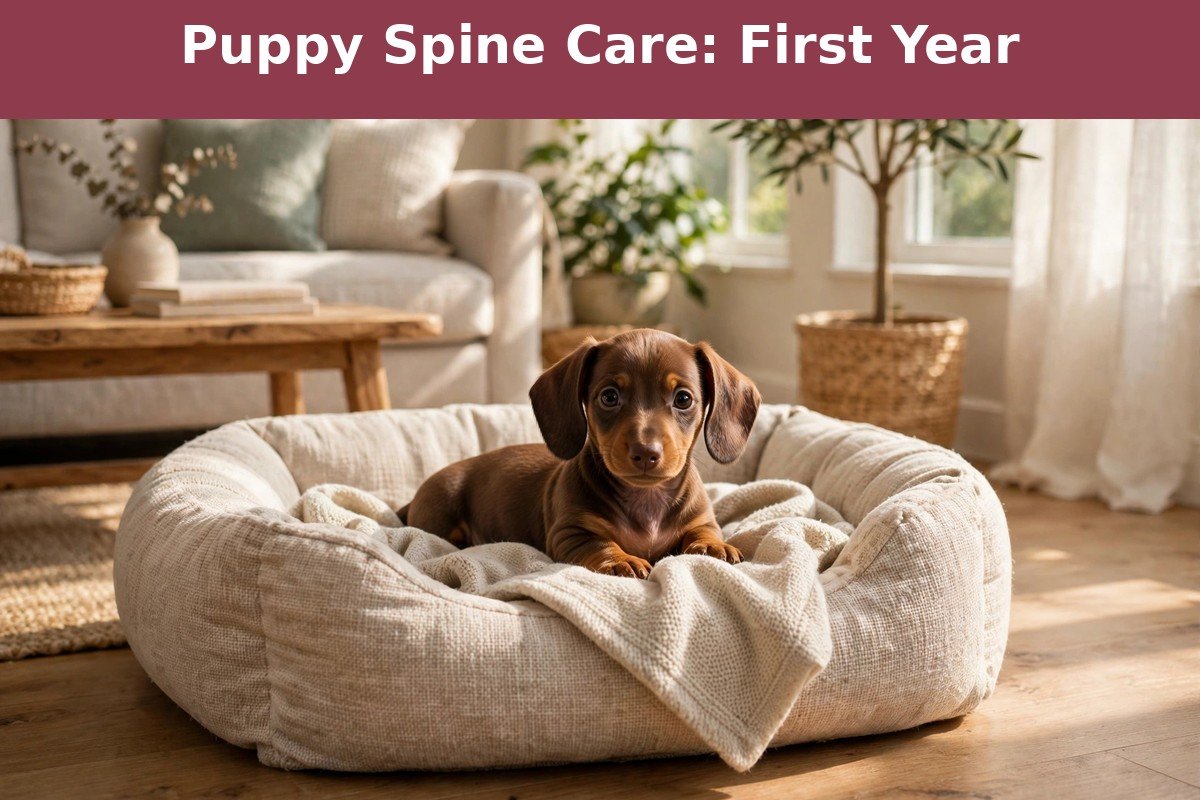
Puppies sleep a lot, and that sleep is when growth happens, so the sleep spot matters. Give the puppy a warm, supportive bed of its own, in a quiet corner, away from drafts and cold floors, with a blanket to burrow under. The bed should be low to the ground, so the puppy can walk in and out of it without jumping or climbing, and it should hold its shape, so the puppy’s back is supported while it sleeps. A bed with raised sides gives the puppy something to lean against, and a familiar blanket makes the bed smell like home.
Keep the puppy’s sleep routine steady. Puppies need around eighteen to twenty hours of sleep a day in the first weeks, and that sleep should be calm and undisturbed. Let the puppy sleep when it is tired, and keep visitors and other pets from waking it for play. A puppy that is woken again and again for play gets overtired, and an overtired puppy is clumsy, mouthy, and far more likely to fall or jump badly. Put the bed in a place where the puppy can rest without being stepped over or tripped over, and keep the room warm through the night.
5. Food, Weight, and Steady Growth
Steady growth is better than fast growth. A puppy that gains weight too fast carries extra load on a growing spine, and a puppy that is fed too much can grow too quickly for its own frame. Feed the puppy the measured meals on the food packet, split into three or four small meals a day, and ask your vet whether the amount suits this puppy. The puppy food guide for the first year covers feeding through the first year, including portions and timing, and the owner who follows a measured routine gives the puppy the best start.
Keep treats small and count them as part of the day’s food. A training treat should be no bigger than a pea, and the total treats for the day should stay a small share of the puppy’s food. Weigh the puppy regularly, once a week at first, and write the weight down, so the owner can see the growth curve and spot a sudden jump.
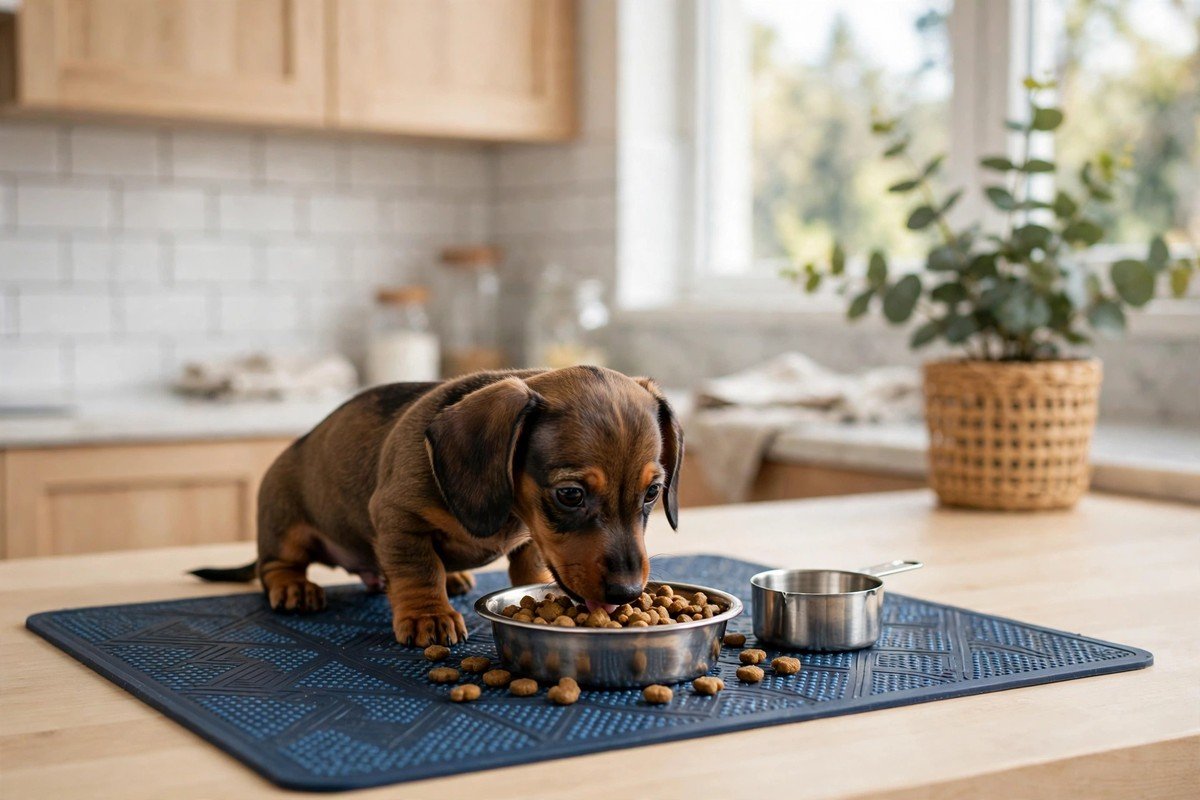
Fresh water should always be nearby, in a bowl the puppy can reach without climbing or stretching. A raised feeder can help an older puppy eat without bending its neck down, but for a young puppy, a low, stable bowl on a non-slip mat is enough. Keep the feeding spot calm and quiet, with no competition from other pets, so the puppy eats slowly and does not gulp its food. A puppy that eats calmly, sleeps well, and grows steadily is a puppy whose spine is getting the best care its owner can give.
Puppy Spine Care Checklist: What to Do and When
| When | What to Do | What to Watch For |
|---|---|---|
| Every lift | Two hands, chest and hips, back level, set down gently | Back stays straight; no dangling; no yelp |
| Every walk | Short, flat walk; about five minutes per month of age | Puppy keeps pace; no lagging or limping |
| Every play session | Low, gentle play; no jumping, stairs, or rough games | Puppy plays calmly; rests when tired |
| Bedtime | Warm bed, low to the ground, away from drafts | Puppy settles and sleeps soundly |
| Weekly | Weigh the puppy; check the food amount with your vet | Steady growth; no sudden weight jump |
The table is a routine to follow every day in the first year, in the same order, every time. A routine followed every time builds the habits that protect the spine for life.
Common Mistakes
- Letting a puppy jump off the sofa or the bed, because it looks small and light enough to manage.
- Lifting a puppy by its front legs alone, or with one hand around the middle, so the back end dangles.
- Walking a puppy for as long as an adult dog walks, and letting it keep playing when it is clearly tired.
- Playing fetch that makes the puppy sprint, twist, and stop suddenly, or letting a big dog knock it over.
- Feeding too much, too fast, so the puppy gains weight quickly and carries extra load on a growing spine.
- Putting the puppy’s bed on a cold floor, or in a draft, instead of a warm, quiet corner.
- Waking a sleeping puppy again and again for play, until it is overtired and clumsy.
- Skipping the weekly weigh-in, so a sudden growth jump goes unnoticed for weeks.
When to Call Your Vet
Contact a veterinarian if the puppy yelps when lifted or touched, limps, refuses to move, or shows weakness in the back legs. Contact a veterinarian urgently if the puppy cannot move its back legs, loses bladder control, or is in severe pain. Puppies can also be clumsy without being hurt, so watch for a pattern: a puppy that is stiff or sore more than once, or that does not recover after a rest, needs to be seen. A veterinarian can examine the puppy and advise on exercise, food, and handling, and the Animal Medical Center guide to intervertebral disc disease in dogs explains the signs that need prompt attention. The DachsLife study, published in 2015, looked at disc disease in Dachshunds, and its findings are a reminder that care in the first year shapes the back for life. This article gives general information only and is not a diagnosis.
Pin This: Puppy Spine Care Checklist
- Lift with two hands, chest and hips, back level, every time.
- Never let your puppy jump off furniture or down stairs.
- Short, flat walks: about five minutes per month of age.
- Low, gentle play; plenty of sleep in a warm bed.
- Measured meals, small treats, weekly weigh-ins.
- Call a veterinarian if the puppy yelps, limps, or will not move.
Frequently Asked Questions
When can my Dachshund puppy use stairs?
Ask your vet, because the right age varies from puppy to puppy. Until then, carry the puppy up and down stairs, or use a stair gate. A puppy that is carried on the stairs learns to wait for the lift, and that habit protects the spine for years. Even adult Dachshunds should use stairs as little as possible.
How much exercise does a Dachshund puppy need?
Around five minutes of walking per month of age, twice a day, on flat ground, plus short, gentle play sessions through the day. A three-month-old puppy walks for about fifteen minutes at a time. Stop when the puppy slows down or lags behind, and build the time up slowly as the puppy grows.
Can my puppy play with bigger dogs?
Yes, if the bigger dog is calm and gentle, and the play is supervised. A large, boisterous dog can knock a puppy over, so watch the play and separate the dogs if it gets rough. Short play with rest breaks is safer than a long, wild game. The Cornell guide to chondrodystrophy and intervertebral disc disease explains the breed background that makes this care important.
What is the best bed for a Dachshund puppy?
A low, supportive bed that holds its shape, with raised sides to lean against and a blanket to burrow under, placed in a warm, quiet corner away from drafts and cold floors. The puppy should be able to walk in and out of the bed without jumping or climbing. A bed that is too high or too soft does not support a growing spine.
How often should I weigh my Dachshund puppy?
Once a week in the first months, then once every two weeks as growth slows. Write the weight down each time, so you can see the growth curve and spot a sudden jump. If the puppy is gaining weight too fast, ask your vet about smaller meals. If the puppy is not gaining weight at all, ask your vet for a check.
Conclusion
The first year sets the pattern for a Dachshund’s whole life: two-hand lifts, no jumping off furniture, short flat walks, gentle low play, plenty of sleep in a warm bed, and measured meals for steady growth. The care is simple, the habits last, and the puppy that grows up with them has the best start its owner can give.