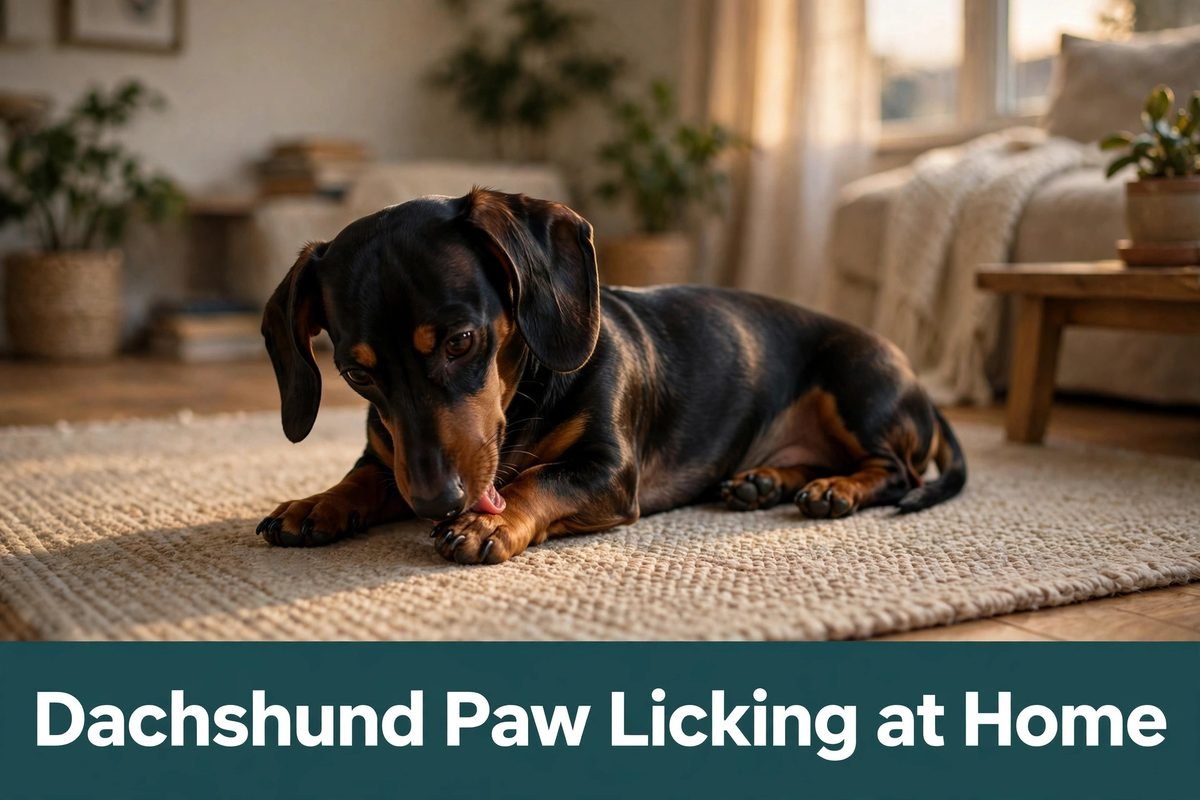
Dachshund Paw Licking at Home: Checks and Vet Care
Quick Answer
- Dachshund paw licking at home is often a sign of itchy skin, a sore spot between the toes, or a habit that started with boredom.
- Check all four paws in good light: look between the toes, under the pads, and around the nails for redness, swelling, or a smell.
- Simple home steps are a gentle rinse after walks and clean dry bedding, while the cause is worked out.
- Do not use human creams, sprays, or medicines on the paws unless a veterinarian advises it, because a dog will lick them off.
- Call a veterinarian if the licking is constant, the skin is broken or bleeding, the paw is swollen, or the dog limps.
Contents
- 1. What Dachshund Paw Licking Looks Like Day to Day
- 2. Common Causes: Itch, Pain, and Irritation
- 3. Checking the Paws Properly at Home
- 4. Simple Home Steps That Help
- 5. When Licking Becomes a Habit
- Dachshund Paw Licking: Daily Paw Check Log
- Common Mistakes
- When to Call Your Vet
- Pin This: Paw Licking at Home
- Frequently Asked Questions
- Conclusion
1. What Dachshund Paw Licking Looks Like Day to Day
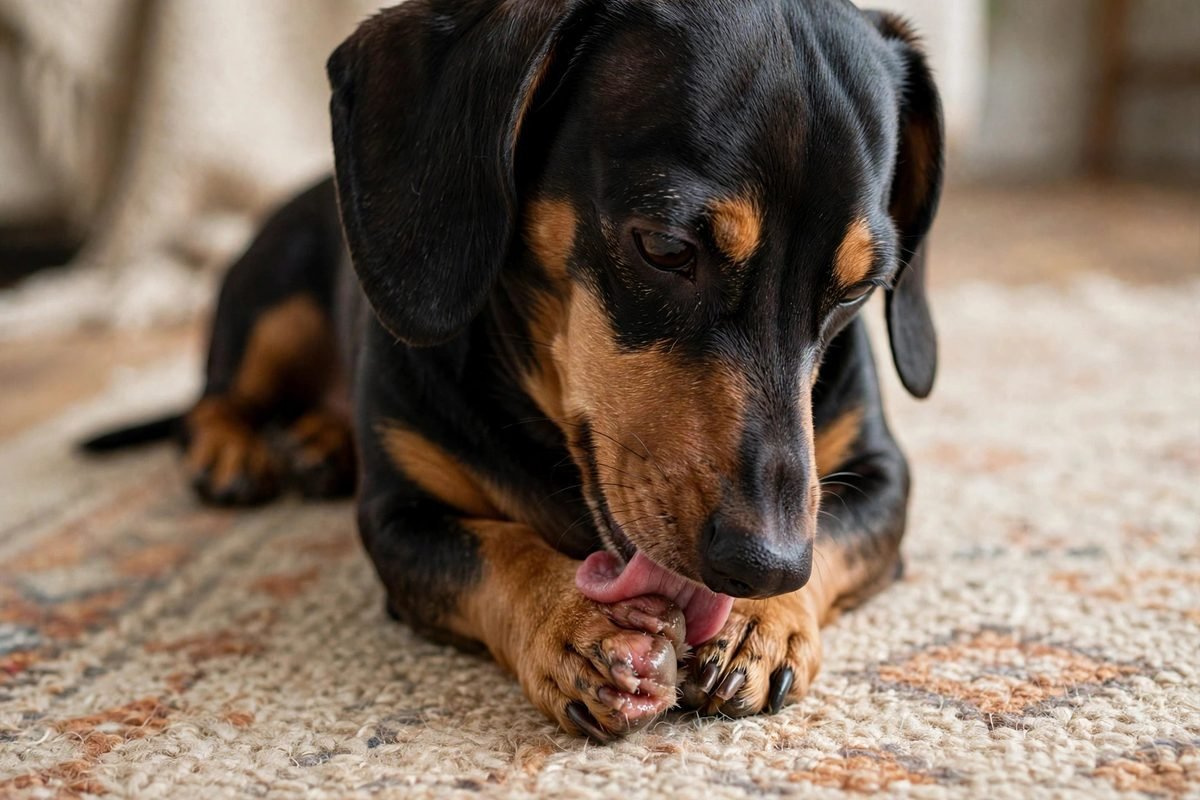
Dachshund paw licking at home usually starts quietly. The dog licks one paw after a walk, then again in the evening, then every time it settles down to rest. The pattern to watch is licking that goes on for a long time, licking that focuses on one paw, or licking that leaves the fur wet, stained pink or brown, or thin. A dog that licks its paws through the night is telling you something is wrong.
The paws themselves give the next clues. A paw that is licked too much may look red between the toes, damp hours after a walk, or sore where the dog has chewed it. The fur between the toes may be stained rusty brown from saliva, and the skin may smell yeasty. Some dogs chew the paws too, which can break the skin and make the paw bleed. A dog that licks one paw only may have a sore spot, a thorn, or a cracked pad, while a dog that licks all four paws is more likely to have an allergy.
Behaviour around the licking matters too. A dog that licks after every walk may be reacting to salt, grit, mud, or a cleaning product on the floor. A dog that licks mostly at night may be licking from boredom or worry rather than from an itch. A dog that licks and then limps, or cries when the paw is touched, has pain, not just an itch. Keep a note of when the licking happens and which paws it affects, because that pattern is the first thing a veterinarian will ask about.
2. Common Causes: Itch, Pain, and Irritation
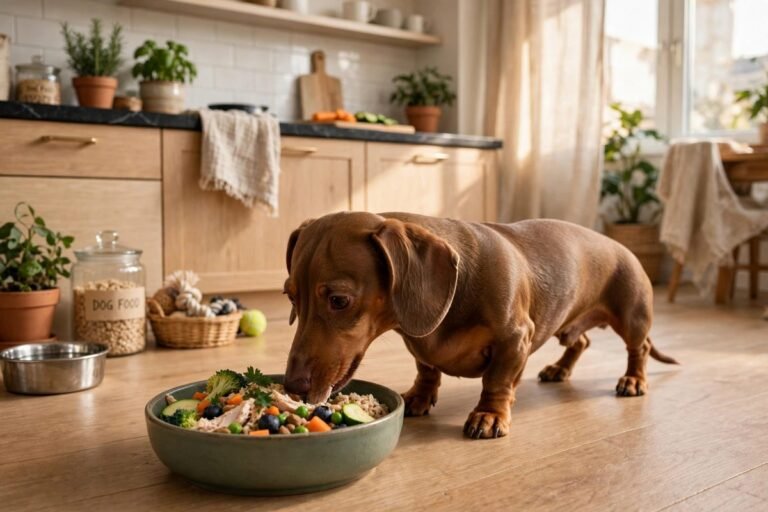
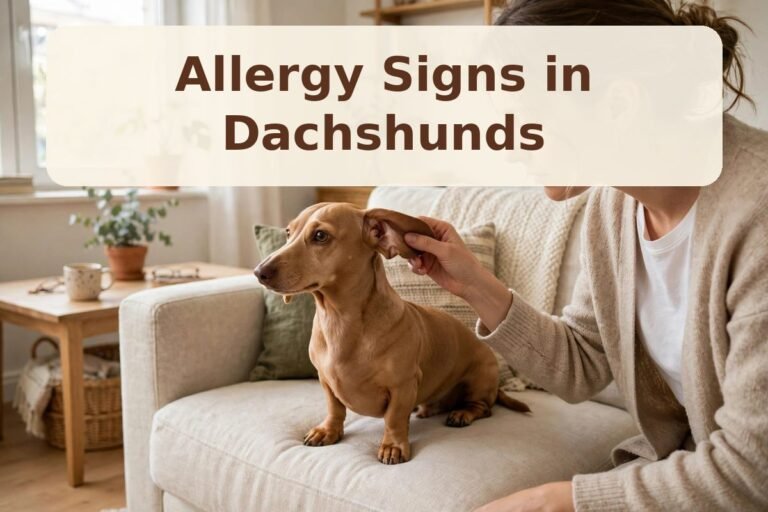
The most common cause of Dachshund paw licking is itchy skin, and the itch often comes from an allergy. Dogs can be sensitive to food, to pollen and dust in the air, or to things that touch the paws, such as grass or the salt on icy pavements. An allergy makes the skin between the toes itch, and licking only makes it more sore. Food can play a part too: a dog that licks its paws and also scratches its ears or rubs its face may be reacting to its diet. The food for itchy skin guide explains how diet and itch are linked.
Pain is the next cause, and it is easy to miss, because a dog licks a sore paw as it licks an itchy one. A thorn, a stone, or a grass seed stuck between the toes can make a dog lick one paw without stopping. A cracked pad, a torn nail, a cut from glass, or a sting can all cause the same licking. In winter, salt and grit on the roads can burn the pads and make the dog lick them raw after a walk. A dog that licks one paw and limps on it, or yelps when the paw is touched, is likely in pain.
Irritation from the world the dog walks through is the third cause. Wet paws that stay damp after a rainy walk can grow yeast between the toes, which itches and smells. Mud, sand, and puddle water can dry on the paws and irritate the skin. Cleaning products used on floors can leave a residue that the dog picks up on its paws and then licks off. A new washing powder on the dog’s bedding can irritate the skin too. If the licking started after a change at home, such as a new floor cleaner, note it, because removing it may be all the dog needs.
3. Checking the Paws Properly at Home
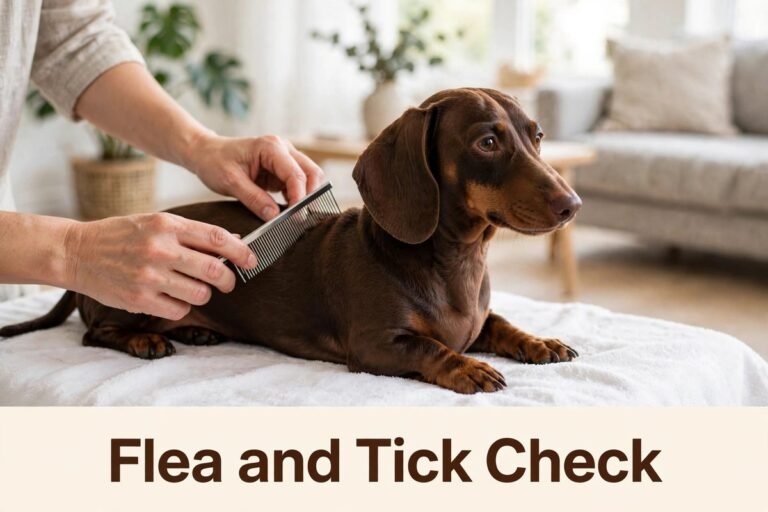
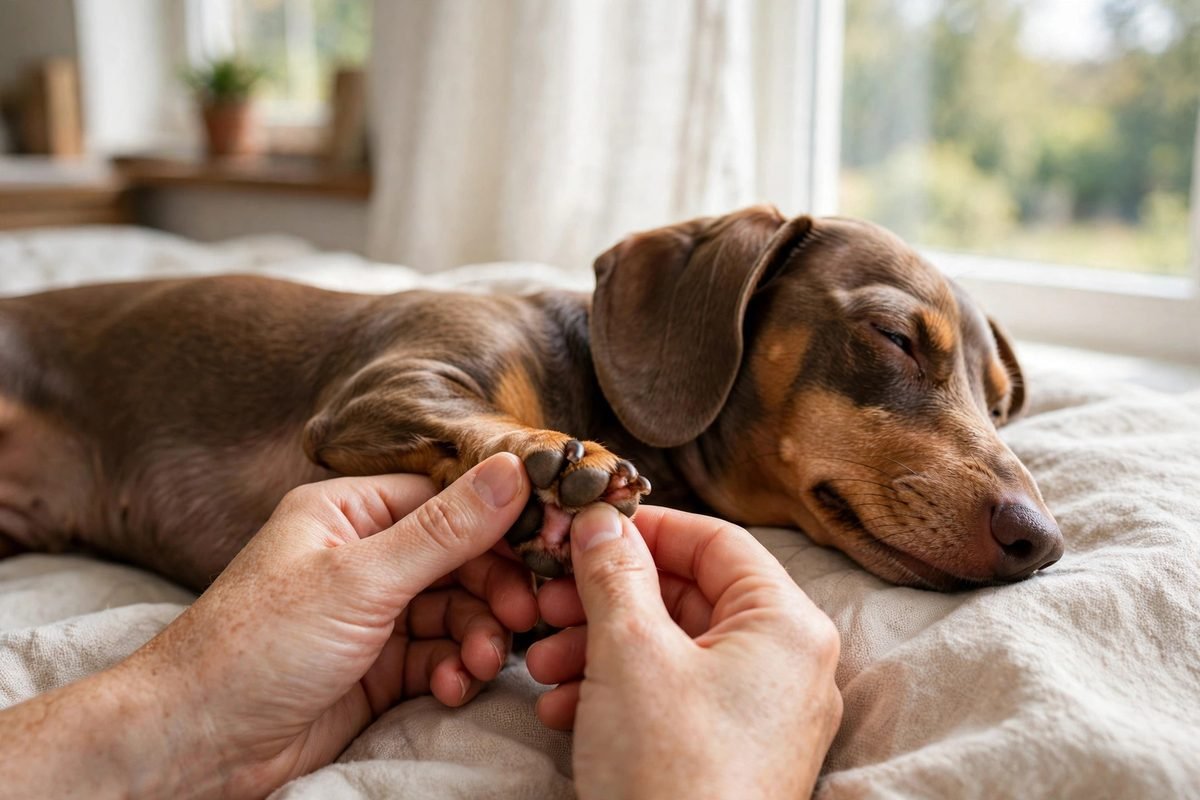
A good paw check takes a few minutes and needs good light and a gentle hand. Sit with the dog and lift one paw at a time, holding it softly so the dog does not pull away. Look at the top of the paw, then spread the toes apart and look between them, where redness and sores hide. Look at the pads: they should be smooth and dark, not cracked, peeling, or raw. Check the nails for cracks, breaks, or a nail that has grown into the pad. Smell the paw too, because a yeasty smell between the toes points to an infection that needs a veterinarian.
Look for things stuck in the paw as well. Grass seeds, small thorns, and stones can lodge between the toes or under a nail, and they are hard to see until the toes are spread apart. A grass seed can work into the skin and cause a swollen, sore lump between the toes. If you find something stuck and it comes away easily, take it out and clean the spot with plain water. If it is deep, or the dog cries when you touch it, leave it alone and let a veterinarian remove it.
Check all four paws, even if the dog only licks one, because the pattern tells you a lot. Redness on all four paws points to an allergy or an irritation that affects the whole dog. Redness on one paw only points to a local problem, such as a thorn, a cut, or a sore pad. Note what you find: which paws are red, whether the skin is broken, and whether the dog flinches when you touch a spot. A short note, or a photo in good light, is useful for the veterinarian, and helps you see whether the paws are getting better or worse.
4. Simple Home Steps That Help
The simplest home step for Dachshund paw licking is a gentle rinse after walks. Rinse the paws in plain lukewarm water after every walk, especially after rain, mud, or salted pavements, and dry them well, including between the toes. Damp paws left to dry on their own stay moist between the toes, and that moisture feeds yeast that makes paws itch. A rinse also washes away salt, grit, and cleaning residues picked up on the walk. The nail and paw care guide covers the routine in full.
Keep the dog’s living space clean and dry as well. Wash the bedding often in a mild detergent, and dry it fully first. Wipe the floors with plain water or a pet-safe cleaner, and rinse away any residue. In wet weather, keep a towel by the door so the paws are dried at once. If the dog licks after walks on a certain route, try a different route for a week and see if the licking eases.
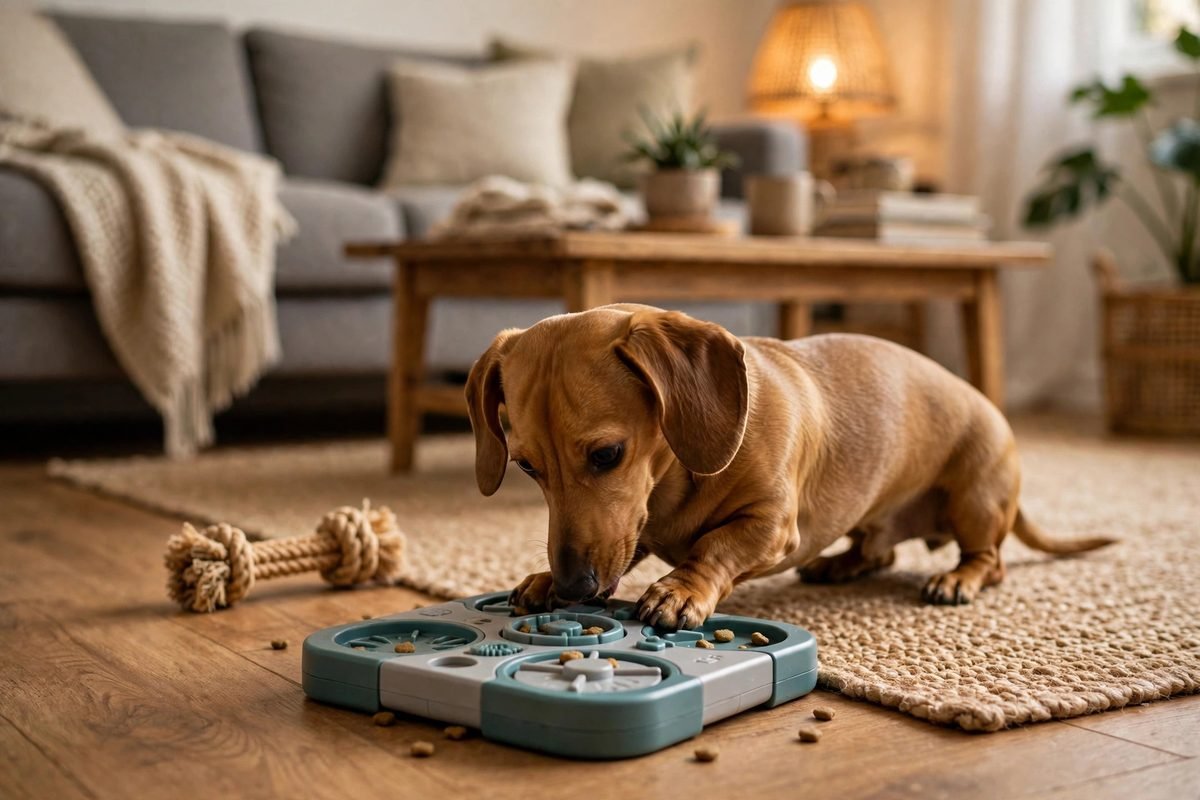
Distraction and routine help while the cause is being worked out. A short play session, a chew, or a puzzle feeder can break the licking habit for a while, and a calm daily routine can ease the worry that drives some dogs to lick. A light sock can protect a sore paw for a short time, but only while the dog is watched. Do not put human creams or oils on the paws, because the dog will lick them off, and some are harmful if swallowed. Plain water, a clean towel, and a dry bed are the safe home steps.
5. When Licking Becomes a Habit
Sometimes Dachshund paw licking starts with an itch or a sore paw, and then becomes a habit after the cause has healed. The dog learns that licking soothes it, and it licks when it is bored, worried, or settling down to sleep, even when the paws are fine. Habit licking is most common at night, when the house is quiet, and it often affects the front paws, which are easiest to reach. A dog that licks from habit will usually stop when distracted, and that is a useful clue: itch-driven licking is harder to interrupt.
Breaking the habit takes routine, not scolding. Give the dog more to do during the day: a longer walk, a puzzle feeder at mealtimes, and a chew in the evening. Keep the dog’s day predictable, with meals, walks, and rest at the same times. When the dog starts to lick, redirect it to a toy or a chew, and praise it when it settles without licking. Do not shout at the dog or pull the paw away, because that adds stress and can make the licking worse.
A habit that goes on for weeks can still damage the paws. Constant licking keeps the skin wet, and wet skin can grow yeast, break open, and become infected, which starts the itch all over again. That is why a dog that licks from habit still needs its paws checked often, and the rinse-and-dry routine after walks. If the habit does not ease within a couple of weeks, or if the skin becomes red, broken, or smelly, the dog needs a veterinarian. In short-legged breeds, disc degeneration can begin in the first year of life, so a dog that licks its paws and also moves stiffly or cries when lifted should be checked for back pain too.
Dachshund Paw Licking: Daily Paw Check Log
| What to Note | How to Record It | Why It Helps |
|---|---|---|
| Which paws | Front left, front right, back left, back right | One paw points to a local problem; all four point to an allergy |
| When it happens | After walks, at night, or all day | After walks points to the ground; at night points to habit |
| What the skin looks like | Red, swollen, broken, stained, or smelly | Shows whether the paws are getting better or worse |
| What changed | New food, cleaner, route, or weather | Links the licking to a cause that can be removed |
| How the dog moves | Limping, holding a paw up, or stiff | Pain needs a veterinarian sooner than an itch |
Common Mistakes
- Putting human creams or oils on the paws, which the dog licks off and may swallow.
- Leaving the paws wet after a walk, so the skin between the toes stays damp.
- Checking only the paw the dog licks, and missing the pattern across all four paws that points to the cause.
- Scolding the dog for licking, which adds stress and can make habit licking worse.
- Changing the food again and again without a veterinarian’s advice, when the cause may be in the air.
- Waiting too long when the skin is broken, bleeding, or smelly, when an infection needs a veterinarian.
When to Call Your Vet
Call a veterinarian if the licking is constant, if the skin is broken, bleeding, swollen, or smelly, if the dog limps, or if the licking has gone on for more than a week. Call sooner for a puppy, a senior dog, or a dog with a known allergy, and at once if a paw is badly swollen or the dog cannot put weight on it. A veterinarian can check for thorns, grass seeds, yeast, and allergies, and can advise on a safe treatment for this dog. This guide is general information only and not a diagnosis; only a veterinarian who examines the dog can say what the licking means.
Pin This: Paw Licking at Home
Save this guide for the next time the licking starts: check all four paws in good light, rinse and dry them after walks, note when the licking happens, and call a veterinarian if the skin is broken, swollen, or smelly, or the licking will not stop.
Frequently Asked Questions
Why does my Dachshund lick its paws at night?
Dachshund paw licking at night often comes from boredom or worry, when the house is quiet. It can also mean the paws itch from the day’s walks, or from yeast in damp skin between the toes. Check the paws, rinse and dry them after walks, and give the dog a chew or a puzzle feeder in the evening to break the habit.
Is paw licking a sign of allergies?
It can be. Dogs with allergies often lick all four paws, and may also scratch their ears or rub their face. Food, pollen, dust, and things that touch the paws can all trigger it. A veterinarian can help work out whether the cause is food, the air, or the ground, and what to change first.
Should I wash my Dachshund’s paws every day?
A gentle rinse in plain lukewarm water after walks is enough, and drying the paws well matters most. Do not use soap or wipes with strong scents on the paws every day, because they can irritate the skin. If the paws are red or sore, ask a veterinarian before using any product on them.
What does it mean if only one paw is licked?
Licking one paw usually points to a local problem, such as a thorn, a grass seed, a cut, or a cracked pad. Check that paw closely, spread the toes apart, and look for anything stuck or broken. If the dog limps, cries when the paw is touched, or the paw is swollen, call a veterinarian.
Can I put coconut oil on my Dachshund’s paws?
Do not put oils or creams on the paws without a veterinarian’s advice, because the dog will lick them off, and some upset the stomach. Plain water, a clean towel, and dry bedding are the safe home steps. If the pads are cracked or dry, a veterinarian can suggest a product that is safe for this dog.
Conclusion
Dachshund paw licking at home is a small sign that deserves a careful look, because it can mean an itch, a sore paw, or a habit. The home routine is simple: check all four paws in good light, rinse and dry them after walks, and note when the licking happens. Do not use human creams on the paws, and do not scold the dog for licking. If the skin is broken, swollen, or smelly, if the dog limps, or if the licking goes on for more than a week, a veterinarian should take a look.