
Dachshund Paw Care After Muddy and Rainy Walks Guide
Quick Answer
- After a muddy or rainy walk, wash a Dachshund’s paws with lukewarm water, dry them fully between the toes, and check each paw for cuts, grit, or soreness.
- Use a shallow basin or a damp cloth, plain water or a mild dog shampoo, and a soft towel, and never use hot water or household cleaners on paws.
- Keep nails trimmed and the hair between the pads short, because long nails and matted fur trap mud and make slips more likely.
- Contact a veterinarian if a paw is cut, swollen, bleeding, or the dog limps, licks one paw constantly, or refuses to walk.
Contents
- 1. Why Mud and Rain Are Hard on Dachshund Paws
- 2. The Wash, Dry, and Check Routine Step by Step
- 3. What to Use, and What to Keep Away from Paws
- 4. Drying Between the Toes and Checking for Hidden Problems
- 5. Keeping Paws Healthy Between Wet Walks
- Muddy Walk Paw Care Checklist
- Common Mistakes
- When to Call Your Vet
- Pin This: Rainy Walk Paw Care Checklist
- Frequently Asked Questions
- Conclusion
Rainy walks are part of apartment life, and mud follows the dog home on four small paws. A Dachshund walks close to the ground, so its paws pick up more mud, grit, and puddle water than a taller dog, and wet paws tracked across the floor are only half the problem. Mud left to dry between the toes can itch, crack the skin, and hide small cuts, while wet paws on smooth floors slip and strain the long back.
This guide explains a simple wash, dry, and check routine for paws after muddy and rainy walks, what to use, and what to watch for. It is general information about home care, not veterinary advice and not a diagnosis. A paw that is cut, swollen, or painful needs a veterinarian, and no home wash can replace that check. Done after every wet walk, the routine takes a few minutes and keeps small paws healthy through the wet season.
1. Why Mud and Rain Are Hard on Dachshund Paws
Dachshund paws are small, close to the ground, and built for digging, which means they collect mud fast. On a rainy day, a short-legged dog wades through puddles that a taller dog steps over, and mud splashes up the legs and between the toes. The pads themselves are tough, but the skin between the toes is thin and soft, and it stays damp long after the walk ends if nobody dries it.
Damp skin between the toes is a perfect place for irritation. Mud dries into grit that rubs with every step, and constant dampness softens the skin so it cracks more easily. In winter, road salt and grit make things worse, drying and stinging the pads, while in summer, muddy park paths can hide sharp stones, broken glass, and thorns. A dog that licks its paws after every walk is often telling the owner that something itches, stings, or hurts.
Wet paws also change how the dog moves indoors. A dog that comes in with wet feet slips on wood and tile, and a slip can twist a leg or strain the back. Drying paws at the door protects the floors and the dog at the same time. A quick check at the door also catches problems early, when a small cut is easy to clean and a sore pad is easy to rest, rather than days later when the dog is limping. A veterinarian can advise on paw care for dogs with allergies or sensitive skin, which often show up first on the paws.

2. The Wash, Dry, and Check Routine Step by Step
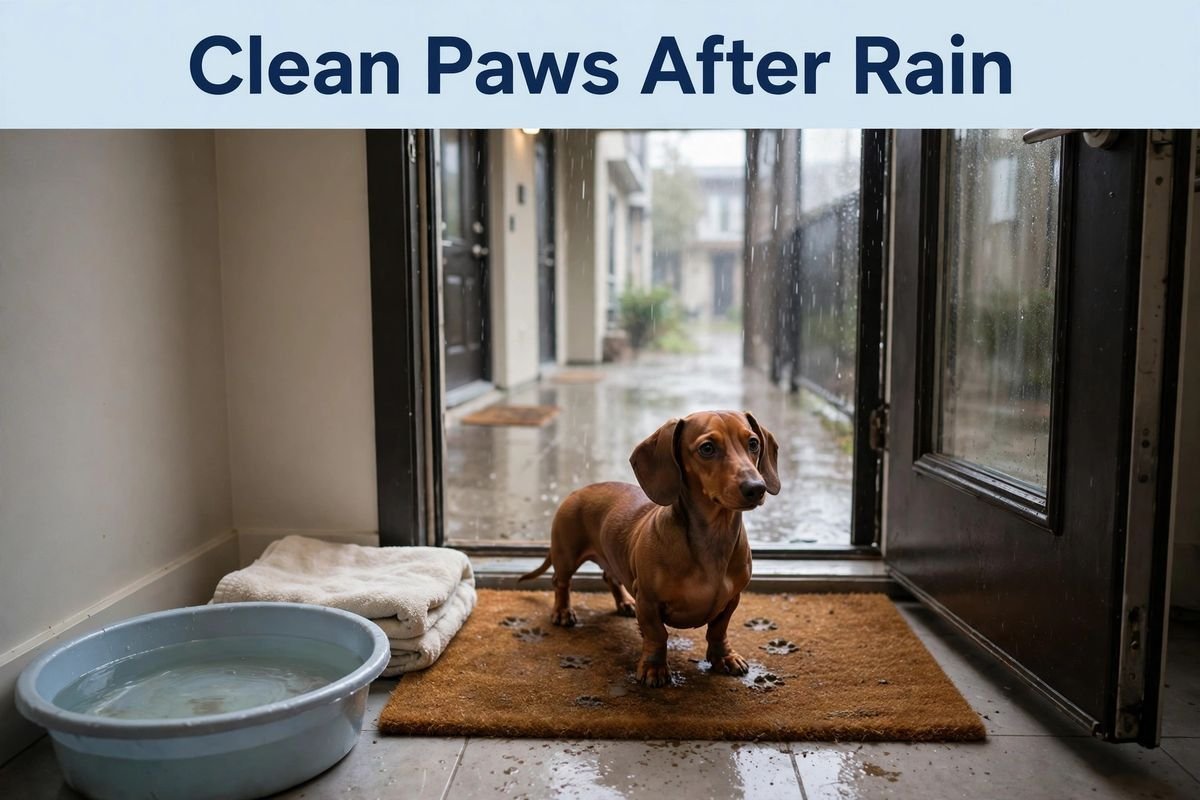
Set up the wash station before the walk, so the routine starts the moment the dog comes in. Keep a shallow basin, a jug of lukewarm water, a soft towel, and a mild dog shampoo by the front door, plus a non-slip mat for the dog to stand on. A basin is easier than a bath, because only the paws get wet and the dog stays calm, and a jug lets the owner control the water instead of running a tap over a small dog.
Start with the front paws, one at a time. Dip each paw in lukewarm water, swirl it gently to loosen the mud, and rub between the toes with fingertips to free trapped grit. If the paws are very muddy, change the water and repeat. For light rain and little mud, a damp cloth wiped between each toe is enough, and a full wash can wait for the muddier days. Work slowly and speak calmly, because a dog that is held still and rushed will pull away next time.
After the wash, lift each paw and look at it properly. Check the pads for cuts, the skin between the toes for redness, and the nails for chips or mud packed underneath. A small stone or thorn can sit between the toes for days if nobody looks. If a little mud is stuck in the fur, tease it out with fingers rather than pulling, and rinse again if the water runs dirty. The whole routine takes about five minutes once it becomes a habit, and most dogs learn to stand at the door and wait for it.
3. What to Use, and What to Keep Away from Paws
Plain lukewarm water is enough for most rainy walks. It removes mud without stripping the skin, and it is safe if the dog licks a paw afterwards. When the paws are very dirty or smelly, add a small amount of mild dog shampoo, work it gently between the toes, and rinse well so no soap stays on the skin. Rinse twice if the water still looks soapy, because leftover shampoo itches and makes the dog lick more.
Never use hot water, which can scald thin skin, and never use household cleaners, disinfectants, or washing-up liquid on paws. These products sting cuts, dry the pads, and are unsafe if licked. Avoid scented wipes made for people, and avoid anything with alcohol, because it dries and cracks the pads. If a ready-made paw wash is used, choose one made for dogs, follow the label, and rinse after use unless the label clearly says it is leave-on.
Choose a soft, absorbent towel and keep one just for paws, so it is always by the door and always clean. A rough towel drags on sore skin, while a soft microfibre towel dries between the toes without rubbing hard. In cold weather, a paw balm made for dogs can protect the pads before a walk, applied thinly and rubbed in well, but it is not a substitute for washing after the walk. The guide to Dachshund nail and paw care at home explains trimming, filing, and regular paw checks in more detail, and the wash routine after wet walks fits into that same weekly care.

4. Drying Between the Toes and Checking for Hidden Problems
Drying matters as much as washing. Wet skin between the toes stays damp for hours inside a warm apartment, and dampness softens the skin, invites irritation, and lets mud dry into hard grit. Dry each paw with the towel, pressing gently between the toes rather than rubbing hard, and finish with a dry cloth or a soft paper towel pushed lightly between the toes. The paw should feel dry, not just look dry.
While drying, check each paw again in good light. Look for redness between the toes, a small cut on a pad, a cracked nail, or a swelling that was hidden by mud. Smell the paws too: a yeasty or sour smell that stays after washing can mean irritation that needs a veterinarian’s look. Check the fur between the pads as well, because long fur holds mud and mats into clumps that pull with every step. Trim it carefully with blunt-tipped scissors, or ask a groomer or veterinarian to show the safe way first.
Watch how the dog walks after the routine. A dog that limps, holds one paw up, or licks one spot again and again is pointing at a problem. A tiny cut can be rinsed with clean water and covered for a short rest, but a deep cut, a swelling, or bleeding that does not stop needs a veterinarian the same day. Keep a note of which paw is sore and when it started, because that detail helps a veterinarian find the cause fast. The guide to Dachshund coat and skin care at home explains how to spot skin irritation early, and the paws are often where that irritation shows up first.
5. Keeping Paws Healthy Between Wet Walks
Healthy paws start with short nails. Long nails change how the foot lands, push the toes apart, and catch on rough ground, which makes slips and sore toes more likely. Trim a little at a time, or file the tips, and check the nails every week in wet weather, because mud hides growth. If trimming at home feels risky, a groomer or veterinarian can do it and show the owner the safe length.
Keep the fur between the pads short and the paws clean between walks. A quick wipe after a dry walk removes dust before it builds up, and a brush of the legs after a muddy park walk stops mud drying into mats. In winter, rinse paws after walks on salted paths, because salt dries the pads and stings small cracks. In summer, avoid hot pavements at midday, because hot ground burns pads fast, and check the pavement with a hand first.
Build the routine into the walk itself. Choose routes that avoid the deepest mud when rain is heavy, carry a towel on long walks, and keep the dog off freshly gritted paths where possible. A dog that is used to the wash at the door will stand calmly for it, and a routine that is quick and kind gets done every time. Over a wet season, those few minutes after each walk add up to paws that stay clean, dry, and free of the small problems that turn into vet visits.

Muddy Walk Paw Care Checklist
| Step | What to do | What to watch |
|---|---|---|
| Set up at the door | Basin, lukewarm water, towel, mat | Water warm, not hot |
| Wash each paw | Dip, swirl, rub between toes | Grit and mud between toes |
| Rinse well | Change water if dirty, rinse soap twice | Soap left on skin itches |
| Dry between toes | Press towel gently, finish dry | Damp skin cracks and itches |
| Check every paw | Pads, toes, nails, fur in good light | Cuts, redness, swelling, smell |
| Nails and fur | Trim weekly, keep pad fur short | Long nails change how feet land |
| After the walk | Watch how the dog walks and licks | Limping or one-paw licking |
Common Mistakes
- Skipping the wash and letting mud dry between the toes.
- Using hot water or household cleaners on paws.
- Leaving soap on the skin after a wash.
- Drying the top of the paw but not between the toes.
- Pulling matted mud out of the fur instead of teasing it free.
- Letting nails grow long in wet weather.
- Ignoring a dog that licks one paw again and again.
When to Call Your Vet
Contact a veterinarian if a paw is cut, swollen, or bleeding, if the dog limps, holds a paw up, or refuses to walk, or if one paw is licked constantly. Contact a veterinarian sooner if the skin between the toes is red, smelly, or sore, if a nail is broken and bleeding, or if the dog has stepped on glass, a thorn, or a sharp stone. This article gives general information only and does not diagnose any condition. A veterinarian can clean a wound properly, check for a foreign body between the toes, and advise on paw care for dogs with allergies or sensitive skin. Do not delay veterinary help for a paw that is bleeding heavily, swollen fast, or clearly painful.
Pin This: Rainy Walk Paw Care Checklist
- Set up a basin and towel by the door.
- Wash each paw in lukewarm water.
- Rub gently between the toes.
- Rinse soap off twice.
- Dry between the toes fully.
- Check pads, nails, and fur in good light.
- Watch for limping or constant licking.
Frequently Asked Questions
Do I need to wash paws after every rainy walk?
Yes, a quick wash or at least a thorough wipe and dry after every wet walk keeps mud and grit from drying between the toes. A full basin wash suits muddy days, while a damp cloth and a good dry is enough after light rain, as long as every toe is checked.
Can I use baby wipes on my Dachshund’s paws?
Plain water and a towel are safer than most wipes. Many wipes made for people contain scents or chemicals that irritate dog skin, so if wipes are used, choose ones made for dogs, wipe gently, and dry the paws afterwards.
Why does my Dachshund lick its paws after walks?
Licking often means something itches, stings, or hurts: mud between the toes, soap left on the skin, salt from winter paths, or a small cut. Wash and dry the paws, check between the toes, and contact a veterinarian if the licking is constant or the skin looks red or sore.
How do I dry between the toes properly?
Press a soft towel gently between each toe instead of rubbing hard, then finish with a dry cloth pushed lightly between the toes. The paw should feel dry all over, because damp skin left between the toes softens, cracks, and itches.
Should I use paw balm in wet weather?
A thin layer of dog paw balm before a walk can protect pads from salt and grit in cold weather, but it does not replace washing after the walk. Rub it in well, and wash and dry the paws as usual when the dog comes home.
Conclusion
Muddy and rainy walks need not mean sore paws. A basin by the door, lukewarm water, a gentle wash between the toes, and a full dry after every wet walk keep small Dachshund paws clean and comfortable, and a quick check each time catches cuts and soreness early, before they turn into limping and vet visits.





2 Comments