

Dachshund Sleep and Bedtime Routine for Apartments
Quick Answer
- Most adult Dachshunds sleep twelve to fourteen hours a day, and puppies and seniors often sleep more, spread across the night and daytime naps.
- A calm bedtime routine works best: last toilet break, a quiet wind-down, the same sleeping place, and a dark, quiet room.
- Keep the bed low, warm, and supportive, away from draughts and stairs, so the dog can settle and stand without jumping or climbing.
- Night waking, restlessness, or crying can signal pain, toileting needs, anxiety, or illness, and repeated night waking deserves a vet check.
Contents
- 1. How Much Sleep Does a Dachshund Need?
- 2. Building a Calm Evening Wind-Down
- 3. The Bedroom Setup: Bed, Place, and Temperature
- 4. Night Waking, Crying, and Restlessness
- 5. Daytime Naps, Routine, and Keeping Sleep Steady
- Sleep Routine Comparison Checklist
- Common Mistakes
- When to Call Your Vet
- Pin This: Bedtime Routine Checklist
- Frequently Asked Questions
- Conclusion
Sleep is easy to overlook, because a sleeping dog looks like nothing is happening. In fact, sleep is when a Dachshund’s body repairs muscle, rests joints, settles the stomach, and processes the day. A dog that sleeps badly often shows it the next day: restless, grumpy, less willing to walk, or more likely to bark. In an apartment, poor sleep affects the owner too, because a restless dog at night wakes the whole flat.
This guide explains how much sleep Dachshunds need, how to build a calm bedtime routine, how to set up a sleeping place that protects the back, and what night waking may mean. It is general information, not medical advice. If a dog’s sleep changes suddenly or night waking becomes regular, a veterinarian should check for pain, illness, or anxiety. What you can do at home is keep the routine steady, the bedroom calm, and the bed easy to reach.
1. How Much Sleep Does a Dachshund Need?
Most adult dogs sleep twelve to fourteen hours in twenty-four hours, and Dachshunds are no exception. Puppies may sleep up to eighteen hours, because growth and learning demand rest, and senior dogs often sleep more too, with longer naps and earlier nights. That total includes daytime naps as well as night sleep, so a dog that sleeps soundly at night and naps during the day is usually getting enough rest.
Sleep needs change with the day. A dog that has walked, played, and trained will sleep more deeply than a dog that has been bored indoors all day, which is why daytime activity and night sleep are linked. A dog that is under-exercised may be restless at night, while a dog that is over-tired may be stiff and sore the next morning. The balance is a day with gentle activity spread out, calm evenings, and rest in between.
Watch the pattern, not just the hours. Healthy sleep is relaxed: the dog lies on its side, breathes slowly, twitches gently while dreaming, and wakes calmly. Sleep that is broken by frequent position changes, whimpering, panting, or getting up and circling may signal discomfort. Note how long the dog sleeps, when it wakes, and whether it settles again easily, because that record helps a veterinarian if sleep becomes a problem.

2. Building a Calm Evening Wind-Down
A good bedtime starts an hour before sleep. Keep the last part of the evening quiet: dim the lights, lower voices, stop exciting play, and avoid visitors or loud television. Offer the last toilet break at a calm pace, on a lead if needed, and avoid a long, exciting walk late at night. A short, slow toilet walk is enough, and it should end at home, not in a game.
Feed the last meal at least two to three hours before bedtime, so the stomach has time to settle and the dog does not need the toilet in the middle of the night. A small, calm bedtime treat is fine for some dogs, but a large late meal or a new treat can cause restlessness or stomach upset. Keep water available overnight in the sleeping area, in a stable bowl that cannot easily spill, so the dog can drink without waking the household.
Repeat the same steps in the same order every night. Dogs learn routines quickly, and a predictable sequence, such as toilet, quiet cuddle, bed, lights out, tells the dog that sleep is coming. The guide to barking at night in apartments covers the same calm-evening approach for dogs that bark after dark, and the routine described here works alongside it. Avoid changing the routine suddenly, because a new pattern can unsettle a dog for several nights.
3. The Bedroom Setup: Bed, Place, and Temperature
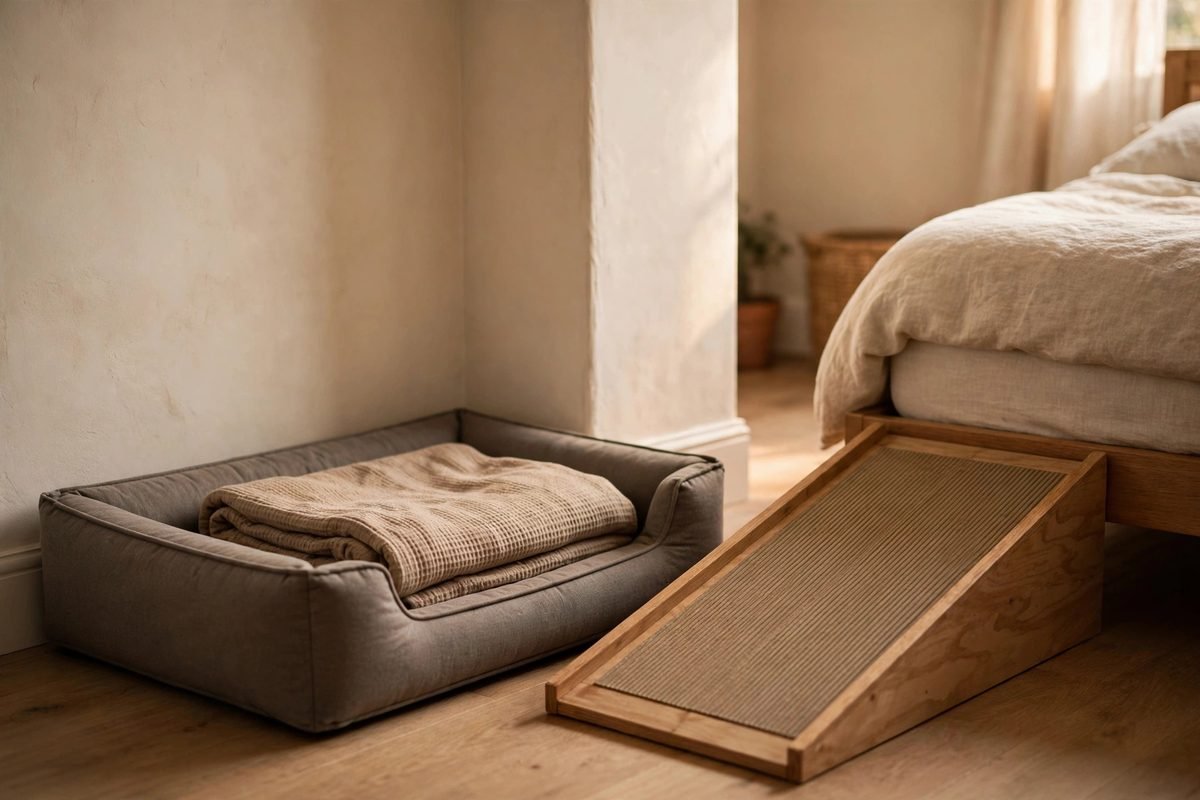
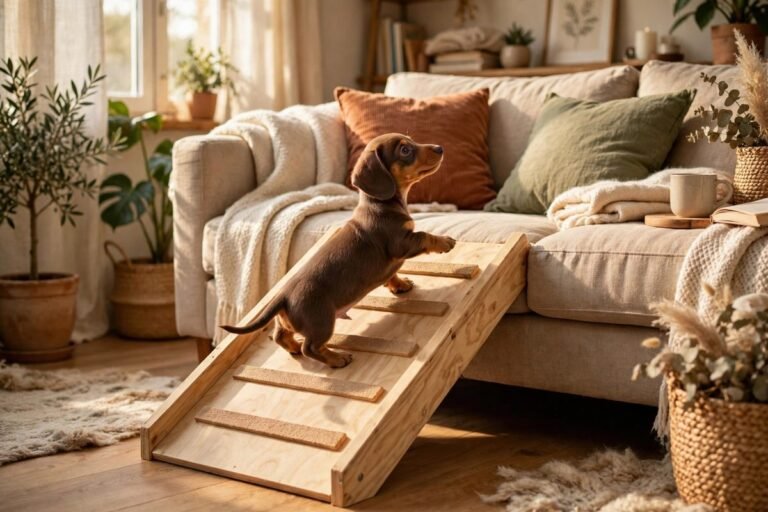
Place the bed where the dog already likes to rest, in a quiet corner away from doors, draughts, and busy walkways. Many Dachshunds sleep best near their owner, and a bed beside the owner’s bed, or a crate with the door open in the bedroom, works well. If the dog sleeps on the owner’s bed, use a ramp so it never jumps up or down, because jumping is the main risk to a Dachshund’s back at bedtime.
Choose a bed that is low, supportive, and easy to step into. A firm mattress with raised sides suits most Dachshunds, because they like to burrow and lean, and a bed that is too soft makes standing difficult for an older or stiff dog. Keep a washable cover and a spare blanket, and wash bedding weekly so it stays clean and free of smells. A familiar blanket, unwashed for a night or two during a change, can help a nervous dog settle in a new bed.
Temperature and light matter more than owners expect. A room that is cool, dark, and quiet helps sleep, while a hot, bright, or noisy room keeps a dog restless. In summer, keep the room ventilated and the bed away from radiators and sunny spots. In winter, keep the bed off cold floors and add a blanket, because a cold dog curls tight and sleeps lightly. A night light is helpful only if the dog is nervous in the dark; most dogs sleep best in darkness.
4. Night Waking, Crying, and Restlessness
Occasional night waking is normal, especially in puppies, seniors, and dogs that have had a busy or worrying day. A dog that wakes, goes to the toilet, and settles again is usually fine. A dog that wakes repeatedly, paces, whines, pants, or cannot settle is giving a signal, and the cause should be found rather than ignored.
Start with the simple causes. Check whether the dog needs the toilet, is thirsty, too hot or too cold, or unsettled by a noise outside. A hallway sound, a neighbour’s television, or fireworks can wake a light sleeper, and a calm response, without fuss or play, helps the dog settle again. Keep night responses boring: a quiet toilet break, a drink, and back to bed, with no games, treats, or conversation, so the dog learns that night is for sleeping.
If night waking becomes a pattern, look for a health cause. Pain, especially back pain, often shows at night, when the dog shifts position and cannot get comfortable. Urinary problems, stomach upset, anxiety, and cognitive change in seniors can all disturb sleep. The guide to everyday health checks for apartment owners helps owners notice small changes early, and a sleep diary, noting when the dog wakes and what happens next, is very useful at a vet visit. Do not use sedatives, calming products, or human sleep aids without veterinary advice.
5. Daytime Naps, Routine, and Keeping Sleep Steady
Daytime naps are part of a healthy sleep pattern, not laziness. A Dachshund that naps after a walk, after a meal, and in the afternoon is resting well. Protect those naps: keep the sleeping place available during the day, avoid waking the dog for cuddles or photos, and let children know that a sleeping dog should be left alone. A dog that is woken often during the day may be overtired and restless at night.
Keep the whole day steady. Meals, walks, play, and rest at similar times each day help the dog’s body clock, and a regular rhythm makes bedtime easier. Avoid big changes to the routine on weekends, because a dog that stays up late on Saturday may be restless on Sunday night. If the household routine must change, shift bedtime gradually, by fifteen minutes a night, rather than all at once.
When sleep is steady, protect it. Keep the bedroom calm, the bed clean, and the routine the same, and resist the urge to change beds, rooms, or routines without a reason. If sleep worsens after a change, such as a move, a new baby, or a new pet, give the dog time to adjust and keep the bedtime steps unchanged. A steady routine is the strongest sleep aid a dog has, and it costs nothing.

Sleep Routine Comparison Checklist
| Part of the day | Helpful habit | Watch for |
|---|---|---|
| Evening | Quiet wind-down, last toilet break | Late excitement, late large meal |
| Bedroom | Low bed, dark, cool, quiet | Draughts, heat, noise, jumping |
| Night waking | Boring toilet break, back to bed | Repeated waking, pacing, whining |
| Daytime | Protected naps, steady routine | Overtired, restless evenings |
| Health | Weekly sleep notes | Sudden change in sleep pattern |
Common Mistakes
- Exciting play or a long walk just before bed.
- Feeding a large meal late at night.
- Letting the dog jump on and off the bed.
- Changing the bed, room, or routine suddenly.
- Responding to night waking with play or treats.
- Waking the dog from daytime naps.
- Ignoring repeated night waking as a habit.
When to Call Your Vet
Contact a veterinarian if a Dachshund wakes repeatedly at night, cannot settle, cries or whines in pain, pants heavily at rest, has toileting accidents after being settled, or shows a sudden change in sleep pattern. Seek urgent care for sudden back pain, weakness, wobbliness, collapse, breathing difficulty, or severe distress at night. This article gives general information only and does not diagnose any condition. A veterinarian can examine the dog, check for pain, urinary or stomach problems, anxiety, or age-related change, and advise on treatment and routine. Do not delay veterinary help while trying routine changes for a dog that is clearly unwell, and always mention sleep changes alongside any back or mobility signs in this breed.
Pin This: Bedtime Routine Checklist
- Wind down quietly an hour before bed.
- Last toilet break, slow and calm.
- Last meal two to three hours before bed.
- Low, warm, supportive bed in a quiet corner.
- Use a ramp if the dog sleeps on your bed.
- Keep nights dark, cool, and boring.
- Track sleep and call the vet for repeated waking.
Frequently Asked Questions
How many hours a day should a Dachshund sleep?
Most adults sleep twelve to fourteen hours a day, including naps, while puppies may sleep up to eighteen hours and seniors often sleep more. The pattern matters as much as the total: relaxed, unbroken sleep is healthy sleep.
Should my Dachshund sleep in my bed or its own bed?
Either can work, as long as the dog can get on and off safely. Use a ramp for the owner’s bed, keep the dog’s own bed low and supportive, and keep the sleeping place the same every night.
Why does my Dachshund wake up at night?
Common reasons include needing the toilet, thirst, heat or cold, noise, anxiety, or pain. Occasional waking is normal, but repeated waking, pacing, or crying should be checked by a veterinarian.
Is it bad to wake a sleeping Dachshund?
Yes, it is best to let a sleeping dog rest. Waking a dog often during the day can leave it overtired and restless at night, and a startled dog may snap.
Can a bedtime routine really help a restless dog?
Yes, a predictable routine helps most dogs settle. The same steps, at the same time, in the same place, teach the dog that sleep is coming, and calm evenings usually mean calmer nights.
Conclusion
A Dachshund sleeps best with a steady day, a calm evening, a low and comfortable bed, and a dark, quiet room. That simple routine protects rest, supports the back, and gives both the dog and the household a better night.




2 Comments