

Dachshund Paw Care on Winter Salt and Grit at Home
Quick Answer
Winter salt and grit can dry, crack, and sting a Dachshund paws, and a dog that licks its paws after a winter walk may be tasting salt as well as soothing sore skin. The routine is simple: keep walks shorter on heavily salted pavements, rinse or wipe the paws with lukewarm water as soon as the dog comes home, dry them gently, check between the toes for salt crystals and grit, and apply a paw balm when the skin looks dry.
Table of Contents
- 1. Why Winter Salt and Grit Hurt Dachshund Paws
- 2. Before the Walk: A Short Preparation Routine
- 3. The After-Walk Rinse: Lukewarm Water, Gentle Hands
- 4. Checking Between the Toes, Nails, and Pads
- 5. Paw Balm, Boots, and the Weekly Winter Routine
- Winter Paw Checklist
- Common Mistakes
- When to Call Your Vet
- FAQs
- Conclusion
1. Why Winter Salt and Grit Hurt Dachshund Paws
Salt works by lowering the freezing point of water, and it draws moisture out of anything it touches, including paw skin. A paw that walks through salt loses moisture from the pads, and the pads become dry, rough, and prone to small cracks. Those cracks sting when the dog walks on salt again, and they can let in grit and dirt. Grit is different from salt: it is made of small sharp stones and sand, and it can cut the soft skin between the toes or lodge in the gaps and press into the skin with every step. Together, salt and grit are a harsh combination for a small dog.
Dachshunds feel this more than taller dogs, because their paws are close to the treated surface and their stride is short, so the paws stay in contact with salt and grit for longer on each walk. A dog that walks on a salted pavement, then on a gritted path, then back onto a salted pavement meets the irritant again and again. Cold itself adds to the problem: cold air dries the skin, cold ground can chill the paws, and a dog that is cold may walk stiffly, which changes how the paws strike the ground. A senior Dachshund or a dog with an existing paw problem is more vulnerable still, because the skin is already thinner or slower to heal.
The signs of salt and grit trouble are easy to miss at first. A dog may lift a paw, walk gingerly, stop often on a walk, or lick its paws more than usual at home. The pads may look dry, pale, or rough, and the skin between the toes may look red or pink. Small cracks may appear on the pads, and the nails may pick up grit that presses into the quick. Watching for these early signs, and acting on them with a rinse and a check, prevents the small irritation from becoming a painful crack or a limp. Disc degeneration in short-legged breeds can begin in the first year of life, so a Dachshund that changes its walk should always be watched for back pain as well as paw pain, because a changed gait can signal either problem. The Animal Medical Center explains intervertebral disc disease in dogs, and Cornell University publishes guidance on intervertebral disc disease.

2. Before the Walk: A Short Preparation Routine
Preparation takes two minutes and saves a great deal of trouble. Before leaving the apartment, look at the paws and check that the pads are intact, the nails are trimmed, and the fur between the toes is neat. Long fur between the toes traps salt, grit, and snow, and it can form small ice balls that press into the skin. Trimming the fur flush with the pads, or asking a groomer to do it, keeps the paws cleaner. The guide to nail and paw care at home explains trimming and checking in more detail, and it pairs well with the winter routine in this article.
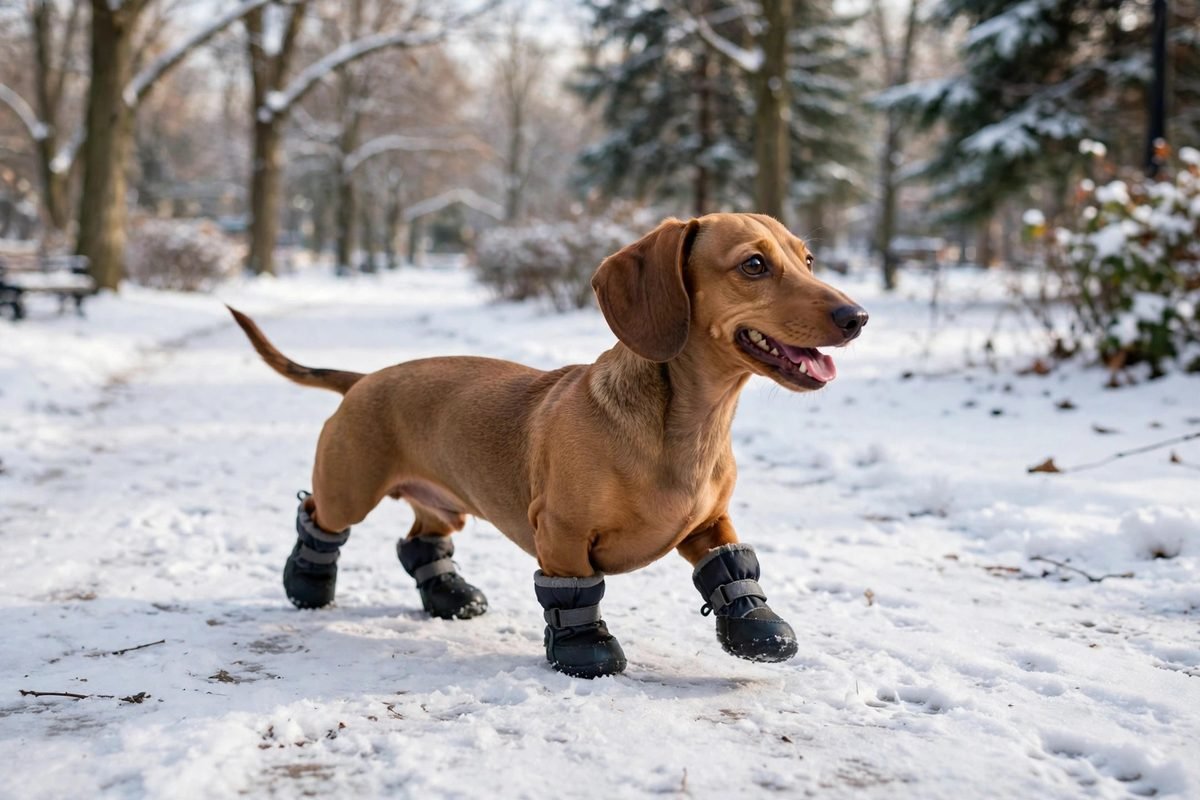
Boots are another option, and they suit some Dachshunds well. A well-fitting boot keeps salt and grit off the paw entirely, and it can help a dog with cracked pads or a healing injury. Introduce boots indoors first, for a few minutes at a time, with praise and a treat, so the dog learns to walk in them before facing a winter pavement. Check the fit carefully: a boot that is too tight can rub, and a boot that is too loose can fall off or twist. Not every Dachshund accepts boots, and a dog that refuses them can still be protected with a good rinse routine and a balm.
Route choice is the simplest preparation of all. Where possible, choose a path with less salt, such as a park path, a quiet side street, or a stretch of untreated pavement, and avoid freshly salted pavements and heavily gritted roads. Keep winter walks shorter when the ground is heavily treated, and use indoor play and gentle exercise at home to make up the difference. A short walk on a clean path is better than a long walk through salt, and a Dachshund that comes home with clean paws is a happier dog.
3. The After-Walk Rinse: Lukewarm Water, Gentle Hands
The after-walk rinse is the heart of winter paw care, and it should happen every time the dog comes in from a salted or gritted walk. Fill a shallow bowl or a basin with lukewarm water, never hot and never cold, and dip each paw in turn, gently moving the toes so the water reaches between them. A soft cloth or a paw washer can help, yet the hands are the best tool, because they can feel for grit, salt crystals, and sore spots while they clean. Rinse each paw for twenty to thirty seconds, and repeat with fresh water when the first bowl looks dirty.
After the rinse, dry each paw gently with a soft towel, pressing rather than rubbing, because rubbing can irritate cracked skin. Pay attention to the spaces between the toes, because damp skin in those folds can become sore. A quick check during drying is useful: look for redness, small cuts, grit that is still lodged, or a pad that looks cracked. The paw care routine after muddy and rainy walks uses a similar rinse-and-dry pattern, and the winter version simply adds attention to salt and grit. Keep the rinse station ready by the door, with a basin, a towel, and a small mat, so the routine becomes a habit rather than a chore.

4. Checking Between the Toes, Nails, and Pads
A good check looks at the whole paw. Start with the pads: they should feel smooth and firm, with no deep cracks, no flaps of skin, and no bleeding. Small surface cracks can be managed with a balm and rest, yet a deep crack, a cut, or a pad that bleeds needs a veterinarian. Look at the colour too: pads that are very pale, very red, or swollen deserve attention, and a pad that is hot to the touch may be inflamed. Compare the four paws, because a problem in one paw often stands out against the other three.
Next, check between the toes. Spread the toes gently and look for salt crystals, grit, small stones, and red or sore skin. Grit that is lodged can be lifted out carefully with clean fingers or tweezers, yet a stone that is pressed deep into the skin, or a cut that bleeds, should be left for a veterinarian. Look for hair loss, redness, or a smell between the toes, because those can signal irritation or infection. A dog that pulls its paw away, cries, or snaps when a toe is touched may be in pain, and that pain should be assessed rather than pushed through.
Check the nails as well. Winter grit can pack under the nails and press into the quick, and a nail that is too long can catch on ice and break. Trim nails regularly, or ask a groomer or a veterinarian to do it, and check after each walk for a cracked or broken nail. A broken nail can bleed a great deal and is painful, and it needs veterinary care when the bleeding does not stop or the dog cannot bear weight on the paw. Keep a clean cloth and a styptic product made for dogs in the home first-aid kit, and ask the veterinarian how to use it.
5. Paw Balm, Boots, and the Weekly Winter Routine
Paw balm is most useful as part of a weekly routine, not as a one-off fix. Apply a thin layer to clean, dry pads in the evening, when the dog is settling for the night, so the balm can soak in without being walked off. Look for a balm made for dogs, and ask a veterinarian when the pads are cracked or the dog has sensitive skin. A balm can soften dry pads and protect them from the next day salt, yet it cannot heal a deep crack or a cut on its own, and those need veterinary care.
The weekly routine also includes a longer paw check, a nail trim when needed, and a look at the fur between the toes. Set aside ten minutes once a week, in good light, to inspect all four paws carefully, and note any change in a small diary. A crack that is healing, a pad that looks drier, or a toe that is redder than last week are all worth noting, because a trend is easier to act on than a single observation. Keep the diary with the vet details, so the information is ready when a call is needed.
Winter Paw Checklist
| When | What to do | What to watch for |
|---|---|---|
| Before the walk | Check pads, trim fur between toes, apply balm | Cracks, redness, long fur trapping salt |
| On the walk | Choose a less salted route, keep it shorter | Lifting a paw, stopping, limping |
| After the walk | Rinse with lukewarm water, dry gently | Salt crystals, grit, cuts, redness |
| Between toes | Spread toes, remove grit, check skin | Redness, smell, hair loss, pain |
| Nails | Trim regularly, check for cracks | Broken nail, bleeding, grit under nail |
| Evening | Apply paw balm to clean dry pads | Dry rough pads, small surface cracks |
| Weekly | Long check in good light, note changes | A crack healing or worsening, swelling |
Common Mistakes
One common mistake is letting the dog lick salt off its paws instead of rinsing, which irritates the stomach and leaves the salt on the skin. Another is using hot water or harsh soap on cracked pads, which stings and dries the skin further. A third is ignoring a small crack until it becomes a deep cut or a limp.
When to Call Your Vet
Call a veterinarian when a paw is cut, bleeding, or swollen, when the dog limps or cannot bear weight, when the pads are cracked and raw, when the skin between the toes is red, smelly, or infected, when licking becomes constant, or when a broken nail bleeds and will not stop. Seek care the same day when the dog has swallowed a de-icing product, vomits after licking its paws, or shows a swollen belly or severe pain. A veterinarian can clean a wound, treat an infection, advise on balm and boots, and check whether a changed gait reflects a paw injury or a back problem. Only a veterinarian can diagnose the cause of a sore paw, and an early visit prevents a small winter injury from becoming a long recovery.
FAQs
Is winter salt dangerous when a Dachshund licks its paws?
Yes, licking salt off the paws can irritate the stomach and cause thirst, vomiting, or diarrhoea, and some de-icing products contain chemicals that are more harmful when swallowed. Rinse the paws with lukewarm water as soon as the dog comes home, before it has a chance to lick them, and call a veterinarian when the dog vomits after licking salt or a de-icing product.
Should a Dachshund wear boots in winter?
Boots can protect the paws from salt and grit, and they suit some Dachshunds well, especially dogs with cracked pads or a healing injury. Introduce boots indoors first, check the fit carefully, and inspect the paws after each walk for rubbing. A dog that refuses boots can still be protected with a good rinse routine and a paw balm.
What water temperature is best for rinsing winter paws?
Lukewarm water is best, never hot and never cold. Hot water can sting cracked skin, and cold water can chill a cold paw. Dip each paw for twenty to thirty seconds, dry gently with a soft towel, and check between the toes for salt and grit while drying.
Can paw balm heal cracked pads?
Paw balm can soften dry pads and protect them from further salt, yet it cannot heal a deep crack or a cut on its own. Small surface cracks may improve with balm and rest, while a deep crack, a cut, or a bleeding pad needs a veterinarian. Apply balm to clean, dry pads, and ask a veterinarian when the pads are cracked or the dog has sensitive skin.
How often should winter paws be checked?
Check the paws after every walk on salted or gritted ground, with a rinse and a quick look between the toes, and set aside ten minutes once a week for a longer check in good light. Note any change in a small diary, because a crack that is worsening or a toe that is getting redder is easier to act on when the trend is clear.
Conclusion
Winter salt and grit are a real challenge for a small, low-built dog, yet a simple routine keeps the paws comfortable. Prepare before the walk, choose a cleaner route, rinse with lukewarm water as soon as the dog comes home, dry gently, check between the toes and the pads, and use balm or boots when they help.
This article is for general information only and is not a diagnosis. When a Dachshund has a sore, bleeding, or swollen paw, or the owner is unsure, a veterinarian should be consulted for advice about that individual dog.
Pin This: Save this guide to your Dachshund care board on Pinterest so the after-walk rinse steps and the winter paw checklist are easy to find on a cold, salty day.





One Comment