Non-Slip Paw Grip for Dachshunds on Slippery Floors
Quick Answer
- Non-slip paw grip helps a Dachshund walk steadily on smooth apartment floors, but it works best together with rugs, nail care, and safe floor routines.
- Grip socks suit short, supervised indoor use, while paw wax gives light grip without covering the foot; neither replaces a safe floor layout.
- Check fit, paw health, and wear after every use, and stop using any grip product that causes limping, chewing, swelling, or skin irritation.
- Place non-slip runners on busy routes, keep floors dry, and slow down play on smooth surfaces to reduce slips and sudden twists.
Contents
- 1. Why Slippery Floors Are Hard for a Dachshund
- 2. Grip Socks: Fit, Use, and Limits
- 3. Paw Wax and Other Paw Grip Options
- 4. Rugs, Runners, and Apartment Floor Layout
- 5. Nail Care, Paw Checks, and Daily Grip Routine
- Paw Grip Comparison Checklist
- Common Mistakes
- When to Call Your Vet
- Pin This: Paw Grip Checklist
- Frequently Asked Questions
- Conclusion
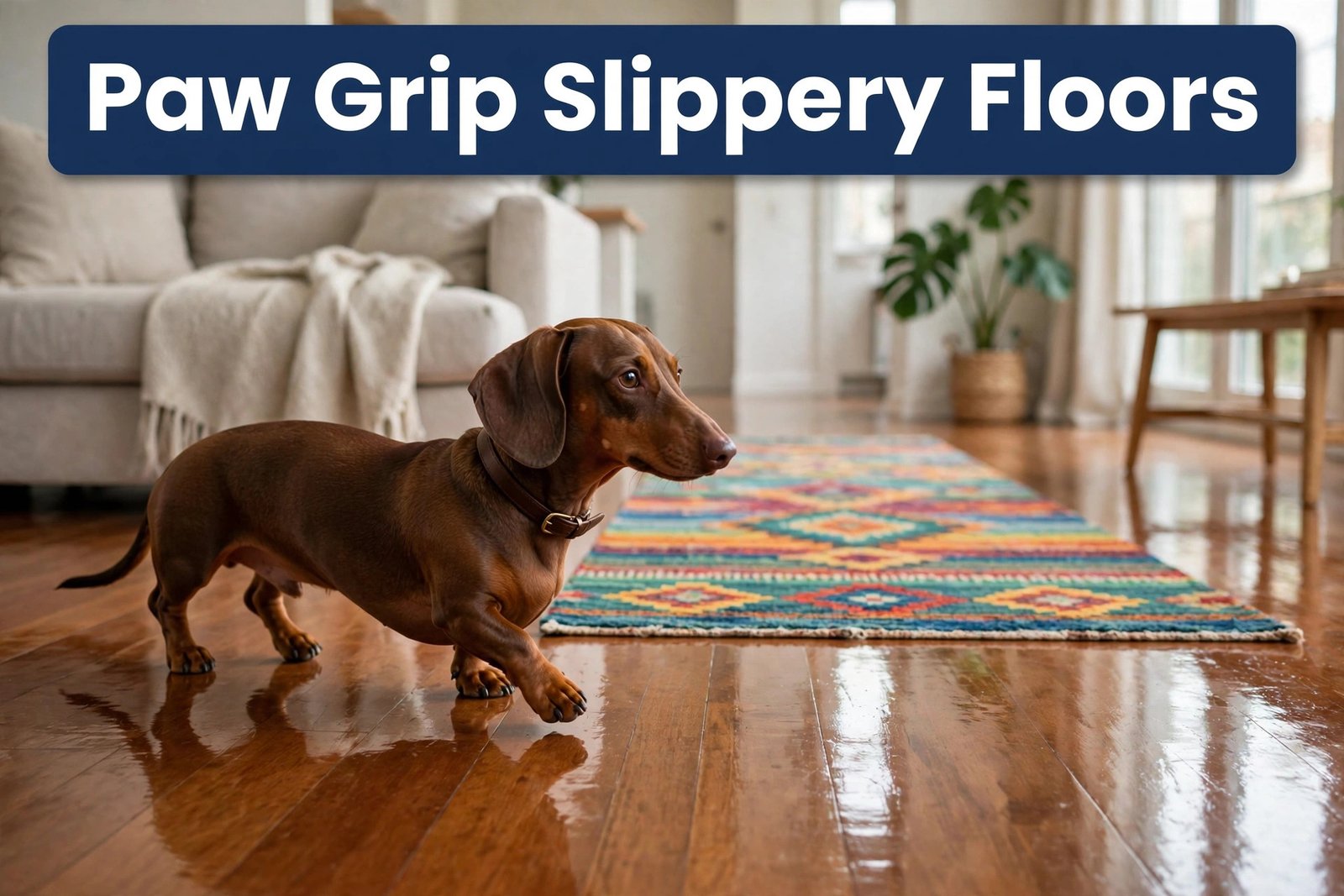
Many apartments have smooth floors: polished wood, laminate, tile, or vinyl. Those floors look clean and are easy to mop, but they give a Dachshund little traction. A dog that starts, stops, turns, or plays on a smooth floor can slide, splay its legs, or twist suddenly. For a long-backed dog, that sudden movement is the problem, not the floor itself. A slip that looks minor can still cause a fright, a pulled muscle, or a fall against furniture.
This guide explains non-slip paw grip options for Dachshunds, how to use them safely, and how to combine them with floor layout and paw care. It covers grip socks, paw wax, rugs, and daily checks, with clear limits for each option. The goal is steadier movement at home, not a product that promises to solve every slip on its own.
1. Why Slippery Floors Are Hard for a Dachshund
Dachshunds have short legs and a long body, so a slip affects balance differently from a taller dog. When back paws slide outward, the spine and hind legs absorb the correction. When front paws slide on a turn, the dog may twist at the waist to recover. Repeated slips during play, greeting visitors, or rushing to a door add up, even if no single slip causes an obvious injury.
Smooth floors are worst in specific places: hallways where dogs run, kitchen floors after mopping, entryways with wet paws, and turns at the bottom of stairs. Speed makes the risk higher. A dog that walks calmly across a smooth floor may manage well, while the same dog sprinting to a door may slide across the room. Managing speed and layout matters as much as any grip product.
General background on disc disease explains why owners pay attention to sudden twists and falls. The Animal Medical Center explains intervertebral disc disease in dogs, including signs that need veterinary attention. Cornell information on chondrodystrophy and intervertebral disc disease describes added disc risk in this breed group. Paw grip is not a medical treatment. It is a home-safety aid, used alongside calm routines, weight control, and veterinary advice.
Apartment layout is part of the solution. A home with a safe resting area, a ramp for furniture, and clear walking routes already reduces rushed movement. The guide to Dachshund apartment essentials explains how those pieces fit together, and paw grip works best inside that wider safety plan.

2. Grip Socks: Fit, Use, and Limits
Grip socks are fabric socks with a non-slip sole or dots on the bottom. They give the most visible grip of the paw options, because the sole contacts the floor directly. They suit short, supervised indoor sessions, such as a dog that slips on a kitchen floor during meal preparation or a dog recovering confidence after a slip. They are not meant for all-day wear without checks.
Fit is the main challenge. A sock that is too loose will twist or slide off, while a sock that is too tight can restrict circulation or cause discomfort. Measure each paw, because front and back paws often differ in size, and check the sizing guidance for the product. Put socks on indoors, watch the first steps, and check that the dog walks naturally rather than lifting paws high or freezing. A dog that refuses to walk in socks needs a slower introduction, not force.
Introduce socks gradually. Start with one paw for a few minutes, then two, then all four, with calm rewards and a familiar room. Keep early sessions short and supervised, and remove socks if the dog chews them, limps, or shows distress. Check paws after removal for redness, swelling, dampness, or rubbing marks. Wash socks regularly, because dirty soles lose grip and dirty fabric can irritate skin.
Grip socks have clear limits. They can become damp, lose grip when worn, and slip on very smooth or wet floors. They should not be used outdoors on rough ground, in rain, or for long unsupervised periods. For a dog that chews socks, a different option, such as paw wax or floor runners, may be safer. Always keep socks as one tool, not the only safety step.
3. Paw Wax and Other Paw Grip Options
Paw wax is a balm applied to the paw pads to add light grip and to protect pads from dry or rough surfaces. It does not cover the foot, so the dog still feels the floor and walks naturally. It suits dogs that dislike socks, dogs that need grip for a short indoor period, and owners who want a simple routine before play or a walk across a smooth lobby floor.
Apply a thin, even layer to clean, dry pads, and allow a short time for the wax to settle before the dog walks on a smooth floor. Too much wax can feel sticky and attract dirt, while too little gives little benefit. Check the ingredient list for anything the dog may be sensitive to, and stop use if redness, licking, or irritation appears. Keep wax away from open cuts or sore pads, and ask a veterinarian about paw care if pads are cracked or damaged.
Other grip options include adhesive paw pads and non-slip booties. Adhesive pads stick to the paw pad and give grip without covering the whole foot, but they may peel off, collect dirt, or irritate sensitive skin. Booties give strong grip and protection, but they change how the dog walks and need careful fitting. For indoor apartment use, booties are often more than needed, and they should be introduced gradually if chosen.
Choose the option that fits the dog, not the option with the strongest claim. A dog that tolerates wax calmly will benefit more from regular wax use than from socks that are chewed off every time. A dog that slips badly on a specific route may benefit more from a rug runner than from any paw product. Test one option at a time, observe walking, and keep the option that gives steady movement without stress.

4. Rugs, Runners, and Apartment Floor Layout
Floor layout often gives more reliable grip than a paw product alone. Non-slip runners on busy routes, rugs in play areas, and mats at doorways create traction zones where the dog moves most. Place runners along hallways, from the bed to the water bowl, and across turns where slips happen. Use a non-slip backing or rug tape so the rug itself does not slide.
Choose rugs that are low, firm, and easy to clean. A thick, plush rug can catch short legs or create a trip edge, while a thin, firm rug gives grip without changing step height much. Avoid rugs with loose tassels or curled edges in walking paths, and check that rug edges lie flat after washing. In a small apartment, two or three well-placed runners often work better than wall-to-wall carpet changes.
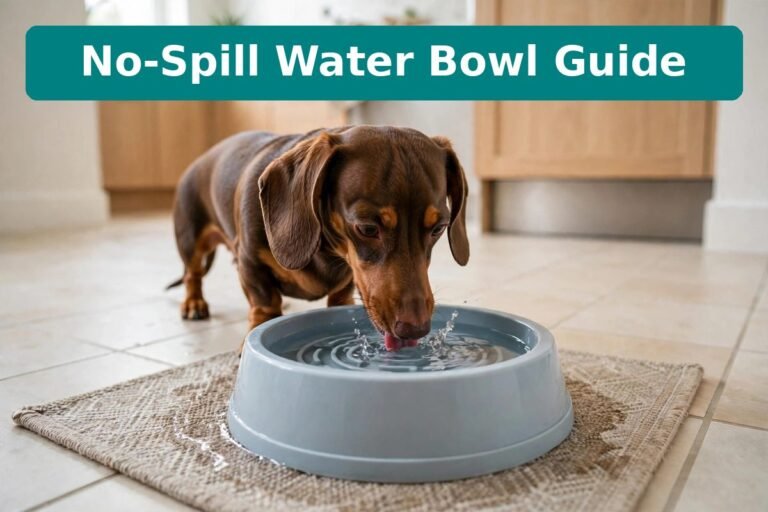
Keep floors dry and clear. Wipe up spills promptly, dry paws after rain, and place a mat at the entry for wet days. Remove clutter from walking routes, and keep food and water bowls on a non-slip mat rather than on bare tile. During play, use a rug area and keep games low and calm, without chasing across smooth floors or jumping onto furniture.
Layout also helps at furniture. A ramp beside a sofa or bed reduces jumping, and a rug at the ramp base gives the dog grip on landing and takeoff. The guide to choosing the right ramp for a Dachshund covers slope and grip checks that pair well with a non-slip floor plan. Together, a ramp, a runner, and a paw grip option create a safer path, not a single fix.
5. Nail Care, Paw Checks, and Daily Grip Routine
Nail length affects grip. Long nails can prevent pads from contacting the floor fully, which reduces traction and changes gait. Keep nails trimmed to a length where they do not click loudly on hard floors and do not splay the toes. If nail trimming is stressful, ask a veterinarian or a groomer for guidance, and introduce trimming gradually with short, calm sessions.
Check paws weekly, and more often in winter or after muddy trips. Look for cracks, redness, swelling, foreign material between toes, and worn or damaged pads. Clean paws with a damp cloth after outdoor trips, dry them fully, and check for grit that can reduce grip indoors. Trim excess hair between pads only if it clearly interferes with walking, and do so carefully to avoid nicking skin.
Build a simple daily routine. In the morning, check that runners lie flat, floors are dry, and any grip product is clean and ready. Before play, choose a rug area and keep games calm. After walks, dry paws and check for damage. In the evening, remove grip socks if used, check paws, and store socks clean and dry. A short routine prevents small problems, such as a curled rug edge or a worn sock sole, from causing a slip.
Watch how the dog moves over time. A dog that suddenly slips more, limps, hesitates on smooth floors, or changes gait may need a veterinary check, not only a new grip product. Note when slips happen, where they happen, and whether they follow a change in floor, product, or activity. That note helps a veterinarian understand the pattern during a visit.

Paw Grip Comparison Checklist
| Option | Best for | Limit to watch |
|---|---|---|
| Grip socks | Short, supervised indoor use | Fit, chewing, dampness, wear |
| Paw wax | Light grip, dogs that dislike socks | Thin benefit, skin sensitivity |
| Adhesive paw pads | Short sessions without full cover | Peeling, dirt, skin irritation |
| Booties | Strong grip and protection | Fit, gait change, gradual introduction |
| Rugs and runners | Busy routes, lasting traction | Rug sliding, curled edges |
| Nail and paw care | Everyday grip and comfort | Needs regular, careful routine |
Common Mistakes
- Relying on one grip product while leaving busy routes bare and slippery.
- Using grip socks all day without checking paws, fit, or wear.
- Applying too much paw wax, which attracts dirt and feels sticky.
- Ignoring long nails, which reduce pad contact with the floor.
- Placing rugs without a non-slip backing, so the rug itself slides.
- Allowing fast chasing games across smooth floors.
When to Call Your Vet
Contact a veterinarian promptly if the dog shows pain, limping, swelling, redness or sores on paws, reluctance to walk, a hunched back, wobbliness, weakness in the legs, or any sudden change in movement after a slip or fall. This article gives general information only and does not diagnose any condition. A veterinarian can examine paws, nails, and movement, and advise on care. Stop using a grip product that causes irritation or distress until veterinary advice has been received.
Pin This: Paw Grip Checklist
- Place non-slip runners on busy routes and at turns.
- Keep floors dry and paws dry after rain.
- Choose grip socks or paw wax based on tolerance, not claims.
- Check fit, paws, and wear after every use.
- Keep nails trimmed so pads contact the floor.
- Play on rugs, calmly, not chasing across smooth floors.
- Note slip patterns and ask a vet about sudden changes.
Frequently Asked Questions
Do grip socks work for Dachshunds?
Grip socks can help for short, supervised indoor use when fit is correct. They work best with rugs, dry floors, and regular paw checks, not as a sole solution.
Is paw wax safe for daily use?
Paw wax suits many dogs for light, regular use, but check ingredients and stop if redness, licking, or irritation appears. Keep wax away from cuts or sore pads.
Can rugs replace paw grip products?
Often, yes for busy routes. Well-placed, non-slip runners give lasting traction without fitting or skin issues, and they pair well with paw care.
How often should paws be checked?
Check paws weekly, and after muddy or wet trips. Look for cracks, redness, swelling, and material between toes, and dry paws fully after cleaning.
What if the dog chews grip socks?
Stop use and try a different approach, such as paw wax or floor runners. A chewed sock is a choking and ingestion risk and should not be left on unsupervised.
Conclusion
Non-slip paw grip for a Dachshund works best as a combined routine: a fitting grip option, non-slip runners on busy routes, dry floors, trimmed nails, and calm play. Start with the floor layout, add a grip product the dog tolerates, and check paws and products regularly. That steady routine reduces slips and sudden twists in apartment life.