
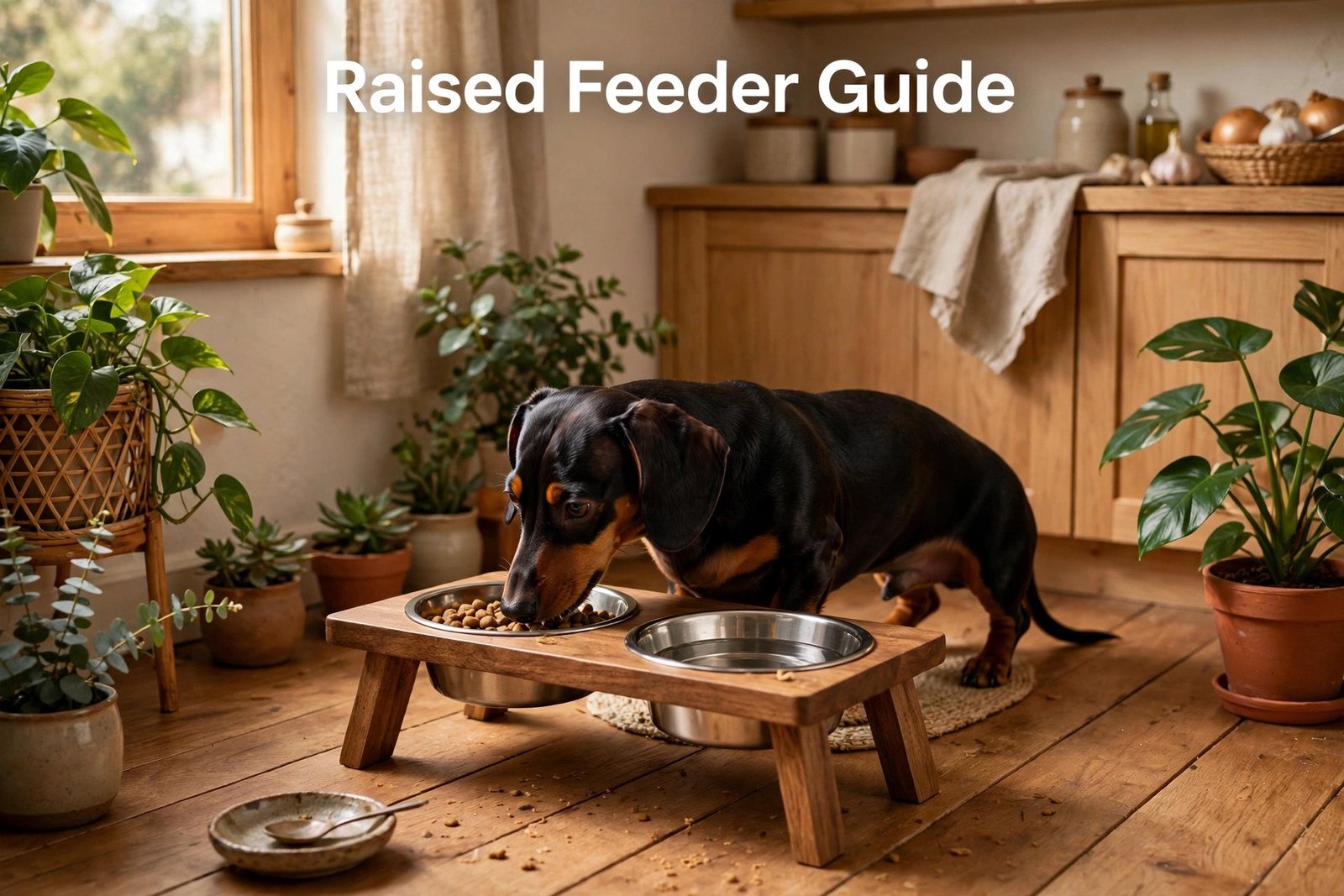
Dachshund Raised Feeder Guide: Bowl Stand Height Made Simple
Quick Answer
- A raised feeder lifts the bowl off the floor so a Dachshund eats with a more level neck and back, instead of reaching down to a bowl on the ground.
- The right height is usually close to the dog’s chest or lower shoulder height, measured while the dog stands normally, not while it stretches or sits.
- Choose a stable stand with a bowl that fits the measured portion, stays put on the floor, and is easy to remove, wash, and dry after every meal.
- A raised feeder supports comfortable eating, but it does not replace measured portions, a feeding schedule, or veterinary guidance on weight and back health.
Contents
- 1. Why Bowl Height Matters for a Dachshund
- 2. How to Measure the Right Feeder Height
- 3. Bowl Size, Shape, and Material Choices
- 4. Stability, Placement, and Apartment Feeding Corners
- 5. Cleaning, Safety Checks, and a Calm Meal Routine
- Raised Feeder Comparison Checklist
- Common Mistakes
- When to Call Your Vet
- Pin This: Raised Feeder Checklist
- Frequently Asked Questions
- Conclusion
Mealtimes happen twice a day, every day, in almost every apartment home. That repetition is exactly why bowl height deserves attention. A bowl placed on the floor asks a long-backed, short-legged dog to lower its head a long way for every bite. A bowl raised to a comfortable height lets the same dog eat with a straighter neck, a steadier stance, and less reaching. The change looks small, but over hundreds of meals it changes how comfortable feeding feels.
This guide explains how to choose a raised feeder for a Dachshund in an apartment. It covers measuring, bowl size, materials, stability, placement, and cleaning, with clear limits on what a feeder can and cannot do. A raised feeder is a comfort and handling aid, not a medical device, and it does not treat back disease or replace veterinary advice.
1. Why Bowl Height Matters for a Dachshund
Dachshunds have a long spine and short legs, so the distance from mouth to floor is larger, relative to body length, than in many other breeds. Eating from the floor means lowering the head and neck for the whole meal, then lifting the head again between bites. Some dogs cope with this without obvious trouble. Others eat more slowly, shift their feet, lie down to eat, or leave food in the bowl. Those behaviors do not prove a bowl is the cause, but they are worth noticing, because a small change in height sometimes makes meals calmer.
A raised feeder changes the geometry of eating. With the bowl near chest height, the dog can stand squarely, keep its feet planted, and reach food without stretching downward. This matters most for older dogs, dogs that tire easily, and dogs that already move carefully. It also helps the person feeding the dog, because a stable stand is easier to fill, move, and clean than a bowl that slides across a kitchen floor.
Back health is part of the background here. The Animal Medical Center explains intervertebral disc disease in dogs, including signs that need veterinary attention. Cornell information on chondrodystrophy and intervertebral disc disease describes added disc risk in this breed group. A raised feeder does not prevent disc disease. It is one practical step in a wider routine that also includes weight control, sensible exercise, ramps instead of jumps, and veterinary guidance.
Feeding comfort also connects to weight control. A dog that eats calmly is easier to portion accurately, because food is not scattered, guarded, or abandoned halfway through a meal. The guide to slow feeder bowls for Dachshunds explains how bowl design and measured portions work together, and a raised stand can be combined with a slow feeder bowl when the sizes match.
2. How to Measure the Right Feeder Height
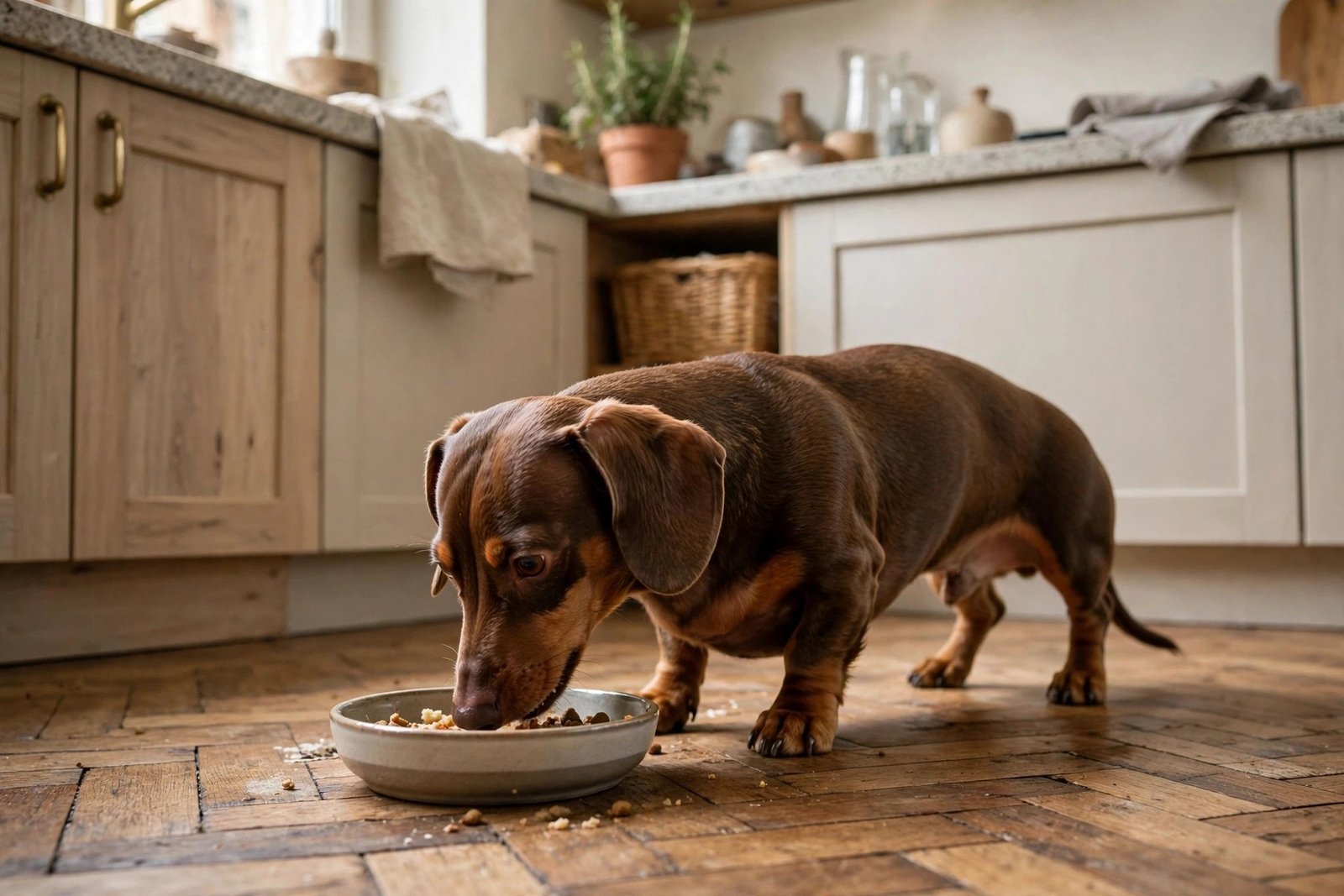
Measure before buying, and measure the dog standing normally on a flat floor. Ask the dog to stand squarely, with weight even on all four feet, and measure from the floor to the lower chest, just behind the front legs. That measurement is a useful starting point for bowl height. The top of the food, not the top of the stand, should sit close to that level, so subtract the depth of the bowl when comparing stands.
Do not measure while the dog sits, stretches upward for a treat, or stands on a rug, because each of those changes the result. Measure twice, on two different days if possible, and write both numbers down. Dogs vary in height even within the miniature range, and a stand that suits one Dachshund may be too high or too low for another. A difference of a few centimeters matters less than a stand that forces the dog to stretch up or reach far down.
Adjustable stands solve much of this problem. A stand with two or three height settings lets the owner start at the measured height, watch how the dog eats for a week, and adjust up or down by one setting. Fixed stands work well too, provided the measured height was taken carefully and the bowl depth is known. If a stand is only available in one height, check that height against the measurement before buying, rather than hoping it will suit.
Watch the dog eat after any change. A comfortable height usually looks relaxed: feet planted, neck level, steady chewing, and the dog finishing without repeatedly stepping back or lying down. If the dog stretches upward, paws at the stand, or avoids the bowl, the height is probably wrong, or the bowl shape does not suit the dog. Adjust one thing at a time, so the cause of any improvement is clear.
3. Bowl Size, Shape, and Material Choices
Bowl size should match the measured portion, not the dog’s appetite. A bowl far too large for a small portion spreads food thinly and makes the last bites hard to reach. A bowl too small for the portion forces food to pile up and spill. Check the bowl capacity against one meal’s portion, and remember that a raised feeder holds one meal at a time, not a full day of food.
Shape matters for a Dachshund muzzle. A wide, shallow bowl usually gives easier access than a deep, narrow bowl, because the dog can reach food across the whole surface without pushing its face deep into the bowl. Dogs with longer ears may also do better with a narrower opening that keeps ears out of wet food, but the opening must still allow the muzzle to reach every part of the bowl. Test with a small amount of food first, and watch whether the dog can finish without straining.
Material choices affect cleaning, durability, and stability. Stainless steel is durable, easy to clean, and resists odors, which makes it a practical everyday choice. Ceramic is heavy and stable, which helps on smooth floors, but it can chip if dropped, and a chipped bowl should be replaced. Food-safe plastic is light and common in adjustable stands, but it can scratch over time, and scratches trap bacteria and odors. Check any bowl regularly, and replace it when it cracks, chips, or holds a smell after washing.
Some stands hold one bowl, and some hold two, for food and water side by side. A two-bowl stand saves space in a small kitchen, but a single-bowl stand gives more freedom to place water separately, on a non-slip mat in a cooler spot.

4. Stability, Placement, and Apartment Feeding Corners
Stability is essential. A raised feeder that tips, slides, or rocks will frighten the dog and scatter food, and a dog that has been startled at mealtimes may eat nervously afterward. Choose a stand with a wide base, non-slip feet, or a heavy frame, and test it on the actual kitchen floor, not only on a shop counter. Push it gently from the side, as a dog might bump it while eating, and check that it stays put.
Placement matters as much as the stand itself. Choose a quiet corner, away from high traffic, doorways, and other pets, where the dog can eat without interruption. Avoid placing the feeder next to a washing machine, a busy hallway, or a door that opens inward onto the feeding spot. A calm corner helps the dog eat steadily, and it keeps the feeding routine predictable, which matters for dogs that are easily startled.
In a small apartment, the feeding corner should also be easy to clean. A non-slip mat under the stand catches spills, protects the floor, and adds grip. The mat should lie flat, without curled edges that trip short legs, and it should be washed regularly. Keep the feeding area free of clutter, such as shoes, bags, or cleaning products, so the dog has a clear, safe approach to the bowl.
Think about the wider apartment setup as well. A ramp beside a sofa or bed, a safe resting area after meals, and a clear path from the feeding corner to a resting spot all support a calm daily routine. The guide to Dachshund apartment essentials explains how ramps, harnesses, and beds fit together in a small home, and a raised feeder belongs in that same practical setup.
>5. Cleaning, Safety Checks, and a Calm Meal Routine
Clean the bowl after every meal. Wash it with warm water and a suitable detergent, rinse fully, and dry before the next use. Food residue, especially wet food, quickly develops odor and bacteria, and a dirty bowl can put a dog off eating. Clean the stand too, at least weekly, including the rim where the bowl sits, because spilled food collects there and attracts insects in warm weather.
Check the stand and bowl regularly for damage. Look for cracks, chips, loose fittings, worn non-slip feet, and height adjustments that slip under weight. A stand that slowly sinks during a meal changes the bowl height without warning, and a bowl with a sharp chip can cut a tongue or lip. Replace damaged parts promptly, and retire a stand that no longer holds its height firmly.
Build a calm meal routine around the feeder. Feed at consistent times, in the same place, with the same bowl, and allow the dog to eat without interruption. Avoid picking up the bowl mid-meal, hovering over the dog, or adding food during the meal, because those actions can increase guarding behavior. After the meal, allow a calm rest period before play or a walk, and remove the bowl so it can be washed.
Watch for signs that the routine needs adjustment. If the dog suddenly eats much more slowly, leaves food, coughs during meals, or shows discomfort while eating, note when the change started and what else changed, such as a new bowl, a new food, or a new stand height. That note helps a veterinarian understand the pattern. Do not keep changing bowls and heights rapidly; change one thing, observe for several days, and then decide.

Raised Feeder Comparison Checklist
| Check | What to look for | Red flag |
|---|---|---|
| Height | Close to lower chest height, standing normally | Dog stretches up or reaches far down |
| Adjustability | Two or three firm height settings | Height slips under weight |
| Bowl size | Fits one measured meal portion | Food piles up or spreads too thin |
| Material | Easy to clean, no chips or cracks | Scratched plastic, chipped ceramic |
| Stability | Wide base, non-slip feet, no rocking | Tips or slides when bumped |
| Cleaning | Bowl removes easily, stand wipes clean | Food traps in joints or rim |
Common Mistakes
- Choosing a stand by appearance without measuring the dog’s standing chest height.
- Setting the bowl so high that the dog must stretch upward to eat.
- Using a bowl far too large or too small for one measured portion.
- Placing the feeder in a busy hallway where the dog is startled during meals.
- Skipping daily bowl washing, so residue builds up and puts the dog off food.
- Keeping a stand whose height adjustment slips, changing bowl height mid-meal.
When to Call Your Vet
Contact a veterinarian promptly if the dog shows pain while eating, difficulty swallowing, coughing or choking during meals, sudden weight loss or gain, food refusal for more than a day, a hunched back, wobbliness, weakness in the legs, or any sudden change in appetite or movement. This article gives general information only and does not diagnose any condition. A veterinarian can examine the dog, discuss feeding height and bowl choice, and advise on portions and weight checks. Do not start a restricted feeding plan for a puppy, a senior dog, or a dog with a health condition without veterinary guidance.
Pin This: Raised Feeder Checklist
- Measure floor to lower chest while the dog stands normally.
- Start at that height, then adjust by one setting if needed.
- Match bowl size to one measured meal portion.
- Test stability on the real kitchen floor.
- Feed in a quiet corner at consistent times.
- Wash the bowl after every meal and check the stand weekly.
- Note any change in eating speed or comfort for your vet.
Frequently Asked Questions
What height should a Dachshund raised feeder be?
Start close to the dog’s lower chest height, measured while standing normally on a flat floor. The top of the food should sit near that level, so allow for bowl depth when comparing stands.
Is an adjustable stand better than a fixed stand?
An adjustable stand is more forgiving, because height can be fine-tuned after watching the dog eat for a week. A fixed stand works well when the measurement was taken carefully and the bowl depth is known.
Can a raised feeder be used with a slow feeder bowl?
Yes, when the slow feeder bowl fits the stand securely and sits at the right height. Check that the bowl does not rock in the stand and that the dog can reach all sections of the bowl.
Should water also be raised?
Water can be raised or kept on the floor, depending on the home. A separate water bowl on a non-slip mat in a cool spot suits many apartments, while a two-bowl stand saves space.
What if the dog avoids the new feeder?
Check height first, then bowl shape and placement. Return to the old bowl for a few days, introduce the new stand gradually with a small amount of food, and keep mealtimes calm and consistent.
Conclusion
A raised feeder for a Dachshund is a simple, practical change: measure the dog standing normally, choose a stable stand at that height, match the bowl to one measured portion, and keep the bowl clean. That routine makes every meal a little more comfortable, and comfortable meals support the wider habits that matter most, from portion control to calm daily routines.





2 Comments