5 Mistakes That Hurt a Dachshund’s Back (And What to Do Instead)
Apartment Dachshunds have long backs that need extra care. Small daily habits — how they get on and off furniture, how they are lifted, and how much weight they carry — can make a big difference for their comfort over time.
1. Letting Them Jump On/Off Sofa and Bed — Use a Ramp Instead
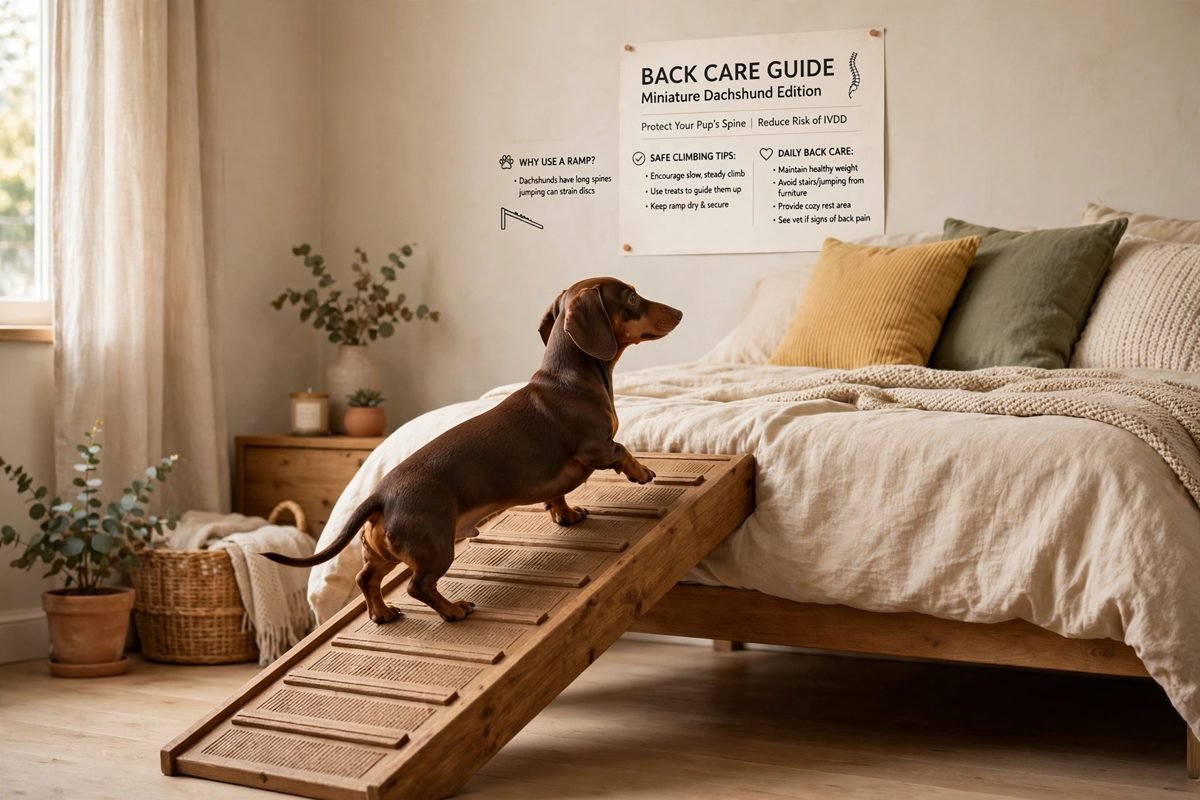
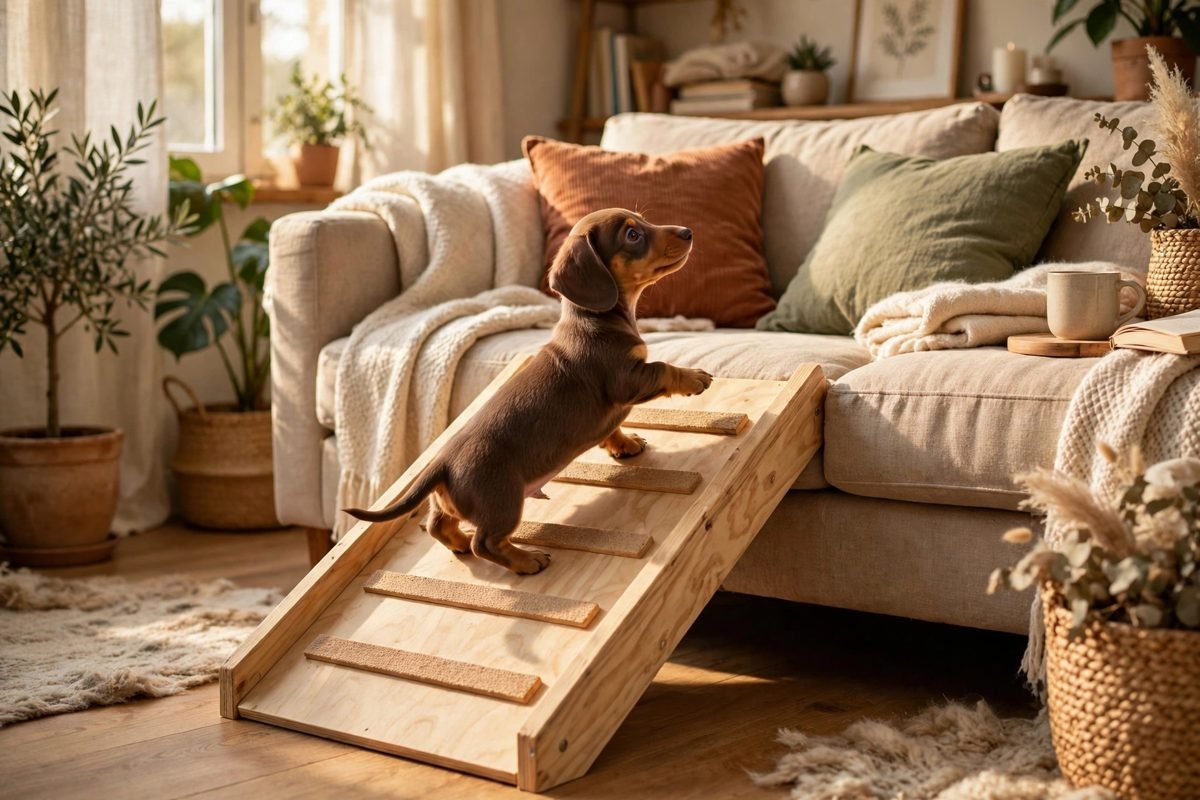
Jumping on and off a sofa or bed asks a long back to take a sudden jolt, again and again. In a small apartment, a sturdy ramp is a simple everyday swap: place it flat against the furniture, guide your Dachshund up and down at a slow, calm pace, and keep the ramp in the same spot so it becomes part of the routine.
2. Picking Them Up by the Front Legs or Armpits — Support Chest and Back Legs Together
Lifting a Dachshund by the front legs or armpits leaves the back and hindquarters hanging unsupported. Instead, support the chest with one hand and the back legs and hindquarters with the other, and keep the back level as you lift. Hold your dog close to your body, and set them down gently the same way.
3. Using a Collar That Pulls on the Neck — A Harness Spreads Pressure
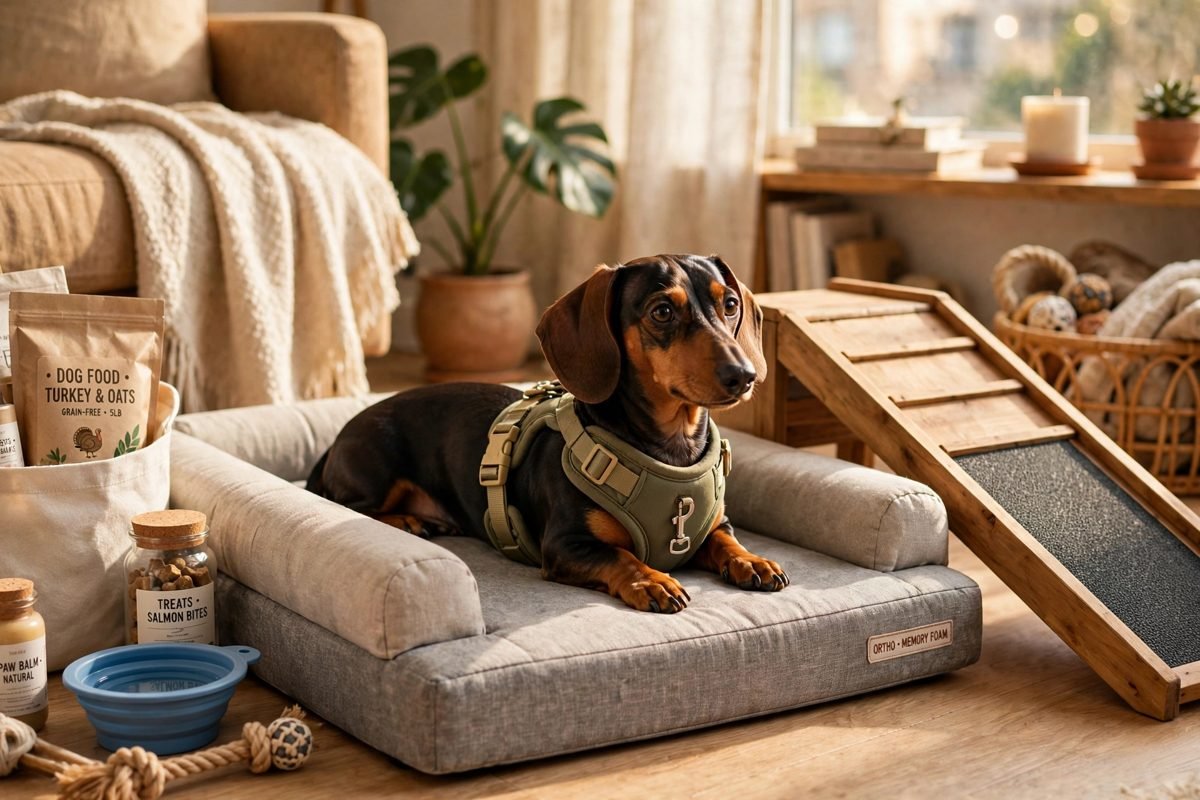
A collar can pull directly on the neck when a Dachshund lunges or pulls on the lead. A well-fitted harness spreads pressure across the chest instead. Choose a harness that fits snugly without rubbing, clip the lead to the harness, and check the fit regularly, especially after a bath or a change in coat.
4. Letting Weight Creep Up — Extra Weight Means Extra Back Strain
Extra weight means extra back strain, and in an apartment it can creep up quietly through treats, table scraps, and less movement. Keep meals measured, count treats as part of the daily food, and build short, regular walks and play into the day. If you are unsure about the right amount of food, ask your vet for guidance for your dog.
5. Ignoring Early Signs — Stiffness, Yelping, Reluctance to Jump or Use Stairs
Early signs are easy to brush off: stiffness after rest, yelping when lifted or touched, or reluctance to jump or use stairs. Do not force jumping or stairs if you notice these changes. Note when the signs started and what your dog was doing, keep routines calm and low-impact, and get advice promptly rather than waiting to see if it passes.
If you see back pain, wobbliness, or sudden weakness, see a vet promptly — this post is not a diagnosis.