
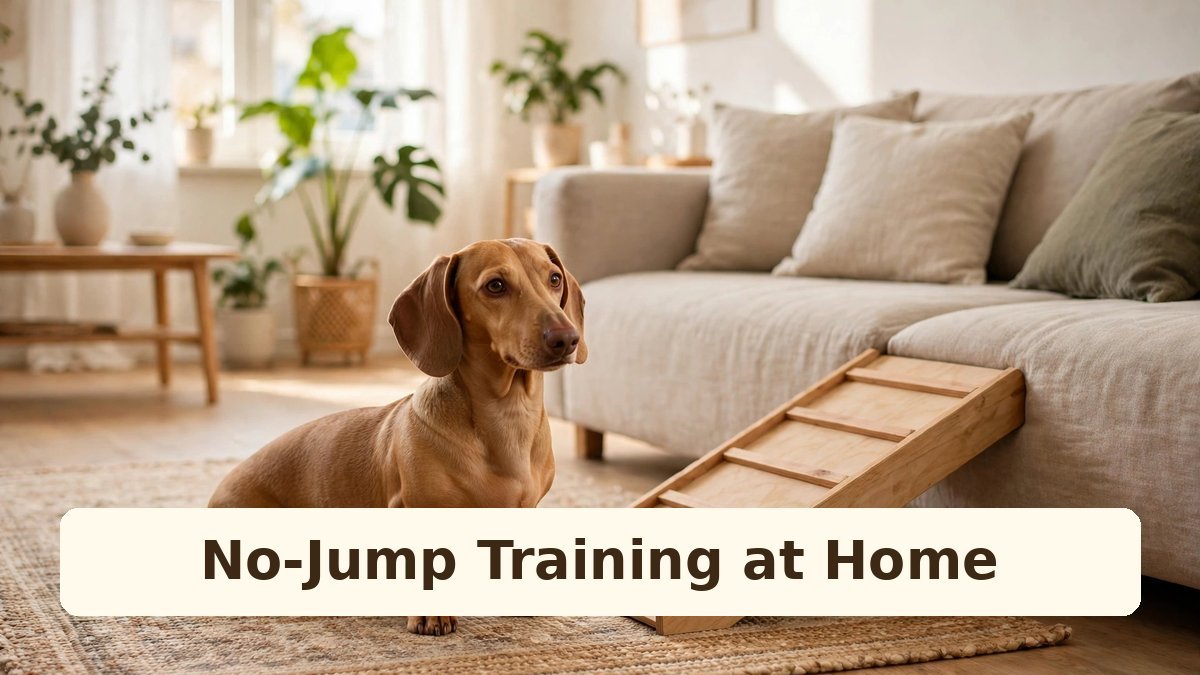
Dachshund No-Jump Training at Home: A Calm, Back-Safe Plan
Quick Answer
- Teach one clear alternative to jumping: wait, then use the ramp or be lifted with both hands supporting the chest and hindquarters.
- Make jumping hard and the safe route easy: block the usual launch spots, keep the ramp in place, and reward calm waiting every time.
- Keep sessions short, calm, and consistent, and ask a veterinarian if your Dachshund shows pain, stiffness, or a sudden change in movement.
Contents: 1. Why Jumping Matters for a Long Back | 2. Set Up the Room First | 3. Teach the Wait | 4. Teach the Ramp Route | 5. Handle Stairs, Beds, and Visitors | Step-by-Step Plan | Common Mistakes | When to Call Your Vet | FAQs | Pin This
Jumping looks harmless when a Dachshund springs onto a sofa, but repeated jumps add up. A long back and short legs mean the landing and the launch both ask a lot of the spine, and apartment life often repeats the same jumps many times a day: sofa, bed, car, and stairs. No-jump training does not mean a dull life for your dog. It means replacing one risky habit with a clear, rewarded routine that your dog can repeat without thinking. The goal is simple: your Dachshund pauses, uses the safe route, and gets praise for it.
Training works best when everyone in the home uses the same rule. If one person lifts the dog while another lets it jump, the dog learns that jumping sometimes works, and that is enough to keep the habit alive. Agree on the rule before you start, put the ramp where it will stay, and keep training sessions to a few minutes. Calm, repeated practice beats long, frustrated sessions every time.
1. Why Jumping Matters for a Long Back
Dachshunds have a body shape that makes back care a daily topic, not an occasional worry. Their long spine is supported by discs between the vertebrae, and disc problems are a known concern in this breed. The Animal Medical Center explains intervertebral disc disease in dogs, including how disc problems can affect movement and comfort. Cornell describes chondrodystrophy and intervertebral disc disease and how this breed-related condition can affect discs. These sources do not say that one jump causes disease, and this article does not claim that either. The point is more practical: reducing repeated impact is a sensible part of everyday back care, alongside weight control, safe lifting, and a suitable home setup.
Watch how your dog jumps at home for a day before you change anything. Note the places: the sofa arm, the bed, the balcony step, or the car boot. Most dogs have one or two favourite launch spots, and those are the places to fix first. Also note the triggers. Many dogs jump when someone comes home, when a toy is thrown onto the sofa, or when dinner is being prepared on a counter. Each trigger is a training opportunity, and each one needs the same answer: wait, then use the safe route.
2. Set Up the Room First
Training is much harder in a room that invites jumping. Start by making the safe route the obvious route. Keep a ramp in place at the sofa your dog uses most, rather than moving it in and out of a cupboard. A ramp that is always there becomes part of the furniture, and a dog that uses it ten times a day learns it faster than a dog that sees it once a week. If your dog also uses the bed, set up the same arrangement there, or close the bedroom door until the routine is settled. Read the guide to a ramp for a Dachshund sofa and bed setup for placement ideas that suit small rooms.
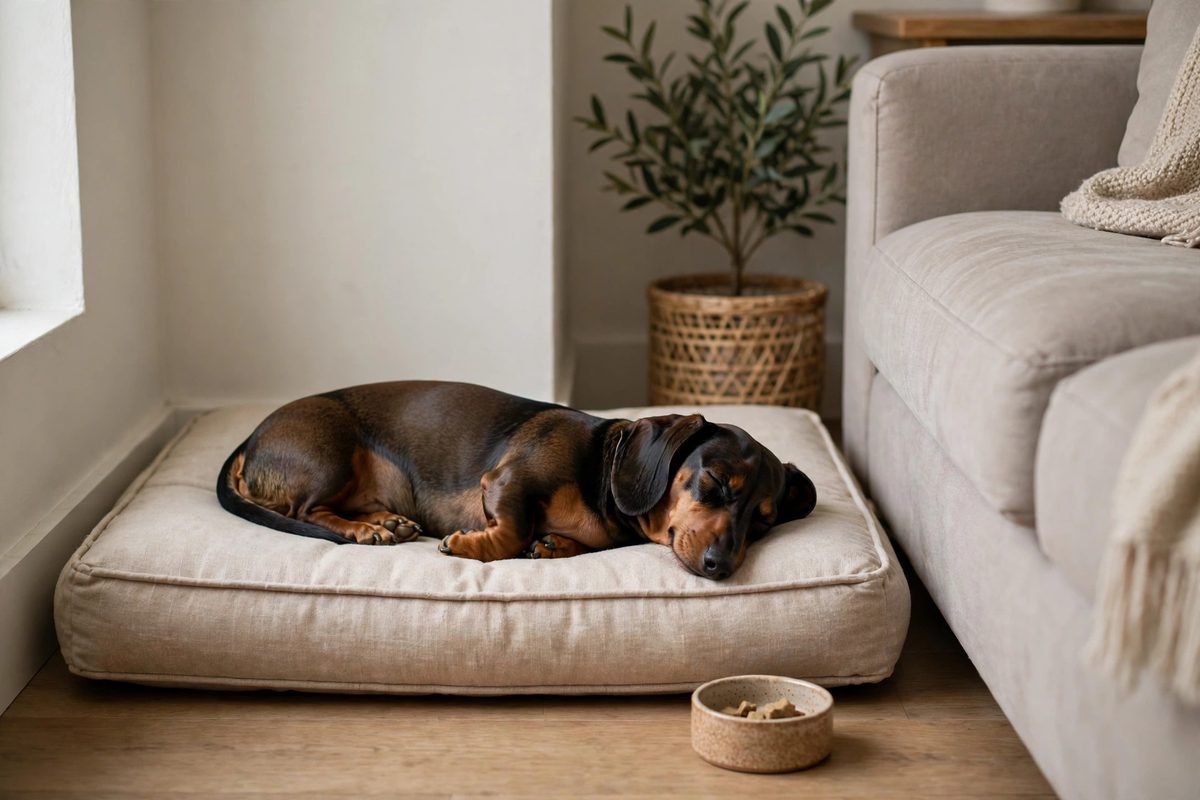
Next, reduce the launch pads. Move a footstool away from the sofa, push a chair back from the bed, and keep cushions off the floor near furniture. Dogs often jump in stages, using a low object as a step, so removing that step removes the jump. Put a comfortable floor bed beside the sofa as well. A dog that has a good place on the floor is less likely to insist on the sofa at all, and the floor bed gives you somewhere to reward calm settling. Keep the floor clear of clutter so the ramp route stays open and safe to walk.
3. Teach the Wait
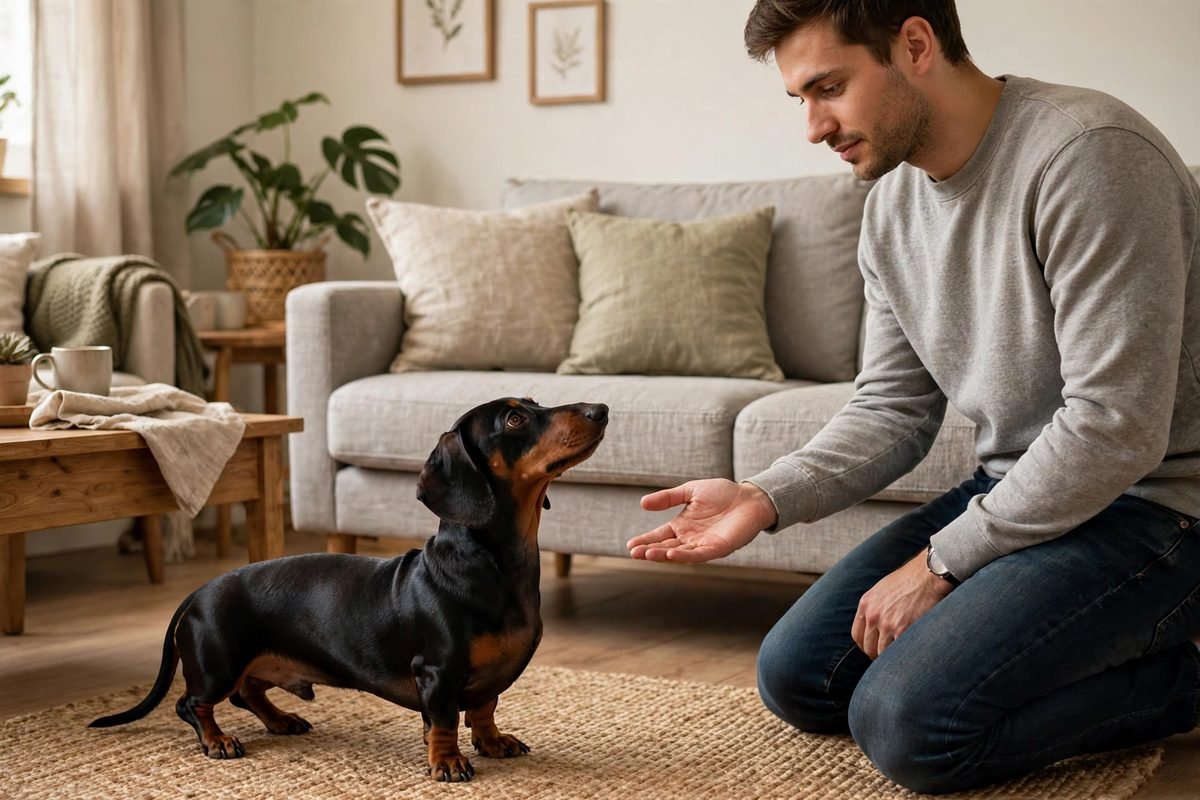
The wait is the heart of no-jump training. It gives your dog a job to do instead of jumping, and it gives you time to help. Start on the floor, away from the sofa. Ask your dog to sit or stand calmly, pause for two seconds, then reward with a small treat and calm praise. Build the pause slowly, from two seconds to five, then to ten, over several short sessions. If your dog breaks the wait, simply reset without fuss: guide it back, wait again, and reward the next calm pause. Keep your voice low and your movements slow, because excitement is the enemy of a steady wait.
Once the wait works on the floor, move it to the sofa. Stand beside the ramp, ask for the wait, and only then guide your dog toward the ramp or lift it. If the dog lunges toward the sofa, step calmly between dog and sofa, reset the wait, and try again. End each session on a success, even a small one, and keep sessions to about five minutes. Three short sessions a day will teach more than one long session, and they fit easily into apartment routines: before a walk, before dinner, and in the evening.
4. Teach the Ramp Route
Some dogs walk up a ramp at once, and others need a slower introduction. Let your dog sniff the ramp first, then place a treat on the lowest part and reward any step onto it. Move the treat a little higher each time, and praise forward movement, not speed. If your dog tries to jump past the ramp, calmly bring it back to the start and begin again. Never push a dog up a ramp or block its way off, because a frightened dog will avoid the ramp next time. Patience here saves weeks of retraining later.
When your dog walks up confidently, add the wait at the bottom: pause, then walk up. Do the same in reverse for coming down, because jumping off is often the harder habit to break. Many dogs run up a ramp and then leap off the sofa at the other side, so practise the down route separately. Guide your dog to the ramp from the sofa, reward each step down, and keep a hand ready to steady it. If your dog is ever lifted instead, use the two-hand method described in the guide on how to lift a Dachshund correctly, with one hand under the chest and one supporting the hindquarters.
5. Handle Stairs, Beds, and Visitors
Stairs need their own rule. Decide whether your dog will be carried on stairs, use a gate, or walk only certain steps, and apply that rule every time. A gate at the top or bottom of a staircase removes the decision from the moment and stops excited dashes. For the bed, the same wait-and-ramp routine applies, or the bedroom stays closed at night with a comfortable floor bed outside. Consistency matters more than the exact choice, so pick the arrangement your household can actually keep.
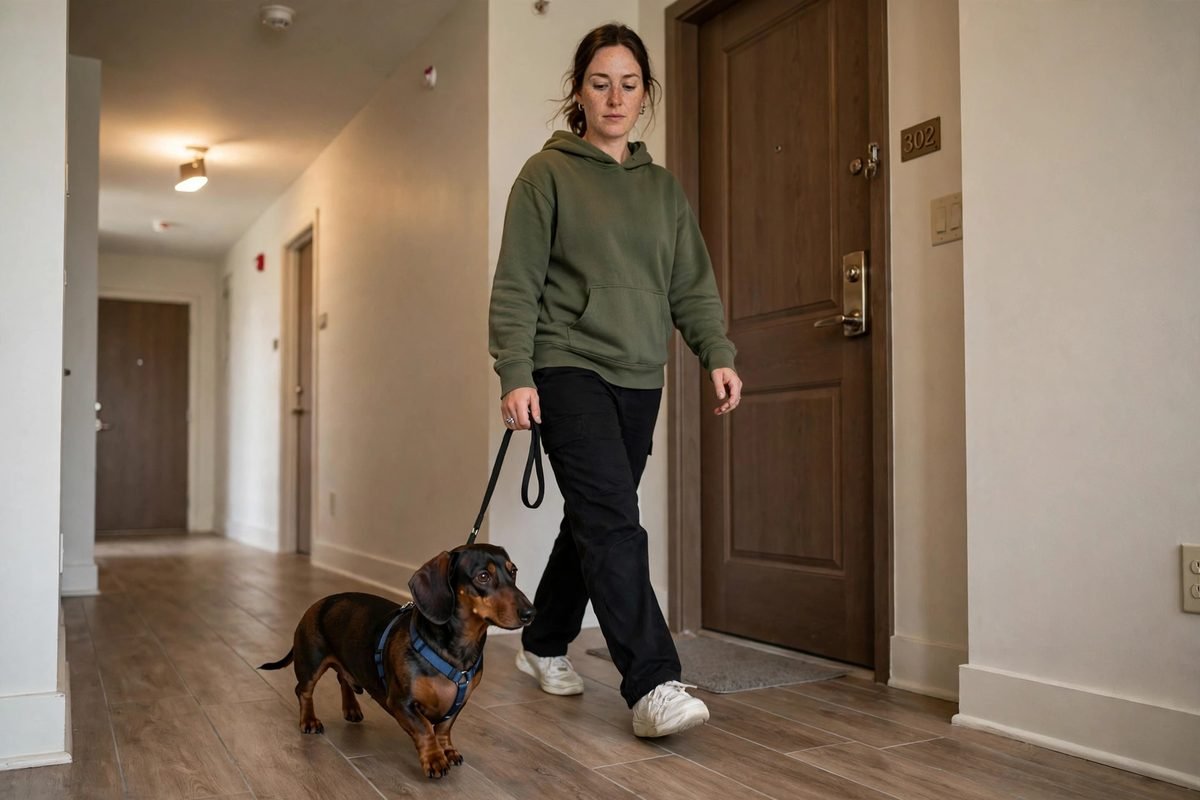
Visitors are the biggest test of any new rule, because guests often encourage jumping without meaning to. Brief visitors before they arrive: ask them to ignore the dog until it is calm, avoid patting an excited jumping dog, and wait for you to lift or guide it. Put a lead on your dog for the first minutes of a visit if that helps you manage greetings. Children need the same simple instruction, in one sentence: wait until the dog is calm, then let an adult help it up. A short, clear rule that guests can follow is worth more than a long explanation at the door.
No-Jump Checklist for Each Room
| Place | Safe route | What to remove or add |
|---|---|---|
| Sofa | Ramp, or lift | Keep ramp in place; move footstools away |
| Bed | Ramp, or lift | Close door if no ramp is fitted yet |
| Stairs | Carry, or gate | Fit a gate; keep the stairway clear |
| Car | Ramp, or lift | Keep a towel and ramp ready by the door |
Step-by-Step: The First Two Weeks
- Days 1-2: Watch and note every jump, trigger, and launch spot.
- Days 3-4: Set up the ramp, floor bed, and gates; remove launch pads.
- Days 5-7: Teach a short wait on the floor, three times a day.
- Days 8-10: Move the wait to the sofa and practise the ramp up and down.
- Days 11-14: Add visitors and stairs, keeping the same rule every time.
- After day 14: Keep rewarding the wait; review any spot where jumping returns.
Common Mistakes
The most common mistake is rewarding jumping by accident. Laughing, patting, or talking excitedly to a jumping dog all teach the dog that jumping gets attention. Turn away calmly, wait for four paws on the floor, and then give attention. A second mistake is training only when you feel like it. Dogs learn from what happens every day, so a rule that applies on weekdays but not at weekends is not a rule yet. A third mistake is moving too fast: asking for a long wait beside the sofa before the dog can wait on the floor. Go back a step whenever progress stalls, and rebuild from the last step that worked.
When to Call Your Vet
Training should never be used to push through pain. Contact a veterinarian promptly if your dog yelps when moving, refuses to jump or climb when it used to, walks stiffly, holds its head low, seems reluctant to go up or down, or shows a sudden change in appetite, toileting, or mood. A veterinarian can examine your dog, discuss what may be happening, and advise whether rest, further checks, or a change in routine is needed. Do not try to diagnose the cause at home, and do not start or stop any treatment without veterinary advice. If your dog shows weakness in the legs, loss of bladder or bowel control, or severe pain, seek veterinary care urgently.
How long does no-jump training take?
Many dogs learn the basic wait-and-ramp routine within two weeks of short daily sessions, but a reliable habit in exciting moments, such as visitors arriving, can take longer. Keep rewarding the behaviour you want, and expect occasional setbacks.
What if my Dachshund refuses the ramp?
Go slower: reward steps onto the lowest part, keep sessions short, and check that the ramp is stable, not slippery, and not too steep. If refusal continues, ask a veterinarian whether discomfort could be part of the picture.
Should I stop a Dachshund jumping completely?
Reducing repeated jumping from furniture and stairs is the practical goal for most apartment dogs. A single careful step off a low surface is different from repeated high jumps, so focus on the everyday pattern rather than perfection.
Can children help with no-jump training?
Yes, with one simple rule: children wait for calm behaviour and let an adult lift or guide the dog. Keep children seated during early practice so the dog is not encouraged to jump up for attention.
What if jumping returns after training?
Check the setup first: a moved ramp, a new footstool, or a change in routine often explains it. Return to short wait practice and reward the safe route again for a week.
Pin This: No-Jump Checklist
- Wait first, then ramp or lift, every time.
- Keep the ramp in place and the route clear.
- Reward calm paws on the floor, not jumping.
- Brief visitors: calm greetings only.
- Ask a veterinarian about any sign of pain.





4 Comments