Dachshund Barking at a Birthday Party at Home: Guide
Quick Answer
- A Dachshund often barks at a birthday party at home because the house fills with new people, new smells, balloons, music, and food, and the dog does not know the rules for a day that breaks every normal routine at once.
- Set up a quiet safe room for the dog before the guests arrive, with its bed, water, and a long-lasting chew, and let the dog rest there while the party is at its loudest.
- Greet each guest calmly at the door, with the dog on a lead behind a baby gate, and reward the dog with a small treat every time it is quiet.
- Give the dog a job during the party, such as resting on its mat with a chew, and take it out for short calm breaks away from the noise.
- Contact a veterinarian if the dog stops eating, hides for hours, or shows signs of pain or distress after the party.
Contents
- 1. Why a Birthday Party Sets Off Barking
- 2. Prepare Before the Guests Arrive
- 3. Greeting Guests Calmly at the Door
- 4. During the Party: Quiet Jobs and Calm Breaks
- 5. After the Party: A Slow Wind-Down
- Birthday Party Barking Checklist
- Common Mistakes
- When to Call Your Vet
- Pin This: Birthday Party at Home Checklist
- Frequently Asked Questions
- Conclusion
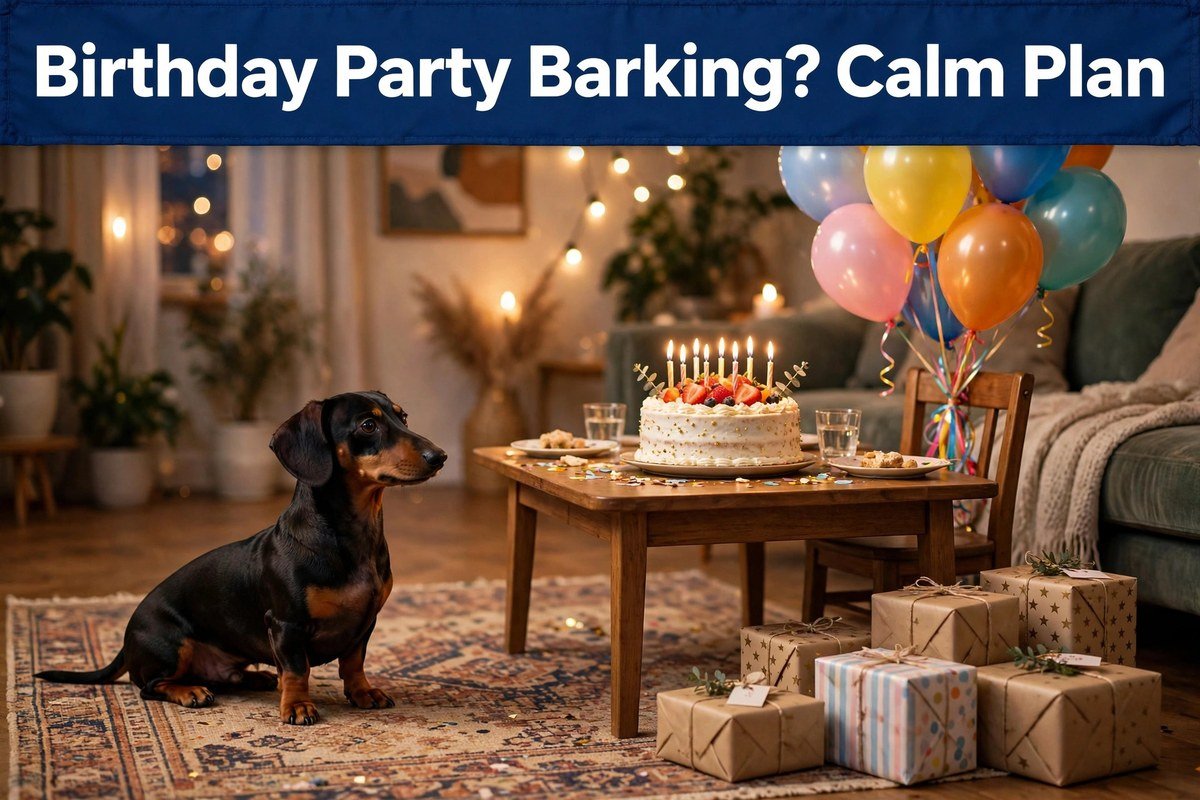
A birthday party at home is one of the hardest days of the year for a Dachshund. The doorbell rings again and again, new people walk in carrying bags and balloons, music plays, children run past, and food appears on every table. The dog’s normal day, with its quiet rooms, set walk times, and familiar faces, is gone for a few hours, and the barking that follows is not bad behavior. It is a dog telling the household that the day has changed too fast and it does not know what to do. This article covers a birthday party held at home, which is different from a family gathering that happens somewhere else, because the party takes place in the dog’s own territory. It is general information only, not a diagnosis.
1. Why a Birthday Party Sets Off Barking
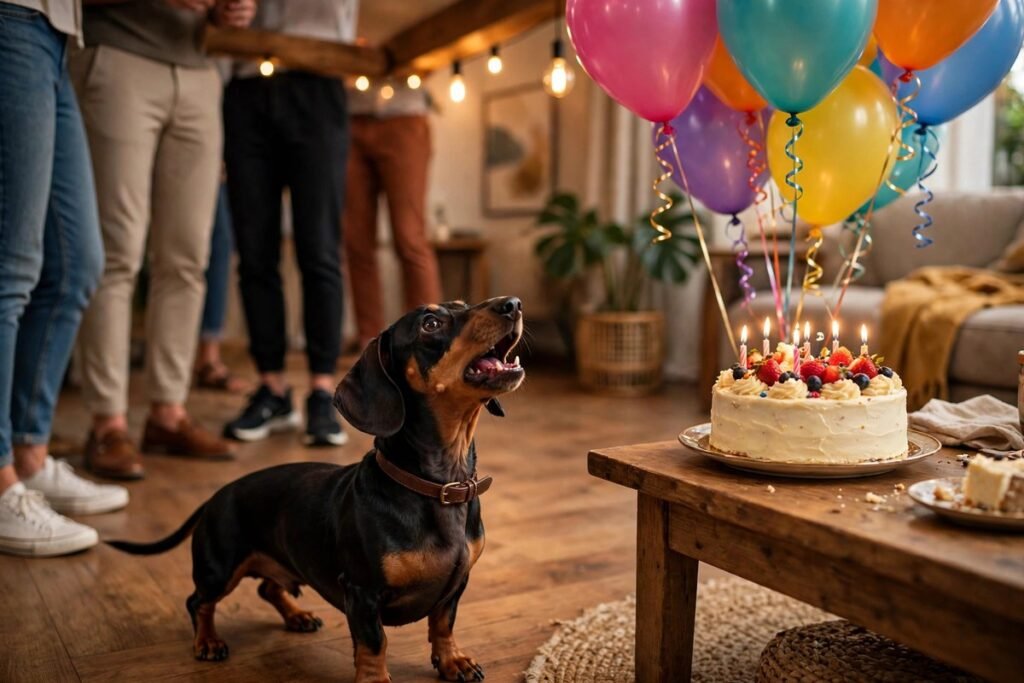
Balloons are a special problem. A balloon moves on its own, floats near the ceiling, and makes a sudden noise if it pops, and a small dog that watches it will bark at it as if it were a strange animal. Children add to the noise, because they run, laugh loudly, and move fast, and a Dachshund that is excited by fast movement will bark at every child that runs past. Food adds a third trigger: a dog that smells cake, snacks, and plates of food on low tables will bark and beg, and guests who feed the dog from the table will teach it that barking earns food, which makes the barking worse with every guest. The guide to calm behavior during a family gathering party covers the same idea of a busy house with many guests, and the same care helps at a birthday party, because the triggers are the same: new people, noise, and food.
2. Prepare Before the Guests Arrive
Prepare the dog’s safe room the morning of the party, not when the first guest rings the bell. Choose a quiet room away from the front door and the party table, and put the dog’s bed or mat there with a familiar blanket, fresh water, and a long-lasting chew. Keep the room in the same state every time the house is busy, so the dog learns that the safe room means rest, not punishment. Put a small sign on the door, such as “Dog resting, please do not open”, so a guest does not walk in by mistake and let the dog out.
Set up the party itself with the dog in mind. Tie the balloons to chairs or weights so they do not float at the dog’s eye level, and keep them away from the dog’s bed and the front door. Put the cake and the food on high tables, not on low coffee tables where the dog can reach them, and tell every guest before they arrive that the dog must not be fed from the table. A guest who means well and gives the dog a piece of cake can undo a whole afternoon of training in a few seconds, and a dog that has eaten party food may also have an upset stomach the next day.
3. Greeting Guests Calmly at the Door
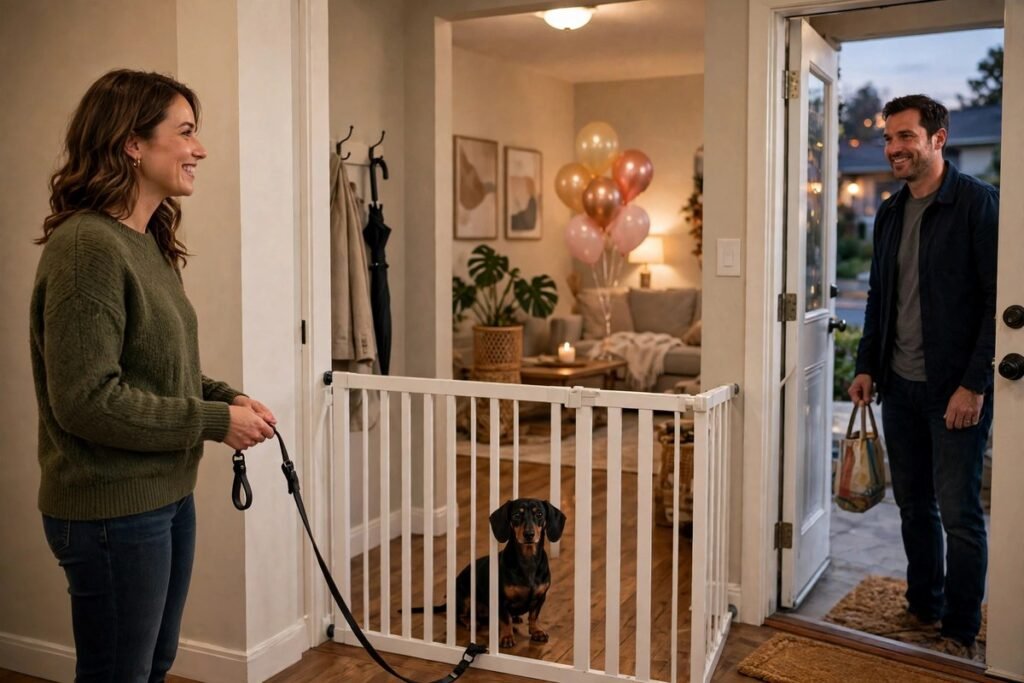
Plan the greeting before the first guest arrives, and keep it the same for every guest. Put the dog on a lead behind a baby gate in the hallway, a few steps from the front door, so it can see and hear each guest without being able to rush forward. When the doorbell rings, let the guest in, ask them to ignore the dog completely, and reward the dog with a small treat every time it is quiet for a few seconds. The guest should not reach out, call the dog over, or crouch down to pet it, because a stranger reaching toward a barking dog makes the barking worse.
Tell the guests the rules in one short message before the party, so no one has to guess. Ask them to ignore the dog, to keep the balloons and the food away from it, and to tell the owner if the dog barks at them. A guest who knows the rules will not feed the dog, chase it, or try to pick it up, and the dog will meet people who are calm and predictable. The guide to calm behavior when a guest stays overnight uses the same idea of a safe distance and a short first meeting, and the same care helps here, because a birthday guest is a visitor the dog has never met, and the first meeting sets the pattern for the rest of the party.
4. During the Party: Quiet Jobs and Calm Breaks
Once the guests are in and the party is going, give the dog a job. The best job is resting on its mat in a quiet corner with a long-lasting chew or a food puzzle, where it can see the party but is not in the middle of it. A dog that has a chew has something to do with its mouth other than barking, and a dog that is lying down is far less likely to bark than a dog that is standing and pacing. Keep the mat in the same place all afternoon, and reward the dog with a small treat every time it settles on it quietly.
Watch the cake moment closely, because it is the loudest part of the party. When the guests gather to sing, the noise rises, the lights may go down, and the candles flicker, and a Dachshund that is already on edge will bark at the singing and the sudden change. Guide the dog to its safe room with a chew before the cake comes out, and let it rest there until the singing is over and the cake has been cut. Disc degeneration in short-legged breeds can begin in the first year of life, so lift the dog carefully and use a ramp or steps for the sofa and the bed, because a stressed dog that jumps on and off furniture to reach the cake table is at risk of a back injury as well as a barking habit.
5. After the Party: A Slow Wind-Down
When the last guest leaves, do not expect the dog to be calm at once. The house still smells of new people, food, and balloons, and the dog’s body is still full of the excitement of the afternoon. Take the balloons down first, put the food away, and open a window for fresh air, so the house starts to smell normal again. Then take the dog for a short, slow walk on the lead, letting it sniff and toilet, and watch how it moves. A dog that walks at an even pace is winding down well, and a dog that is still panting or pacing needs more time.
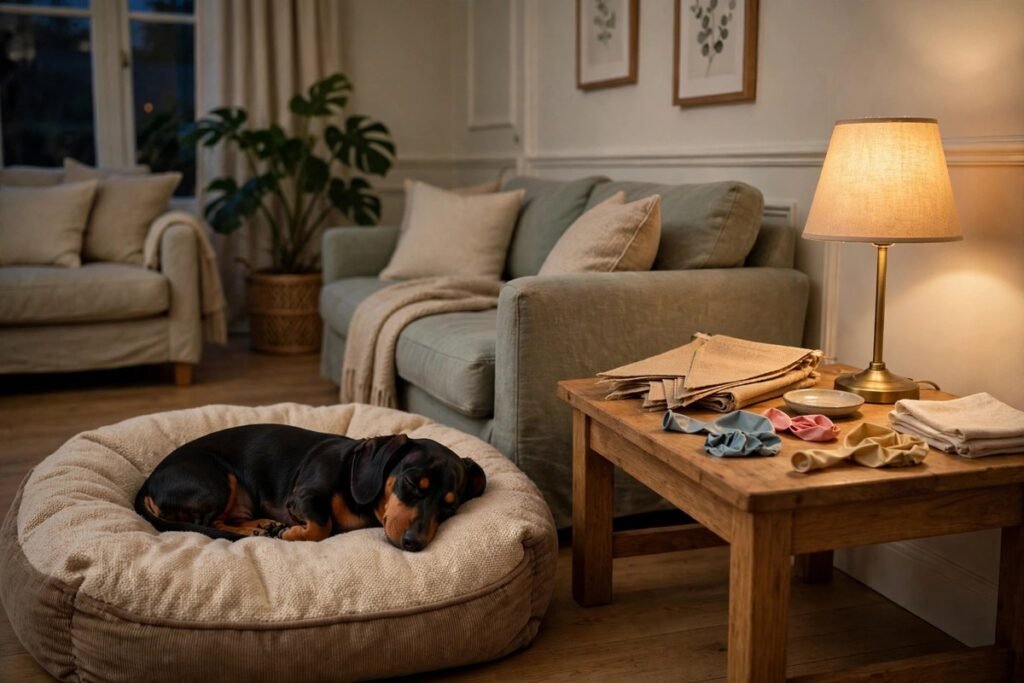
Keep the rest of the evening quiet. Feed the dog at its normal time, with its normal food, and let it rest in its own bed. Do not start another play session because the dog seems lively, and do not let the dog eat leftover cake or party food, because a dog that has eaten rich food may have an upset stomach the next day. If the dog seems stiff or slow the next morning, keep the day quiet, with no long walk and no visitors, and watch how it moves. A dog that is slow to get going the next morning is usually just tired, and a quiet day will sort it out.
Birthday Party Barking Checklist
| When | What to Do | What to Watch For |
|---|---|---|
| Morning of the party | Slow walk; set up the safe room with bed, water, and a chew | Dog rested and calm before guests arrive |
| Before guests arrive | Tie balloons down; put food on high tables; tell guests the rules | No food or balloons at the dog’s level |
| Each guest arrives | Dog on a lead behind the gate; guest ignores the dog; reward quiet | Barking fades within a few minutes |
| During the party | Dog on its mat with a chew; short calm breaks every hour | Panting, pacing, or hiding |
| Cake and singing | Dog in its safe room with a chew until the singing ends | Barking at the singing or the candles |
| After the party | Balloons down; food away; slow walk; quiet evening | Stiffness or tiredness the next morning |
Common Mistakes
- Letting the dog greet every guest at the front door with no lead and no gate.
- Shouting at the dog every time it barks at a guest or a balloon.
- Letting guests feed the dog from the table or give it cake.
- Leaving balloons floating at the dog’s eye level around the living room.
- Skipping the dog’s walk in the morning because the house is busy.
- Keeping the dog in the middle of the party with no safe room and no chew.
- Picking the dog up while it is barking to carry it away from the guests.
- Letting the dog eat leftover cake or party food after the guests leave.
When to Call Your Vet
Contact a veterinarian if the dog stops eating, hides for hours, trembles, vomits, has diarrhea, or shows signs of pain after the party, and seek urgent help if the dog collapses, cannot breathe normally, or shows sudden weakness in the back legs. Contact a veterinarian also if the barking is joined by pacing, panting, or a loss of interest in walks and play that lasts more than a few days, because stress can hide pain, and a long-backed breed can hurt its back while jumping or rushing around a busy house. This article gives general information only and does not diagnose any condition. A veterinarian can check for pain, anxiety, or a health problem, and advise whether a calmer routine, a training plan, or a health check is the right next step. The Animal Medical Center guide to intervertebral disc disease in dogs explains the back signs that need prompt attention, and the Cornell guide to intervertebral disc disease in dogs explains the breed background that makes back care important. Do not delay veterinary help for a dog that is clearly distressed or in pain.
Pin This: Birthday Party at Home Checklist
- Set up the safe room in the morning, with bed, water, and a chew.
- Walk the dog before the party, and feed it at its normal time.
- Tie balloons down and put food on high tables.
- Tell guests the rules: ignore the dog, do not feed it.
- Greet each guest with the dog on a lead behind a gate.
- Dog on its mat with a chew; safe room for the cake and singing.
- After the party: balloons down, slow walk, quiet evening.
Frequently Asked Questions
Should my Dachshund be in the room during a birthday party?
Yes, if the dog is calm and has a job, such as resting on its mat with a chew in a quiet corner. If the dog is barking, panting, or pacing, guide it to its safe room with a chew and let it rest there. A dog that is in the room but stressed is worse off than a dog that is resting quietly in another room.
Why does my Dachshund bark at balloons?
A balloon moves on its own, floats near the ceiling, and can pop without warning, and a small dog will bark at it as if it were a strange animal. Tie balloons to chairs or weights so they do not float at the dog’s eye level, and keep them away from the dog’s bed and the front door.
Can guests give my Dachshund a treat at the party?
Only the owner should give the dog treats, and only when the dog is quiet. A guest who gives the dog a treat while it is barking rewards the barking, and a guest who feeds the dog from the table teaches it that barking earns food. Tell the guests the rules before they arrive.
How do I keep my Dachshund calm when the guests sing happy birthday?
Guide the dog to its safe room with a chew before the cake comes out, and let it rest there until the singing is over and the cake has been cut. The singing, the candles, and the sudden change in light are the loudest part of the party, and a dog that is already on edge will bark at them.
What if my Dachshund is still barking the day after the party?
Keep the day quiet, with no visitors and no long walk, and watch how the dog moves and eats. A dog that is still barking, hiding, or refusing food a day later may be stressed or in pain, so contact a veterinarian if it does not settle, and ask a trainer for help if the barking carries on for more than a few days.
Conclusion
A birthday party at home is a hard day for a Dachshund, but it is a day that can be planned. A safe room set up in the morning, a slow walk before the guests arrive, balloons tied down and food kept high, a calm greeting at the door behind a gate, a mat with a chew during the party, and a slow wind-down after the last guest leaves will turn a day of barking into a day the dog can cope with. This article is general information only, not a diagnosis, and a dog that stops eating or shows signs of pain needs a veterinarian. Keep the routine steady, and the next birthday will be easier than this one.