Dachshund Barking at Neighbors Music Through the Wall
Quick Answer
- A Dachshund often barks at a neighbor’s music or TV through the wall because the sound comes from a place the dog cannot see, and the dog barks at a noise it cannot explain, especially when the bass is loud or the sound starts suddenly.
- Find the pattern first: note the time, the type of sound, and how long it lasts, because a dog that barks at evening bass is different from a dog that barks at every sound all day.
- Cover the sound with a white noise machine, a fan, or calm music in your own flat, and keep the dog’s bed away from the shared wall.
- Train quiet at the wall: guide the dog to its mat near the shared wall, reward it with a small treat every time it is quiet, and never reward barking with attention.
- Contact a veterinarian if the dog stops eating, hides for hours, or shows signs of pain or distress.
Contents
- 1. Why Music and TV Through the Wall Trigger Barking
- 2. Find the Pattern: When and What the Dog Hears
- 3. Cover the Sound at Home
- 4. Train Quiet at the Wall, Step by Step
- 5. Living With Apartment Noise for the Long Term
- Neighbor Music Barking Checklist
- Common Mistakes
- When to Call Your Vet
- Pin This: Neighbor Music Through the Wall Checklist
- Frequently Asked Questions
- Conclusion
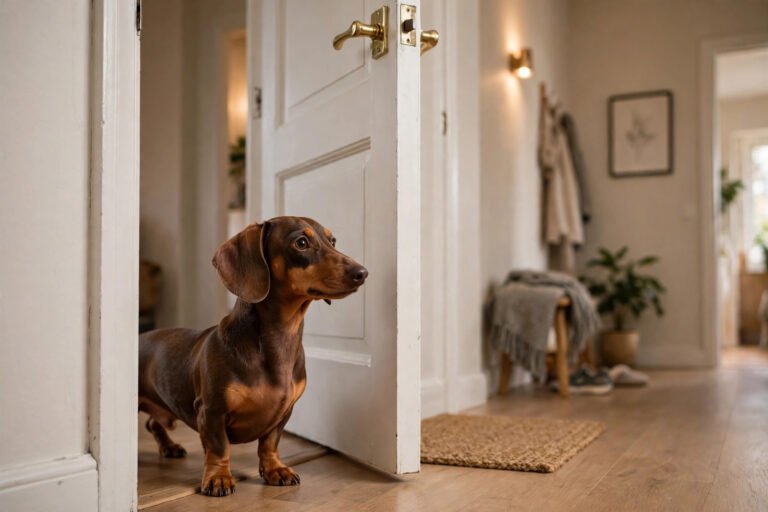
Music and TV through the wall are one of the hardest barking triggers in an apartment, because the sound has no face and no door. A dog can see a visitor at the door and learn that the visitor is safe, but it cannot see the neighbor’s television, and it cannot check the room where the music is coming from. The barking that follows is not bad behavior, and it is not a sign that the dog dislikes the neighbors. It is a dog telling the household that a noise it cannot explain is coming through the wall, and it does not know what to do about it. This article covers music and TV sounds through a shared wall, which is different from dogs barking next door or sounds in the hallway, because the trigger is a sound with no animal and no person the dog can see. It is general information only, not a diagnosis.
1. Why Music and TV Through the Wall Trigger Barking
The barking is usually worst in the evening and at night, when the flat is quiet and every sound stands out, and when the dog is guarding the bedroom and the sleeping household. A neighbor who plays music late, watches a loud film, or turns the TV up for a sports match can keep a Dachshund barking for hours, and the barking may get worse as the night goes on, because the dog is tired and on edge. Thin apartment walls make it worse, because the sound is louder and clearer, and a dog that lives against a shared wall hears far more than a dog that lives in a detached house. The guide to calm behavior with hallway and neighbor sounds covers the same idea of sounds the dog cannot see, and the same slow pattern helps here, because the first step is always to understand the sound before trying to change the barking.

2. Find the Pattern: When and What the Dog Hears
Before changing anything, spend a week noting the pattern. Keep a small notebook by the sofa, and each time the dog barks at the wall, write down the time, what the sound seems to be, and how long it lasts. Note whether it is music, a television, a film, or a game, whether the bass is loud, and whether the dog barks at once or after a few minutes. After a week, the notes will show a pattern: the dog may bark only in the evening, only when the bass is loud, or only when the sound starts suddenly after a quiet hour.
The pattern matters, because each pattern needs a different fix. A dog that barks only when the bass is loud needs sound cover and a bed away from the wall. A dog that barks only at sudden starts needs a routine that warns it, such as a white noise machine that is always on, so the sound never starts from silence. A dog that barks at every sound all day may be anxious or bored, and it may need more walks, more play, and more rest, not only a fix for the wall. A dog that barks only when the owner is out may need a different plan again, with a safe spot and a sound cover that run on their own.
3. Cover the Sound at Home
Sound cover is the simplest fix, and it works because it makes the neighbor’s sound less sudden and less clear. A white noise machine, a fan, or a radio playing calm music at a low volume will fill the flat with a steady sound, so the neighbor’s music does not arrive out of silence. Put the sound cover near the shared wall, not near the dog’s bed, so the steady sound sits between the dog and the wall. Keep it on at a low, steady volume, and do not turn it up and down, because a sound cover that keeps changing is as bad as no sound cover at all.
Calm music in your own flat can help too, if it is the right kind. Slow, steady music with no sudden changes, played at a low volume, will give the dog a sound it knows and can ignore, and it will soften the neighbor’s music behind it. Do not play loud music to drown out the neighbor, because two loud sounds are worse than one, and a dog that is already on edge will bark at both. The guide to calming music and a white noise machine for apartments explains how to set up a low, steady sound and how to keep it running through the evening, and the same setup helps here, because the goal is a flat that sounds steady all day, not a flat that goes from silence to noise in a second.

4. Train Quiet at the Wall, Step by Step
Once the sound is covered, train quiet at the wall in short sessions. Choose a time when the neighbor’s music is playing at a normal level, guide the dog to its mat a few steps from the shared wall, and sit nearby with a treat pouch. When the dog is quiet for a few seconds, give it a small treat. When the dog barks, wait calmly, and reward the quiet that follows. Keep the sessions short, under ten minutes, and end each one while the dog is still calm. The goal is not a dog that never barks, but a dog that hears the music, looks at the owner, and settles on its mat.
Reward quiet behavior every day, in small moments, not only in formal training sessions. If the dog hears the neighbor’s TV and stays quiet, give it a small treat. If the dog walks past the shared wall without barking, give it a small treat. If the dog settles on its bed while the music is playing, give it a treat and a calm word. The rule is simple: quiet behavior earns the treat, and barking earns nothing. Do not give a treat while the dog is barking, and do not shout at the dog, because shouting sounds like barking to a dog and makes the noise worse. Disc degeneration in short-legged breeds can begin in the first year of life, so lift the dog carefully and use a ramp or steps for the sofa and the bed, because a stressed dog that jumps on and off furniture to reach the wall is at risk of a back injury as well as a barking habit.
5. Living With Apartment Noise for the Long Term
Most dogs show clear improvement in two to three weeks of steady work, such as barking less at the evening music and settling on the mat while the TV plays next door. Full calm can take a month or more, and a setback after a loud night is normal. A neighbor who has a party, plays music late, or watches a loud film can start a fresh burst of barking even after a good week, and that does not mean the plan has failed. It means the dog needs a few more days of sound cover and a greater distance from the wall, and the routine needs to stay steady.
Once the barking has faded, protect the new routine by keeping it the same every day. Keep the white noise machine on at the same low volume, keep the dog’s bed away from the shared wall, and keep the same walk and sleep times. If the neighbors change, or a new neighbor moves in with louder music, go back to the basics for a few days: sound cover, a bed away from the wall, and short quiet sessions on the mat.

Neighbor Music Barking Checklist
| Step | What to Do | How Long |
|---|---|---|
| Week 1 | Note the time, the sound, and how long it lasts in a notebook | Seven days |
| Sound cover | White noise machine or fan near the shared wall, low and steady | Every day |
| Move the bed | Dog’s bed away from the shared wall; rug and bookshelf against the wall | Once, then keep it |
| Train quiet | Mat a few steps from the wall; reward quiet; move closer over days | Under 10 minutes a day |
| Daily life | Reward quiet in small moments; keep walk and sleep times the same | Every day |
| Setback | More distance from the wall, more sound cover, shorter sessions | A few days |
Common Mistakes
- Shouting at the dog every time it barks at the wall.
- Playing loud music to drown out the neighbor, so the dog hears two loud sounds.
- Keeping the dog’s bed against the shared wall where the sound is loudest.
- Turning the white noise machine on and off, so the sound keeps changing.
- Moving the dog’s mat right up to the wall on the first day of training.
- Giving the dog a treat while it is barking, which rewards the barking.
- Expecting the dog to stop barking in a week, and giving up when it does not.
- Arguing with the neighbors every week instead of fixing the routine at home.
When to Call Your Vet
Contact a veterinarian if the dog stops eating, hides for hours, trembles, vomits, has diarrhea, or shows signs of pain after the barking starts, and seek urgent help if the dog collapses, cannot breathe normally, or shows sudden weakness in the back legs. Contact a veterinarian also if the barking is joined by pacing, panting, or a loss of interest in walks and play that lasts more than a few days, because stress can hide pain, and a long-backed breed can hurt its back while jumping or rushing around a noisy flat. This article gives general information only and does not diagnose any condition. A veterinarian can check for pain, anxiety, or a health problem, and advise whether a calmer routine, a training plan, or a health check is the right next step. The Animal Medical Center guide to intervertebral disc disease in dogs explains the back signs that need prompt attention, and the Cornell guide to chondrodystrophy and intervertebral disc disease explains the breed background that makes back care important. Do not delay veterinary help for a dog that is clearly distressed or in pain.
Pin This: Neighbor Music Through the Wall Checklist
- Note the pattern for a week: time, sound, and how long it lasts.
- Move the dog’s bed away from the shared wall.
- White noise machine or fan near the wall, low and steady.
- Train quiet on the mat, a few steps from the wall, under ten minutes.
- Reward quiet behavior with small treats, never barking.
- Keep the routine the same every day, even after the barking fades.
- Talk to the neighbors calmly, once, if the sound is very loud or late.
Frequently Asked Questions
Why does my Dachshund bark at the neighbor’s music but not my own?
The dog knows its own music and has learned to ignore it, but the neighbor’s music comes through the wall at times the dog cannot predict, and it carries bass and sudden changes the dog has never learned to ignore. A sound with no face and no door is harder to learn than a sound the dog can see and check.
Will a white noise machine really help with barking?
Yes, if it is low, steady, and always on. A white noise machine fills the flat with a steady sound, so the neighbor’s music does not arrive out of silence, and the dog hears a dull sound instead of a sudden one. Put it near the shared wall, and do not turn it up and down.
Should I move my Dachshund’s bed away from the shared wall?
Yes. A bed against the shared wall puts the dog where the sound is loudest, and moving it to the far side of the room can cut the sound enough to make a real difference.
What if the neighbor’s music is very loud late at night?
Keep the sound cover and the routine, and talk to the neighbors calmly, once, so they know the sound comes through the wall. If the sound stays loud and late, keep the dog in its safe spot with a chew, and ask a trainer for help, because the dog can still learn to settle even when the sound does not change.
How long does it take for a Dachshund to ignore the neighbor’s music?
Most dogs show clear improvement in two to three weeks of steady work, such as barking less at the evening music and settling on the mat while the TV plays next door. Full calm can take a month or more, and a loud night can cause a setback, so keep the routine steady.
Conclusion
Music and TV through the wall are hard to fix, because the sound has no face and no door, but the plan is simple: find the pattern, cover the sound, move the bed away from the wall, and train quiet on the mat one step at a time. A white noise machine that is always on, a dog that is rewarded for quiet behavior, and a routine that stays the same every day will turn a wall that barks back into a wall the dog can ignore. This article is general information only, not a diagnosis, and a dog that stops eating or shows signs of pain needs a veterinarian. Keep the routine steady, and the evenings will get quieter week by week.