
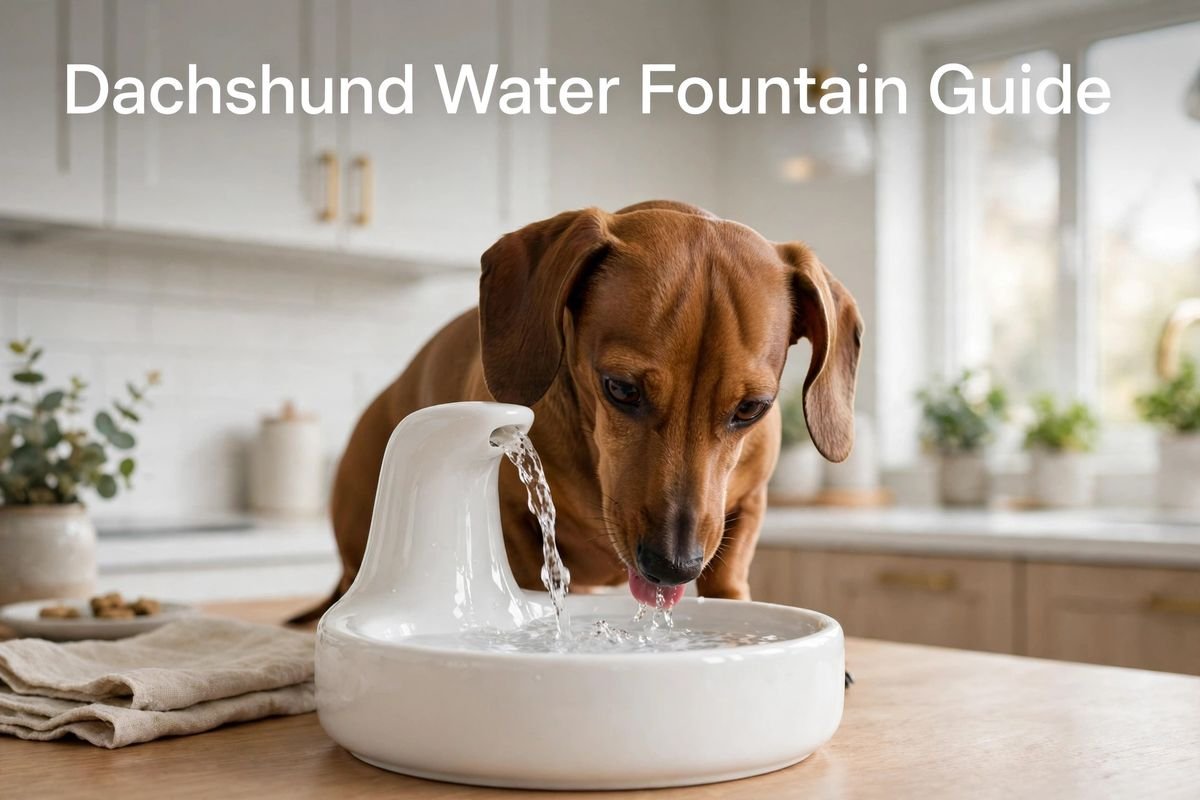
Dachshund Drinking Water Fountain Guide for Apartments
Quick Answer
- A Dachshund drinking water fountain is a small electric water bowl that keeps water moving through a pump and filter, so the water stays fresh, cool, and free of dust all day.
- Pick a fountain that holds enough water for a full day, is made of ceramic or stainless steel, and runs quietly enough for a small apartment.
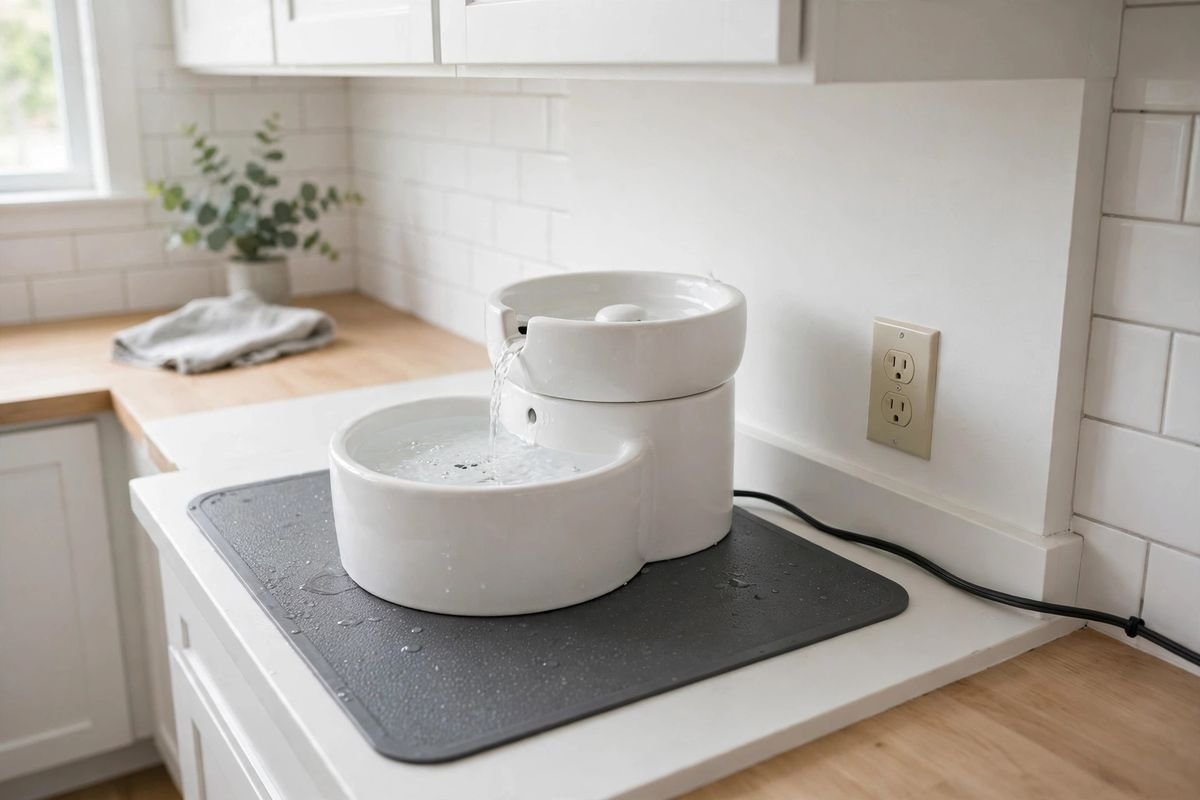
- Place the fountain on a flat, waterproof mat near a wall outlet, away from the food bowl and the dog’s bed, so splashes stay off the floor.
- Clean the fountain every week: empty it, wash the bowl and parts, rinse the filter, and refill it with fresh water.
- Contact a veterinarian if the dog suddenly drinks much more or much less water than usual, or stops drinking altogether.
Contents
- 1. How a Dachshund Drinking Water Fountain Works
- 2. Choosing the Right Fountain: Size, Material, and Flow
- 3. Setting Up the Fountain in a Small Apartment
- 4. Cleaning the Fountain: A Simple Weekly Routine
- 5. Helping a Dachshund Learn to Drink From a Fountain
- Fountain Care Checklist: Setup, Cleaning, and Refills
- Common Mistakes
- When to Call Your Vet
- Pin This: Fountain Cleaning Checklist
- Frequently Asked Questions
- Conclusion
1. How a Dachshund Drinking Water Fountain Works
A Dachshund drinking water fountain is a water bowl with a small pump that keeps the water moving in a gentle stream or a soft waterfall. The pump lifts water from the bowl, pushes it through a small filter, and lets it fall back into the bowl again. The moving water picks up oxygen, stays cooler than still water, and does not collect dust or fur on the surface the way a still bowl does. For a Dachshund in a small apartment, the fountain gives the dog fresh water all day without the owner refilling a bowl every few hours.
The moving water also catches a dog’s attention. Many dogs drink more from a fountain than from a still bowl, because the sound and the movement draw them in, and the water tastes fresher. A dog that drinks enough stays hydrated through the day, which supports normal digestion, healthy skin, and regular bathroom habits. A fountain does not make a dog drink; it simply makes the water more inviting, and a dog that already drinks well may show no change at all.
Most fountains run on a low-power pump that plugs into a wall outlet or a USB port, and they use very little electricity. The pump sits under the water or in a small housing at the side, and a filter cartridge inside the fountain traps fur, dust, and food bits. The filter needs rinsing or replacing on a set schedule, and the pump needs cleaning so it keeps running quietly. A fountain is a small appliance, not just a bowl, so it needs a little weekly care to keep working well.
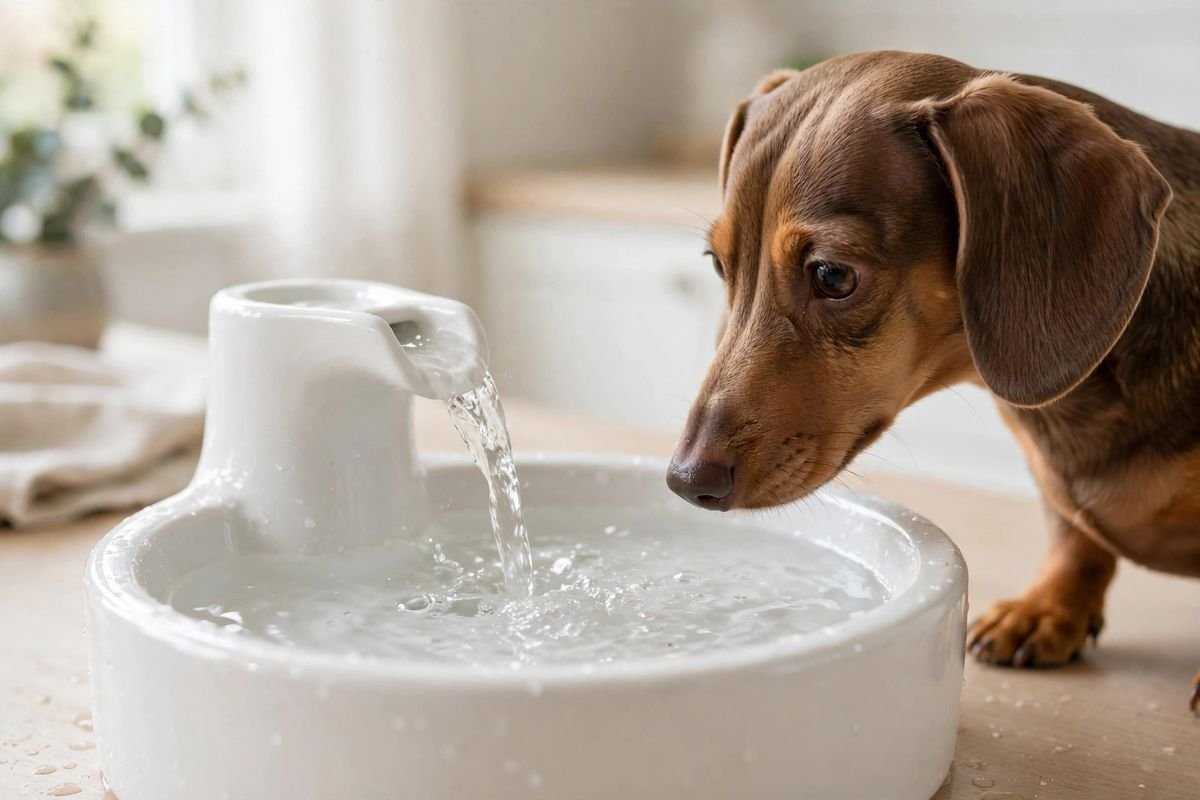
2. Choosing the Right Fountain: Size, Material, and Flow
Size comes first. A fountain should hold enough water for a full day, so the pump never runs dry while the owner is at work. A mini Dachshund drinks less than a standard one, and a home with two dogs needs a bigger fountain than a home with one. A fountain that holds about 50 to 70 ounces suits most single Dachshunds in an apartment, while a larger home with two dogs may need one that holds more. Check the water level every morning and refill it to the fill line.
Material is the next choice. Ceramic and stainless steel are the easiest to clean and the least likely to hold smells, and they suit dogs with sensitive chins. Plastic fountains cost less and weigh less, but they can scratch over time, and scratches hold bacteria that washing does not always reach. If the dog has ever had chin acne or a sore under the chin, a ceramic or steel fountain is the safer pick. Look for a fountain with a wide, low bowl, since a deep, narrow bowl forces a Dachshund to push its ears into the water while it drinks.
Flow and noise matter in a small apartment. Some fountains pour a steady stream, others bubble gently, and many have a flow control that lets the owner turn the stream down. A quiet pump is worth paying attention to, because a loud pump can scare a nervous dog and annoy the household at night. A no-spill water bowl can be the right choice instead if the home has no free outlet near the water spot, or if the dog is scared of the sound of a pump.
3. Setting Up the Fountain in a Small Apartment
Set the fountain up on a flat, hard floor with a waterproof mat underneath. Kitchens and entryways work well, since the floor there is easy to wipe, while carpet soaks up splashes and hides leaks. Keep the fountain near a wall outlet so the cord runs flat along the wall, out of the dog’s reach, and use a cord cover if the dog likes to chew. Leave a little space around the fountain so the dog can approach it from the front without stepping on the mat edge.
Place the fountain away from the food bowl and the dog’s bed. Food bits fall into a fountain placed next to the food bowl, and the filter clogs faster, while a fountain next to the bed can keep a light sleeper awake with the sound of running water. The best spot is a quiet corner the dog already passes often, such as the kitchen doorway or the hallway near the living room. If the home has more than one floor, one fountain on the main floor is enough for most dogs, as long as the dog can reach it easily.
Fill the fountain to the marked line with fresh tap water, plug it in, and check that the water flows smoothly and the pump runs quietly. Watch the dog’s first approach: some dogs drink at once, while others sniff the fountain and walk away. Leave the old water bowl next to the fountain for the first week, so the dog always has water while it gets used to the new one. Once the dog drinks from the fountain every day, the old bowl can be put away.
4. Cleaning the Fountain: A Simple Weekly Routine
Clean the fountain once a week, on the same day each week, so the routine is easy to remember. Unplug the pump first, then pour out all the water and take the fountain apart: bowl, lid, pump, and filter. Wash the bowl and the lid with warm water and a small amount of dish soap, scrub the corners and the spout with a bottle brush, and rinse everything until no soap remains. A slimy film inside the bowl is normal after a week of use, and it washes off with a brush and soap.
Clean the pump with care, since it is the part that fails first. Open the pump housing, pull out the small rotor, and rinse away fur and grit under running water. Use a soft brush or an old toothbrush on the rotor and the housing, and check the intake slots for blockages. A pump that hums loudly, runs hot, or pushes only a weak stream is usually dirty, not broken, and a good clean often fixes it. Rinse the filter under running water, and replace it on the schedule printed on the pack, usually every two to four weeks.
Put the fountain back together, fill it with fresh water, and plug it in. Check that the water flows at the same strength as before and that no part leaks. A water bowl cleaning and hygiene routine covers the same weekly steps for a normal bowl, and the fountain follows the same idea with a pump added. Keep a spare filter in the cupboard, so a worn filter can be swapped at once instead of waiting for a new pack to arrive.
5. Helping a Dachshund Learn to Drink From a Fountain
Most Dachshunds learn to use a fountain in a few days, but a nervous dog may need a slower start. Turn the flow down to its lowest setting at first, so the water moves gently and the pump runs almost silently. Put a few drops of water on the dog’s lips with a clean finger, or hold a treat near the fountain so the dog steps close and hears the water. Never push the dog’s head toward the water, since that creates fear and sets the training back.
Keep the old bowl next to the fountain for the first week, and let the dog choose. Most dogs try the fountain on their own within a day or two, often at night when the house is quiet. Once the dog drinks from the fountain twice in one day, the old bowl can be moved a few feet away, then put away entirely after another day or two. If the dog still refuses the fountain after a week, try a different flow setting or a fountain with a quieter pump, since the sound or the stream may be the problem.
Watch how much the dog drinks once the fountain is in use. A dog that drinks more than before is a good sign, and the fountain is doing its job. A dog that drinks less, or avoids the fountain after trying it once, may have been startled by the pump or the stream, and the flow should be turned down or the fountain moved to a quieter spot. In a home with more than one dog, watch that each dog gets its turn, since a bold dog can guard the fountain and keep a shy dog away from the water.
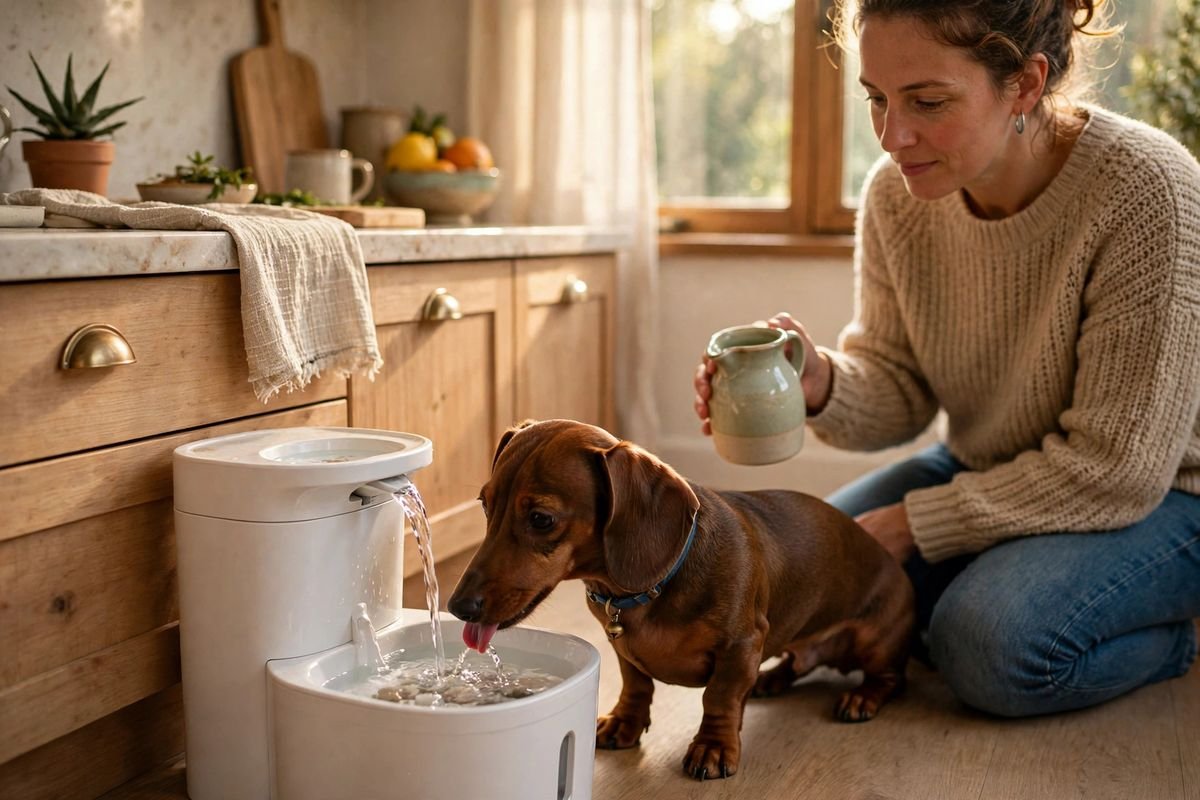
Fountain Care Checklist: Setup, Cleaning, and Refills
| When | What to Do | What to Watch For |
|---|---|---|
| Setup day | Flat floor, waterproof mat, cord along the wall | No splashes on carpet; cord out of reach |
| Every morning | Check the water level; refill to the fill line | Pump never runs dry; water looks clear |
| Every week | Empty, wash, scrub, rinse, clean the pump | Slimy film gone; pump runs quietly |
| Every 2 to 4 weeks | Replace the filter cartridge | Water stays clear; no smell |
| First week | Keep the old bowl next to the fountain | Dog drinks from the fountain on its own |
| Monthly | Check the cord, pump, and seals for wear | No cracks, leaks, or frayed cord |
Follow the checklist in the same order every week. A fountain that is refilled daily, washed weekly, and given a fresh filter on time keeps the water fresh and the pump running quietly.
Common Mistakes
- Letting the water run low so the pump runs dry and burns out.
- Skipping the weekly clean, so slime builds up in the bowl and the spout.
- Using a plastic fountain with deep scratches that hold bacteria.
- Putting the fountain on carpet, where splashes soak in and hide leaks.
- Leaving the cord where the dog can chew it.
- Removing the old bowl on day one, so a nervous dog has no water while it learns.
- Forgetting to replace the filter, so the water looks clear but smells stale.
- Running the pump at full flow for a nervous dog, which scares the dog away.
When to Call Your Vet
Contact a veterinarian if the dog suddenly drinks much more or much less water than usual, stops drinking altogether, or seems tired, weak, or unwell. Contact a veterinarian promptly if the dog vomits, has diarrhea, or shows signs of dehydration such as dry gums or a loss of skin elasticity. A veterinarian can check whether the change comes from the water setup or from a health problem, and advise on the next step. This article gives general information only and is not a diagnosis.
Pin This: Fountain Cleaning Checklist
- Refill to the fill line every morning.
- Wash the bowl, lid, and spout every week.
- Clean the pump rotor and intake slots weekly.
- Replace the filter every two to four weeks.
- Keep the old bowl out for the first week.
- Call a veterinarian if drinking changes suddenly.
Frequently Asked Questions
Do Dachshunds drink more from a fountain than a bowl?
Many do, because the moving water and the sound draw the dog in, and the water stays cooler and cleaner than still water. Some dogs show no change at all, and a dog that already drinks well may drink the same amount. The fountain helps most in a warm apartment or a home where the water bowl sits all day.
How often should I clean a pet water fountain?
Clean it once a week: empty it, wash the bowl and lid with soap and water, scrub the spout, and clean the pump rotor. Rinse everything well so no soap remains. Replace the filter every two to four weeks, or sooner if the water starts to smell stale.
Is a water fountain safe to leave running at night?
Yes, as long as the water level stays above the pump and the cord is out of the dog’s reach. A quiet pump will not disturb most dogs, and the dog can drink at night without waking the owner. Check the water level before bed so the pump never runs dry overnight.
What material is best for a dog water fountain?
Ceramic and stainless steel are the easiest to clean and the least likely to hold smells, and they suit dogs with sensitive chins. Plastic costs less, but it scratches over time, and scratches hold bacteria. A wide, low bowl suits a Dachshund better than a deep, narrow one.
What if my Dachshund is scared of the fountain?
Turn the flow to its lowest setting and keep the old bowl next to the fountain for a week, so the dog always has water. Let the dog approach on its own, and praise it calmly when it sniffs the fountain. If the dog still refuses after a week, try a quieter pump or a different flow style.
Conclusion
A Dachshund drinking water fountain works when the size fits the dog, the material is easy to clean, and the weekly wash stays on the calendar. The next step is a small one: pick a quiet corner near an outlet, set the fountain on a waterproof mat, and keep the old bowl beside it for the first week.





One Comment