Dachshund Gulping Food Too Fast: How to Slow Mealtimes
Quick Answer
- Dachshund gulping food too fast means the bowl is empty in under a minute, with little chewing, loud swallowing, and sometimes coughing, gagging, or vomiting after the meal.
- Common reasons include competition with another dog, a long gap between meals, excitement at mealtimes, and a bowl that makes the food too easy to scoop up in big mouthfuls.
- Slow the meal down with a slow feeder bowl, a lick mat, food spread on a flat tray, or the daily portion split into several small servings.
- Feed in a calm, quiet spot, away from other pets, and keep mealtimes at the same times each day so the dog does not feel rushed.
- Call a veterinarian if gulping comes with choking, repeated vomiting, a swollen belly, or a sudden change in eating, because those signs need a check.
Contents
- 1. What Dachshund Gulping Food Looks Like
- 2. Why a Dachshund Gulps Food Too Fast
- 3. Slow Feeder Bowls and Other Ways to Slow the Meal
- 4. A Calm Mealtime Routine That Slows Gulping
- 5. When Gulping Needs a Veterinarian
- Dachshund Gulping Food: Mealtime Slow-Down Plan
- Common Mistakes
- When to Call Your Vet
- Pin This: Slow Down Gulping at Meals
- Frequently Asked Questions
- Conclusion
1. What Dachshund Gulping Food Looks Like
Dachshund gulping food looks like a race: the dog dives into the bowl, takes big mouthfuls without chewing, and the food is gone in under a minute. The eating is loud, with fast swallowing and sometimes a cough or a gag as a mouthful goes down the wrong way. The dog may lift its head, look around for more, and then start licking the empty bowl or begging for a second serving, even though it has just eaten a full meal. Some dogs vomit the food back up a few minutes later, and then try to eat it again.
The signs after the meal tell the same story. A dog that gulps often has gas, a noisy belly, or a swollen feeling after eating, because it swallows a lot of air along with the food. It may burp, hiccup, or seem uncomfortable for a while after the bowl is empty. A dog that eats too fast may also seem hungry all the time, because the meal was over before the body had time to feel full. The hunger is real to the dog, but the answer is not more food — it is a slower meal.
Gulping is common in Dachshunds, and it is worth taking seriously even when the dog seems fine. A dog that barely chews its food is more likely to choke, more likely to vomit after eating, and more likely to swallow air that leaves the belly gassy and uncomfortable. In a breed where extra weight strains the back, fast eating also makes portion control harder, because the dog finishes before it feels full and begs for more. Slowing the meal down is one of the simplest things an owner can do for a Dachshund’s health.

2. Why a Dachshund Gulps Food Too Fast
Competition is the most common reason a dog learns to gulp. A Dachshund that grew up eating with other dogs, or that lives now with another pet that hovers near the bowl, may eat fast to finish before the other dog gets a share. Even a cat sitting nearby, or a child reaching toward the bowl, can make a dog feel it must eat quickly. The dog is not being greedy; it is guarding its meal the only way it knows. Feeding the dog alone, in a quiet spot, takes that pressure away.
Hunger and timing play a part too. A long gap between meals, a missed meal, or a portion that is too small for the dog’s needs can leave the dog very hungry by the next meal, and a very hungry dog eats fast. A dog that is fed once a day may gulp far more than a dog fed twice a day, because the hunger builds up over a longer wait. Regular meals at the same times each day, with a measured portion that suits the dog’s size and activity, take the edge off that hunger.
The bowl itself can make gulping worse. A deep, narrow bowl lets the dog scoop up big mouthfuls, and a bowl on a slippery floor slides around while the dog chases it. Excitement adds to the problem: a dog that is wound up before the meal — after a walk, after play, or when the food bag rattles — may dive into the bowl still excited and eat without pausing. A calm pause before the meal, a bowl that slows the dog down, and a quiet spot to eat in all work together to break the habit.
3. Slow Feeder Bowls and Other Ways to Slow the Meal
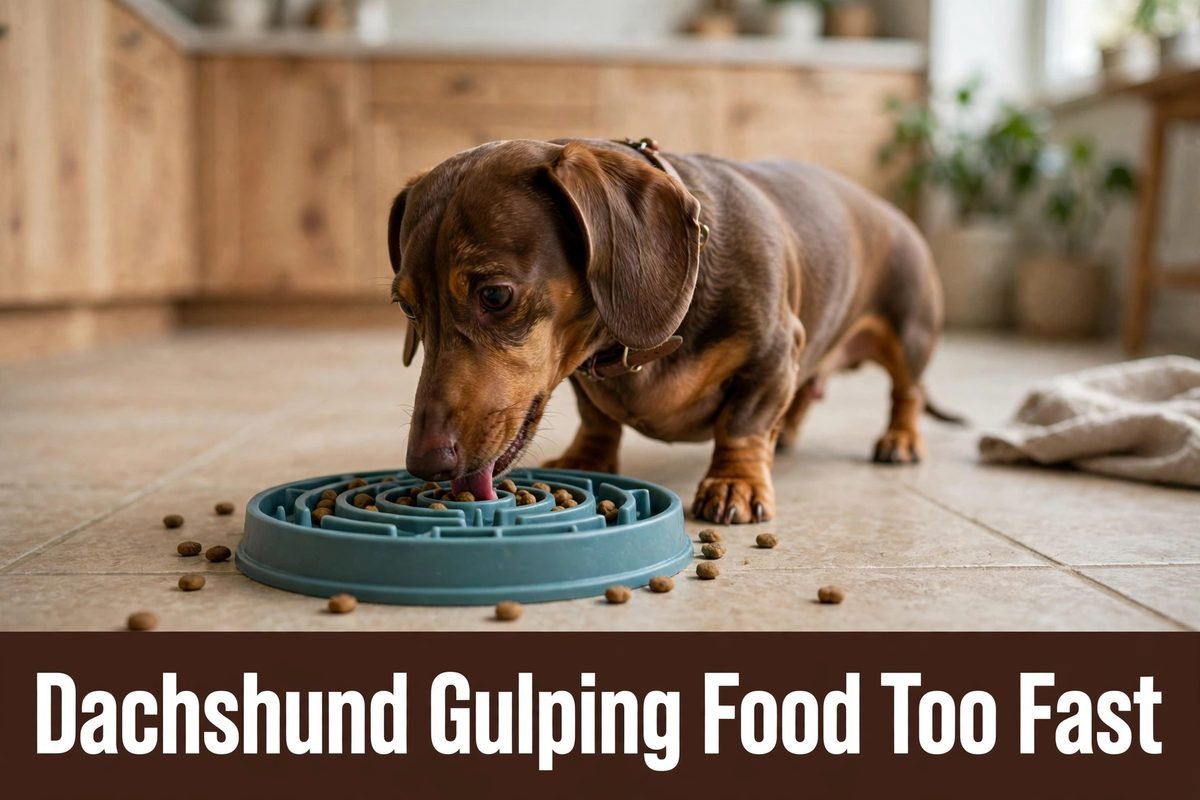
A slow feeder bowl is the simplest tool for a dog that gulps. The bowl has ridges, bumps, or a maze pattern inside, and the dog must work its tongue around the obstacles to pick up the food a little at a time. The meal takes several minutes instead of seconds, the dog chews more, and it swallows less air. The slow feeder bowl guide explains how to choose one that fits a Dachshund’s short muzzle, and it is worth reading before buying, because a feeder that is too deep or too hard can frustrate a small dog.
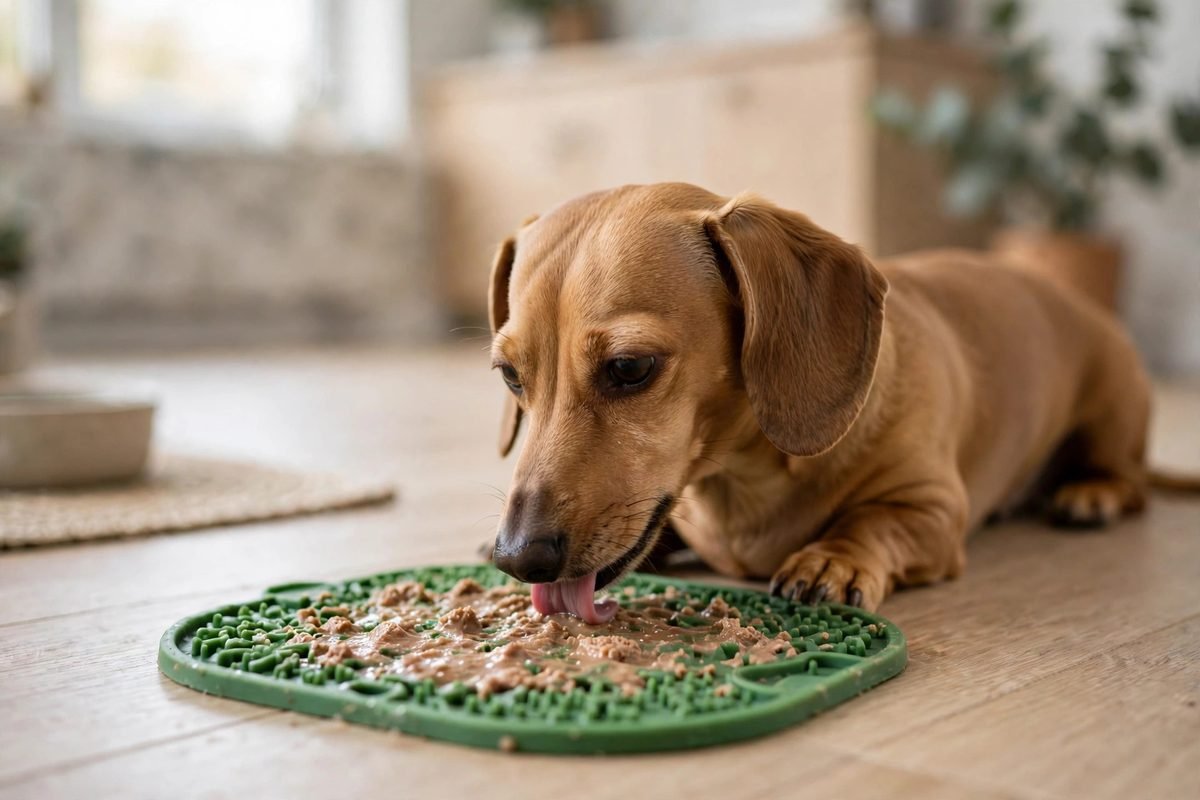
A lick mat is another good option, especially for wet food. The food is spread thinly over a textured mat, and the dog licks it off slowly instead of gulping mouthfuls. The lick mat guide covers how to use one safely and how to clean it, and a lick mat can also calm a dog that gets excited at mealtimes. A flat tray or a baking sheet works in a similar way for dry food: spread the kibble out in a single layer so the dog must pick up one piece at a time instead of scooping up a mouthful.
Splitting the portion is a free fix that works on its own. Instead of one full bowl, give a third of the meal, wait a few minutes, then give the next third, and so on. Hand-feeding a few pieces at a time works the same way, and it also builds a calm bond at mealtimes. Puzzle feeders and snuffle mats, where the dog must nose through fabric to find the food, slow the meal down and give the dog a job to do. Start with the easiest option, watch how long the meal takes, and keep the method that doubles or triples the eating time without stressing the dog.
4. A Calm Mealtime Routine That Slows Gulping
A calm routine starts before the bowl goes down. Give the dog a few minutes to settle after a walk or play, and prepare the food without a fuss, so the rattling bag and the excited dance do not wind the dog up. Put the bowl down in the same quiet spot each day, away from other pets and away from the busiest part of the home. A dog that eats in peace does not need to rush, and a dog that eats in the same spot at the same times each day learns that the meal is safe and will not be taken away.
Stay nearby but calm while the dog eats, and do not reach for the bowl, touch the dog, or try to take food away during the meal. A hand near the bowl during eating can make a gulping dog eat faster, not slower, because the dog feels the meal is under threat. If there are children in the home, teach them to leave the dog alone while it eats. A quiet room, a closed door, and a few minutes of peace are worth more than any correction at the bowl.
Keep the routine steady from day to day. Same food, same measured amount, same times, same spot, same slow feeder or mat. A routine that changes every day keeps the dog guessing, and a guessing dog eats fast. Weigh the food or use a measuring cup, so the portion is the same every time, and count treats in the daily amount. A dog that eats slowly, chews its food, and finishes calmly is a dog whose routine is working, and the change often shows within a week or two of steady practice.
5. When Gulping Needs a Veterinarian
Gulping needs a veterinarian when it comes with choking, repeated vomiting, or a swollen belly. A dog that chokes often, that brings food back up after most meals, or that has a belly that looks swollen and feels tight after eating should be checked the same day. A swollen belly with restlessness, pacing, and an inability to settle is an emergency, and the dog needs a veterinarian at once. These signs can mean something more serious than a fast eating habit, and they should never be waited out at home.
A sudden change in eating also needs a check. A dog that always ate calmly and suddenly starts gulping, a dog that gulps and then refuses food, or a dog that loses weight while eating fast may have a medical problem behind the change. Pain in the mouth, a sore tooth, a throat problem, or a gut problem can all change how a dog eats, and only a veterinarian can rule those out. Bring a note of when the gulping started, how fast the meals are, and whether the dog vomits, coughs, or seems uncomfortable after eating.
A veterinarian can also help with the feeding plan itself. The right portion, the right number of meals a day, and the right food for this dog’s age, weight, and activity all affect how fast the dog eats and how full it feels. A veterinarian can weigh the dog, check the body condition, and advise on a portion that keeps the dog satisfied without adding weight. In short-legged breeds, disc degeneration can begin in the first year of life, and extra weight adds strain to a spine that is already at risk, so keeping the weight steady matters as much as slowing the meal down.
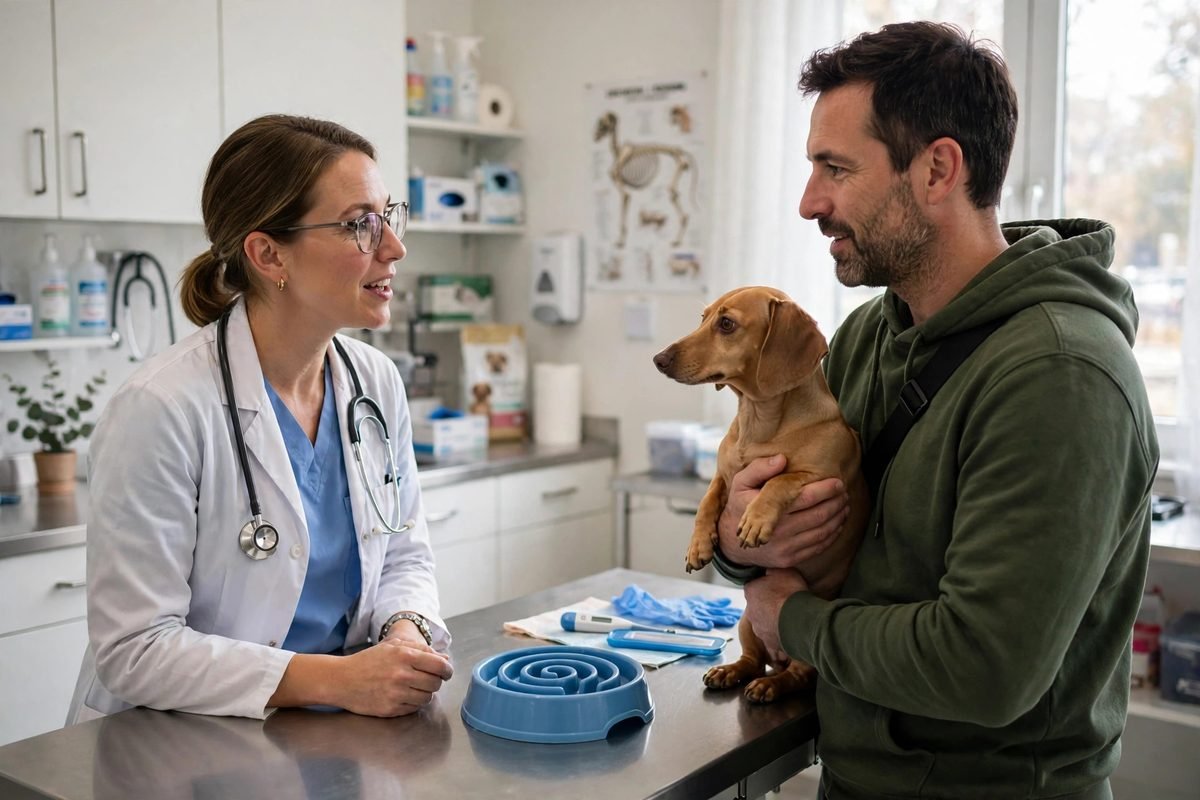
Dachshund Gulping Food: Mealtime Slow-Down Plan
| Step | What to Do | What It Changes |
|---|---|---|
| Feed alone | Quiet spot, away from other pets | Removes the pressure to eat fast |
| Slow feeder | Bowl with ridges, or food spread on a tray | Meal takes minutes, not seconds |
| Split the portion | A third at a time, with short pauses | Stops one big, fast mouthful after another |
| Same times daily | Two measured meals at set times | Less hunger, less rushing at the bowl |
| Calm before meals | Settle after walks, quiet food preparation | Dog starts the meal calm, not excited |
| Track the time | Time the meal each day for a week | Shows whether the meal is slowing down |
A meal that takes three to five minutes instead of under one minute is a real improvement. Keep the plan steady for two weeks, then judge the result.
Common Mistakes
- Adding more food because the dog still seems hungry after gulping a fast meal.
- Reaching for the bowl or touching the dog while it eats, which speeds it up.
- Feeding the dog next to another pet that hovers or competes for the bowl.
- Using a deep, narrow bowl that lets the dog scoop up big mouthfuls.
- Buying a slow feeder that is too deep or too hard for a Dachshund’s short muzzle.
- Changing the food, the bowl, and the routine all at once, so nothing can be judged.
- Feeding once a day, which leaves the dog very hungry and more likely to gulp.
- Ignoring repeated vomiting or choking and hoping the habit will fix itself.
When to Call Your Vet
Contact a veterinarian if the dog chokes often, vomits after most meals, or has a swollen belly after eating. Contact a veterinarian urgently if the belly looks swollen and tight, the dog is restless and cannot settle, or the dog is retching without bringing anything up. Contact a veterinarian soon if a calm eater suddenly starts gulping, if the dog refuses food, or if it loses weight while eating fast. A veterinarian can check the mouth, throat, and belly and advise on a safe feeding plan. This article gives general information only and is not a diagnosis.
Pin This: Slow Down Gulping at Meals
- Feed alone, in a quiet spot, away from other pets.
- Use a slow feeder bowl, a lick mat, or food spread on a tray.
- Split the portion into thirds, with short pauses between.
- Feed twice a day at the same times, with a measured portion.
- Let the dog settle before the meal, and leave it in peace while it eats.
- Call a veterinarian if gulping comes with choking or vomiting.
Frequently Asked Questions
How do I slow down my Dachshund when it gulps its food?
Use a slow feeder bowl or a lick mat, spread the food on a flat tray, or split the portion into thirds with short pauses. Feed alone in a quiet spot, at the same times each day, and time the meal to see whether it is getting longer.
Is gulping food dangerous for a Dachshund?
Gulping can cause choking, vomiting, gas, and a swollen belly, and it makes portion control harder, which can lead to weight gain. A dog that chokes often or vomits after most meals needs a veterinarian’s check.
Should I feed my Dachshund once or twice a day?
Twice a day suits most adult Dachshunds, because the hunger does not build up as much between meals. A measured portion, split into two meals at set times, is the best starting point, and a veterinarian can advise on the right amount.
Will a slow feeder bowl frustrate my Dachshund?
A feeder that fits a short muzzle should slow the dog down without stressing it. If the dog paws at the bowl, gives up, or refuses to eat, try a simpler option, such as food spread on a tray or a lick mat, and ask a veterinarian if the problem continues.
When should gulping worry me?
Worry when gulping comes with choking, repeated vomiting, a swollen and tight belly, restlessness, or a sudden change in eating. Those signs need a veterinarian’s exam, and a swollen belly with retching needs urgent care.
Conclusion
Dachshund gulping food is a habit that can be changed at home: feed alone in a quiet spot, slow the meal with a feeder or a tray, split the portion, and keep the routine steady. The next step is simple — time the next meal, and if it is over in under a minute, try a slow feeder bowl this week.