Dachshund Back Care After Swimming: Post-Swim Check
Quick Answer
- Dachshund back care after swimming starts the moment the dog leaves the water: lift the dog out level, dry it with towels on flat ground, and keep it warm.
- Check the back gently once the dog is dry: watch how it stands, walks, and lies down, and note any stiffness, yelping, or reluctance to move.
- Give the dog a quiet rest on a warm bed, with water close by, and skip stairs, jumping, and play for the rest of the day.
- Keep the first walk after swimming short, flat, and slow, and let the dog set the pace.
- Contact a veterinarian if stiffness lasts past the next morning, or if the dog yelps, flinches, or shows weakness in the back legs.
Contents
- 1. Why the Minutes After Swimming Matter Most
- 2. Getting Out of the Water: Level Lifting and Drying
- 3. The Post-Swim Check: Back, Legs, and Movement
- 4. Warmth, Rest, and the First Walk After
- 5. The Rest of the Day and the Next Morning
- Post-Swim Checklist: Out of the Water to Bedtime
- Common Mistakes
- When to Call Your Vet
- Pin This: Back Care After Swimming
- Frequently Asked Questions
- Conclusion
1. Why the Minutes After Swimming Matter Most
Swimming is gentle exercise for a Dachshund, but the minutes after the swim are when the back is most at risk. A wet dog is a cold dog, and cold muscles along the spine tighten quickly once the dog leaves warm water. A dog that climbs out on its own, shakes hard, and scrambles up slippery steps can twist its back before it is even dry. A dog that is lifted out suddenly, carried at an angle, or left wet on a cold floor faces the same risk. Dachshund back care after swimming is therefore a routine for the exit and the drying, not just for the swim itself, because the exit is where the strain happens.
The long back of a Dachshund adds to the post-swim problem. A short-legged breed carries its spine close to the ground, and the back works hard with every climb out of the water, every shake, and every step across wet ground. Disc degeneration in short-legged breeds can begin in the first year of life, so the spine of a Dachshund deserves gentle handling from an early age, and a rough exit from the water adds to that load rather than starting it. The water itself supports the body and takes weight off the spine, which is why swimming feels easy, but the moment the dog leaves the water, the full weight returns, and the back must carry it again.
After-care is different from the swim itself, although the two share the idea of gentle water and a calm dog. The gentle water play guide covers paddling at home and how to keep the play itself back-safe, and this article covers what happens next: the exit, the drying, the check, and the rest. The life jacket and swim vest guide covers safety in the water, and the vest should stay on until the dog is out and dry. What matters most is the order: out level, dry warm, check gently, and rest quietly.

2. Getting Out of the Water: Level Lifting and Drying
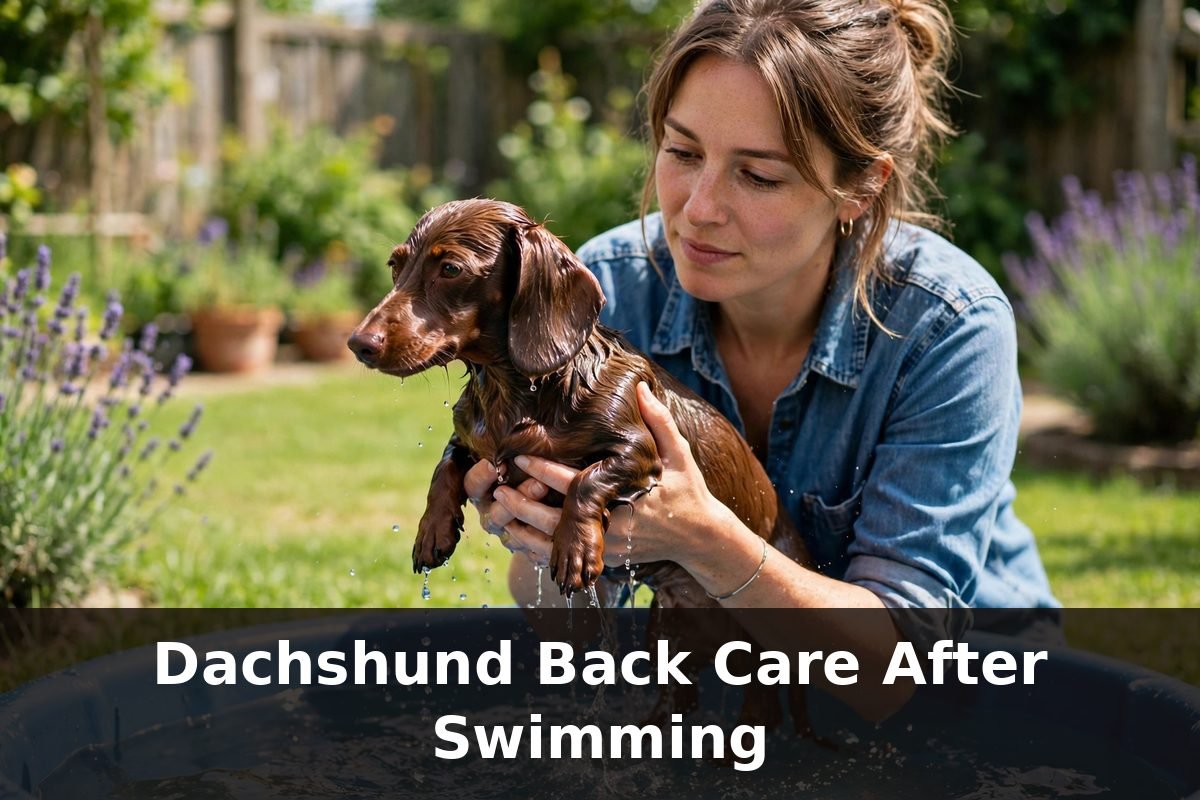
Lift the dog out of the water level, with one hand under the chest and one under the hips, keeping the back flat. Do not lift the dog by the front legs, and do not let it scramble up a steep bank or slippery steps on its own. A ramp or shallow steps into the water make the exit easy, and the dog should be guided up slowly, with a hand steadying the hips. Set the dog down on a flat, non-slip surface, with all four paws landing together, and keep a hand on the dog until it is standing steadily.
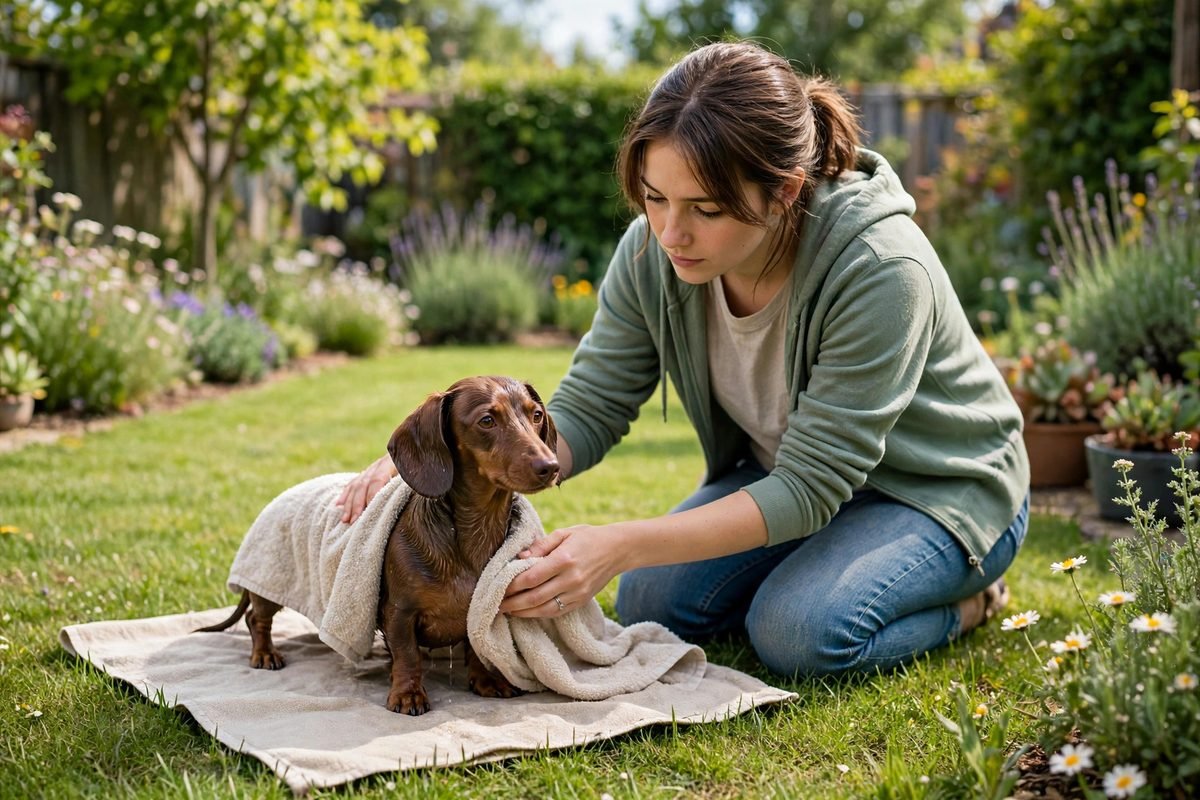
Dry the dog on flat ground, with towels, before anything else happens. Start with the back, pressing the towel gently along the spine rather than rubbing hard, because hard rubbing can make a cold, tired back tense up. Dry the chest, the belly, and the legs, and then the paws, checking between the toes for grit or small stones. Use two or three towels if the dog is very wet, and change to a dry towel for the final pass. A dog that is dried quickly stays warm, and a dog that stays warm keeps its back loose.
Keep the dog warm while it dries, and keep it out of drafts and cold wind. If the swim was outdoors, move the dog to a sheltered spot or indoors as soon as it is dry enough to carry. A light dog coat or a dry blanket over the back helps on a cool day, and a warm room indoors is best of all. Let the dog shake once or twice on flat ground, but hold the hips steady if the shake is violent, because a hard shake can twist a tired back. Once the dog is dry and warm, the post-swim check can begin.
3. The Post-Swim Check: Back, Legs, and Movement
Once the dog is dry, watch how it stands. A dog that stands level, with all four paws placed evenly and the back flat, has come out of the water well. A dog that stands with its back arched, its back legs tucked under, or its weight shifted forward is showing stiffness or soreness, and it needs a quieter rest. Let the dog walk a few steps on flat ground, and watch the stride: an even stride with a level back is a good sign, while a short stride, a dipping back, or a pause before each step is a sign to slow down.
Check the back with eyes, not hands. Watch how the dog moves, how it turns, and how it lies down, rather than pressing hard on the spine. A dog that flinches when its back is touched, or that turns its head to look at a spot on its back, is showing pain, and pressing harder will not tell more. A dog that lies down smoothly, circles once, and settles is comfortable, while a dog that paces, circles many times, or cannot find a position is still sore. Note what is seen, in a few words, so the pattern is on record.
Check the legs and paws as part of the same check. Swimming works the legs hard, and tired legs make the back work harder with every step. Look for a leg that is held up, a paw that is licked often, or a limp that was not there before the swim. Check the paws for cuts, grit, or soreness from pool edges or rough ground, and rinse them with clean water if needed. A dog with sore paws walks unevenly, and uneven walking strains the back, so the paws are part of back care after a swim.
4. Warmth, Rest, and the First Walk After
After the check, give the dog a warm rest. Put the dog on its soft bed on the floor, in a warm corner away from drafts, with a blanket to burrow under and water close by. Keep the room quiet, with no visitors, no play, and no stairs, so the back can rest after its work in the water. A dog that rests warm for an hour after a swim recovers far better than one that is kept busy, because rest lets the muscles along the spine relax and warm up again.
Offer a small drink of water during the rest, and a small meal later, once the dog is dry and settled. Swimming is tiring, and a tired dog needs water and food, but a full meal straight after a swim can leave the dog uncomfortable, so wait until the dog is dry and calm. Keep the meal measured, because extra weight adds load to the back with every step, and a steady weight is part of after-swim care. Let the dog eat slowly from a raised bowl on a non-slip mat.
Keep the first walk after swimming short, flat, and slow. Five to ten minutes on level ground, on a loose leash, is enough, because the aim is to loosen the back, not to tire it further. Let the dog sniff and set the pace, and stop before it tires. A dog that walks with a level back and an even stride is recovering well, while a dog that lags behind, sits down, or walks with a dipping back needs more rest. Plan the walk for a few hours after the swim, not straight after, so the rest comes first.

5. The Rest of the Day and the Next Morning
Keep the rest of the day quiet after a swim. No stairs, no jumping on or off the sofa, no rough play, and no long walks. Use a ramp for the sofa and the bed, and lift the dog level in and out of the car if a car is needed. A quiet afternoon lets the back recover from the swim, and a busy afternoon can undo the good of a gentle swim. If there are children or other dogs in the home, keep the swimmer in a calm room for a few hours, with its bed, water, and a quiet chew.
Watch the dog through the evening, and note how it moves, eats, and settles. A dog that eats well, walks evenly, and settles smoothly is recovering normally. A dog that is quieter than usual, eats slowly, or paces before lying down may still be stiff, and it needs a quieter evening. Offer a warm bed for the night, with a rug under it, and keep the room warm, because a cold night after a swim can leave the dog stiff in the morning.
Check the dog again the next morning, because the morning after a swim is the real test. A dog that rises smoothly, stretches, and walks with a level back has recovered well, and the swim did it good. A dog that rises slowly, arches its back, or is stiffer than usual needs a quiet day, with short walks and a warm bed. Note the morning in the diary, with the length of the swim and how the dog moved after it, so the next swim can be shorter if needed. The swim is only a success if the morning after is a good one.
Post-Swim Checklist: Out of the Water to Bedtime
| When | What to Do | What to Watch For |
|---|---|---|
| Exit | Lift out level, chest and hips supported; set down on flat ground | Scrambling; twisting; slipping on wet steps |
| Drying | Towel dry on flat ground; keep warm and out of drafts | Shivering; hard shaking; cold skin along the back |
| Check | Watch stance, stride, and lying down; check legs and paws | Arched back; dipping stride; flinching; limping |
| Rest | Warm bed; water close by; quiet room; no stairs or play | Pacing; circling many times; reluctance to lie down |
| Next morning | Slow rise; short flat walk; diary note on the swim | Stiffness lasting past midday; yelping; weakness |
Common Mistakes
- Letting the dog scramble out of the water up steep or slippery steps on its own.
- Lifting the dog out by the front legs only, so the back end dangles and twists.
- Leaving the dog wet on a cold floor or in a cold wind to dry on its own.
- Rubbing the back hard with a towel instead of pressing gently along the spine.
- Skipping the post-swim check and missing stiffness until the next morning.
- Taking the dog for a long walk straight after the swim, before it has rested.
- Letting the dog jump on and off the sofa all afternoon after a swim.
When to Call Your Vet
Contact a veterinarian if stiffness lasts past the next morning, the dog yelps when lifted, flinches when the back is touched, shows weakness in the back legs, or refuses to move or eat after a swim. Contact a veterinarian urgently if the dog cannot move its back legs, loses bladder control, or is in severe pain. A veterinarian can examine the dog, review the swim diary, and advise whether swimming should be shorter, less often, or paused, and the Animal Medical Center guide to intervertebral disc disease in dogs explains the signs that need prompt attention. The Cornell guide to intervertebral disc disease notes that the condition ranges from mild pain to paralysis, which is why early contact matters. The Cornell guide to chondrodystrophy and intervertebral disc disease explains the breed background behind that caution. This article gives general information only and is not a diagnosis.
Pin This: Back Care After Swimming
- Lift the dog out of the water level, chest and hips supported.
- Towel dry on flat ground and keep the dog warm.
- Check stance, stride, and lying down before resting.
- Rest warm and quiet, with water close by.
- Walk short and flat a few hours after the swim.
- Check the next morning and call a veterinarian if stiffness lasts.
Frequently Asked Questions
Is swimming good for a Dachshund’s back?
Swimming can be gentle exercise, because the water supports the body and takes weight off the spine. Keep swims short and calm, use a life jacket if the dog needs one, and follow the post-swim routine every time.
How long should a Dachshund swim?
Keep swims short, especially at first, and watch the dog closely. Stop while the dog is still moving well, and build up slowly over weeks rather than making the first swim a long one.
Why is a Dachshund stiff after swimming?
A wet dog cools quickly, and cold muscles along the spine tighten after the swim. Drying the dog warmly, resting it, and keeping the first walk short usually eases the stiffness within a day.
Should a life jacket stay on after the swim?
Keep the vest on until the dog is out of the water and on flat ground, then take it off gently while the dog stands level. Removing it in the water or on slippery steps risks a twist.
When should post-swim stiffness be checked by a vet?
Call a veterinarian if stiffness lasts past the next morning, or if the dog yelps, flinches, or shows weakness in the back legs. Bring the swim diary, with the length of the swim and how the dog moved after it.
Conclusion
The swim is the easy part, and the minutes after it are the part that protects the back. Lift out level, dry warm, check gently, and rest quietly, and the next step is to lay out the towels and the warm blanket before the next swim, so the post-swim routine is ready when the dog leaves the water.