

Senior Dachshund Back Signs vs Normal Aging: Know More
Quick Answer
- Senior Dachshund back signs vs normal aging is a daily judgment: normal aging is gradual, even, and stable, while back problems often appear suddenly, unevenly, or with pain.
- Watch for stiffness that lasts, reluctance to jump or climb, a hunched back, wobbliness, crying when lifted, or weakness in the legs.
- Keep a simple weekly note of movement, appetite, and rest, and share it with a veterinarian, because patterns over weeks are more useful than one bad day.
- Do not wait for a crisis to ask for help: gradual changes also deserve a veterinary visit, and early advice often means simpler care.
Contents
- 1. How Normal Aging Usually Looks in a Senior Dachshund
- 2. Back Signs That Are Different From Normal Aging
- 3. Daily Checks an Owner Can Do at Home
- 4. Home Adjustments That Help a Senior Dog Either Way
- 5. Working With a Veterinarian Over Time
- Signs Comparison Checklist
- Common Mistakes
- When to Call Your Vet
- Pin This: Senior Back Signs Checklist
- Frequently Asked Questions
- Conclusion
A senior Dachshund slows down. That much is normal, and every owner of an older dog notices it. Walks get shorter, naps get longer, and a dog that once raced to the door may now take its time. The difficulty is that back problems in this breed can look like slowing down at first, and slowing down can look like a back problem. Telling the difference matters, because a back problem that is missed can worsen, while normal aging that is treated as an emergency causes worry without helping the dog.
This guide does not diagnose any dog. It gives a careful way to compare what is changing, what is stable, and what deserves a veterinary visit soon. The key idea is simple: normal aging changes gradually and evenly, while back problems often change suddenly, unevenly, or with signs of pain. A weekly note, a calm daily check, and a home that supports an older body all help, whichever side of the line a dog falls on.
1. How Normal Aging Usually Looks in a Senior Dachshund
Normal aging in a senior dog is gradual. Over months, a dog may sleep more, play for shorter periods, and prefer a familiar resting spot. Appetite usually stays steady, weight changes slowly if at all, and the dog still enjoys walks, greetings, and food, even if enthusiasm is lower. Movement may be a little slower in the morning, but it loosens up within minutes and stays even through the day.
Normal aging also affects both sides of the body fairly evenly. A dog may walk a little more slowly, but it does not drag one leg, lean to one side, or stumble repeatedly. It may hesitate before a long walk, but it does not cry out, freeze in pain, or refuse to move altogether. Stairs may become harder, but the dog still tries them carefully rather than avoiding them completely overnight.
Senses change too. An older dog may hear less well, see less clearly in dim light, and sleep more deeply. These changes are usually steady and slow, and they can look like stubbornness, but they are often age-related rather than sudden problems.
The most useful test for normal aging is stability. If a dog is a little slower this month than last month, but otherwise eating, drinking, resting, and greeting normally, and the change is steady rather than sudden, that pattern fits aging. If the pattern breaks, with a sudden change, a new sign of pain, or a loss of a previously normal ability, that break deserves attention.

2. Back Signs That Are Different From Normal Aging
Back problems often announce themselves with pain or with a sudden loss of function. A dog that yelps when lifted, cries when touched along the back, or flinches when picked up is showing pain, not simply age. A dog that suddenly refuses to jump onto a sofa it used yesterday, or that freezes halfway up a stair, may be protecting a sore back rather than being slow.
A hunched back is another sign that differs from normal aging. A dog that stands or walks with its back arched, its head low, and its belly tucked is often in discomfort. This posture may come and go at first, appearing after rest or after activity, and it is worth noting every time it appears. Normal aging does not usually produce a hunched posture that appears suddenly.
Weakness and coordination problems are also different. A dog that drags its back paws, knuckles over, stumbles, or crosses its legs while walking is showing a nerve or spinal issue, not ordinary slowing. A dog that wobbles, falls to one side, or cannot stand steadily needs prompt veterinary attention. These signs can appear gradually in some conditions, but they are not part of normal aging, and they should never be dismissed as old age alone.
Changes in bladder or bowel control, especially sudden changes, are a further warning sign. A house-trained senior dog that suddenly cannot control urination or defecation, or that strains without result, needs a veterinary visit promptly. Gradual aging can cause occasional accidents in very old dogs, but a sudden change is different and should be treated as urgent.
General background explains why this breed needs extra care. The Animal Medical Center explains intervertebral disc disease in dogs, including signs that need veterinary attention. Cornell information on chondrodystrophy and intervertebral disc disease describes added disc risk in this breed group, and DachsLife 2015 research on disc calcification gives background on disc changes in Dachshunds. These sources describe conditions, they do not diagnose one dog, and only a veterinarian who examines the dog can do that.
For a fuller list of early warning signs, the guide to 7 early signs of IVDD every Dachshund owner should know covers the signs in detail. Use it alongside this guide, not instead of veterinary advice, when a new sign appears.
3. Daily Checks an Owner Can Do at Home
A daily check takes only a minute and gives a baseline that makes changes visible. Watch the dog get up in the morning: does it rise smoothly, stretch, and walk normally within a few minutes, or does it struggle, hesitate, or stay hunched? Watch the first walk of the day: is the gait even, are all four paws placed normally, and does the dog move willingly?
Check appetite, drinking, and toileting as part of the same routine. A dog that eats normally, drinks a usual amount, and toilets normally is usually stable, even if it moves a little slower. A change in any of these, especially combined with a movement change, is worth noting and mentioning to a veterinarian.
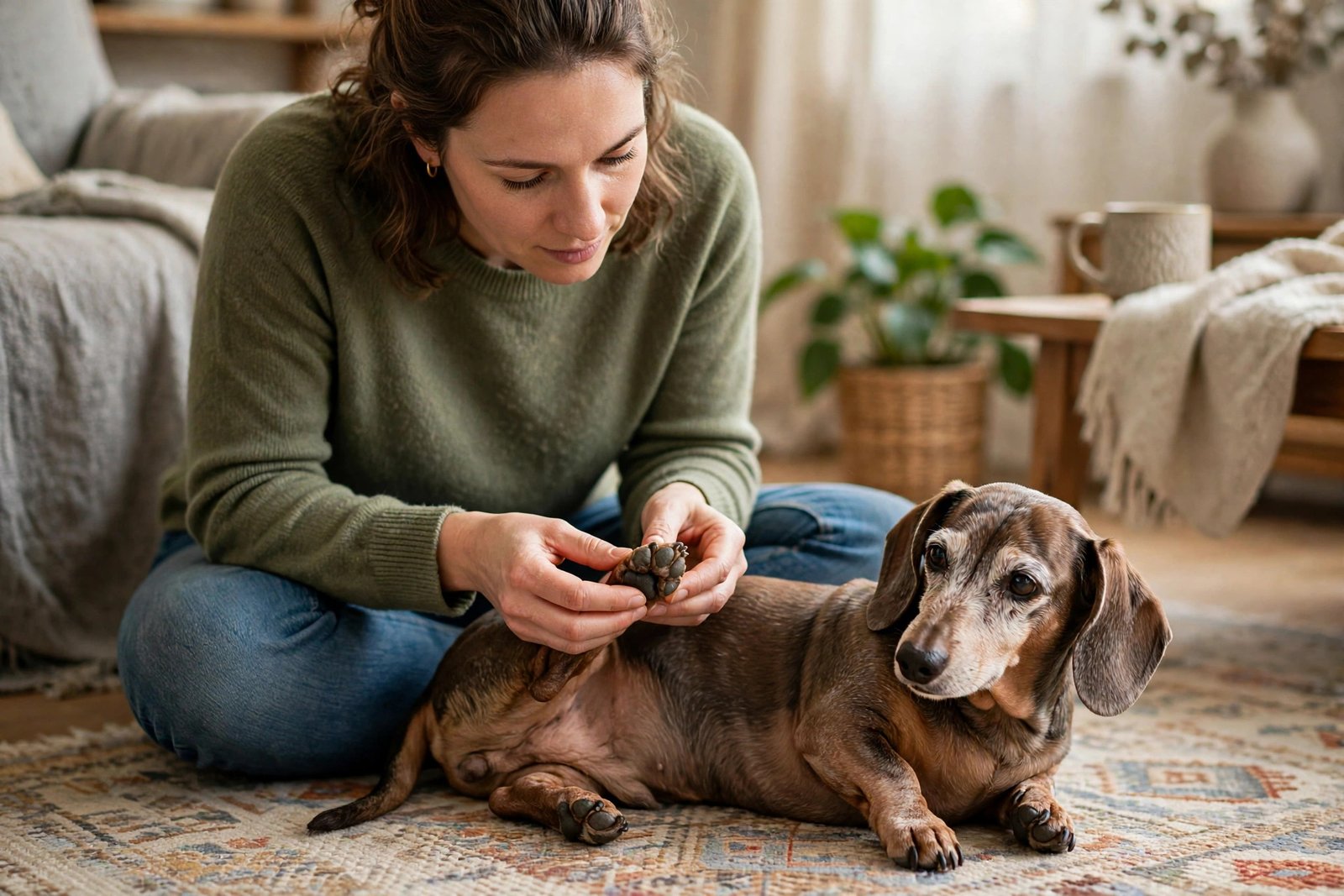
Once a week, do a gentle hands-on check. Run a hand lightly along the back and watch for flinching, tensing, or crying. Lift the dog correctly, supporting chest and hindquarters, and note any yelping or stiffness afterward. Check the paws for dragging marks or worn nails on one side, which can signal an uneven gait. Keep the check gentle and brief, and stop if the dog shows pain.
Write a short weekly note. A few lines are enough: movement, appetite, rest, and any new sign, with the date. Over weeks, this note shows whether change is gradual and stable or sudden and worsening, and it gives a veterinarian concrete information instead of a general impression. Bring the note to every visit, and update it after any veterinary advice so the next note reflects the new plan.
Do not try to test the dog with jumps, stairs, or fast play to see if it can still do them. Forcing a movement that hurts can worsen a problem and does not give useful information. The daily check is observation, not a test, and any doubt should lead to a veterinary call rather than a home experiment.
4. Home Adjustments That Help a Senior Dog Either Way
Whether a senior dog is aging normally or showing early back signs, the same home adjustments help. Ramps beside beds and sofas remove jumping, which is the single most useful change for an older Dachshund. A ramp should be gentle, non-slip, and wide enough for a confident walk, and it should stay in place so the dog uses it every time.
Flooring matters too. Non-slip runners on busy routes, rugs in resting areas, and mats at doorways give an older dog grip and confidence. Keep floors dry, clear clutter from walking routes, and avoid rugs with curled edges that trip a stiff dog. A dog that slips less moves more confidently, and confidence itself reduces hesitation and stiffness.
Resting spots should be low, warm, and easy to reach. An orthopedic-style bed on the floor, away from drafts and traffic, lets a senior dog rest without climbing. Keep water, food, and a resting spot on the same floor as the dog spends most of its time, so it does not need stairs for basic needs. If stairs are unavoidable, use a gate and carry the dog correctly, or use a ramp where one fits safely.
Weight control becomes more important with age, because extra weight adds load to a back that is already less flexible. Measure food, count treats, and adjust portions with veterinary guidance as activity falls. A lean senior dog moves more easily than a heavy one, and weight control is one of the few factors an owner can directly improve.
For a full daily framework, the guide to a Dachshund back care daily routine for apartments covers ramps, rest, feeding, and gentle movement together. Use it to build a steady routine, and adjust it as the dog ages rather than changing everything at once.
5. Working With a Veterinarian Over Time
Senior dogs benefit from regular veterinary visits even when they seem well. A visit every six months, or as a veterinarian advises, gives a baseline of weight, movement, and general health, and it means a new sign can be compared with a recent normal examination rather than with a distant memory. Bring the weekly note, a list of current food and treats, and any questions about movement or behavior.
Ask about pain management, weight targets, and activity levels at these visits, and ask what signs should prompt an earlier visit. A veterinarian may suggest gentle exercise, weight adjustment, or further examination, and may also reassure an owner that a particular change is normal aging. Both outcomes are useful, and neither can be reached safely from an article alone.
Between visits, call sooner rather than later when a new sign appears. A veterinarian would rather hear about a sign early, when advice is simple, than late, when a problem has worsened. Describe the sign, when it started, whether it is constant or intermittent, and what the weekly note shows. Avoid starting any new supplement, pain relief, or exercise program without veterinary guidance, because treatments that help one condition can harm another.
End-of-life decisions are not part of this guide, but planning ahead helps. Knowing a veterinarian’s advice, keeping the home comfortable, and focusing on quality of life, appetite, comfort, and enjoyment, rather than on a single ability such as jumping, gives an older dog the best daily life. A dog that no longer jumps but still enjoys walks, food, and company is living well, and that matters more than any one lost skill.

Signs Comparison Checklist
| Change | More like normal aging | More like a back problem |
|---|---|---|
| Speed | Gradual slowing over months | Sudden slowing or refusal to move |
| Posture | Normal posture, slower gait | Hunched back, low head, tucked belly |
| Pain | No crying or flinching | Yelping, flinching, crying when lifted |
| Coordination | Even gait, both sides similar | Dragging, knuckling, wobbling, falling |
| Toileting | Stable habits | Sudden loss of control |
| Appetite | Steady | Sudden loss with movement change |
Common Mistakes
- Dismissing every change as old age and waiting for a crisis.
- Treating every slowing as an emergency and changing everything at once.
- Testing a dog with jumps or stairs to see if it can still do them.
- Starting supplements or pain relief without veterinary guidance.
- Keeping a heavy dog on the same portions as activity falls.
- Not writing anything down, so gradual change goes unnoticed for months.
When to Call Your Vet
Contact a veterinarian promptly if the dog shows pain, yelping when lifted or touched, a hunched back, wobbliness, weakness in the legs, dragging paws, loss of bladder or bowel control, sudden reluctance to move, or any sudden change in movement, appetite, or toileting. This article gives general information only and is not a diagnosis. A veterinarian can examine the dog, ask about recent changes, and advise on examination or care. Do not attempt home treatment for suspected back pain, and avoid stairs, jumping, and active play until veterinary advice has been received if signs are present. A second reason to call a veterinarian is a gradual change that continues over weeks, such as steadily increasing stiffness, slowly worsening weakness, or a steady loss of a previously normal ability, because gradual back problems also need veterinary attention.
Pin This: Senior Back Signs Checklist
- Note movement, appetite, and rest every week.
- Gradual and even usually fits aging; sudden or painful does not.
- Watch for hunching, wobbling, dragging, and crying when lifted.
- Use ramps, rugs, and a low bed for every senior dog.
- Control weight as activity falls, with veterinary guidance.
- Visit a veterinarian regularly, and call sooner for new signs.
- Never test a dog with jumps or stairs to check its back.
Frequently Asked Questions
Is it normal for a senior Dachshund to sleep much more?
Yes, gradually sleeping more over months is normal aging, provided appetite, toileting, and enjoyment of walks and company remain steady. A sudden increase in sleep with other changes deserves veterinary attention.
How can I tell stiffness from normal morning slowness?
Normal morning slowness loosens within minutes and stays even through the day. Stiffness that lasts, worsens, or comes with pain, hunching, or reluctance to move is different and should be mentioned to a veterinarian.
Should a senior Dachshund still use stairs?
Many senior dogs do better without stairs. Use ramps where possible, gates where not, and correct carrying for unavoidable stairs, with veterinary guidance for the individual dog.
Does weight matter more for senior Dachshunds?
Yes, because extra weight adds load to a less flexible back. Measure food, count treats, and adjust portions as activity falls, with veterinary guidance.
How often should a senior Dachshund see a veterinarian?
Every six months is a common pattern, or as a veterinarian advises for the individual dog. Bring a weekly note and questions about movement and behavior to each visit.
Conclusion
Senior Dachshund back signs vs normal aging comes down to pattern: gradual, even, and stable usually fits aging, while sudden, uneven, or painful change needs a veterinarian. Start a simple weekly note today, and use it to guide your next veterinary conversation.






4 Comments