
Dachshund Ear Care at Home: A Gentle Weekly Routine
Quick Answer
- Check a Dachshund’s ears once a week, looking for redness, swelling, odor, discharge, or a change in how the dog holds its head.
- Clean only the outer, visible part of the ear with a veterinarian-approved ear cleaner and a soft cloth or cotton pad, never with a cotton swab pushed into the canal.
- Keep ears dry after baths and rainy walks, and dry the outer ear gently with a soft towel.
- Contact a veterinarian promptly for head shaking that does not settle, scratching that breaks the skin, a strong odor, dark discharge, or any sign of pain.
Contents
- 1. Why Dachshund Ears Need Regular Attention
- 2. The Weekly Ear Check: What to Look and Smell For
- 3. Safe Cleaning Steps for the Outer Ear
- 4. Baths, Rain, Swimming, and Keeping Ears Dry
- 5. Building a Calm Ear-Care Routine at Home
- Ear Care Comparison Checklist
- Common Mistakes
- When to Call Your Vet
- Pin This: Ear Care Checklist
- Frequently Asked Questions
- Conclusion
Dachshunds have long, floppy ears that fold over the ear opening. That shape is part of the breed’s charm, but it also means air reaches the ear canal less easily than it does in a dog with upright ears. Warmth and moisture can linger under the flap, and debris from walks, grooming, or play can collect where it is hard to see. A short, gentle weekly routine catches small changes early, before they become uncomfortable for the dog.
Ear care at home means looking, smelling, and gently cleaning only what is visible, and knowing when a change needs a veterinarian. It fits naturally into a weekly grooming session and takes only a few minutes in a small apartment.
1. Why Dachshund Ears Need Regular Attention
The ear flap, called the pinna, covers the opening of the ear canal in a Dachshund. When the flap lies flat, it limits airflow and traps a small pocket of warm, humid air next to the skin. Moisture from baths, rain, or a humid apartment can stay in that pocket longer than an owner expects. Over time, that damp, warm setting can irritate the skin inside the ear and make it easier for debris or natural ear wax to build up.
Dachshunds also spend a lot of time close to the ground. Their short legs put their ears near grass, dust, and floor-level debris during walks and play. A dog that sniffs through long grass, shakes after a bath, or rolls on a rug can move debris toward the ear opening. None of this is unusual, and none of it means the owner has done something wrong. It simply means ears deserve a regular look, in the same way paws deserve a check after a walk.
Early signs of ear trouble are often subtle. A dog may shake its head a little more than usual, scratch at one ear, hold an ear slightly lower, or shy away when the ear is touched. Some dogs become quieter or less interested in play when an ear is sore, while others show no change in mood at all. A weekly check gives the owner a baseline: what the ears normally look and smell like when the dog is well. Without that baseline, it is harder to notice a gradual change.
Ear care also supports the wider grooming routine. Teeth, coat, skin, and ears are checked together in a healthy home routine, and a problem in one area sometimes draws attention to another. The guide to Dachshund dental care at home covers a gentle brushing routine that pairs well with a weekly ear check, because both routines rely on short, calm sessions and a dog that trusts being handled. Keeping those sessions short and positive matters more than doing everything perfectly in one sitting.

2. The Weekly Ear Check: What to Look and Smell For
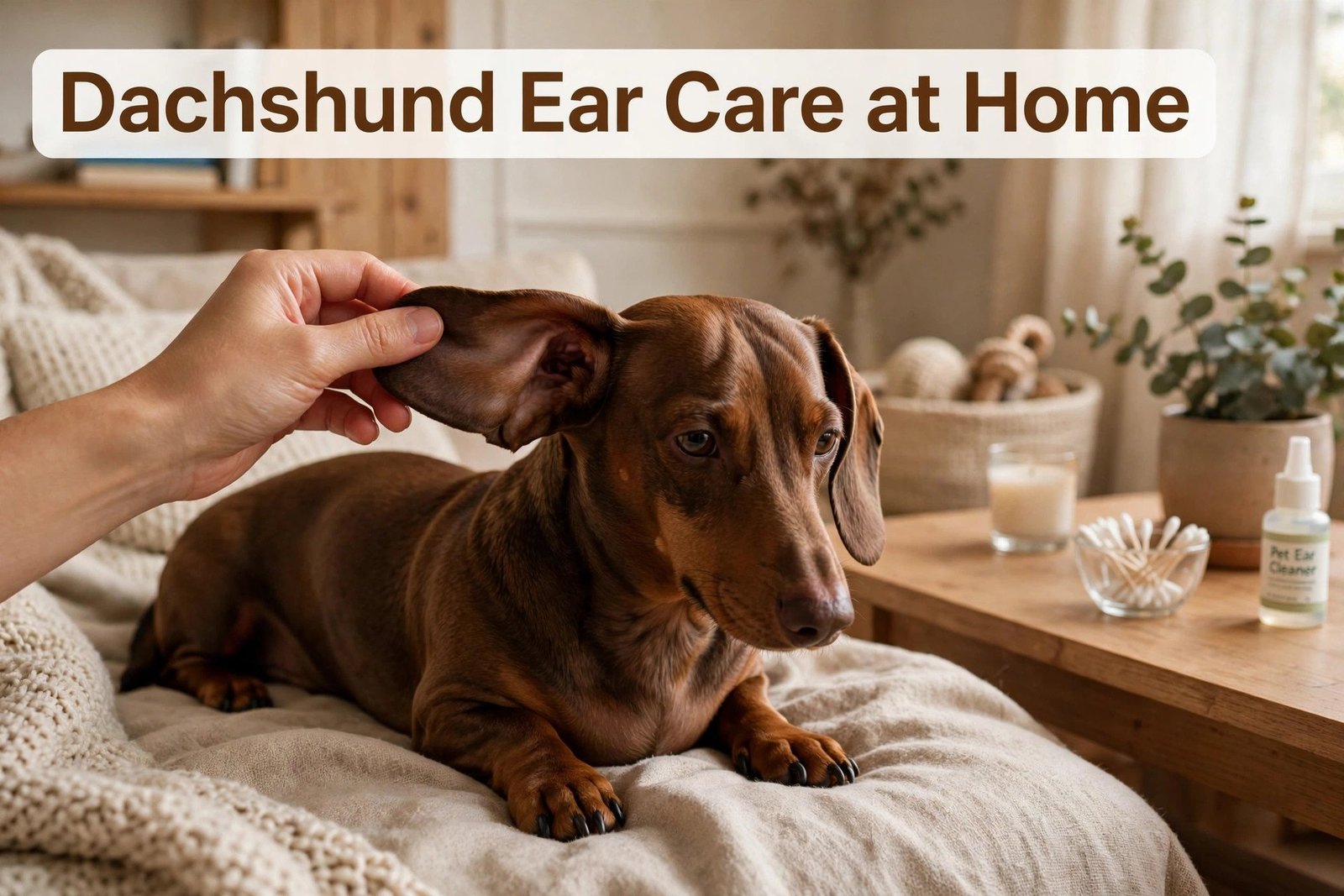
Choose a calm moment for the check, such as after a walk when the dog is settling, or during a quiet evening at home. Sit beside the dog rather than looming over it, and let the dog sniff your hands first. Lift the ear flap gently, just enough to see the outer ear and the start of the canal. Do not pull the flap hard, fold it back sharply, or press on the ear. The check should be comfortable; if the dog pulls away, pause, offer a calm word, and try again briefly.
Look at the skin of the outer ear first. Healthy outer-ear skin is usually a consistent color for that dog, without bright redness, swelling, or broken skin. A small amount of light-colored wax is normal in many dogs. Look for changes from the dog’s usual state rather than comparing one dog to another, because ear color and wax amount vary between dogs. Check both ears, even if only one seems to bother the dog, because comparing the two sides often makes a change easier to spot.
Smell the ear from a short distance, without pressing your nose into the canal. A healthy ear has little or no strong odor. A sour, yeasty, or unusually strong smell is a reason to contact a veterinarian, even if the dog seems comfortable. Also look for discharge: dark, thick, or colored material, or any wetness that was not there after a bath, deserves veterinary attention rather than repeated home cleaning.
Watch the dog’s reaction during the check. Flinching, yelping, growling, or repeatedly pulling one ear away can mean soreness, even if the ear looks normal from the outside. Note what you see, briefly, so a change over several weeks is easier to track. A simple note such as “left ear slightly red, no odor” is more useful than relying on memory. If anything is unclear, a veterinarian can examine the ear canal properly, which home checks cannot do.
3. Safe Cleaning Steps for the Outer Ear
Cleaning is only needed when the outer ear has visible dirt or wax, and it should always be gentle. Start with clean hands and a soft cotton pad or a piece of gauze, plus a veterinarian-approved ear cleaner if a veterinarian has recommended one for the dog. Do not use alcohol, hydrogen peroxide, vinegar mixtures, or homemade solutions unless a veterinarian has specifically advised them, because these can irritate the skin inside the ear.
Dampen the cotton pad lightly with the ear cleaner, rather than pouring cleaner directly into the ear canal. Wipe only the parts of the ear that are easy to see and reach: the inner surface of the flap and the outer folds. Use a fresh section of the pad as it picks up dirt, and stop if the dog shows discomfort. Never push a cotton swab, a finger, or any tool into the ear canal. The canal in a dog is L-shaped, and pushing material deeper can pack debris against the eardrum or injure the skin.
If the outer ear is only slightly dusty, a dry soft cloth may be enough, and no cleaner is needed. Avoid over-cleaning: cleaning a healthy ear every day can dry or irritate the skin and remove the natural protection of the ear. Once a week, or after a bath or a muddy walk, is enough for most dogs. If wax or dirt returns quickly after cleaning, or if cleaning seems to be needed every day, contact a veterinarian instead of increasing the cleaning frequency.
After cleaning, let the dog shake its head naturally if it wants to, and check that no cotton fibers remain in the ear folds. Offer a calm reward, such as a quiet word or a small treat that fits the dog’s daily feeding plan, and finish the session while the dog is still relaxed. A short, uneventful cleaning session makes the next one easier. A long, stressful session makes the dog dread the next check, which is the opposite of what a home routine should do.
4. Baths, Rain, Swimming, and Keeping Ears Dry
Water is the most common reason a Dachshund’s ears stay damp. During a bath, water can run under the ear flap and sit in the outer ear. During a rainy walk, the flap can trap rainwater in the same way. Swimming adds more water and, in some cases, debris from the water itself. None of these activities need to be avoided, but each one should end with a drying step.
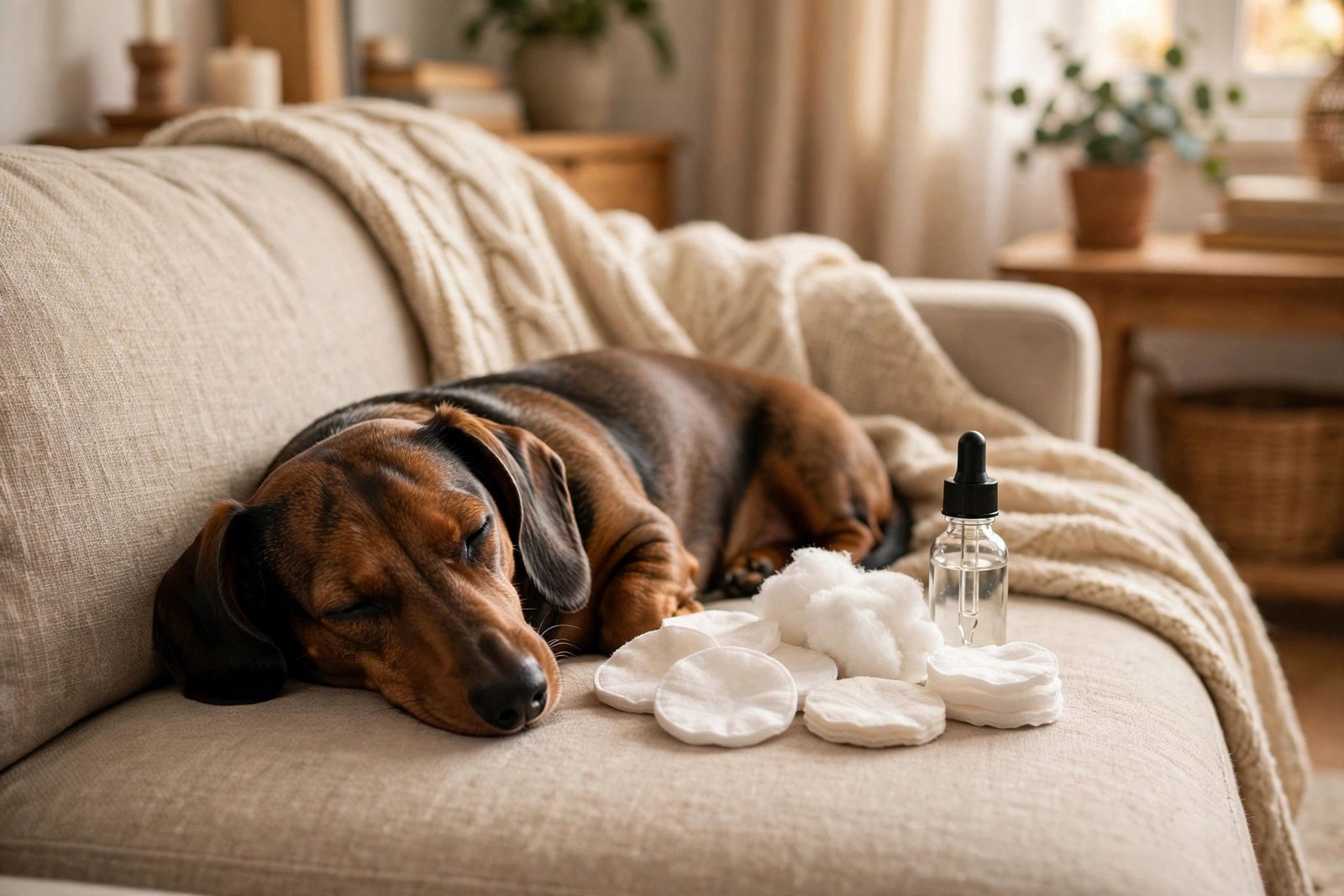
During a bath, keep the head mostly dry. Wash the body first, and clean the face and ears last, with a damp cloth rather than a stream of water. If water does get into the outer ear, dry the flap and the visible folds gently with a soft towel afterward. Do not use a hair dryer on a hot setting near the ears, and do not insert anything into the canal to dry it. A gentle towel dry of the outer ear is enough for home care.
After a rainy walk, dry the ears along with the paws and belly. In a humid apartment, or during a season when the home feels damp, the weekly check matters even more, because ears dry more slowly. If the dog swims, a veterinarian may advise a specific drying routine for that dog; follow that advice rather than a general guide, because swimming frequency and ear history differ between dogs.
5. Building a Calm Ear-Care Routine at Home
The best ear routine is the one that actually happens every week. Tie it to something the owner already does, such as the weekly coat brushing or the dental routine, so it does not depend on remembering a separate task. Keep supplies together in one place: cotton pads, a soft cloth, and any veterinarian-approved cleaner, stored where they are easy to reach but out of the dog’s way.
Start with handling before cleaning. For a dog that is new to ear checks, spend the first sessions simply lifting the flap, looking briefly, and rewarding calm behavior, without any cleaning at all. Add a wipe only when the dog accepts the look without pulling away. Keep each session to a few minutes, and end while the dog is calm, even if the check is not fully finished. A partial, calm session is better than a complete, stressful one.
Children and visitors should follow the same gentle approach. A dog that is used to one calm handler can become wary if another person handles its ears roughly. Show anyone who helps with grooming how to lift the flap gently and when to stop. If the dog is in pain or shows signs of ear trouble, leave handling to the owner and the veterinarian until the ear has been examined.
Ear care also fits the wider skin and coat routine. The guide to Dachshund coat and skin care at home covers brushing by coat type and weekly skin, paw, and ear checks, which makes it a natural companion to this guide. When ears, coat, and skin are checked together, a change in one area is less likely to be missed, and the dog gets used to one predictable grooming session rather than several separate ones.

Ear Care Comparison Checklist
| Check | Healthy sign | Contact a vet |
|---|---|---|
| Outer-ear skin | Usual color, no swelling | Bright redness, swelling, broken skin |
| Wax | Small amount, light color | Large amount, dark or thick material |
| Odor | Little or no smell | Strong, sour, or yeasty smell |
| Discharge | None, or dry debris only | Wet, colored, or persistent discharge |
| Behavior | Calm during handling | Head shaking, scratching, flinching, head tilt |
| After water | Dries quickly, no change | Shaking or odor in the days after baths |
Common Mistakes
- Pushing a cotton swab into the ear canal, which can pack debris deeper or injure the skin.
- Using alcohol, peroxide, or homemade mixtures without veterinary advice.
- Cleaning a healthy ear every day, which can dry and irritate the skin.
- Cleaning only the ear that bothers the dog, and missing a change in the other ear.
- Skipping the drying step after baths and rainy walks.
- Continuing home cleaning when odor, discharge, or pain appears, instead of contacting a veterinarian.
When to Call Your Vet
Contact a veterinarian promptly if the dog shows persistent head shaking, scratching that breaks the skin, a head tilt, a strong ear odor, dark or wet discharge, swelling, redness that spreads, or pain when the ear is touched. Also contact a veterinarian if a foreign object, such as a grass seed, may have entered the ear, or if the dog suddenly becomes unsteady or holds its head to one side. This article gives general information only and is not a diagnosis. A veterinarian can examine the full ear canal, identify the cause, and advise on cleaning products and treatment for that dog. Do not start ear drops, ointments, or home remedies for a suspected ear problem without veterinary advice, and avoid repeated cleaning of a sore ear until it has been examined.
Pin This: Ear Care Checklist
- Check both ears once a week, looking and smelling for change.
- Clean only the visible outer ear, with a soft pad, never a swab in the canal.
- Use only a veterinarian-approved cleaner, if one has been recommended.
- Dry the outer ear gently after baths and rainy walks.
- Note changes briefly, so a pattern over weeks is easy to spot.
- Contact a veterinarian for odor, discharge, swelling, or pain.
Frequently Asked Questions
How often should a Dachshund’s ears be checked?
Once a week is a sensible routine for most dogs, with an extra check after a bath, a muddy walk, or a swim. A dog with a history of ear trouble may need a schedule set by a veterinarian.
Can a cotton swab be used to clean a dog’s ear?
No. A cotton swab can push wax and debris deeper into the canal and can injure the skin. Use a soft cotton pad or gauze on the visible outer ear only.
Is a small amount of ear wax normal?
Yes, a small amount of light-colored wax is normal in many dogs. A large amount, a dark color, a thick texture, or a strong odor is a reason to contact a veterinarian.
Should ears be cleaned after every bath?
The outer ear should be dried gently after every bath, but full cleaning is only needed when visible dirt or wax is present. Over-cleaning can irritate the skin.
What if only one ear looks different?
Check both ears and note the difference, then contact a veterinarian if the change includes redness, odor, discharge, swelling, or pain, or if it does not settle within a day or two.
Conclusion
Gentle, weekly ear care is a small habit with a clear payoff: changes are noticed early, cleaning stays simple, and the dog stays comfortable with being handled. Start this week with a calm look at both ears, and keep the same routine going alongside the coat and dental checks.




2 Comments