
Dachshund Paw Wipes and Cleaning Routine After Walks
Quick Answer
- Clean a Dachshund’s paws after every walk to remove mud, salt, grit, and germs before the dog licks them off or tracks them across the apartment floor.
- Use gentle, unscented paw wipes or a damp cloth with warm water, wipe between every toe, and dry the paws fully, especially in winter.
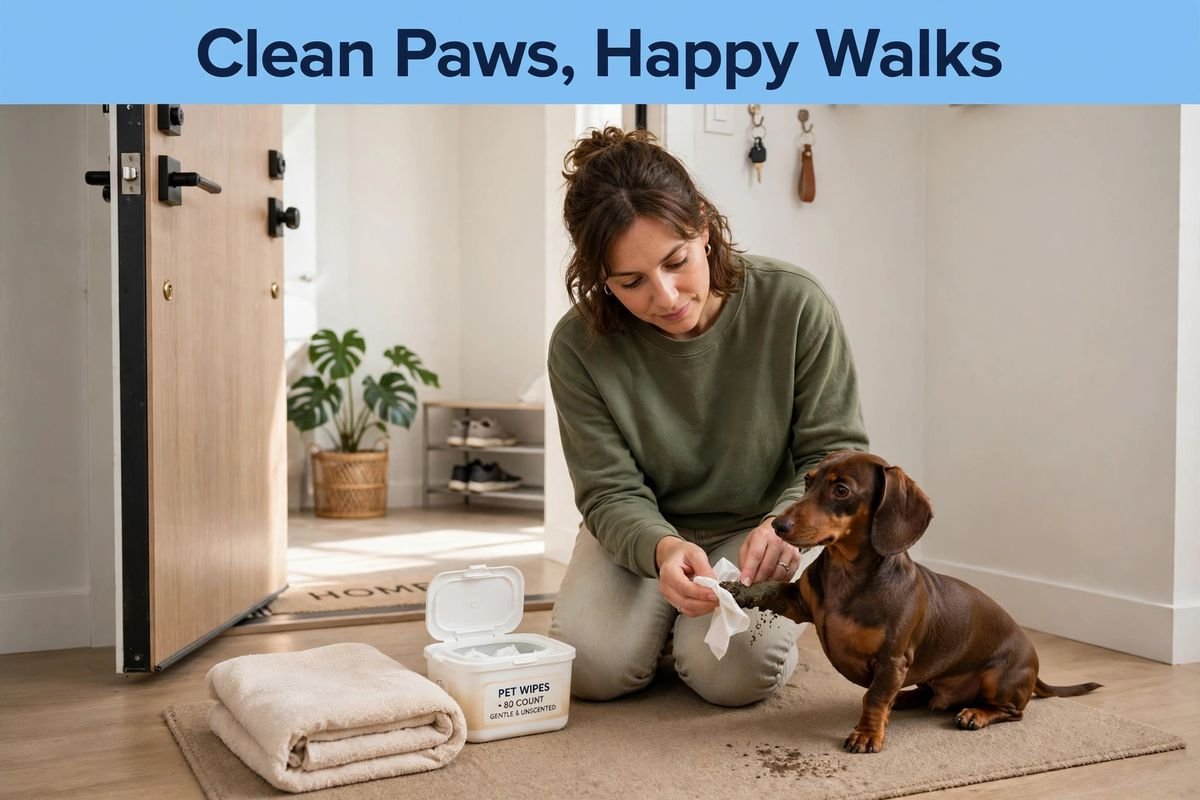
- Keep a paw-cleaning station by the front door, with wipes, a towel, and a small bowl, so the routine takes two minutes and the dog learns what to expect.
- Contact a veterinarian if a paw is cut, swollen, red, or sore, or if the dog limps, licks one paw constantly, or refuses to walk.
Contents
- 1. Why Clean Paws After Every Walk
- 2. Paw Wipes vs Cloth, Bowl, and Paw Washer
- 3. Choosing Gentle Wipes and Safe Ingredients
- 4. A Two-Minute Paw Cleaning Routine
- 5. Winter Salt, Summer Heat, and Paw Checks
- Paw Cleaning Comparison Checklist
- Common Mistakes
- When to Call Your Vet
- Pin This: Paw Cleaning Checklist
- Frequently Asked Questions
- Conclusion
A Dachshund comes home from every walk with its paws full of the street: mud, dust, grit, salt in winter, and germs from pavements, parks, and puddles. A small dog walks close to the ground, and its paws pick up more than a taller dog’s, so those paws need cleaning before the dog walks across the apartment floor, climbs onto the sofa, or licks its feet clean itself. A quick wipe after every walk keeps the home cleaner, and it keeps the paws healthier, because dirt and salt left on the skin can dry it out, crack it, and cause soreness.
This guide explains why paw cleaning matters, which wipes and tools suit a Dachshund, how to choose gentle ingredients, and how to build a two-minute routine that the dog accepts calmly. It is general information about home products, not veterinary advice. A paw that is cut, swollen, or sore needs a veterinarian, and paw wipes are for cleaning healthy paws, not for treating wounds, infections, or skin problems.
1. Why Clean Paws After Every Walk
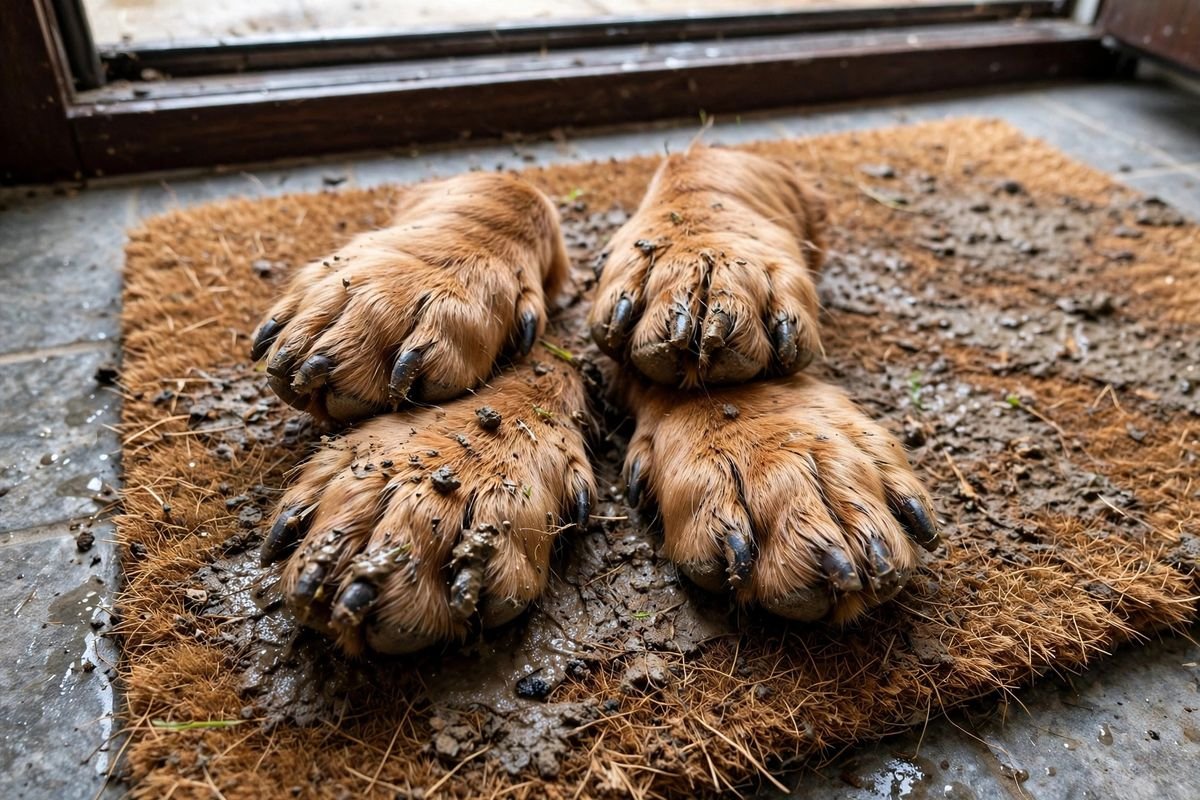
Paws pick up more than mud. Pavements and parks hold dust, grit, and germs, and in winter they hold road salt and grit spread to melt ice, which can burn and dry out the skin between the toes. A dog that licks its paws after a walk swallows whatever was on them, including salt and dirt, and a dog that walks across the apartment with dirty paws spreads that dirt onto floors, rugs, and bedding. Cleaning the paws at the door stops both problems at once, before the dog has a chance to lick or to track dirt inside.
Cleaning is also a daily health check. A owner who wipes each paw after every walk will notice a cut, a thorn, a cracked pad, or a swelling early, when it is small and easy to treat, rather than days later when the dog is limping. Dachshunds have short legs and small paws, so a small injury can change how they walk, and a dog that walks oddly to protect a sore paw can strain its back or its other legs. A two-minute wipe is therefore a health habit as well as a cleaning habit, and it gives the owner a daily look at all four paws.
Regular cleaning also helps the dog get used to having its paws handled. A dog that is used to a gentle wipe after every walk will accept nail trims, paw checks, and veterinary examinations more calmly, because having its paws touched is normal, not a surprise. A veterinarian can advise if the dog’s paws are often sore, cracked, or red, because that can be a sign of a skin problem that needs treatment.
2. Paw Wipes vs Cloth, Bowl, and Paw Washer
Paw wipes are the simplest option: a pre-moistened, unscented wipe that cleans one paw at a time and is thrown away after use. They suit apartments because they need no water, no bowl, and no drying time, and they can be kept by the front door in a tub or a pack. The drawback is cost and waste, because a pack is used up quickly with four paws after every walk, and some wipes contain scents or chemicals that can irritate a dog’s skin. Choose unscented wipes made for dogs, and keep a pack by the door so they are always ready.
A damp cloth with warm water is the cheapest and gentlest option, and it suits dogs with sensitive skin. A soft cloth, dampened with warm water and wrung out, cleans mud and dust well, and it can be washed and reused, which saves money and waste. Keep two or three cloths by the door, so a clean one is always ready, and wash them with the dog’s bedding.
A paw washer is a small cup with soft bristles inside, filled with warm water, into which each paw is dipped and twisted gently. It cleans mud from between the toes better than a wipe, which suits muddy walks and rainy days, and it uses only water, so there are no chemicals on the skin. The drawback is that the dog must accept having its paw dipped in water, which some dogs dislike, and the washer must be emptied and cleaned after every use. A small bowl of warm water works in the same way, for a dog that will stand with one paw in a bowl while the owner wipes it.
3. Choosing Gentle Wipes and Safe Ingredients
Choose wipes made for dogs, unscented, and free of alcohol, bleach, and strong scents. A dog’s paw skin is thinner and more sensitive than human skin, and a wipe made for people can dry it out or irritate it, especially between the toes where the skin is thinnest. Look for wipes with simple, gentle ingredients, such as water, a mild cleanser, and a soothing ingredient like aloe or oatmeal, and avoid wipes with fragrance, dyes, or antibacterial chemicals unless a veterinarian has advised them.
Check the size and the thickness of the wipe. A wipe should be large enough to clean one paw fully, including between the toes, without falling apart, and thick enough that dirt does not soak through to the hand. Thin, small wipes tear easily and need two or three per paw, which costs more and takes longer, while a large, thick wipe can clean a whole paw and still have a clean side left for the next one.
Store wipes where they will not dry out, with the lid or the seal closed after every use, and keep them away from heat and sunlight. A dried-out wipe is useless, and a pack left open by the door will dry out in a few days. Keep a spare pack in a cupboard, so the routine never stops because the wipes ran out, and check the expiry date, because old wipes can lose their moisture and their cleaning power. The guide to nail and paw care at home explains how wiping, nail trims, and paw checks fit together, and wipes are the daily cleaning part of that care.

4. A Two-Minute Paw Cleaning Routine
Set up a station by the front door: a tub of wipes, a dry towel, and a small mat for the dog to stand on. When the dog comes in, ask it to stand on the mat, and clean one paw at a time, starting with the front paws and working back. Wipe the top of the paw, the pads underneath, and between every toe, where mud and grit collect, then dry the paw with the towel before moving to the next one. A calm voice and a treat at the end teach the dog that the routine is quick, gentle, and worth standing still for.
Keep the routine short and consistent, the same order every time, so the dog learns what to expect. A dog that knows the routine will lift each paw in turn, or at least stand still while the owner works, and a routine that takes two minutes is one the owner will keep up every day. A routine that is calm and quick becomes a habit, while a routine that is a struggle will be skipped.
Finish with a quick check of all four paws: look for cuts, thorns, swelling, redness, or anything stuck between the toes, and check the nails for cracks or breaks. A small cut can be rinsed with clean water and watched, but a deep cut, a swelling, or a dog that will not put weight on a paw needs a veterinarian. Keep the walk essentials ready by the door, because the guide to walk essentials kits for apartments covers the lead, bags, and treats that go out with the dog, and the wipes and towel are the part that waits for it when it comes home.
5. Winter Salt, Summer Heat, and Paw Checks
Winter is the hardest season for paws. Road salt and grit can burn the skin between the toes, dry out the pads, and cause soreness that makes the dog limp, so winter walks need a thorough wipe with warm water, not just a quick wipe, and the paws must be dried fully before the dog settles. A thin layer of paw balm, made for dogs, can protect the pads on cold days, but it should be applied before the walk, not after, and the dog should be stopped from licking it off. Check the paws for salt crystals between the toes, and rinse with warm water if the dog has walked on a salted pavement.
Summer brings a different risk: hot pavements. A pavement in strong sun can burn a dog’s pads, so test it with the back of your hand, and if it is too hot to hold your hand on for five seconds, it is too hot for the dog’s paws. Walk in the early morning or the evening, stick to grass and shaded paths, and check the pads after every summer walk for redness or blistering. A dog that lifts its paws, hops, or refuses to walk on a hot pavement is showing that its paws hurt, and it should be carried to shade at once.
Make a paw check part of the weekly routine as well as the daily wipe. Once a week, look at each paw in good light, check the pads for cracks, the nails for length and breaks, and the skin between the toes for redness or sores. A veterinarian can advise on paw care for a dog with cracked pads, allergies, or skin problems, and can show the owner how to trim nails safely.

Paw Cleaning Comparison Checklist
| Cleaning method | Best for | Limit to watch |
|---|---|---|
| Unscented paw wipes | Quick daily cleans, apartments | Cost, waste, check ingredients |
| Damp cloth and warm water | Sensitive skin, low cost, reusable | Needs a sink, cloth must be washed |
| Paw washer cup | Muddy walks, between the toes | Dog must accept dipping its paw |
| Small bowl of warm water | Winter salt, thorough rinse | Takes longer, needs drying after |
Common Mistakes
- Skipping paw cleaning after a walk, especially in winter.
- Using scented or alcohol wipes made for people.
- Forgetting to clean between the toes, where grit collects.
- Leaving the paws damp, which can cause soreness.
- Using a dirty cloth that holds germs from last week.
- Ignoring a small cut or a swelling until the dog limps.
- Walking on hot pavements or salted paths without a check.
When to Call Your Vet
Contact a veterinarian if a Dachshund has a cut, swollen, red, or sore paw, limps, licks one paw constantly, or refuses to walk, and seek urgent help for heavy bleeding, a deep cut, or a paw that is hot, swollen, and painful. Contact a veterinarian also if the paws are often cracked, red, or itchy, because that can be a sign of allergies or a skin problem that needs treatment. This article gives general information only and does not diagnose any condition. A veterinarian can examine the paw, check for thorns, infection, or injury, and advise on cleaning, balm, and care for that dog. Do not delay veterinary help for a dog that will not put weight on a paw or that seems in pain.
Pin This: Paw Cleaning Checklist
- Clean all four paws after every walk.
- Use unscented wipes or a damp cloth.
- Wipe between every toe, then dry fully.
- Keep wipes, a towel, and a mat by the door.
- Rinse with warm water after salted winter walks.
- Check the paws weekly for cuts and swelling.
- Reward the dog with a treat when the routine is done.
Frequently Asked Questions
Do I need to clean my Dachshund’s paws after every walk?
Yes. Paws pick up mud, dust, grit, salt, and germs on every walk, and a quick wipe at the door stops the dog licking them off or tracking them across the floor. Cleaning is also a daily health check, so a cut or a swelling is noticed early, when it is small and easy to treat.
Are baby wipes safe for a dog’s paws?
Not always. Baby wipes can contain scents, alcohol, or chemicals that irritate a dog’s paw skin, especially between the toes. Choose wipes made for dogs, unscented, and free of alcohol and strong scents, or use a damp cloth with warm water, which is the gentlest option of all.
How do I clean between my Dachshund’s toes?
Gently spread the toes apart with your fingers and wipe between each one with a wipe or a damp cloth, then dry the area fully with a towel. Mud, grit, and salt collect between the toes, so this step matters most, and a paw washer cup can help on very muddy days.
What should I do if a Dachshund’s paw is cut?
Rinse the cut with clean, warm water, check for anything stuck in it, and watch it closely. A small cut may heal with rest and clean paws, but a deep cut, heavy bleeding, swelling, or a dog that will not put weight on the paw needs a veterinarian. This article gives general information only.
Can I use paw wipes on a puppy?
Yes, with gentle, unscented wipes made for dogs, or a damp cloth with warm water, which is the safest choice for a puppy.
Conclusion
Clean paws after every walk keep a Dachshund healthy and an apartment clean: a gentle wipe, a check between every toe, and a full dry, in a two-minute routine at the front door. Keep the wipes ready, stay consistent, and check the paws weekly, so small problems are caught early.




One Comment