Dachshund Drinking From Puddles on Walks: Risks to Know
Quick Answer
- Puddle water can carry dirt, chemicals, animal waste, and germs, so a Dachshund should not drink from puddles on walks when fresh water is available.
- Carry fresh water on every walk, offer it before the dog reaches a puddle, and steer around puddles calmly on a short lead.
- If the dog does drink from a puddle, stay calm, offer fresh water, rinse the mouth if the dog allows it, and watch the dog at home.
- Keep the rest of the day quiet, with the normal meal, fresh water, and a simple note of when the dog drank and how it seems.
- Contact a veterinarian if the dog vomits, has diarrhea, seems tired or in pain, refuses food or water, or was seen drinking from a puddle with an oily shine or a chemical smell.
Contents
- 1. Why Puddle Water Is Not Just Water
- 2. Steering Around Puddles: The Walk Routine
- 3. Fresh Water on the Walk: Offer Before the Puddle
- 4. After a Puddle Drink: Rinse, Watch, and Rest
- 5. Keeping Notes and Knowing What to Watch For
- Puddle Drinking Checklist: What to Do and When
- Common Mistakes
- When to Call Your Vet
- Pin This: Puddle Drinking Checklist
- Frequently Asked Questions
- Conclusion
1. Why Puddle Water Is Not Just Water
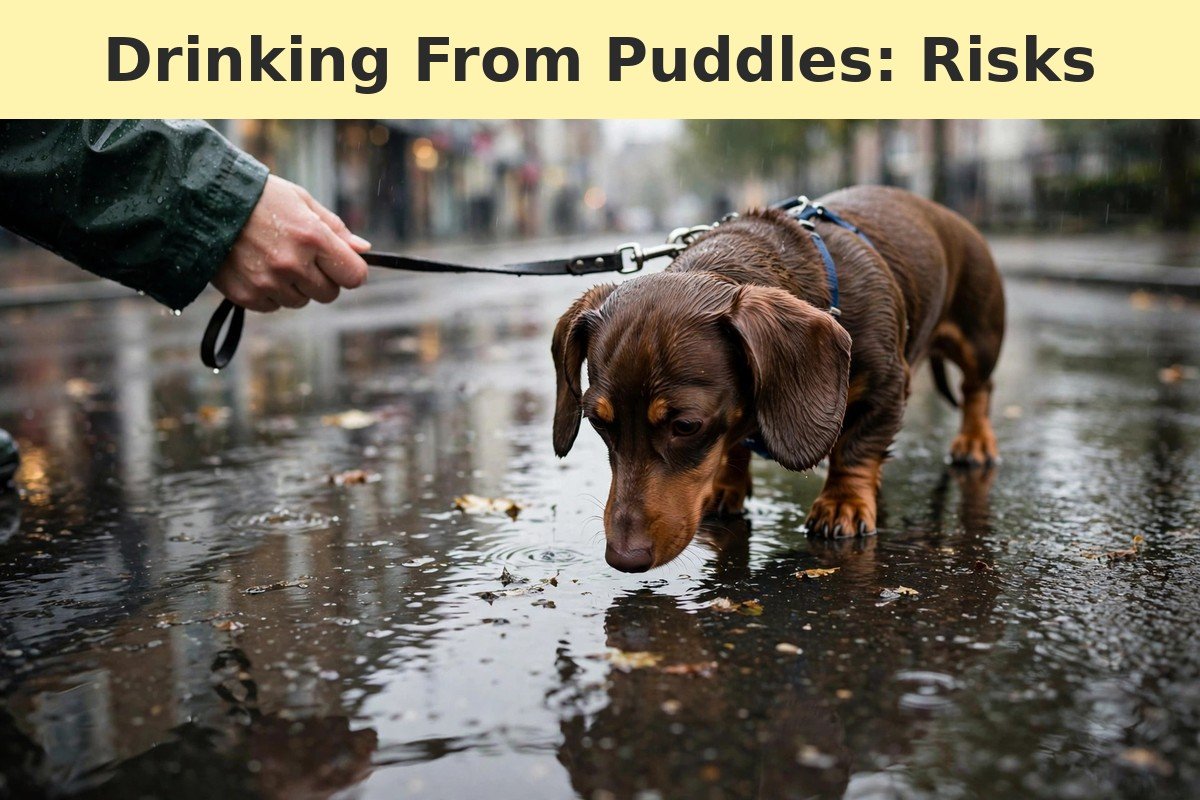
A puddle looks like water, and to a thirsty Dachshund on a walk it smells like water, but what is in it is often very different from the water in the bowl at home. Rainwater that has sat on a road, a pavement, or a car park has picked up everything it has run over: dirt, oil from cars, salt and grit from winter roads, fertilizer from gardens, and waste from other animals. A puddle in a park can hold bird droppings, rat urine, and germs from the soil. A puddle near a building site or a garage can hold chemicals that the owner cannot see and the dog cannot smell. The water may look clear, and it may still be unsafe, because the things that make a dog ill are often invisible.
The risks are real but they are not all the same. The most common result of drinking puddle water is a stomach upset: vomiting, loose stool, or a dog that goes off its food for a day. Less often, puddle water can carry germs that cause a more serious illness, with fever, tiredness, and diarrhea that lasts for days. Some puddles hold antifreeze, weed killer, or spilled fuel, and those are dangerous even in small amounts. A puddle with an oily rainbow shine on its surface, a strong chemical smell, or a strange color should never be touched by a dog, and the owner should steer the dog away at once. The owner cannot test a puddle by looking at it, so the safest rule is simple: no puddle is a drinking bowl.
Disc degeneration in Dachshunds can begin in the first year of life, so a dog that becomes ill from puddle water and then vomits or moves stiffly is a dog whose back is under extra strain as well as its stomach. The guide to a hydration and water routine for apartments covers fresh water at home.
2. Steering Around Puddles: The Walk Routine
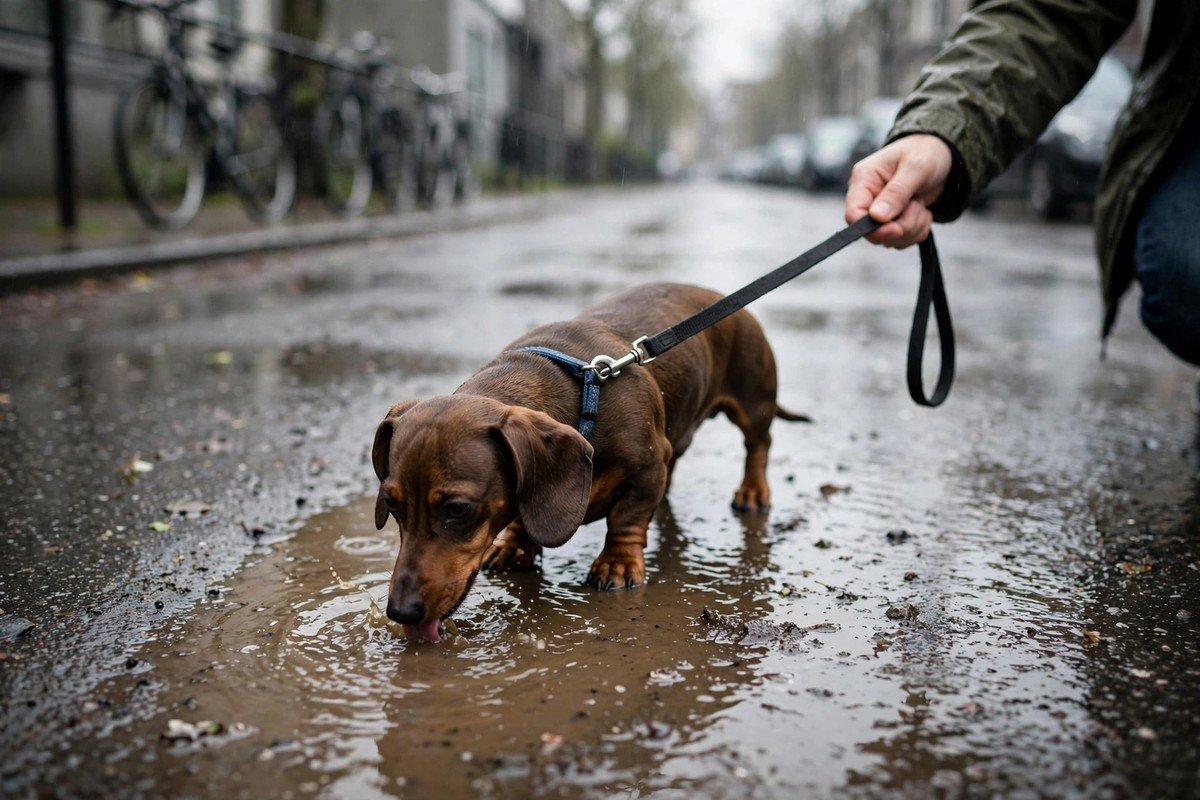
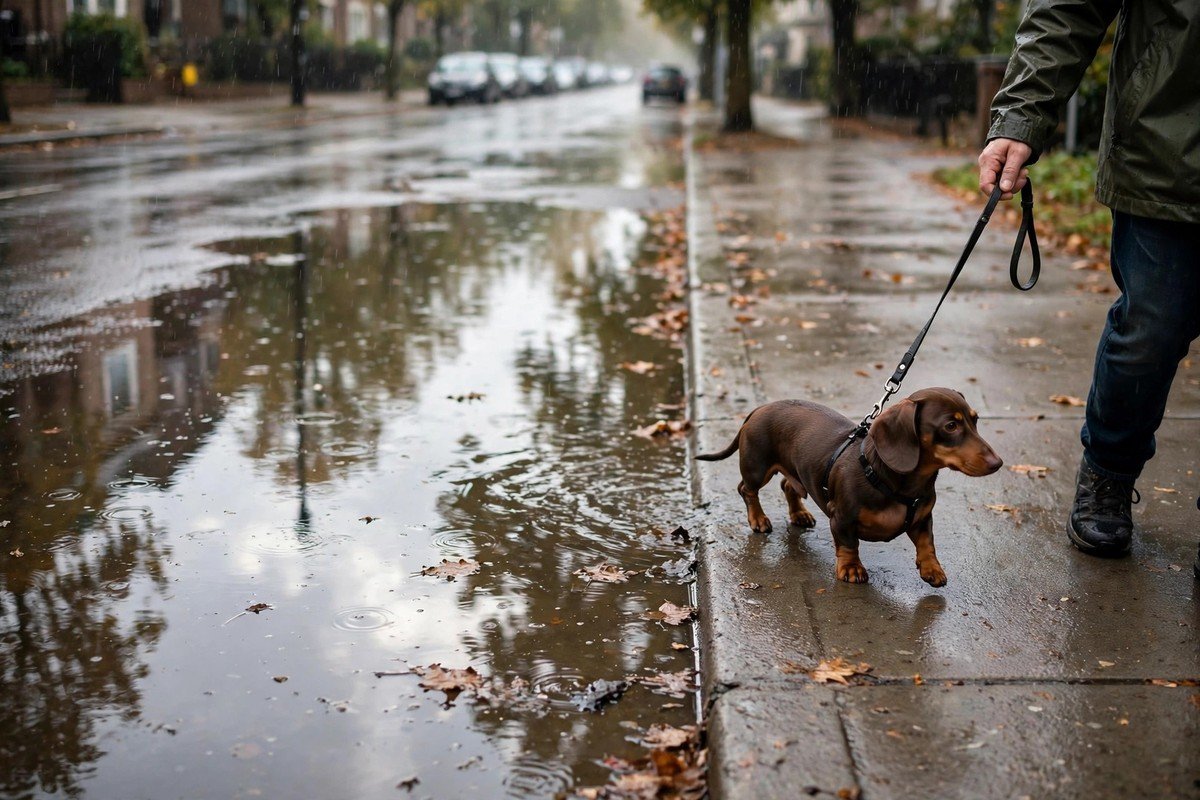
Steering around puddles starts with the lead. Keep the lead short on wet days, about a meter long, so the dog stays close to the owner’s side and cannot dart to a puddle at the edge of the pavement. Walk on the dry side of the pavement where possible, and cross the road or step around a puddle calmly, without pulling hard on the lead. A sudden yank on the lead can hurt a Dachshund’s neck and back, so the steering should be gentle: a slight change of direction, a quiet word, and a treat for walking past. The dog learns over time that walking past a puddle is normal, and the owner learns the puddles on the usual route and plans around them.
Choose the route with puddles in mind. After rain, a park path, a low corner of the pavement, and the edge of a car park are where puddles gather, and a route that stays on higher, drier ground will have fewer of them. A short, level walk on a dry pavement is better on a wet day than a long walk through a park full of standing water. If the usual route is flooded, take a shorter route, or wait for the puddles to drain before going out. There is no rule that says a walk must be long to count. A short walk with fresh water offered on the way is better than a long walk where the dog drinks from every puddle it finds.
3. Fresh Water on the Walk: Offer Before the Puddle
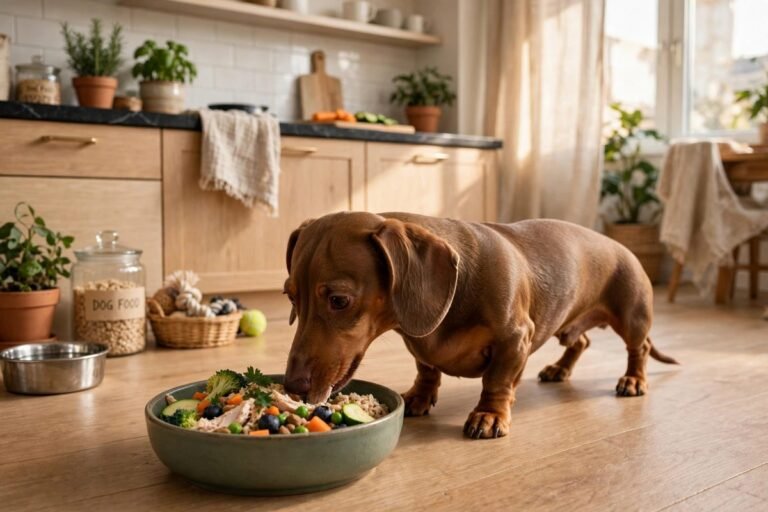
Fresh water on the walk is the heart of this routine, because a dog that is not thirsty does not need a puddle. Before leaving the apartment, fill a small portable bottle or a collapsible bowl with fresh, cool water, and carry it on every walk, even a short one. Offer water at the start of the walk, before the dog gets thirsty, and offer it again halfway through, especially on a warm day or a long walk. Hold the bowl steady, let the dog drink at its own pace, and pour away any water the dog does not drink rather than saving it for later, because a bowl that has been carried around all day can pick up dirt of its own.
At home, keep the water routine steady too. A Dachshund that has drunk well before the walk is a dog that starts the walk hydrated, and a dog that comes home to a full, clean bowl will drink there instead of looking for water outside. The guide to water bowl cleaning and hygiene explains how to keep the bowl clean, because a dirty bowl can put a dog off drinking at home and send it looking for water on the walk. Wash the bowl every day with warm water, rinse it well, and fill it with fresh water each morning and evening. A clean bowl, in the usual place, is the first line of defense against puddle drinking.
4. After a Puddle Drink: Rinse, Watch, and Rest
If the dog does drink from a puddle, stay calm and act simply. Move the dog away from the puddle gently, on a short lead, and offer fresh water from the bottle at once. A drink of fresh water afterwards can help wash the mouth and dilute what was swallowed, and a dog that drinks fresh water willingly is a reassuring sign. If the dog allows it, wipe the mouth gently with a clean, damp cloth, and wipe the paws and belly as well, because a dog that has walked through a puddle will lick its paws later and swallow more of the same water. Do not force the mouth open, and do not try to make the dog vomit. Making a dog vomit at home is dangerous and should never be done without a veterinarian’s advice.
When home, give the dog fresh water in its clean bowl, and let it drink at its own pace. Wipe the paws, belly, and legs with a damp cloth to remove puddle water from the coat, and dry them well with a soft towel. Check the mouth gently for any sign of irritation, and note whether the dog seems normal or not. Keep the rest of the day quiet, with short level walks for toileting, no park visit, and no rough play. Serve the normal meal at the normal time, with the usual food, and watch whether the dog eats normally. A dog that eats, drinks, and moves normally after a puddle drink is usually fine, and the owner can simply keep watching.
5. Keeping Notes and Knowing What to Watch For
A simple note is the most useful tool after a puddle drink, and it costs nothing. On a piece of paper or in a phone note, write the date, the time, and the place of the drink, what the puddle looked like, how much the dog seemed to drink, and how the dog seemed afterwards. Add a line for each meal, each drink of fresh water, each toilet trip, and any sign that appears, with the time. Keep the note going for two days, because some germs take a day or more to show up as vomiting or diarrhea. A dog that is well for two days after a puddle drink is almost certainly fine, and the note can stop.
Know the signs that matter most. Vomiting once, with the dog otherwise bright and drinking, is often a passing upset, but vomiting more than once, or vomiting with diarrhea, tiredness, or refusal of food and water, needs a veterinarian call. Diarrhea that lasts more than a day, diarrhea with blood in it, or a dog that strains and seems in pain needs a call the same day. A dog that becomes dull, lies flat and will not get up, or refuses water after a puddle drink needs a call the same day too. Puppies and seniors need a call sooner than a healthy adult, because they become weak faster and have less reserve to cope with a stomach upset.
The Cornell guide to chondrodystrophy and intervertebral disc disease explains the breed background that makes a calm, steady walk routine so important for a Dachshund.

Puddle Drinking Checklist: What to Do and When
| When | What to Do | What to Watch For |
|---|---|---|
| Before the walk | Fill a bottle with fresh water; offer water at home | Dog starting the walk already thirsty |
| On the walk | Short lead; steer around puddles; offer fresh water | Pulling toward a puddle; sniffing a puddle for a long time |
| If the dog drinks | Move away gently; offer fresh water; wipe mouth and paws | Oily shine; chemical smell; strange color in the puddle |
| At home | Fresh water in a clean bowl; normal meal; quiet rest | Vomiting; loose stool; tiredness; refusal of food or water |
| Next two days | Keep the note going; watch stool, appetite, and energy | Signs that appear a day later; diarrhea with blood |
Common Mistakes
- Leaving home without fresh water, and leaving the dog to find water in puddles.
- Letting the dog drink from a puddle because the water looks clear, when the risk is invisible.
- Pulling hard on the lead to drag the dog away from a puddle, and hurting its neck and back.
- Trying to make the dog vomit at home after a puddle drink, instead of calling a veterinarian.
- Using a shared bowl outside a shop, or a fountain, as if it were clean drinking water.
- Changing the food or fasting the dog after a puddle drink, without a veterinarian’s advice.
- Forgetting to wipe the paws and belly, so the dog licks puddle water off its coat later.
- Stopping the watch after a few hours, when some signs take a day or more to appear.
When to Call Your Vet
Contact a veterinarian if a Dachshund vomits more than once, has diarrhea that lasts more than a day, has blood in the stool, refuses food or water, seems tired, dull, or in pain, or has a sore belly after drinking from a puddle. Contact a veterinarian the same day if the dog drank from a puddle with an oily shine, a chemical smell, or a strange color, or near a garage or building site, even if the dog seems well. Contact a veterinarian urgently if the dog cannot stand, has severe vomiting or diarrhea, or collapses. A veterinarian can examine the dog and advise on care, and the Animal Medical Center guide to intervertebral disc disease in dogs explains the signs that need prompt attention. This article gives general information only and is not a diagnosis.
Pin This: Puddle Drinking Checklist
- Carry fresh water on every walk, and offer it before the puddle.
- Keep the lead short on wet days and steer around puddles.
- Teach a calm “leave it” and reward turning away from puddles.
- If the dog drinks, offer fresh water and wipe mouth and paws.
- Watch for vomiting, diarrhea, or tiredness for two days.
- Call a veterinarian early if the puddle smelled of chemicals.
Frequently Asked Questions
Is it okay for my Dachshund to drink from a rain puddle once?
One lap from a clean rain puddle will usually cause no harm, and the owner should not panic. The risk grows with dirty puddles, puddles near roads or garages, and drinking that becomes a habit, so the routine in this article is about keeping every walk safe, not about one unlucky lap.
What is in puddle water that can make a dog ill?
Puddle water can carry dirt, oil, road salt, fertilizer, animal waste, and germs from the soil, and some puddles hold antifreeze, weed killer, or spilled fuel. The owner cannot tell by looking whether a puddle is safe, so the safest rule is to offer fresh water from home and steer around every puddle.
How do I stop my Dachshund drinking from puddles?
Carry fresh water and offer it before the dog gets thirsty, keep the lead short on wet days, steer around puddles calmly, and teach a simple “leave it” with a reward for turning away. A dog that is not thirsty, and that is rewarded for walking past, will stop diving for puddles over a few weeks.
My Dachshund drank from a puddle and vomited once. What should I do?
Offer fresh water, keep the dog quiet, serve the normal meal at the normal time, and watch the dog through the day and the next morning. Contact a veterinarian if the dog vomits again, has diarrhea, refuses food or water, or seems tired or in pain, and note the time of the drink and the vomiting for the call.
Can my Dachshund drink from a stream or fountain instead?
No, not as a safe choice. A stream can carry waste from upstream, a fountain can hold the same germs as a puddle, and a shared bowl can carry germs from other dogs. The only water the owner can trust on a walk is the fresh water carried from home in a clean bottle.
Conclusion
Puddle water is not drinking water: carry fresh water on every walk, offer it before the dog gets thirsty, steer around puddles on a short lead, and if the dog does drink, offer fresh water, wipe the mouth and paws, keep a simple note, and watch for two days. The routine takes little effort, and it keeps a walk from ending in a stomach upset.