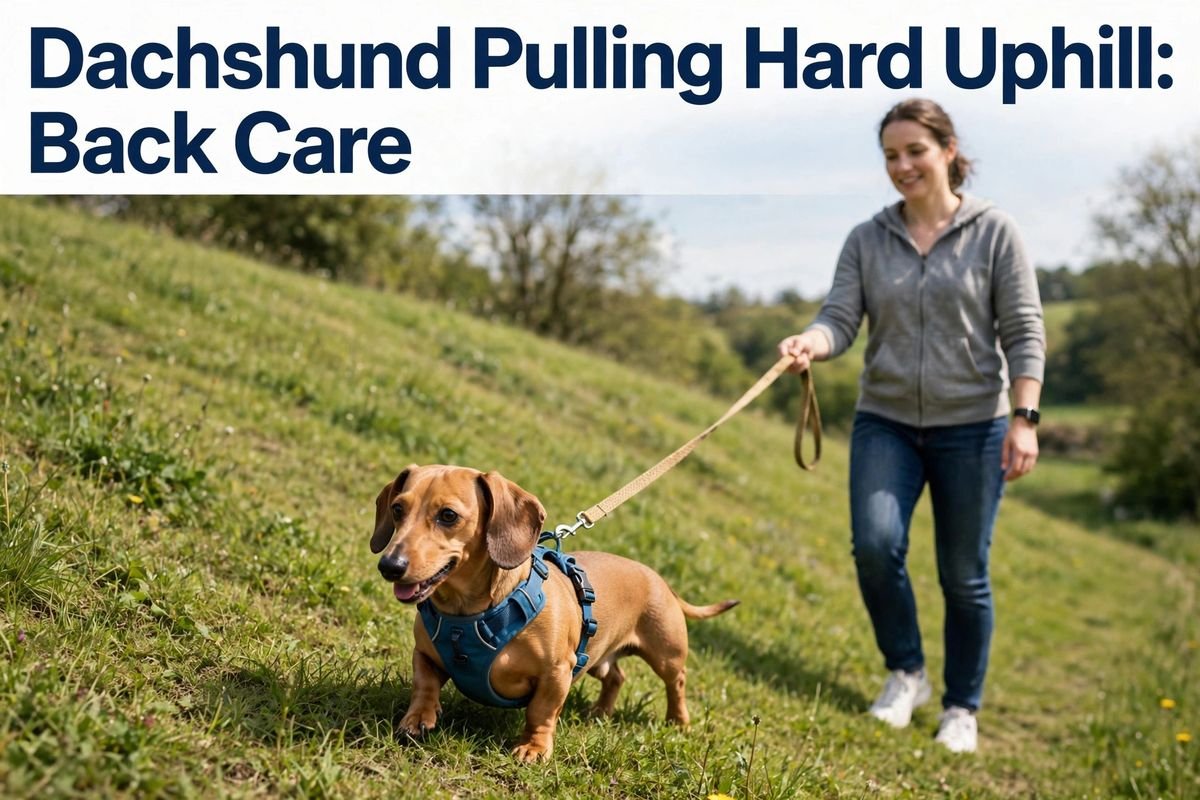
Dachshund Pulling Hard on the Leash Uphill: Back Care
Quick Answer
- A Dachshund pulling hard on the leash uphill loads the long back with every step, because the dog leans forward, arches its spine, and pulls against the leash while climbing.
- Fit a harness that sits flat on the chest and back, with no pressure on the neck, and check the fit before every walk.
- Use stop-and-wait: when the leash pulls tight, stop, wait for the dog to turn back or slacken the leash, and then walk on calmly.
- Choose flat routes where possible, and keep uphill walks short, slow, and in the cooler hours.
- Contact a veterinarian if the dog yelps when the harness is put on, flinches when the back is touched, or moves stiffly after a walk.
Contents
- 1. Why Pulling Uphill Loads a Dachshund’s Back
- 2. Harness Fit: The First Fix for a Pulling Dog
- 3. Stop-and-Wait: Teaching a Loose Leash on a Slope
- 4. Choosing Flat Routes and Shorter Hills
- 5. Warming Up, Cooling Down, and Building a Calmer Walk
- Pulling Uphill Checklist: Before, During, and After the Walk
- Common Mistakes
- When to Call Your Vet
- Pin This: Dachshund Pulling Uphill Back Care
- Frequently Asked Questions
- Conclusion
1. Why Pulling Uphill Loads a Dachshund’s Back
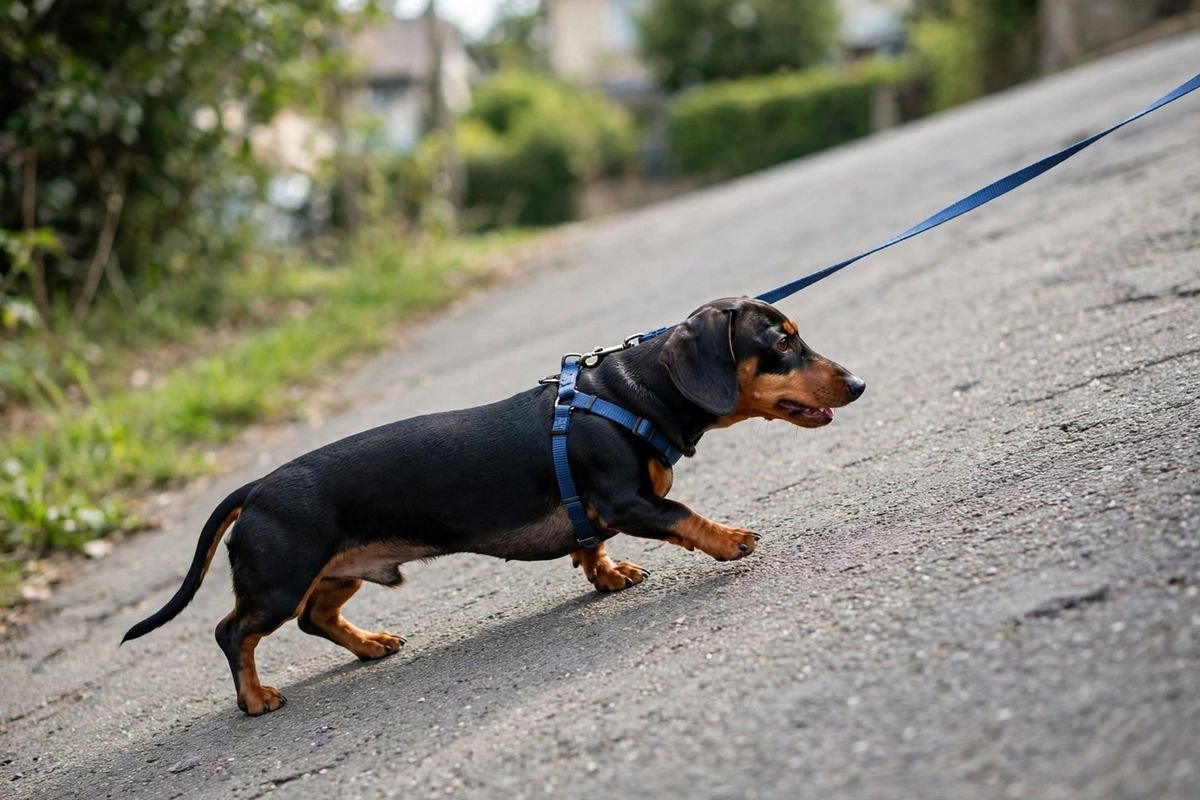
A Dachshund pulling hard on the leash uphill is a back care problem because of how the body moves on a slope. Going uphill, a dog leans forward, pushes hard with the back legs, and arches the spine to drive itself up. Add a tight leash, and the dog pulls forward against that pressure as well, so the neck, chest, and spine all work against resistance at the same time. Vets commonly advise at-risk dogs to avoid sudden, high-impact movement, and a hard pull uphill, repeated on every walk, is a daily version of that load.
Disc degeneration in short-legged breeds can begin in the first year of life, so a young Dachshund can already have a spine that reacts to repeated pulling. The load is not one pull. It is the pattern: every hill on every walk, day after day, with the dog straining at the end of the leash and the owner pulling back. A dog that pulls hard is also a dog that cannot turn, stop, or change pace easily, so it cannot protect itself when the slope gets steeper or the ground gets uneven.
Excitement makes the pull worse. A dog that sees another dog, a squirrel, or a familiar corner at the top of a hill will pull harder, faster, and with less control. A dog that is cold at the start of a walk, and has not warmed up, will pull with stiff muscles, and stiff muscles load the spine more than warm ones. The fix is not to pull back harder, which only adds pressure, but to change the walk itself: a better harness, a slower pace, a flat route, and a calm stop-and-wait habit.
2. Harness Fit: The First Fix for a Pulling Dog
A harness that fits well spreads pressure across the chest and back, and keeps it off the neck and spine. A collar pulls on the neck, and a neck pull on a dog that is already leaning uphill can arch the back and strain the throat. A harness, fitted correctly, lets the dog pull without that neck pressure, and it gives the owner a steady point of control at the chest. The harness fitting guide for back support covers measuring and fitting in detail, and the fit should be checked before every walk, not just once when the harness is new.
Check the fit with two fingers. Slide two fingers under each strap: they should fit snugly, with no pinching and no loose gap. The chest strap should sit flat across the breastbone, not up near the throat, and the back strap should sit flat along the spine, not twisted to one side. The harness should not slide forward when the dog pulls, and it should not rub under the front legs, where the skin is thin. A harness that rubs will make the dog pull more, not less, because the dog tries to escape the rub.
Size the harness to the dog, not to the label. A mini Dachshund and a standard Dachshund need different sizes, and a growing puppy will outgrow a harness in a few months. Check the fit after a meal, after a walk, and in different seasons, because a thick winter coat changes the fit. If the harness leaves marks on the fur, or the dog flinches when it is put on, the fit is wrong, and the walk should wait until the harness is adjusted or replaced. A well-fitted harness is the first fix, and it makes every other fix easier.
3. Stop-and-Wait: Teaching a Loose Leash on a Slope
Stop-and-wait is a simple habit: when the leash pulls tight, the walk stops. The owner stands still, holds the leash steady without pulling back, and waits. The dog will usually turn back, look at the owner, or take a step back, and the leash slackens. At that moment, the owner walks on calmly, in a quiet voice. The dog learns that a tight leash stops the walk, and a loose leash starts it again, and that lesson works on a hill just as well as on flat ground.
Practice stop-and-wait on flat ground first, before trying it on a hill. A short, flat walk, with many stops, teaches the habit without the added load of a slope. Keep the sessions short, five to ten minutes, and end while the dog is still walking well. On a hill, stop more often, and keep the stops calm: no shouting, no yanking, and no dragging the dog back. A calm stop is a lesson, and a yank is a jolt to a long back.
Use the pause well. While waiting, let the dog sniff the ground, look around, and settle. Sniffing calms a dog, and a calm dog pulls less. If the dog will not slacken the leash after a minute of waiting, turn around and walk a few steps back down the hill, then try again. A short, calm reset is better than a long, frustrated stand-off on a steep slope. Over days and weeks, the stops get fewer, the leash stays looser, and the hill gets easier for the dog and the owner.
4. Choosing Flat Routes and Shorter Hills
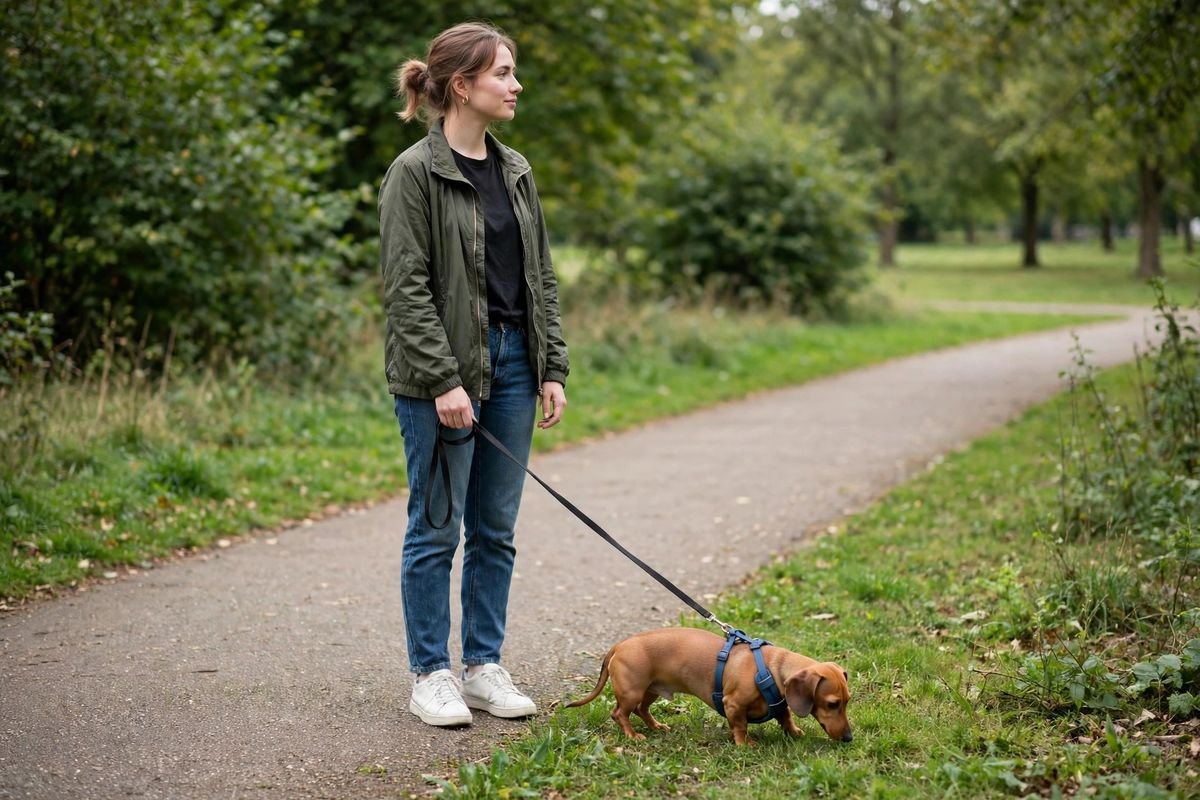
The easiest fix for pulling uphill is to walk somewhere flat. A flat route removes the slope, and with it the lean, the arch, and the hard push from the back legs. Look for flat streets, park paths, and level pavements near home, and plan a route that stays flat for most of the walk. A route that is flat for ten minutes is better than a route that is short but steep, because the dog can walk at a steady, level pace the whole way.
When a hill cannot be avoided, make it short and slow. Walk up the gentlest slope available, at the dog’s own pace, with frequent stops. Let the dog sniff at the bottom of the hill, walk up slowly, and rest at the top before walking on. A hill that is walked slowly, with pauses, loads the back far less than a hill that is rushed at full speed. If the hill is long, split it: walk halfway up, rest in the shade, and then finish the climb, or turn around and walk a flat route instead.
Time the walk for cooler hours, when the dog is less tired and less keen to rush. A hot, tired dog pulls harder and with less control, and a cold, stiff dog pulls with muscles that have not warmed up. A morning walk, after a gentle warm-up indoors, is the best time for a hill, and a midday walk in the heat is the worst. A flat route in the heat is better than a hill at any time, and the owner who plans the route the night before will find the flat one faster in the morning.
5. Warming Up, Cooling Down, and Building a Calmer Walk
A warm-up before the walk makes a hill easier. Let the dog wander indoors for a few minutes, walk slowly around the apartment, and loosen up before going outside. A cold dog that goes straight onto a hill will pull with stiff muscles, and that stiffness adds to the load on the spine. The gentle warm-up guide for stiff Dachshunds before walks explains how a slow indoor start prepares the body, and the same few minutes fit before an uphill walk.
Cool down after the walk in the same slow way. Come home, offer water, and let the dog rest on a soft bed on the floor, with no stairs or jumping. Watch how the dog moves over the next hour: a dog that settles calmly and rises easily later has had a good walk, and a dog that lies stiffly or refuses to move needs a shorter, flatter walk next time. Keep a short note for the first few weeks: route, hill length, how hard the dog pulled, and how it moved afterward. The note shows whether the flat routes and stop-and-wait are working.
Build the calmer walk over weeks, not days. A dog that has pulled uphill for years will not stop in one walk, and the owner should not expect it to. Small gains, a looser leash on one hill, a calmer stop on another, add up to a walk that is easier on the back. A dog that walks on a loose leash, on flat ground, at a steady pace, is a dog that can enjoy walks for years, and that is the goal the routine is building toward.

Pulling Uphill Checklist: Before, During, and After the Walk
| When | What to Do | What to Watch For |
|---|---|---|
| Before the walk | Check harness fit; warm up indoors; plan a flat route | Harness flat; dog moves freely; route planned |
| On a hill | Walk slowly; stop-and-wait when the leash pulls tight | Leash slackens; back level; steady pace |
| During the walk | Pause for sniffing; offer water in the shade | Dog settles at stops; breathing stays easy |
| After the walk | Water, rest on a soft bed, no stairs or jumping | Dog rises easily later; no stiffness |
| Each week | Note the route, the pull, and the morning after | Leash looser; hills easier; mornings loose |
The checklist works best when it is followed in the same order every time. A routine followed every time makes it easy to spot the day something changes, because the owner knows what a normal walk looks like.
Common Mistakes
- Using a collar on a dog that pulls uphill, so every pull strains the neck and arches the back.
- Pulling back hard on the leash, which adds pressure instead of teaching a loose leash.
- Choosing a steep hill every day, when a flat route is available nearby.
- Skipping the warm-up, and going straight from rest onto a cold, steep hill.
- Yanking the dog back when it pulls, instead of stopping calmly and waiting for slack.
- Keeping the harness too loose or too tight, so it slides, rubs, or leaves marks on the fur.
- Expecting the pull to stop in one walk, and giving up on stop-and-wait after a day.
- Ignoring stiffness after an uphill walk, and repeating the same steep route the next day.
When to Call Your Vet
Contact a veterinarian if the dog yelps when the harness is put on, flinches when the back is touched, or moves stiffly after a walk, or if pulling uphill seems to cause pain. Contact a veterinarian urgently if the dog cannot move its back legs, loses bladder control, or is in severe pain. A veterinarian can examine the dog and advise whether the walk routine needs to change, and the Animal Medical Center guide to intervertebral disc disease in dogs explains the signs that need prompt attention. The DachsLife study, published in 2015, found that evidence on exercise in Dachshunds is observational and mixed, which is why a cautious, flat-route routine is a sensible choice. The Cornell guide to chondrodystrophy and intervertebral disc disease explains the breed background behind that caution. This article gives general information only and is not a diagnosis.
Pin This: Dachshund Pulling Uphill Back Care
- Fit a harness that sits flat, with no pressure on the neck.
- Stop and wait when the leash pulls tight, then walk on calmly.
- Choose flat routes, and keep hills short and slow.
- Warm up indoors before the walk, and cool down after it.
- Note the route, the pull, and how the dog moves the next morning.
- Call a veterinarian if stiffness or yelping follows a walk.
Frequently Asked Questions
Why does my Dachshund pull hard uphill?
A hill asks the dog to lean forward and push hard with its back legs, and excitement at the top of the hill adds to the pull. A tight leash, a cold start, or a collar that pulls on the neck can all make the pull harder.
Is a harness better than a collar for a pulling Dachshund?
A well-fitted harness spreads pressure across the chest and back and keeps it off the neck, which is kinder for a long-backed dog that pulls. Check the fit with two fingers under each strap, and replace the harness if it slides or rubs.
How does stop-and-wait work?
When the leash pulls tight, stop walking and wait for the dog to turn back or slacken the leash, then walk on calmly. The dog learns that a tight leash stops the walk, and a loose leash starts it again.
Should I avoid hills completely?
Flat routes are the best daily choice, but a short, gentle hill walked slowly, with pauses, is fine for most dogs. Avoid long, steep hills every day, and rest the dog if it stiffens after a climb.
What if my Dachshund is sore after an uphill walk?
Let the dog rest on a soft bed, offer water, and watch how it moves over the next few hours. If soreness, stiffness, or yelping lasts more than a day, contact a veterinarian for advice.
Conclusion
Pulling uphill loads a Dachshund’s back, but a fitted harness, stop-and-wait, and a flat route change the walk completely. The next step is to check the harness fit today, and to plan a flat route for tomorrow’s walk.