Dachshund Barking at Tradesperson or Cleaner: Quiet Plan
Quick Answer
- Dachshund barking at tradesperson or cleaner usually means the dog sees a stranger doing strange things in its home, moving furniture, carrying tools, and making new noises.
- A work visit is harder than a friendly visit, because the visitor stays longer, moves around the home, and does not stop to greet the dog.
- Set up a calm room for the dog before the visit, with a bed, a chew, and a closed door between the dog and the work.
- Introduce the dog to the visitor calmly at the door, then settle the dog in its room before the work begins.
- Most Dachshunds improve within two to three weeks of planned visits, with shorter barking bursts and faster settling in their room.
Contents
- 1. Dachshund Barking at Tradesperson or Cleaner Explained
- 2. Why a Work Visit Is Harder Than a Friendly Visit
- 3. The Work Visit Plan: Room, Introduction, and Settling
- 4. Real Work Visits: Cleaners, Plumbers, and Long Jobs
- 5. Keeping Work Visits Calm for Good
- Work Visit Calm Plan
- Common Mistakes
- When to Call Your Vet
- Pin This: A Calmer Work Visit
- Frequently Asked Questions
- Conclusion
1. Dachshund Barking at Tradesperson or Cleaner Explained
Dachshund barking at tradesperson or cleaner starts with a stranger who does not behave like a guest. A guest sits down, talks to the owner, and often bends down to greet the dog. A tradesperson walks straight past the dog, carries a toolbox into the kitchen, and starts making noise. A cleaner moves from room to room, shifts furniture, and runs a vacuum. To the dog, this is not a visit. It is a stranger taking over the home, and barking is the dog’s way of saying so.
The tools and the noises make it worse. A drill, a hammer, and a vacuum all sound strange, and they come from different rooms at different times. The dog cannot see where the noise is coming from or predict what will happen next. The barking often follows the worker from room to room, getting louder each time the worker moves.
The length of the visit matters too. A friendly visitor stays for an hour and talks, while a tradesperson can be in the home for a whole morning, and a cleaner can be there every week. A dog that barks for five minutes at a guest can bark for an hour at a worker, and an hour of barking leaves the dog tired, stressed, and even more likely to bark next time. The fix is to give the dog a job that lasts as long as the visit: a calm room, a chew, and a routine it knows.

2. Why a Work Visit Is Harder Than a Friendly Visit
A friendly visit follows a script the dog knows. The bell rings, the owner opens the door, the visitor steps in, everyone sits down, and the dog settles. A work visit has no script. The visitor may arrive early, knock instead of ringing, go straight to the bathroom, and come back with a ladder. The dog has no idea what comes next, and a dog that cannot predict the next minute will bark at every minute. The guide to a calm greeting routine for visitors covers the friendly-visit script, and the work visit needs a different script of its own.
A cleaner is a special case, because the cleaner comes every week and the dog must learn to live with a regular stranger. The first few visits are the hardest, because the dog meets a new person, new smells, and new cleaning products all at once. Over time the cleaner becomes familiar, and the barking usually fades, but only if the first visits are handled calmly. A bad first visit, with the dog barking at the cleaner for an hour, can set the pattern for months.
A tradesperson also brings the smell of other homes and strong materials, and a Dachshund’s nose notices all of it. The dog may bark at the smell before it barks at the person. The answer is the same in every case: distance, a calm room, and a routine that does not depend on who the visitor is.
3. The Work Visit Plan: Room, Introduction, and Settling
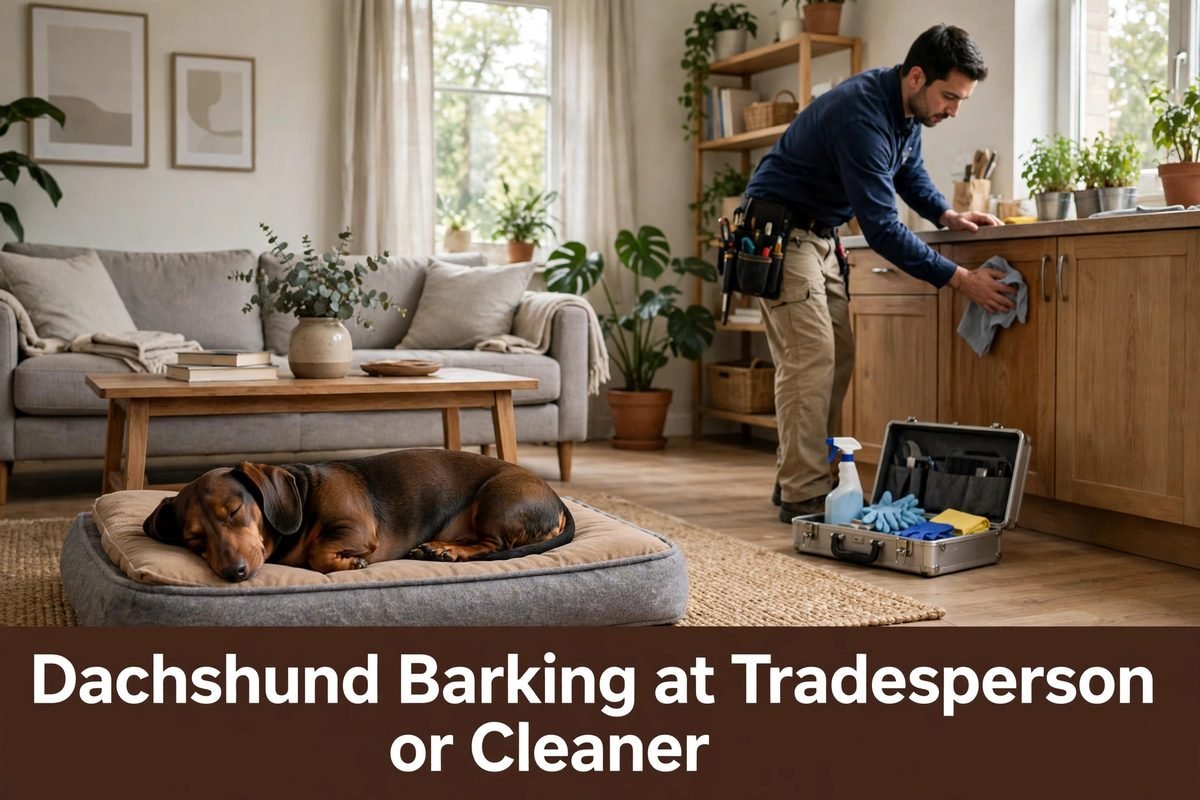
The plan starts the day before the visit, with a calm room. Choose a room far from where the work will happen, put the dog’s bed, blanket, and water bowl in it, and leave a long-lasting chew there. Let the dog spend time in the room on normal days too, so it feels like a favourite place, not a prison. On the day of the visit, settle the dog in the room with the chew before the worker arrives, and close the door. A dog that is already calm in its room when the bell rings will bark far less than a dog that meets the worker at the front door.
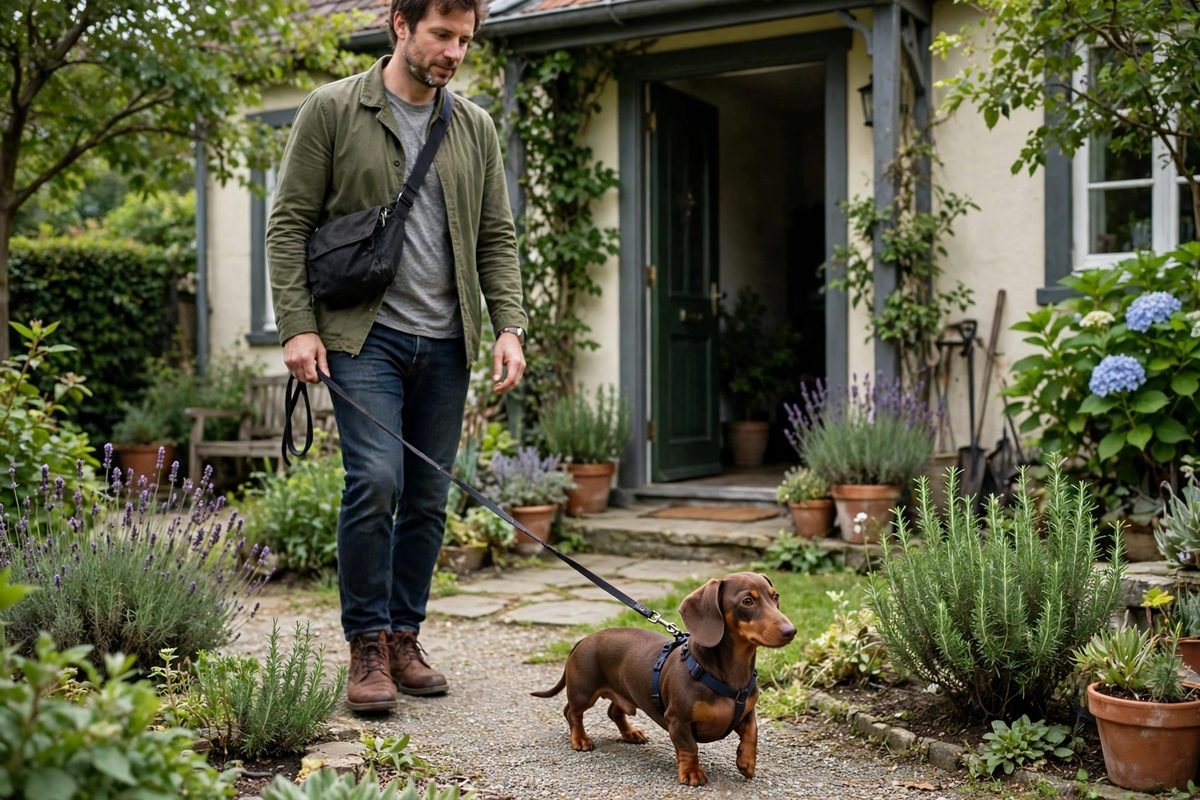
Next, plan a short, calm introduction at the door. Open the door with the dog on a lead, let the dog see the visitor, drop a treat when the dog looks at the visitor calmly, and then take the dog to its room. Keep the introduction under a minute. The dog does not need to greet the worker or to be petted by them. It only needs to see that the owner is calm, that the visitor is expected, and that the next step is the calm room. A new person moving into the home needs the same short, calm first meeting, and the guide to barking when a new person moves in covers that slower introduction in detail.
The third step is settling. Once the dog is in its room, give it the chew and leave it alone. Check on it every twenty minutes, quietly, with a small treat for calm behaviour, and then leave again. Never open the door while the dog is barking, because that teaches the dog that barking opens doors. Wait for a pause, then open the door, drop a treat, and close it again. Gentle handling matters throughout, because disc degeneration in short-legged breeds can begin in the first year of life, so lift the dog calmly if it needs carrying to its room, with support under the chest and the hindquarters.

4. Real Work Visits: Cleaners, Plumbers, and Long Jobs
A regular cleaner needs a regular routine. Use the same room, the same chew, and the same introduction every week, and the dog will learn the pattern within three or four visits. Tell the cleaner the plan in advance, so the cleaner knows not to open the dog’s room door or to call the dog out. A cleaner who follows the plan will become a familiar, boring part of the week, and a boring visitor is exactly what a barking dog needs.
A plumber, an electrician, or a builder brings noise, and noise needs distance. Put the dog’s room as far from the work as possible, close an extra door between them, and play soft background music or a familiar radio station in the dog’s room to soften the banging. Give the dog a chew that lasts, and check on it often. If the work is loud enough to scare the dog, take the dog out for a walk during the noisiest hour, or ask a friend to look after it. A dog that is not in the home cannot bark at the work.
Long jobs that last all day need breaks. Let the dog out of its room for a short, calm walk or a garden break every hour or two, away from the worker, and then settle it back in its room with a fresh chew. A dog that spends all day shut in a room will bark out of frustration, even if it was calm at the start. Short breaks keep the dog comfortable, and a comfortable dog barks less. Always tell the worker when the dog is out of its room, so no doors are left open by mistake.
5. Keeping Work Visits Calm for Good
Work visits stay calm when the routine stays the same. Every tradesperson and every cleaner should get the same treatment: a short introduction at the door, the same calm room, the same chew, and the same quiet checks. If the owner sometimes lets the dog greet the worker and sometimes shuts it away, the dog will keep trying to greet the worker, because it works half the time. Consistency is kinder than variety here, and every person in the household should follow the same plan.
Keep practicing even after the barking improves. A short practice visit, with a friend pretending to be a worker, carrying a bag and walking into the kitchen, keeps the routine fresh. If the barking returns after a new cleaner starts, or after a long break with no visits, go back to the full plan for a few visits and rebuild slowly. Setbacks are normal, and they are not a sign that the training has failed. They are a sign that the dog needs a reminder.
Watch the dog’s body as well as its voice. A dog that settles on its bed, chews slowly, and sleeps through the work is calm. A dog that paces, pants, or scratches at the door is stressed, even if it is quiet, and needs a break, a walk, or more distance from the noise. The dog’s body tells the truth before its voice does, and a calm body is the real goal of the whole plan.
Work Visit Calm Plan
| Step | What to Do | What Good Looks Like |
|---|---|---|
| Day before | Set up the calm room with bed, water, and a chew | Dog uses the room happily on normal days |
| Before arrival | Settle the dog in its room with the chew | Dog is calm in its room when the bell rings |
| At the door | Short introduction on a lead; treat for calm looking | Dog sees the visitor and settles quickly |
| During work | Check quietly every 20 minutes; treat for calm | Dog chews and rests through the work |
| Long jobs | Short walk or garden break every hour or two | Dog stays comfortable all day |
| Every visit | Same room, same chew, same routine | Work visits become boring and calm |
The plan works best when the room comes before the visitor, the introduction stays short, and the dog is checked quietly and often. Keep the routine the same every time, and the dog will learn it too.
Common Mistakes
- Letting the dog meet the worker at the front door with no plan, so the dog barks for the whole visit.
- Shutting the dog in a room it has never used before, so the room feels like a punishment.
- Opening the dog’s room door while it is barking, which teaches the dog that barking opens doors.
- Letting the worker pet the dog or call it out, which restarts the excitement.
- Forgetting to tell the worker the plan, so doors are left open by mistake.
- Leaving the dog in its room all day with no break, so it barks out of frustration.
- Expecting the dog to accept a new cleaner on the first visit without any practice.
- Stopping the routine once the barking improves, so it fades within a few weeks.
When to Call Your Vet
Contact a veterinarian if the barking comes with shaking, hiding for hours, loss of appetite, or a refusal to enter the room where the work happened. Contact a veterinarian promptly if the dog seems in pain, yelps when touched, or shows sudden changes in behavior, such as barking far more than usual or becoming withdrawn. A veterinarian can check whether anxiety, pain, or a health problem is driving the behavior, and can advise on the next steps. This article gives general information only and is not a diagnosis.
Pin This: A Calmer Work Visit
- Set up a calm room the day before, with a bed and a chew.
- Settle the dog in its room before the worker arrives.
- Keep the introduction at the door under a minute.
- Check quietly every twenty minutes and reward calm.
- Give the dog a break every hour or two on long jobs.
- Tell the worker the plan, so no doors are left open.
Frequently Asked Questions
Why does my Dachshund bark at the cleaner every week?
The cleaner is a regular stranger who moves around the home, shifts furniture, and makes new noises, and the dog has never learned that the cleaner is safe. A calm room, a short introduction, and the same routine every week teach the dog that the cleaner is a boring, expected part of the week.
How do I introduce my Dachshund to a tradesperson?
Keep it short and calm. Open the door with the dog on a lead, let the dog see the visitor, drop a treat for calm looking, and then take the dog to its room. The dog does not need to be petted or greeted by the worker. A one-minute introduction is enough.
Should I shut my Dachshund in a room during a work visit?
Yes, if the room is a favourite place with a bed, water, and a chew, and the dog has used it on normal days too. A calm room is kinder than a barking dog following a worker from room to room. Check on the dog quietly every twenty minutes and give it breaks on long jobs.
What if the work is very noisy, like drilling?
Put the dog’s room as far from the noise as possible, close an extra door, and play soft background music in the room. If the noise is still too much, take the dog out for a walk during the noisiest hour, or ask a friend to look after it until the work is done.
Will my Dachshund ever get used to the cleaner?
Most Dachshunds do, within three or four weekly visits, when the routine stays the same. The cleaner becomes a familiar face, the room becomes a habit, and the barking fades. If the barking is getting worse after a month, go back to the full plan and rebuild slowly.
Conclusion
A tradesperson or a cleaner is a stranger doing strange things in the dog’s home, and the fix is a calm room, a short introduction, and the same routine every time. Set up the room the day before, settle the dog before the worker arrives, and check quietly and often. As a next step, pick the calm room today, put the dog’s bed and a chew in it, and let the dog spend time there on a normal day.