
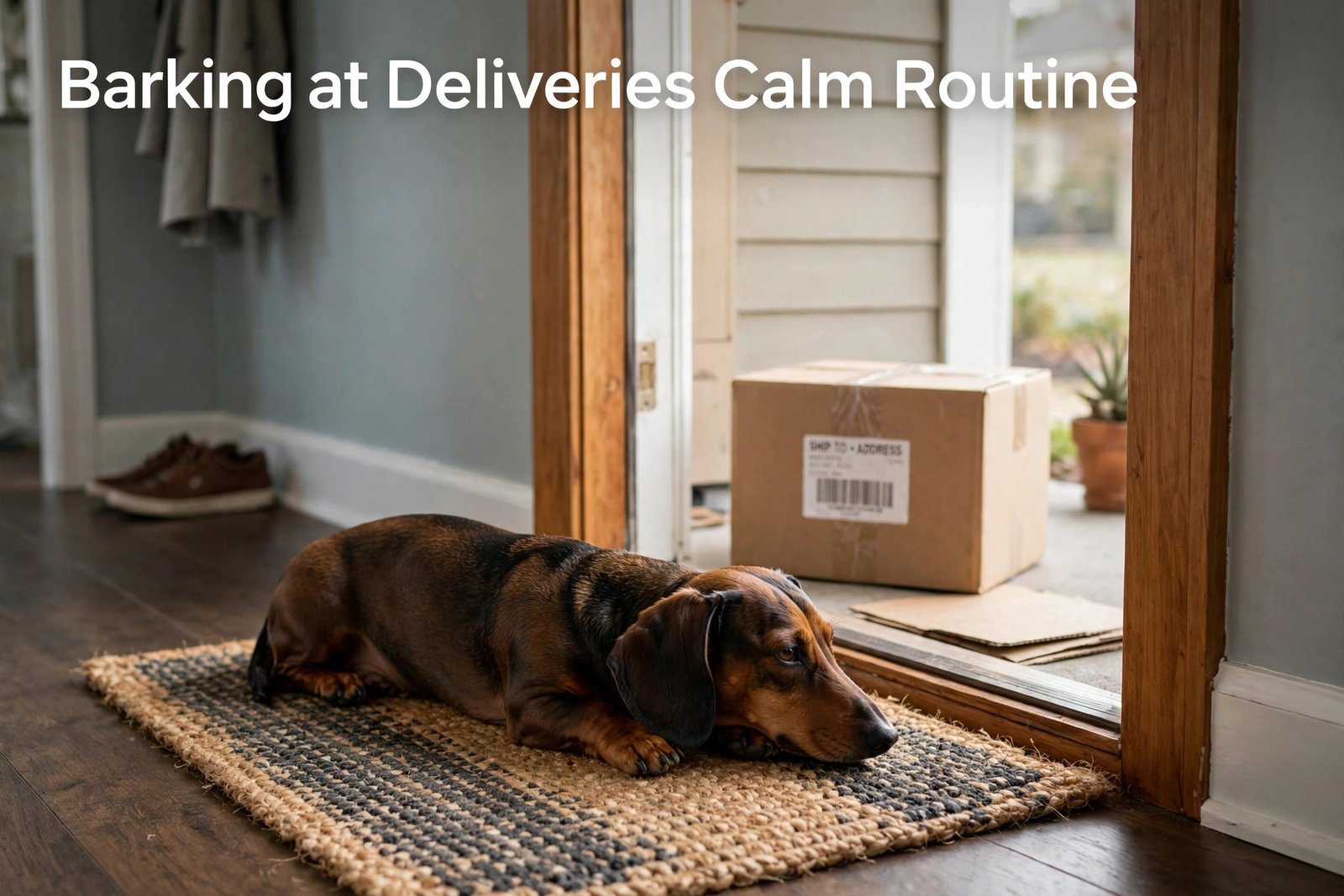
Dachshund Barking at Deliveries
Deliveries trigger a special kind of barking. A vehicle stops, footsteps approach, a parcel is left, and a stranger leaves quickly — all within a minute or two. For a Dachshund, that sequence can look like an intruder arriving and then retreating, which can reinforce barking: the dog barks, the delivery person leaves, and the dog learns that barking worked. This article is about the delivery-person routine, not the general doorbell routine for visitors who come inside. Deliveries need their own plan, because the person does not enter, the parcel stays behind, and the household often opens the door after the person has gone.
The plan below uses a fixed delivery spot, a place routine away from the door, sound practice at low levels, and a calm settle after the parcel arrives. It suits apartments with shared hallways, as well as houses with a front step or porch. The goal is a dog that hears a delivery, goes to a place, and settles, while the household collects the parcel without a barking rush to the door.
Quick Answer
- Choose one delivery spot and tell regular couriers to leave parcels there, away from the main door where possible.
- Teach a place routine on a mat or bed, away from the door, before practising with real deliveries.
- Practise delivery sounds — knock, bell, footsteps, vehicle sounds — at low volume, paired with calm treats.
- After a delivery, collect the parcel calmly, keep the dog on its place, then release to a quiet settle.
Contents
- 1. Set Up a Delivery Spot That Reduces Door Rush
- 2. Teach the Place Routine Before Real Deliveries
- 3. Practise Delivery Sounds at a Low Level
- 4. Run a Real Delivery Step by Step
- 5. Settle After the Parcel Arrives
- Delivery Routine Checklist
- Common Mistakes
- When to Call Your Vet or a Trainer
- Pin This: Calm Delivery Checklist
- Frequently Asked Questions
1. Set Up a Delivery Spot That Reduces Door Rush
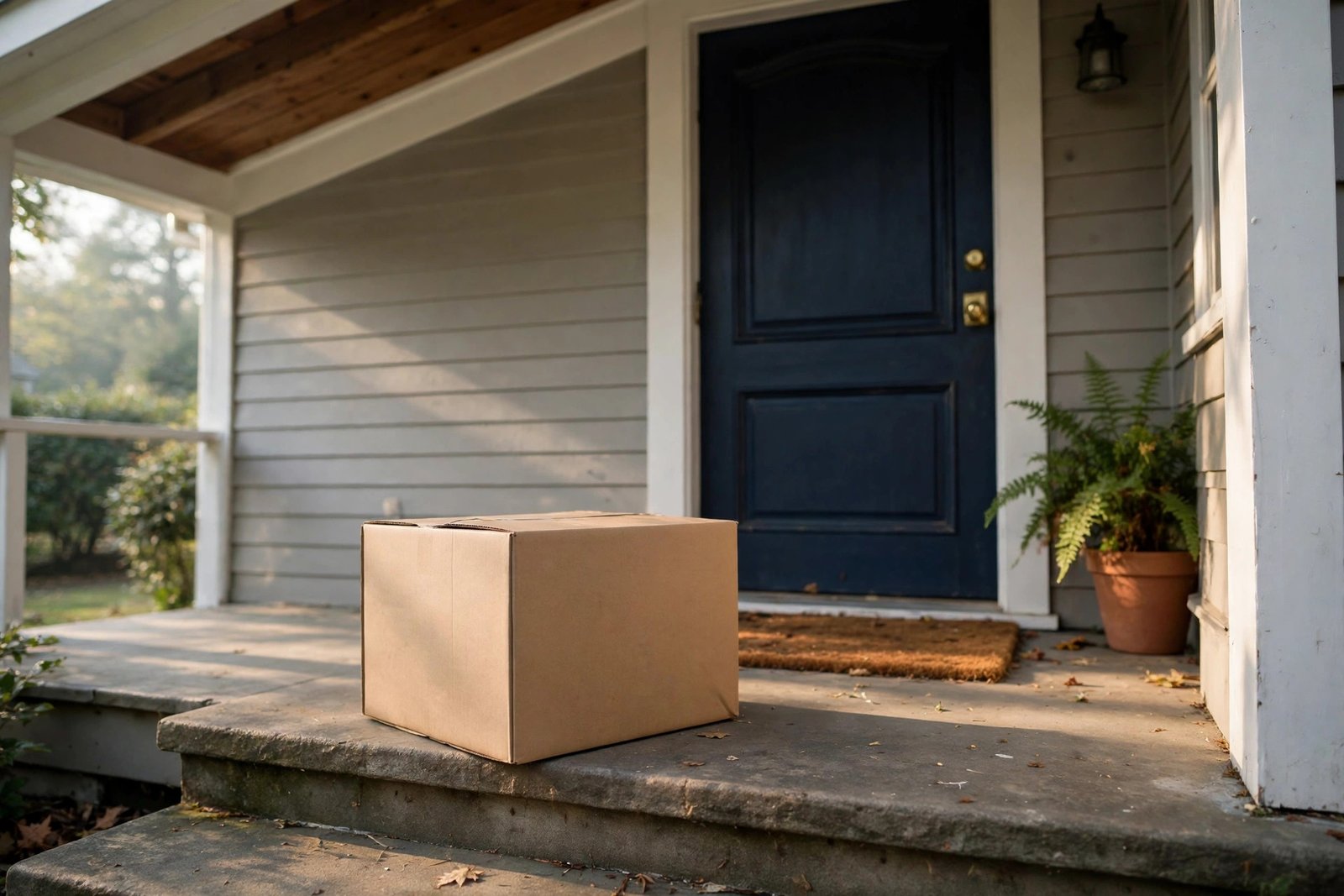
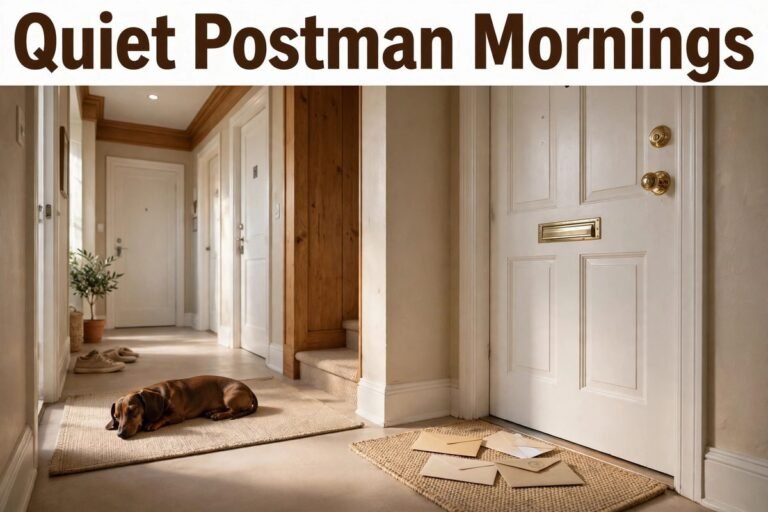
The delivery spot is where parcels are left, and it should be as boring and predictable as possible. In an apartment, that may be a parcel box, a concierge desk, a hallway shelf, or a spot just outside the front door. In a house, it may be a porch box, a side gate area, or a covered step. The key point is that the dog does not need to meet the delivery person at the door, and the household does not need to open the main door while the dog is rushing toward it.
Where delivery instructions can be left, use a short, clear note: “Please leave parcels at [spot]. No need to knock loudly.” Keep the note polite and simple, and update it if the spot changes. For regular couriers, consistency helps: the same spot, the same routine, and no door interaction unless a signature is truly needed. If a signature is needed, keep the dog on its place first, open the door only as far as needed, and close it promptly.
Inside the home, create a clear path from the dog’s place to the door that does not run through the dog’s place. A baby gate, a closed inner door, or a piece of furniture can separate the place area from the entrance, without isolating the dog completely. The dog should still hear household sounds and feel part of the home, but should not be able to rush the door in one leap. Check the setup during the day, when no delivery is expected, so the dog gets used to the barrier as a normal part of the home.
2. Teach the Place Routine Before Real Deliveries
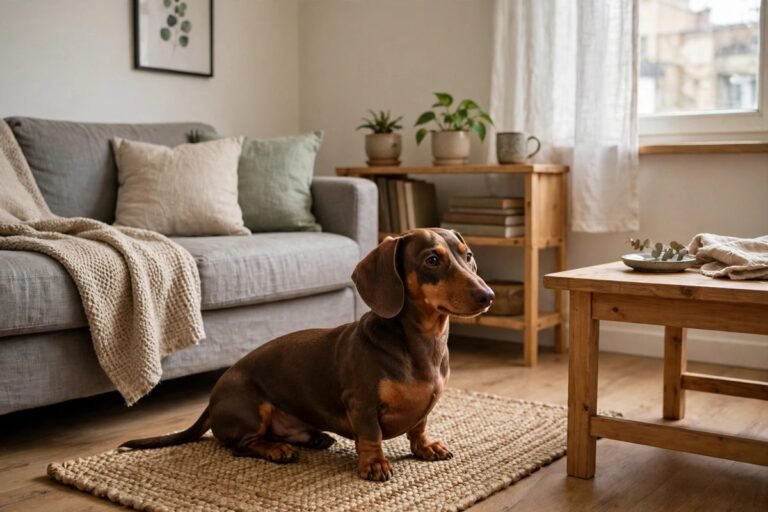
A place routine means the dog goes to a mat or bed, lies down, and stays there until released. Teach it away from the door first, in a quiet room, with no delivery sounds. Lure the dog onto the mat with a treat, mark calm lying down with a short word such as “yes,” and reward. Repeat until the dog goes to the mat on a simple cue, such as “place,” and settles without constant treats.
Build duration slowly. Start with a few seconds of lying down, then ten seconds, then thirty seconds, with treats given calmly on the mat, not thrown across the room. Add small distractions next: a person walking past, a door opening in another room, or a voice from the hallway. If the dog leaves the mat, guide it back calmly, without scolding, and restart at an easier level. Short sessions of five minutes, two or three times a day, work better than one long session.
Once the place routine is reliable in a quiet room, move the mat to its delivery position, away from the door but with a view of the household. Practise there during normal daytime activity, so the place becomes a normal resting spot, not only a delivery-time command. The general doorbell routine in Dachshund barking at the doorbell and a quiet routine uses a similar calm-response idea for visitors, but delivery practice stays separate: the delivery person does not come inside, and the dog is not asked to greet anyone.
3. Practise Delivery Sounds at a Low Level
Delivery sounds often trigger barking before the person is even visible: a vehicle stopping, footsteps, a knock, a bell, a parcel being set down. Practising those sounds at a low level helps the dog learn that the sound predicts a calm routine, not a rush to the door. Use recordings of knocks and bells at low volume, or ask a helper to knock softly from another room. Pair each sound with a treat on the place mat, at a volume where the dog notices the sound but does not bark.
Increase volume or realism in small steps, one factor at a time. A soft knock with no footsteps is easier than a loud knock plus a voice plus a parcel sound. If barking starts, the step was too hard: lower the volume, increase distance from the door, or return to a quieter sound. End each practice session on a calm success, even if that means ending earlier than planned. Three short practice sessions across a week often help more than one long session that ends in barking.
Include the sounds that are specific to deliveries, not only the doorbell. A vehicle door closing, a trolley or footsteps in a hallway, and the sound of a parcel being placed are all part of the delivery sequence. Practise them in order, at low intensity, with the place routine running throughout. When the dog can hear a soft sequence and stay on the mat, the routine is ready for a controlled real delivery with a helper acting as courier.

4. Run a Real Delivery Step by Step
A real delivery follows a fixed sequence, so the dog can predict what happens next. Step one: the delivery sound is heard. The handler calmly cues “place” and guides the dog to the mat if needed. Step two: the handler waits, with the dog on the mat, while the delivery person leaves the parcel. There is no rush to the door, no shouting, and no opening the door while the person is still there, unless a signature is needed.
Step three: once the outside is quiet, the handler collects the parcel calmly, keeping the dog on its place. Step four: the handler returns, gives a calm treat on the mat, and then releases the dog with a simple release word. The parcel itself should not become a toy or an exciting object. Open it later, away from the door, after the dog has settled. If the dog rushes the door during a real delivery, guide it back to the mat calmly, close the door, and try again with a helper delivery at a lower intensity.
For visitors who do come inside, a different routine applies, because greeting manners, seating, and conversation are involved. The steps in Dachshund barking at visitors and a calm greeting routine cover that case. Keeping delivery practice and visitor practice separate prevents confusion: deliveries mean place, quiet, and no greeting, while visitors follow their own calm greeting steps.
5. Settle After the Parcel Arrives
The minutes after a delivery matter as much as the delivery itself. A dog that is released immediately into excitement — sniffing the parcel, jumping at the door, or running to the window — may carry that arousal into the next delivery. Instead, keep the dog on its place for a short settle after the parcel is collected, then release to a calm activity: a chew, a sniff game, or quiet rest on a bed.
Watch for a second wave of barking after the delivery person leaves. Some dogs bark when the door closes, when a neighbour passes in the hallway, or when the parcel is opened. A low background sound, a closed inner door, and a calm household voice can reduce that second wave. If barking starts after the delivery, guide the dog back to its place calmly, without restarting the whole delivery sequence or giving a long conversation.
Log deliveries for two weeks: the time, the courier type, whether the dog stayed on place, and what helped. Patterns often emerge, such as difficulty with evening deliveries, with large parcels, or with a particular hallway sound. Adjust one factor at a time — the delivery spot, the place position, or the sound practice level — rather than changing the whole routine after one hard delivery. Neighbours in apartments also benefit from a quieter routine, and a short note explaining that a training routine is in progress can help while progress builds.

Delivery Routine Checklist
| Stage | Action | Goal |
|---|---|---|
| Before | Fixed delivery spot, place mat away from door | No door rush, no greeting needed |
| Sound | Low-volume sound practice, treat on place | Sound predicts calm, not barking |
| Delivery | Cue place, wait, collect parcel calmly | Dog stays settled while parcel arrives |
| After | Short settle on place, then calm release | No second wave of excitement |
| Review | Log each delivery, change one factor at a time | Pattern visible, progress steady |
Common Mistakes
- Opening the door while the dog rushes forward, which rewards door rushing and makes the next delivery harder.
- Practising place only during real deliveries, with no quiet-room foundation first.
- Jumping from silent practice to loud real deliveries, skipping low-volume sound steps.
- Turning the parcel into an exciting toy, which raises arousal right after the delivery.
- Using the delivery routine for visitors who come inside, confusing a no-greeting rule with a greeting routine.
- Changing the delivery spot, the mat position, and the sound level all at once after one difficult delivery.
When to Call Your Vet or a Trainer
Call a vet if delivery barking starts suddenly, worsens sharply, or comes with pain signs, limping, reluctance to jump or move, appetite changes, or movement changes. Pain can lower tolerance for sudden sounds and visitors at the door, and a medical check should come first. This article gives general information only and does not diagnose any dog.
For background on disc-related conditions in Dachshunds, the Animal Medical Center pet health library entry on intervertebral disc disease in dogs describes disc disease in dogs. Only one external source is used here, because the other approved sources cover the same disc-disease background and would add no new relevant information for a delivery routine. A professional trainer can help when barking at deliveries involves intense fear, door rushing that feels unsafe, or no progress after several weeks of consistent place practice.
Pin This: Calm Delivery Checklist
- One delivery spot, same place every time.
- Place mat away from the door, taught in a quiet room first.
- Low-volume delivery sounds, paired with calm treats on place.
- Real delivery: place, wait, collect calmly, settle, then release.
- Log deliveries for two weeks, change one factor at a time.
Frequently Asked Questions
How is delivery barking different from doorbell barking?
Doorbell barking often involves a visitor who enters and interacts. Delivery barking involves a stranger who arrives, leaves a parcel, and departs quickly, without entering. The delivery routine therefore focuses on place and no greeting, rather than greeting manners.
What if the courier knocks loudly despite instructions?
Keep the place routine running, wait until the outside is quiet, and collect the parcel calmly. Loud knocks can be added gradually to sound practice at a controlled level, with a helper, before the next real delivery.
Should the dog be allowed to sniff the parcel?
A brief sniff after a calm settle is fine, but the parcel should not become an exciting game. Open parcels later, away from the door, after the dog has settled.
What if a signature is required?
Keep the dog on its place, open the door only as far as needed, sign quickly, and close the door promptly. Return to the place routine immediately afterward.
How long does a delivery routine take to work?
Place training alone often takes one to two weeks of short sessions, and calm real deliveries usually follow over the next few weeks, depending on delivery frequency and consistency.
Conclusion
Calm deliveries come from a fixed spot, a place routine taught before real deliveries, low-volume sound practice, and a quiet settle after the parcel arrives. The next step is to choose the delivery spot, place the mat away from the door, and practise five minutes of place work today.



2 Comments