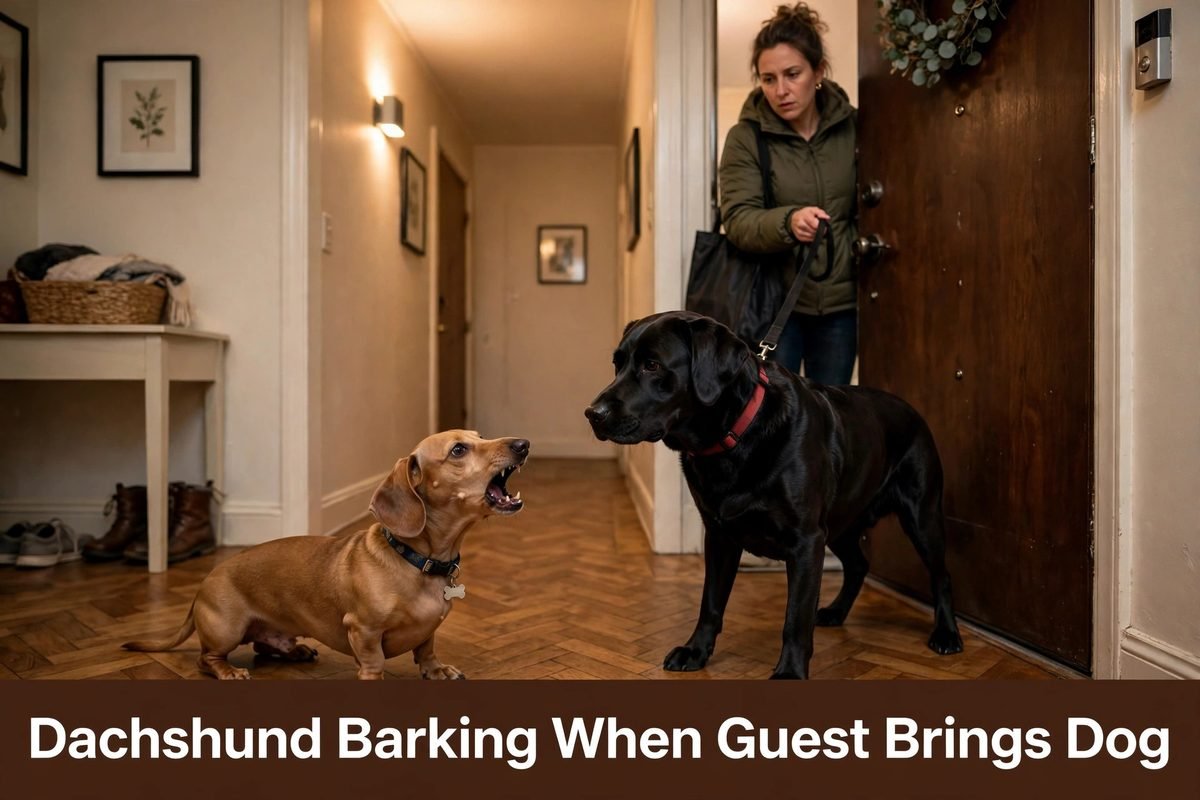
Dachshund Barking When Guest Brings Dog: Calm Visit
Quick Answer
- Dachshund barking when guest brings dog usually means the resident dog sees a strange dog in its own home and barks to guard its space, its toys, and its people.
- The visit is harder than meeting a dog outside, because the guest dog is inside the Dachshund’s territory, and neither dog can walk away easily.
- Keep the two dogs apart at first, let them meet through a gate or in a neutral place, and reward calm behaviour from both dogs.
- Never force the dogs together, shout over the barking, or hold one dog up in your arms, because each of those reactions adds fear and excitement.
- Most Dachshunds settle noticeably within two to three visits of steady practice, with shorter barking bursts and calmer greetings at the door.
Contents
- 1. Dachshund Barking When Guest Brings Dog Explained
- 2. Why a Visit Is Harder Than a Walk
- 3. The Calm Visit Plan: Apart, Gate, Then Together
- 4. Real Visits: Arrival, Play, and Saying Goodbye
- 5. Keeping Guest Dog Visits Calm for Good
- Guest Dog Visit Quiet Plan
- Common Mistakes
- When to Call Your Vet
- Pin This: A Calmer Guest Dog Visit
- Frequently Asked Questions
- Conclusion
1. Dachshund Barking When Guest Brings Dog Explained
Dachshund barking when guest brings dog starts with territory. The Dachshund’s home is its safe place, with its own bed, its own toys, and its own people, and a strange dog walking through the front door changes all of that at once. The resident dog barks to warn the newcomer that this space is taken, and to warn the household that something new has arrived. The barking often begins before the guest dog has even stepped inside.
The guest dog adds to the problem. It is also nervous, because it is in a strange home with strange smells and a barking dog it has never met. A nervous guest dog may bark back, pull on its lead, or rush forward, and each of those reactions makes the resident Dachshund bark harder. Two nervous dogs in a small hallway can set each other off in seconds, and the owners’ raised voices add even more noise to a scene that is already tense.
Routine also shapes the problem. Guest visits often follow the same pattern: a knock, the door opening, and a dog walking in at once, with no time for either dog to adjust. The Dachshund learns that the doorbell predicts a strange dog, so it starts barking at the bell, before the guest has even arrived. The barking then continues through the visit, because the dogs are never given a calm way to meet. Changing that pattern is the heart of the fix, so that a guest dog leads to separate spaces and a slow hello instead of a barking match at the door.
2. Why a Visit Is Harder Than a Walk
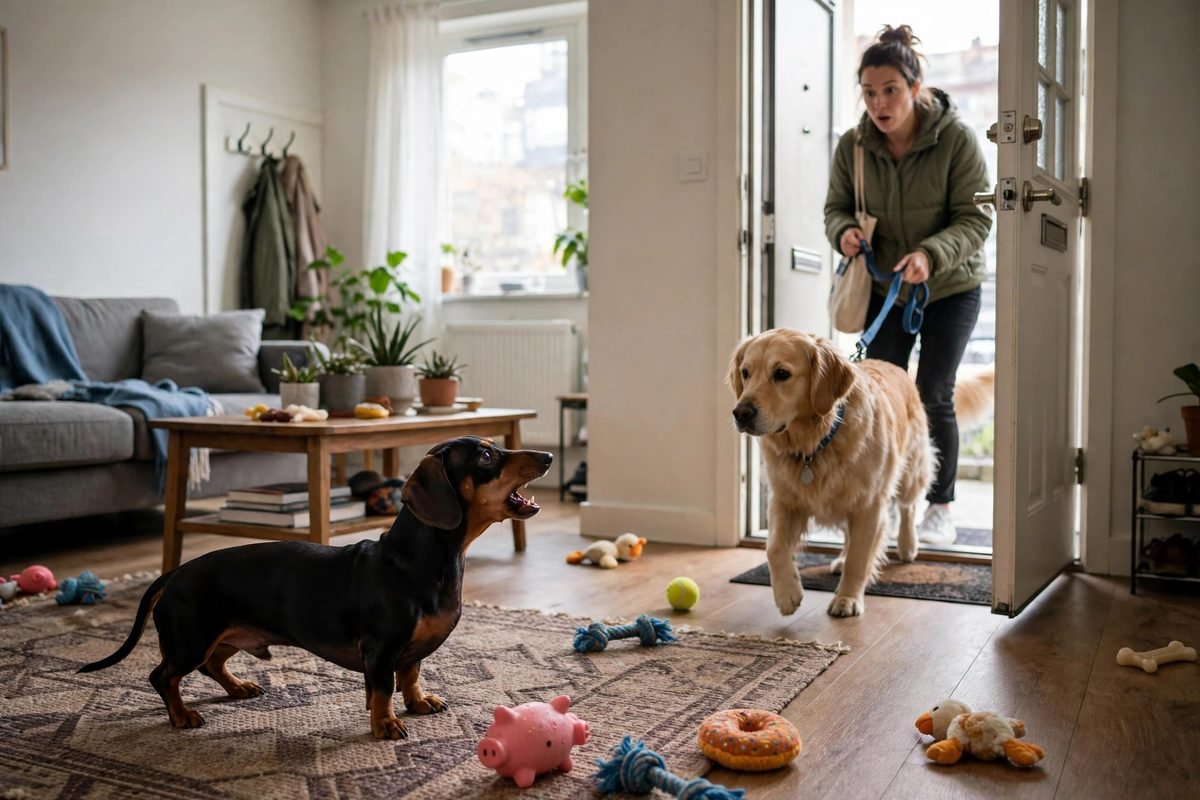
A visit is harder than a walk, because a walk gives both dogs space and a way out. On a walk the dogs can pass each other at a distance, sniff the ground, and walk away, and the meeting ends in seconds. In a flat there is no distance and no way out, so the dogs must share a small space for an hour or more, and the resident dog feels trapped with a stranger. A dog that is calm with other dogs on a walk may still bark hard at a dog that walks into its living room.
The home also holds things worth guarding. A Dachshund may share a park with another dog without any trouble, yet bark at the same dog in its own kitchen, because the kitchen holds its food bowl, its bed, and its favourite toy. The guest dog may walk straight to the water bowl or sniff the resident dog’s bed, and the resident dog reads that as a challenge. The guide to barking with two dogs at home covers the same guarding problem for a second dog that lives in the house full time.
The guest’s behaviour matters too. A guest who lets their dog rush in off the lead, or who laughs and says the dogs will sort it out, makes the meeting far harder than it needs to be. A calm guest who keeps their dog on a lead, waits in the hallway, and lets the dogs meet slowly gives both dogs a much better chance. The plan works best when both owners agree on the steps before the visit, so the dogs get one clear message from everyone in the room.
3. The Calm Visit Plan: Apart, Gate, Then Together
The calm visit plan starts with the dogs apart, in separate rooms, so each dog can settle before they meet. Put the Dachshund in its usual room with a chew, and let the guest and their dog settle in another room or in the hallway for ten minutes. Swap a blanket between the rooms, so each dog can sniff the other’s smell without meeting face to face. A dog that has already sniffed the newcomer’s smell is far less likely to bark when they finally meet.
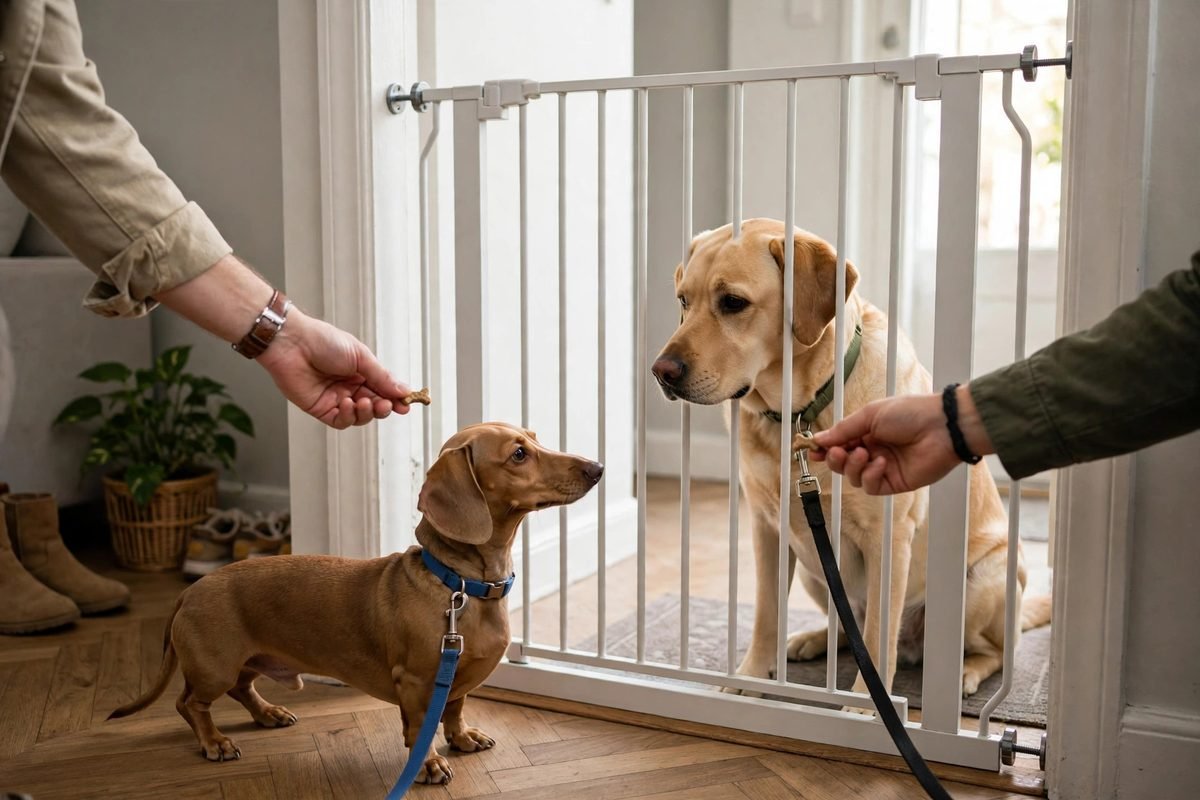
Next, let the dogs see each other through a gate or a doorway, with both dogs on leads and a good distance between them. Reward every quiet moment with a small treat, and keep the meeting to two or three minutes. If either dog barks, move them further apart and try again, because the distance was too small. Short, calm glimpses teach both dogs far more than one long meeting that ends in barking, and the gate keeps everyone safe while they learn.
The third step is a short walk together outside. Take both dogs out for a calm parallel walk, with one owner and one dog on each side of the pavement, and let them walk in the same direction without meeting face to face. Walking together is a shared job that calms most dogs, and by the time the walk ends, the dogs often feel like walking partners rather than strangers. Bring them back inside together, with the guest dog entering second, and reward both dogs for calm behaviour in the living room.
4. Real Visits: Arrival, Play, and Saying Goodbye
Real visits need a plan for arrival, because the first minute sets the tone for the whole visit. Ask the guest to text when they arrive, and meet them outside the flat with the Dachshund on a lead. Let the dogs sniff the ground near each other for a minute, then walk them in together, with the guest dog on a lead and the Dachshund going to its own spot with a chew. A dog that is already busy with a chew has far less energy for barking, and the chew gives it something pleasant to do while the guest settles in.
Play needs its own rules. Put away the Dachshund’s favourite toys before the guest dog arrives, and give both dogs a separate chew or a separate toy, so there is nothing to guard. Watch the play closely, and call both dogs apart for a treat every few minutes, so the excitement never builds into barking. If one dog starts to bark, separate them calmly behind the gate, wait for quiet, and try again with more distance. The guide to barking when a guest stays overnight covers the same separate-spaces idea for longer visits that last into the evening.
Saying goodbye deserves care too. A Dachshund that has finally settled may bark again when the guest dog leaves, because the leaving is another sudden change. Keep the resident dog on its spot with a treat while the guest dog walks to the door, and do not let the dogs rush each other in the hallway. A Dachshund that is lifted up during a goodbye may wriggle, and gentle handling matters for a long-backed breed, since disc degeneration in short-legged breeds can begin in the first year of life, so guide the dog with a treat instead of picking it up.
5. Keeping Guest Dog Visits Calm for Good
Guest dog visits stay calm when the routine stays the same. Every visit should follow the same sequence: apart first, gate meeting, short walk together, and then calm time in separate spots. If the owner sometimes lets the dogs rush together at the door and sometimes keeps them apart, the Dachshund will keep barking, because rushing works half the time. Every person in the household and every guest should use the same steps, so the dogs get one clear message from everyone.
Keep practicing even after the barking improves. A short visit with a calm, familiar dog once every few weeks keeps the routine fresh, and the Dachshund learns that guest dogs are ordinary. If the barking returns after a long gap, a bad visit, or a new guest dog the Dachshund has never met, go back to separate rooms and a gate meeting for a few visits and rebuild slowly. Setbacks are normal, and a few calm sessions usually bring the quiet back.
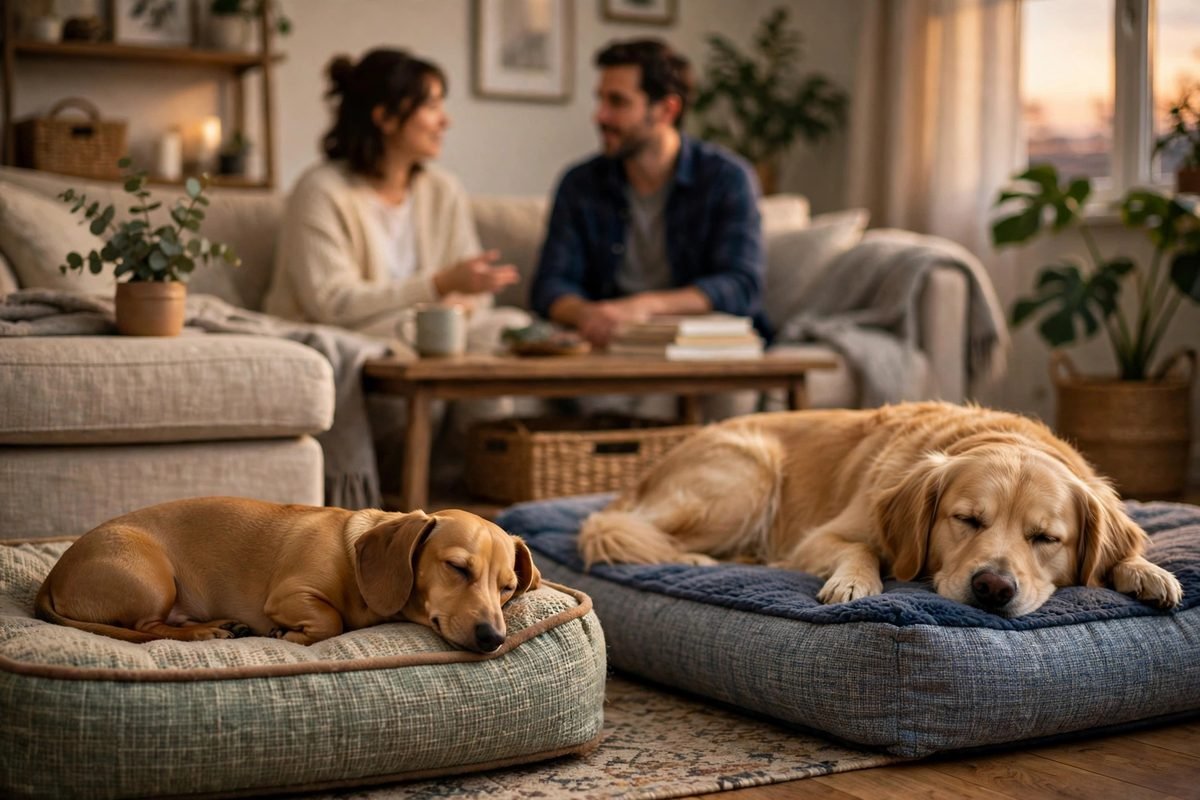
Watch both dogs’ bodies as well as their voices. A dog that lies on its spot with a loose body and soft ears is calm, while a dog that stands stiffly and stares at the other dog is still worried even if it is quiet. The worried dog needs more distance, a longer chew, and slower practice, not a longer meeting. Over time, a guest dog becomes an ordinary visitor, and the Dachshund barely lifts its head when a familiar dog walks through the door.
Guest Dog Visit Quiet Plan
| Step | What to Do | What Good Looks Like |
|---|---|---|
| Before the visit | Put away favourite toys; set up two separate spots | Nothing to guard; each dog has its own place |
| Arrival | Meet outside; short parallel sniff, then walk in together | Both dogs walk in calmly on leads |
| First ten minutes | Dogs apart in separate rooms; swap a blanket | Each dog sniffs the other’s smell calmly |
| Meeting | See each other through a gate; reward quiet | Both dogs look calmly without barking |
| Walk together | Short parallel walk outside, then back in together | Dogs walk side by side in the same direction |
| Every few weeks | Short visit with a calm familiar dog | Quiet routine stays fresh and reliable |
The plan works best when apart comes before meeting, the meeting comes through a gate first, and together time only grows after quiet. Keep the order the same every time, and both dogs will learn the order too.
Common Mistakes
- Forcing the dogs together at the front door, with no time to adjust to each other.
- Shouting over the barking, which adds more noise and excitement to the hallway.
- Holding one dog up in your arms, which frightens the dog and puts it at face height with the other dog.
- Leaving favourite toys out, so the resident dog has something to guard.
- Letting the guest dog rush in off the lead, which startles the resident dog.
- Letting the dogs play without breaks, so the excitement builds into barking.
- Skipping the gate meeting, so the first face-to-face meeting happens with no barrier.
- Stopping practice completely once the barking improves, so the routine fades within a few weeks.
When to Call Your Vet
Contact a veterinarian if the barking comes with shaking, hiding for hours, loss of appetite, or a refusal to eat for more than a few days. Contact a veterinarian promptly if the dog seems in pain, yelps when touched, or shows sudden changes in behavior, such as barking far more than usual or becoming withdrawn. A veterinarian can check whether anxiety, pain, or a health problem is driving the behavior, and can advise on the next steps. This article gives general information only and is not a diagnosis.
Pin This: A Calmer Guest Dog Visit
- Keep the dogs apart at first, and swap a blanket between rooms.
- Let them meet through a gate, rewarding every quiet moment.
- Take a short parallel walk together before coming inside.
- Put away favourite toys and give each dog its own chew.
- Call the dogs apart for a treat every few minutes during play.
- Never force the dogs together or hold one dog up in your arms.
Frequently Asked Questions
Why does my Dachshund bark at a guest dog but not at dogs on walks?
On a walk the dogs can pass at a distance and walk away, but at home the guest dog is inside the Dachshund’s territory, near its bed, its toys, and its people, with no way out. The resident dog barks to guard its space, so keep the dogs apart at first and let them meet slowly through a gate.
How do I start if my Dachshund barks the moment a guest dog arrives?
Start by meeting outside the flat, with both dogs on leads and a good distance between them. Let them sniff the ground near each other, take a short parallel walk, and only bring them inside once both dogs are calm, with separate spots and chews ready.
Should I let the dogs sort it out themselves?
No, letting dogs sort it out themselves can turn a barking match into a fight, especially in a small hallway with no way out. A calm, guided meeting through a gate, with treats for quiet behaviour, teaches both dogs far more than an uncontrolled meeting ever will.
What if the guest dog is much bigger than my Dachshund?
Keep a greater distance, use the gate for longer, and make the parallel walk the main meeting, because a large dog can frighten a small Dachshund simply by standing over it. Never let the bigger dog lean over or jump on the Dachshund, and end the meeting while both dogs are still calm.
Will my Dachshund ever accept guest dogs calmly?
Most Dachshunds learn to greet a familiar guest dog with only a few barks and then settle on their own spot, rather than barking through the whole visit. A single alert bark is normal, and the goal is a short bark followed by quiet resting, not total silence. If the barking is getting worse after a month of practice, go back to separate rooms and gate meetings and rebuild slowly.
Conclusion
A guest dog is a stranger in the Dachshund’s own home, and the fix is one slow routine for every visit. Keep the dogs apart, swap smells, meet through a gate, walk together, and give each dog its own spot and chew. As a next step, set up the gate and the two spots today, and ask your next guest to text before they arrive, so the dogs meet outside first, calmly, on leads.