Dachshund Constipation at Home: Signs, Help, and Vet Care
Quick Answer
- Dachshund constipation means stools that are hard, dry, and hard to pass, or several trips outside with straining and little or no result.
- Most mild cases follow a change in food, too little water, too little movement, or a swallowed bit of bone, hair, or other material that is hard to pass.
- Safe home steps are fresh water, a normal measured meal, gentle movement, and a calm routine. Do not give laxatives, oils, or human medicine without a veterinarian’s advice.
- Keep a note of the last normal stool, what the dog ate, and how much water it drank, because that record guides the vet visit.
- Call a veterinarian if there is no stool for more than two days, if the dog strains in pain, vomits, or passes blood, or if the belly looks swollen.
Contents
- 1. What Dachshund Constipation Looks Like
- 2. Why a Dachshund Gets Constipated
- 3. Safe Home Steps for Mild Constipation
- 4. Food, Water, and Movement: The Daily Routine
- 5. When Constipation Needs a Veterinarian
- Dachshund Constipation: Daily Stool and Water Log
- Common Mistakes
- When to Call Your Vet
- Pin This: Constipation at Home
- Frequently Asked Questions
- Conclusion
1. What Dachshund Constipation Looks Like
Dachshund constipation shows up first in the stool itself: small, hard, dry pellets instead of a soft, formed stool, or no stool at all after a normal day of eating. The dog may go outside, circle, squat, and strain for a long time, and then come back inside with nothing to show for it. Some dogs try again and again in one walk, passing only a few hard pieces each time. Others ask to go out more often than usual, then give up and lie down.
The dog’s behaviour gives the next clues. A constipated Dachshund may eat less, seem restless, pace around the house, or lick its belly and rear end more than usual. The belly may feel firm when touched gently, and the dog may flinch or move away from a touch on the belly. Some dogs drag their rear along the floor or keep turning to look at it. A dog that strains hard without passing anything, or that cries while straining, needs attention sooner rather than later.
It helps to know what normal looks like for this dog, because normal varies. Most adult Dachshunds pass one or two formed stools a day, soft enough to hold their shape but not hard or dry. Puppies and seniors may differ, and a change in food or routine can shift the pattern for a day. The stool check guide describes the colours, shapes, and textures that count as normal, and it is worth reading before deciding whether the dog is constipated or simply having a slow day.

2. Why a Dachshund Gets Constipated
Too little water is the most common reason a stool turns hard and dry. A dog that drinks little, especially in warm weather or after a salty treat, passes stools that have lost too much moisture on the way through the gut. A water bowl that is empty for part of the day, a bowl placed where the dog rarely goes, or a dog that simply forgets to drink while sleeping can all lead to the same result. Fresh water, changed daily and kept within easy reach, is the first fix and often the only one a mild case needs.
Food plays the next part. A sudden change of food, a diet low in fibre, or a run of rich treats and table scraps can slow the gut down. So can a swallowed object: a piece of bone, a chunk of rawhide, a hairball, a bit of toy, or a stone picked up on a walk. These things can sit in the gut and block the passage of normal stool, and the dog strains against a blockage it cannot clear. Dogs that chew and swallow things on walks need watching, and anything the dog swallows should be noted for the vet visit.
Movement, age, and routine matter too. A dog that spends most of the day lying still, a senior dog with stiff joints, or a dog whose walks were cut short by rain may pass stools less often, because movement helps the gut move. Stress can slow the gut as well: a house move, a new pet, building noise, or a change in the feeding routine can all show up as constipation for a day or two. Pain is another cause — a dog with a sore back or sore hips may avoid the squatting posture, hold the stool in, and end up constipated. In short-legged breeds, disc degeneration can begin in the first year of life, so back pain in a young Dachshund is not impossible, and a dog that strains or avoids squatting should be watched closely.
3. Safe Home Steps for Mild Constipation
For a mild case — the dog is eating, drinking, and comfortable, but the stools are hard or a day late — the safe home steps are simple. Offer fresh water often, and keep the bowl full and clean. Feed the normal measured meal at the normal time, and do not add new foods, rich treats, or table scraps while the gut settles. A short, gentle walk can help the gut move, so take the dog out for a calm stroll and give it time to squat without rushing it back inside.
Some owners add a spoonful of plain canned pumpkin or a little extra water mixed into the food, and for many dogs that extra moisture and fibre helps. Keep the amount small, keep the food otherwise the same, and watch the result over the next day. Do not add bran, oils, or any home remedy in large amounts, and do not change the whole diet at once. The aim is to soften the next stool gently, not to force the gut into action. If the dog is straining in pain, vomiting, or passing blood, skip the home steps and call a veterinarian instead.
Never give a human laxative, a stool softener, an enema, or any medicine made for people, and never try to remove a stuck stool by hand. Human products can be the wrong dose, the wrong ingredient, or dangerous for a small dog, and an enema given at home can injure the bowel. A veterinarian can advise on a safe product for this dog, and on whether the blockage needs an exam. The sensitive stomach routine covers the feeding habits that keep the gut steady day to day, and those habits are the best prevention once a mild case has passed.

4. Food, Water, and Movement: The Daily Routine
A steady daily routine is the best defence against constipation, and it starts with measured meals. Feed the same food, in the same amount, at the same times each day, twice a day for most adult Dachshunds. Measured meals make it easy to spot when the dog eats less, and they keep the gut on a regular rhythm. Treats count as part of the daily food, so keep them small and count them in the daily amount. A dog that eats at random times, or that gets a different treat from every visitor, has a gut that never settles into a routine.
Water deserves its own place in the routine. Keep a clean bowl of fresh water where the dog sleeps and another near the food bowl, and change the water at least once a day. Some dogs drink more from a wide, shallow bowl, and some prefer a fountain, but the type matters less than the habit: water always available, always fresh, always easy to reach. A dog that drinks little may need water mixed into the food, or a few ice cubes in the bowl on a warm day. Watch how much the dog drinks for a few days, so a drop in drinking is easy to spot early.
Movement is the third part of the routine. A daily walk, a short play session, and time to sniff and explore all help the gut move, and they also help the dog keep a healthy weight, which takes pressure off the back. A senior dog or a stiff dog still needs gentle movement, even if it is a slow stroll around the block. After meals, a calm walk gives the dog a chance to pass a stool at its normal time. A routine of food, water, and movement, kept steady from day to day, prevents most mild cases of constipation before they start.
5. When Constipation Needs a Veterinarian
Constipation needs a veterinarian when it lasts, when it hurts, or when it comes with other signs. No stool for more than two days, straining that goes on for a long time, or a dog that cries while trying to pass a stool should be checked. So should a swollen or painful belly, vomiting, a loss of appetite, or blood in the stool or around the rear end. These signs can mean a blockage, an injury, or a problem that home steps cannot fix, and waiting can make it worse.
Some dogs need a veterinarian sooner because of who they are. Puppies, seniors, and dogs with a known back problem, a recent surgery, or a medicine that slows the gut should be checked early, even for a mild case. A dog that has swallowed something it should not have — a bone, a toy, a stone — needs a veterinarian even before the stool stops, because a blockage can turn serious quickly. Bring the stool and water log, and note the last normal stool, the food, the treats, and anything the dog may have swallowed.
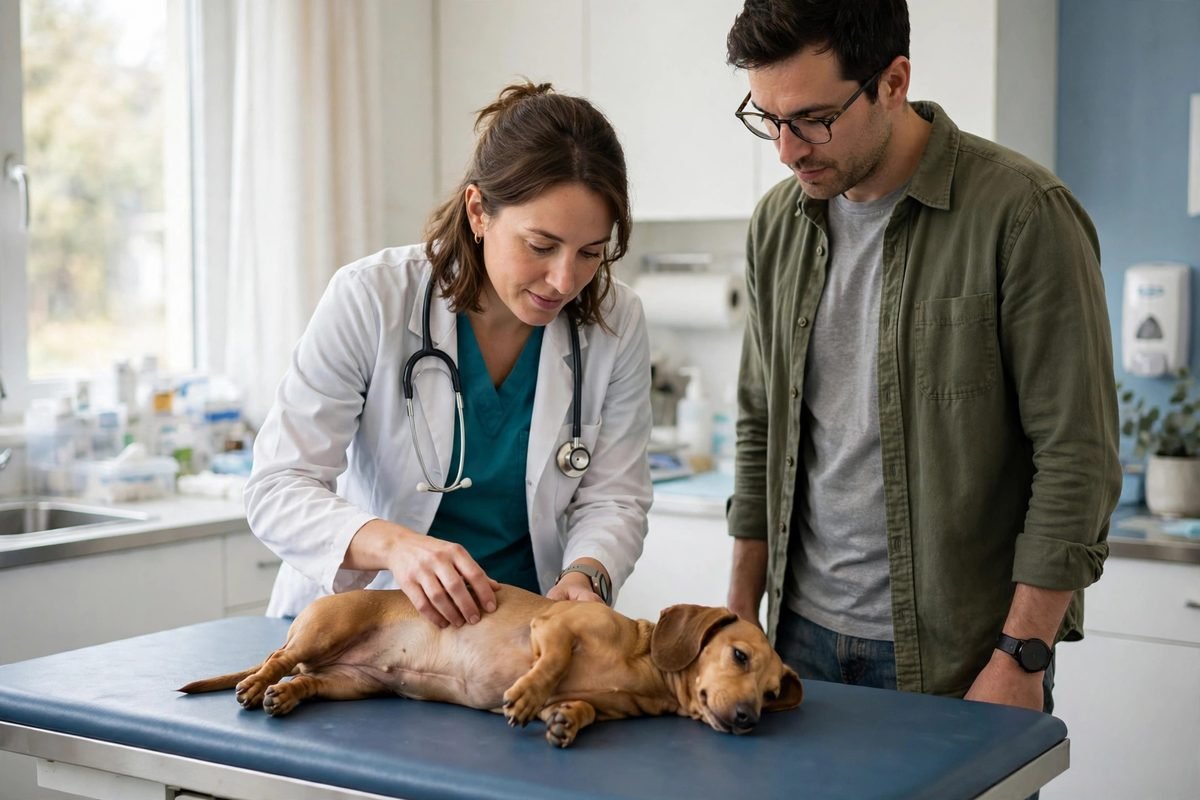
A veterinarian may feel the belly, check the rear end, and suggest an X-ray if a blockage is suspected. Treatment may mean fluids, a safe stool softener, or, in some cases, removing a blockage under care. The visit is also a chance to talk about the daily routine: the food, the water, the walks, and anything that changed in the last week. A veterinarian can advise on a diet and a routine that fits this dog, and on what to do the next time the stool is late.
Dachshund Constipation: Daily Stool and Water Log
| What to Note | How to Record It | Why It Helps |
|---|---|---|
| Last normal stool | Day and time of the last normal, formed stool | Shows how long the problem has lasted |
| Stool now | Hard pellets, small pieces, or nothing passed | Shows whether the stool is improving |
| Straining | How long, how often, any crying or pain | Painful straining needs a vet check sooner |
| Water | How much the dog drank, bowl refills | Low water is the most common cause |
| Food and treats | Food name, amount, treats, scraps | Points to a food change or rich extras |
| Swallowed items | Any bone, toy, stone, or hairball | Flags a possible blockage |
A log kept for a few days, with the last normal stool noted, gives the veterinarian a clear picture in minutes. Bring it to the appointment.
Common Mistakes
- Giving a human laxative, oil, or enema without a veterinarian’s advice.
- Trying to remove a stuck stool by hand, which can injure the bowel.
- Changing the whole diet at once instead of keeping the normal food steady.
- Feeding rich treats and table scraps while the gut is already struggling.
- Forgetting to check whether the water bowl is empty or hard to reach.
- Rushing the dog back inside before it has time to squat and pass a stool.
- Waiting more than two days with no stool before calling a veterinarian.
- Missing the signs of a swallowed bone, toy, or stone that may be blocking the gut.
When to Call Your Vet
Contact a veterinarian if there is no stool for more than two days, if the dog strains in pain or cries while straining, or if the belly looks swollen or feels painful. Contact a veterinarian urgently if the dog vomits repeatedly, passes blood, cannot pass gas, or becomes weak and unwilling to move. Contact a veterinarian soon if a puppy, a senior, or a dog with a back problem is constipated, or if the dog may have swallowed a bone, toy, or stone. A veterinarian can examine the belly, check for a blockage, and advise on safe treatment. This article gives general information only and is not a diagnosis.
Pin This: Constipation at Home
- Hard, dry stools or straining with little result mean constipation.
- Offer fresh water often and keep the bowl full and easy to reach.
- Feed the normal measured meal at the normal time, nothing new.
- A short, calm walk gives the gut time to move.
- Never give human laxatives or try to remove a stool by hand.
- Call a veterinarian if there is no stool for more than two days.
Frequently Asked Questions
How do I know if my Dachshund is constipated or just having a slow day?
A slow day means one late stool that is still soft and formed. Constipation means hard, dry pellets, repeated straining with little result, or no stool at all after a normal day of eating. If the dog strains in pain or there is no stool for more than two days, call a veterinarian.
How long can a Dachshund go without a stool?
Most adult Dachshunds pass one or two stools a day. A single missed day can be normal after a change in routine, but more than two days without a stool, especially with straining or a swollen belly, needs a veterinarian’s advice.
Can I give my Dachshund pumpkin for constipation?
A small spoonful of plain canned pumpkin mixed into the normal food can add moisture and fibre, and many dogs find it helps. Keep the amount small, keep the rest of the diet the same, and ask a veterinarian if the problem does not improve in a day or two.
What should I do if my Dachshund strains but nothing comes out?
Let the dog try calmly, without rushing it, and note how long the straining lasts. If the dog cries, vomits, or passes blood, or if the straining keeps happening with no result, contact a veterinarian the same day.
When is constipation an emergency?
Repeated vomiting, blood in the stool, a swollen and painful belly, weakness, or a known swallowed object with no stool passing are emergencies. Contact a veterinarian at once rather than waiting for home steps to work.
Conclusion
Dachshund constipation is usually a sign that the daily routine needs a small fix: more water, a steady measured meal, and a calm walk. Watch the stool, keep a short log, and never reach for human medicine. The next step is simple — check the water bowl and the last stool today, and call a veterinarian if there is no stool for more than two days.