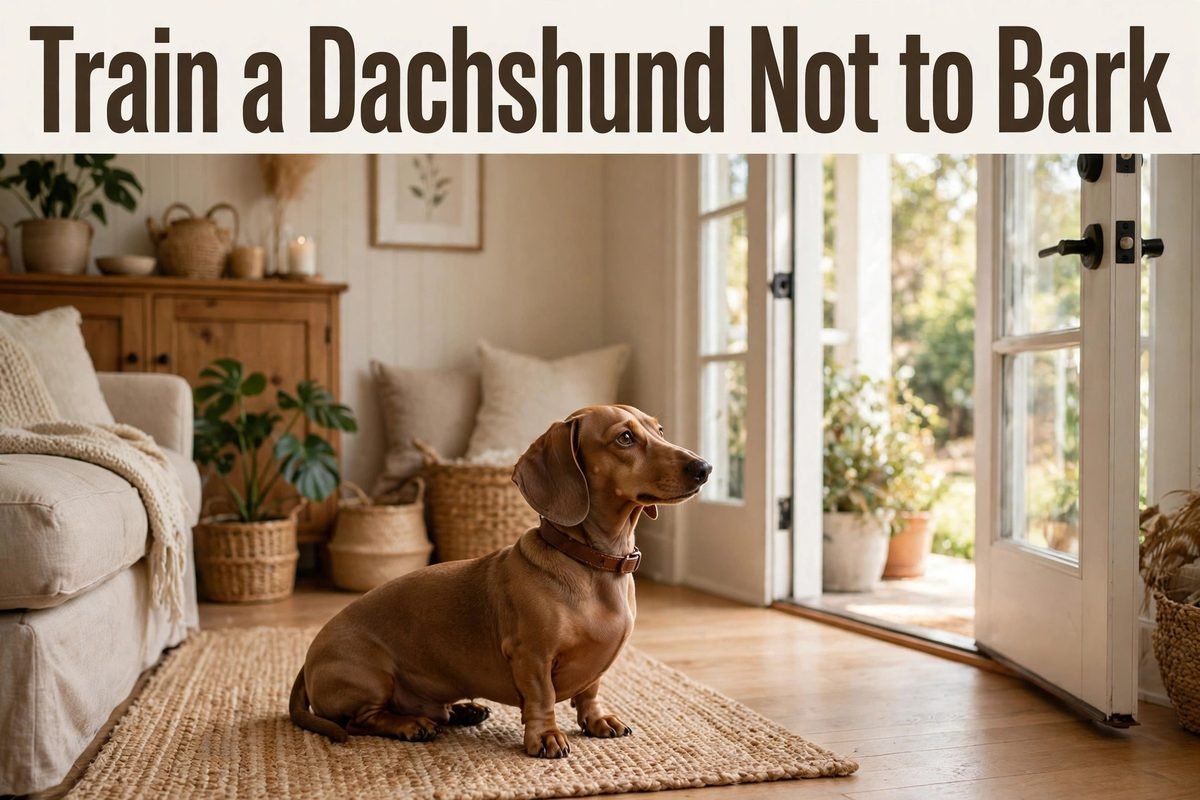
How to Train a Dachshund Not to Bark
Quick Answer
- How to train a dachshund not to bark starts with finding the trigger, then teaching a quiet cue with small treats in short daily sessions.
- Reward calm behaviour the moment it happens, and keep sessions to five minutes so the dog stays focused and relaxed.
- Reduce the trigger where possible: close curtains, move the bed away from the window, and greet visitors calmly.
- Never shout over barking, because a raised voice sounds like joining in and often makes the barking louder.
- Ask a veterinarian if barking starts suddenly, comes with pain, or does not change after several weeks of steady practice.
Contents
- 1. Find the Trigger Before Training Starts
- 2. Teach the Quiet Cue in a Calm Room
- 3. Practise With Real Triggers, One at a Time
- 4. Reward Calm Behaviour All Day Long
- 5. Build a Calm Daily Routine That Prevents Barking
- Training Checklist: From First Cue to Real Life
- Common Mistakes
- When to Call Your Vet
- Pin This: Train a Dachshund Not to Bark
- Frequently Asked Questions
- Conclusion
1. Find the Trigger Before Training Starts
Every barking Dachshund has a reason, and the training only works once that reason is clear. Some dogs bark at the doorbell, some bark at people passing the window, some bark when left alone, and some bark for attention or for a toy. How to train a dachshund not to bark begins with watching the dog for a few days and noting what happens just before the barking starts. A simple notebook helps: write the time, the place, and what the dog saw or heard. After a few days, a pattern usually appears, and that pattern points to the right training plan.
Alert barking is the most common pattern in a home. The dog hears a sound at the door, sees a stranger on the pavement, or notices a neighbour dog in the hall, and barks to warn the household. This kind of barking often comes with a stiff body, ears forward, and a rush toward the door or window. Demand barking looks different: the dog barks at a person, stares at a toy, or barks beside the food bowl, then stops the moment it gets what it wants. Barking when left alone is another pattern, and it often comes with pacing, whining, or scratching at the door. Each pattern needs a slightly different plan, so guessing the trigger wastes weeks.
Start by listing the top two triggers, not all of them. A dog that barks at the doorbell and at the window needs a plan for the doorbell first, because that trigger is easier to control in practice. A dog that barks at every sound in the hall needs a quiet resting spot away from the door. Once the top triggers are named, the rest of the training falls into place: the quiet cue is taught in a calm room, then practised with the easiest trigger, then with the harder one. Keep the notebook going during training, because it shows whether the barking is getting shorter, quieter, or less frequent.
2. Teach the Quiet Cue in a Calm Room
The quiet cue is a short word, such as “quiet” or “enough”, said once in a calm voice, and it is taught in a room with no triggers at all. Start when the dog is relaxed, not when it is already barking. Say the cue word, wait for a brief pause in any sound, then offer a small treat right away. Repeat this a few times, keeping the session to five minutes. The aim is simple: the dog learns that the cue word predicts a treat when it stays quiet, and that lesson is the foundation for everything that follows.
Next, teach the cue with a small, planned sound. Ask another person in the home to knock softly on a table in another room, or tap the door lightly, while the dog is calm. The moment the dog looks toward the sound without barking, say the cue word and offer a treat. If the dog barks once, wait for a pause, say the cue word, and reward the pause. Keep the sound very soft at first, because a loud sound pushes the dog past the point where it can learn. Short sessions, several times a day, build the habit faster than one long session.
Timing matters more than the size of the treat. The reward must arrive within a second or two of the quiet moment, or the dog will not connect the treat with being quiet. Keep small, soft treats in a pocket or in a jar near the training spot, so the reward is always ready. Use the same cue word every time, and say it once, not over and over. Repeating the word while the dog is barking teaches the dog to ignore it, because the word becomes background noise.
3. Practise With Real Triggers, One at a Time
Once the quiet cue works in a calm room, take it to the easiest real trigger. For many homes, that is the doorbell, because it can be practised on purpose. Ask a friend or family member to ring the bell once, then say the cue word the moment the dog pauses, and reward the quiet. Keep the first practice rounds very short, with long calm breaks between rings. The doorbell quiet routine gives a step-by-step version of this practice for homes where the bell is the main trigger.
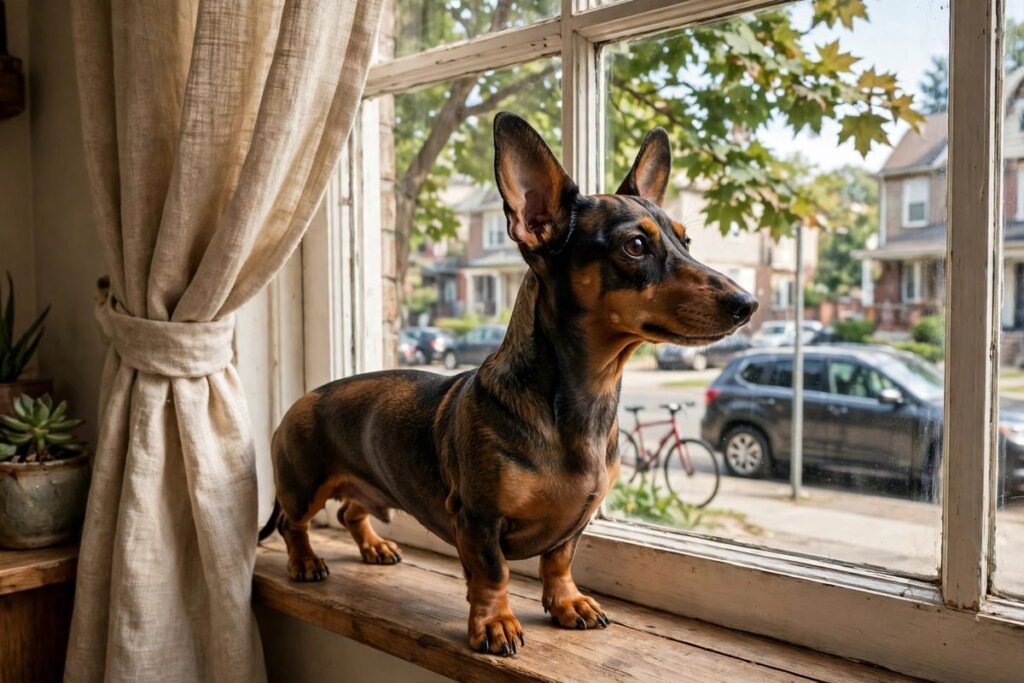
Window barking needs a different setup, because the trigger appears without warning. Start by moving the dog away from the window during the busiest time of day, and practise the cue with a person walking past at a distance. Reward the dog for noticing the person without barking, and move closer to the window over several days. The window barking fixes cover the room setup that makes this practice easier, including blocking the view during busy hours. Distance is the key: a dog that can stay quiet at ten steps from the window can learn to stay quiet at five steps, and then at the window itself.
Work on only one trigger at a time, and keep the other triggers managed in the meantime. If the doorbell is the training trigger, close the curtains during window practice, and ask visitors to text before they arrive so the bell does not ring unplanned. If the window is the training trigger, put a sign on the door asking visitors to knock softly, and keep the dog in a back room when deliveries are due. Managing the other triggers is not cheating; it keeps the dog below the point where barking takes over, and that is where learning happens.
4. Reward Calm Behaviour All Day Long
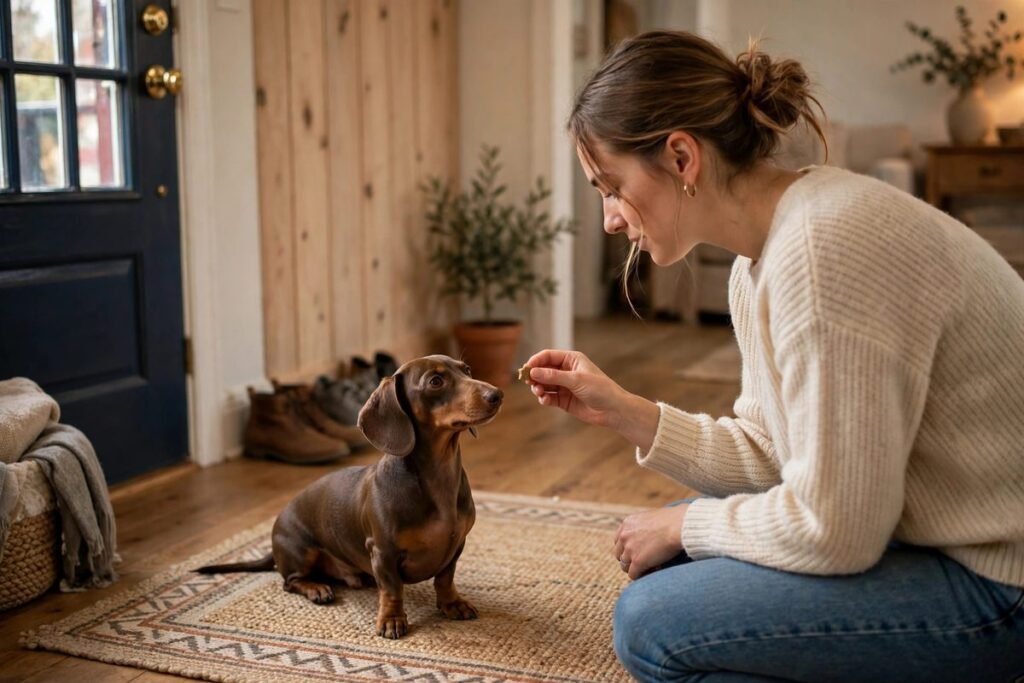
Training sessions are only a small part of the day, so the rest of the day matters just as much. The fastest way to teach a Dachshund not to bark is to reward calm behaviour whenever it happens, even outside a training session. When the dog hears a sound and stays quiet, offer a calm word and a small treat. When the dog lies down while visitors talk, offer a treat between its paws. When the dog watches a person pass the window without barking, reward that choice. These small rewards teach the dog that calm behaviour pays, all day long.
Make the rewards easy to give. Keep a small jar of treats in the living room and another near the front door, so a calm moment can be rewarded at once. Use tiny treats, so the dog can eat many of them without getting too much food in a day. Mix treats with calm praise and a slow stroke, so the dog learns that quiet attention from a person is also a reward. Over time, the treats can become less frequent, but the calm praise should stay, because it keeps the habit alive.
Attention is a reward too, and this is where many owners undo their own training without realising it. A dog that barks for attention and gets a look, a laugh, or a scolding has still got attention, and that attention can keep the barking going. When the dog barks for attention, turn away calmly, wait for a pause, and only then give attention. When the dog is quiet, give attention freely. This contrast is the lesson: barking earns nothing, and quiet earns company, play, and treats.
5. Build a Calm Daily Routine That Prevents Barking
A calm daily routine prevents a lot of barking before it starts. Dachshunds do best with a steady pattern: a morning walk, a calm rest, a midday outing, play in the afternoon, and a quiet evening. A walk that includes plenty of sniffing tires the mind as well as the body, and a dog that has sniffed its way around the block is calmer at the window than a dog that has only marched around it. Keep walks to a steady pace, and let the dog stop and sniff often.
Give the dog a resting spot away from the front door and the window. A bed in a quiet corner, with a blanket and a chew, gives the dog a place to settle instead of patrolling the hall. Teach the dog to go to that spot on cue, and reward it for lying there while the household goes about its day. A dog that has a favourite resting spot barks less, because it is not standing guard at the noisiest part of the home. Move the bed if the dog keeps choosing the window sill instead.
Plan for the noisiest times of day. If the post arrives at the same time each morning, keep the dog in the back room with a chew for those ten minutes. If children pass the house on their way home from school, close the curtains for that half hour. If visitors are coming, meet them at the door with the dog on a lead, reward the dog for staying calm, and then let the dog greet them once everyone is settled. Planning for noisy times is not avoiding the problem; it is giving the dog a fair chance to stay calm while the training catches up.
End the day calmly too. A short evening walk, a quiet play session, and a settled rest help the dog sleep well, and a rested dog barks less the next day. Keep the evening routine the same each night, so the dog knows what comes next. Over weeks, the routine itself becomes a cue for calm: the walk, the rest, the chew, and the quiet evening all tell the dog that the day is steady and there is nothing to warn about.

Training Checklist: From First Cue to Real Life
| Stage | What to Do | Sign It Is Working |
|---|---|---|
| Find the trigger | Note time, place, and trigger for a few days | Top two triggers are clear |
| Teach the cue | Say “quiet” once in a calm room; reward pauses | Dog pauses and looks for a treat |
| Practise one trigger | Short rounds at a distance; reward quiet | Barking bouts get shorter |
| Reward calm all day | Treats near door and window; praise quiet | Dog settles without being asked |
| Build the routine | Steady walks, rest spot, planned noisy times | Fewer barks at the main trigger |
Common Mistakes
- Shouting over the barking, which sounds like joining in and makes it louder.
- Repeating the cue word many times while the dog is barking.
- Training only when the dog is already barking hard, instead of in a calm room first.
- Trying to fix every trigger at once instead of one at a time.
- Rewarding the dog with attention, food, or a toy right after a barking bout.
- Skipping practice for days, then expecting the dog to remember the cue.
- Using a long session that tires the dog instead of short five-minute sessions.
When to Call Your Vet
Contact a veterinarian if barking starts suddenly in a dog that was quiet before, if barking comes with signs of pain, limping, yelping when lifted, loss of appetite, or changes in sleep. Contact a veterinarian if barking when left alone comes with heavy panting, drooling, escape attempts, or injury, because those signs may point to distress that needs a closer look. A veterinarian can check for pain or illness behind a sudden change, and can suggest next steps if the barking does not improve after several weeks of steady practice. This article gives general information only and is not a diagnosis.
Pin This: Train a Dachshund Not to Bark
- Find the top two triggers and note them for a few days.
- Teach a quiet cue in a calm room with small treats.
- Practise one trigger at a time, at a distance first.
- Reward calm behaviour all day, not only in sessions.
- Build a steady routine with walks, a rest spot, and planned quiet times.
- Call a veterinarian if barking starts suddenly or comes with signs of pain.
Frequently Asked Questions
How long does it take to train a Dachshund not to bark?
Most homes see shorter barking bouts within two to three weeks of short daily practice, and steadier quiet over six to eight weeks. Progress depends on the trigger, the routine, and how steady the practice is.
What is the best cue word for quiet training?
A short word such as “quiet” or “enough” works well, as long as the same word is used every time and said once in a calm voice. The word matters less than the timing of the reward after it.
Should a barking Dachshund be shouted at?
No, shouting sounds like joining in and often makes the barking louder. A calm voice, a single cue word, and a reward for the pause teach the dog far more than a raised voice.
Can an older Dachshund learn not to bark?
Yes, an older dog can learn a quiet cue with the same short, calm sessions, though the habit may take longer to change if the barking has gone on for years. Keep sessions short and reward every quiet pause.
What if the dog only barks when left alone?
Start with very short absences, reward calm returns, and keep departures low key. If the barking comes with panting, drooling, or escape attempts, ask a veterinarian for advice before going further.
Conclusion
How to train a dachshund not to bark comes down to a clear trigger, a calm quiet cue, short daily practice, and rewards for calm behaviour all day long. Start with one trigger this week, keep the sessions short, and let the steady routine do the rest.