
Dachshund Back Care on Short Walk Indoor Days: Gentle Plan
Quick Answer
- Dachshund back care on short walk indoor days means replacing a missed walk with gentle indoor movement, calm mental work, and extra rest, not with intense indoor play.
- Use short sniffing games, slow hallway walks, gentle exercises a veterinarian has approved, and puzzle toys, all on non-slip surfaces.
- Keep the day structured with regular meals, toileting breaks, rest periods, and calm activity blocks, so the dog does not become restless and race around the home.
- Watch for stiffness after a quiet day, because inactivity itself can stiffen a long back, and adjust the next day with veterinary guidance.
Contents
- 1. Why Short Walk Days Still Need a Plan
- 2. Gentle Indoor Movement That Protects a Long Back
- 3. Mental Work: Sniffing, Puzzles, and Calm Training
- 4. Rest, Routine, and Toileting on Indoor Days
- 5. When Short Days Become a Pattern: Adjusting With Vet Help
- Indoor Day Checklist
- Common Mistakes
- When to Call Your Vet
- Pin This: Indoor Day Checklist
- Frequently Asked Questions
- Conclusion
Some days, walks are short. Rain, heat, ice, illness in the household, a busy schedule, or a dog that is a little stiff can all cut a walk short, and on some days there is no walk at all. A single short day does no harm, but a day without a plan often ends with a restless dog racing around an apartment, jumping on furniture, and playing roughly indoors, which is worse for a long back than a calm missed walk.
Indoor days need a plan that replaces outdoor movement with indoor calm. The plan is not about tiring the dog out with intense play. It is about giving the dog enough gentle movement, mental work, and rest to stay settled, so the evening does not become a burst of wild energy. This guide gives that plan, in blocks that fit a normal apartment day.
1. Why Short Walk Days Still Need a Plan
A Dachshund that misses a walk does not simply sleep all day. Energy builds up, boredom grows, and by evening the dog may be more active than usual, not less. That evening burst is when jumping, racing, and rough play happen, often on smooth floors and around furniture. Planning the day prevents the burst by spreading calm activity across the whole day.
Inactivity itself can also stiffen a back. A dog that lies still all day may be stiffer in the evening than a dog that moved gently every few hours. Short, regular movement keeps joints and muscles warm and flexible, without the impact of a long walk or fast play. The goal on an indoor day is frequent gentle movement, not one intense session.
Routine matters on indoor days because dogs read routine for security. A dog that knows when meals, toileting, play, and rest happen will settle between blocks, while a dog with no routine may pace, bark, or demand attention all day. Keeping meal times, rest times, and activity blocks at their usual times, even when walks are short, gives the day a familiar shape.
Weather is the most common reason for short walks, and it brings its own risks. Wet floors from rainy walks, hot pavements in summer, and icy paths in winter can all make outdoor movement riskier than indoor movement. On such days, a short toileting walk outside, followed by indoor activity, is a sensible trade, not a failure.
General background helps put indoor care in context. The Animal Medical Center explains intervertebral disc disease in dogs, including signs that need veterinary attention, and Cornell information on chondrodystrophy and intervertebral disc disease describes added disc risk in this breed group. Indoor care is not a medical treatment, and it does not prevent disc disease. It keeps a dog moving gently and resting well on days when outdoor activity is limited.

2. Gentle Indoor Movement That Protects a Long Back
Slow hallway walks are the simplest indoor movement. Walk with the dog along a hallway or around a large room at a slow, steady pace, on a rug or runner, for a few minutes at a time. Keep the dog on a lead indoors if it tends to race, and pause often. Several short hallway walks across the day add up to useful movement without speed or impact.
Gentle exercises approved by a veterinarian can also fit indoor days. These might include slow weight shifting, gentle stretching, or short balance exercises on a stable surface, done calmly and stopped at any sign of discomfort. Only use exercises a veterinarian has shown or approved for the individual dog, because an exercise that helps one dog can strain another. For general low-impact ideas, the guide to gentle back exercises for Dachshunds covers routines that fit apartment life, but veterinary approval for one dog always comes first.
Movement through the home can be structured too. Placing water, resting spots, and toys in different rooms, on the same floor, encourages the dog to walk between rooms calmly during the day. Avoid placing everything in one spot, which encourages long periods of stillness followed by rushing, and avoid stairs as part of this indoor movement.
Play that involves movement should stay slow. A toy rolled gently along a rug, a treat trail along a hallway, or a slow game of follow-the-owner around a room all give movement without running. Stop any game that speeds up, and switch to a sniffing game if the dog becomes overexcited. The pace should feel like a walk, not a race.
Watch the dog after each movement block. A dog that moves freely afterward, settles quickly, and shows no stiffness is benefiting. A dog that stiffens, limps, or seems sore after indoor movement needs a shorter, gentler block next time, and a veterinary call if the change persists.
3. Mental Work: Sniffing, Puzzles, and Calm Training
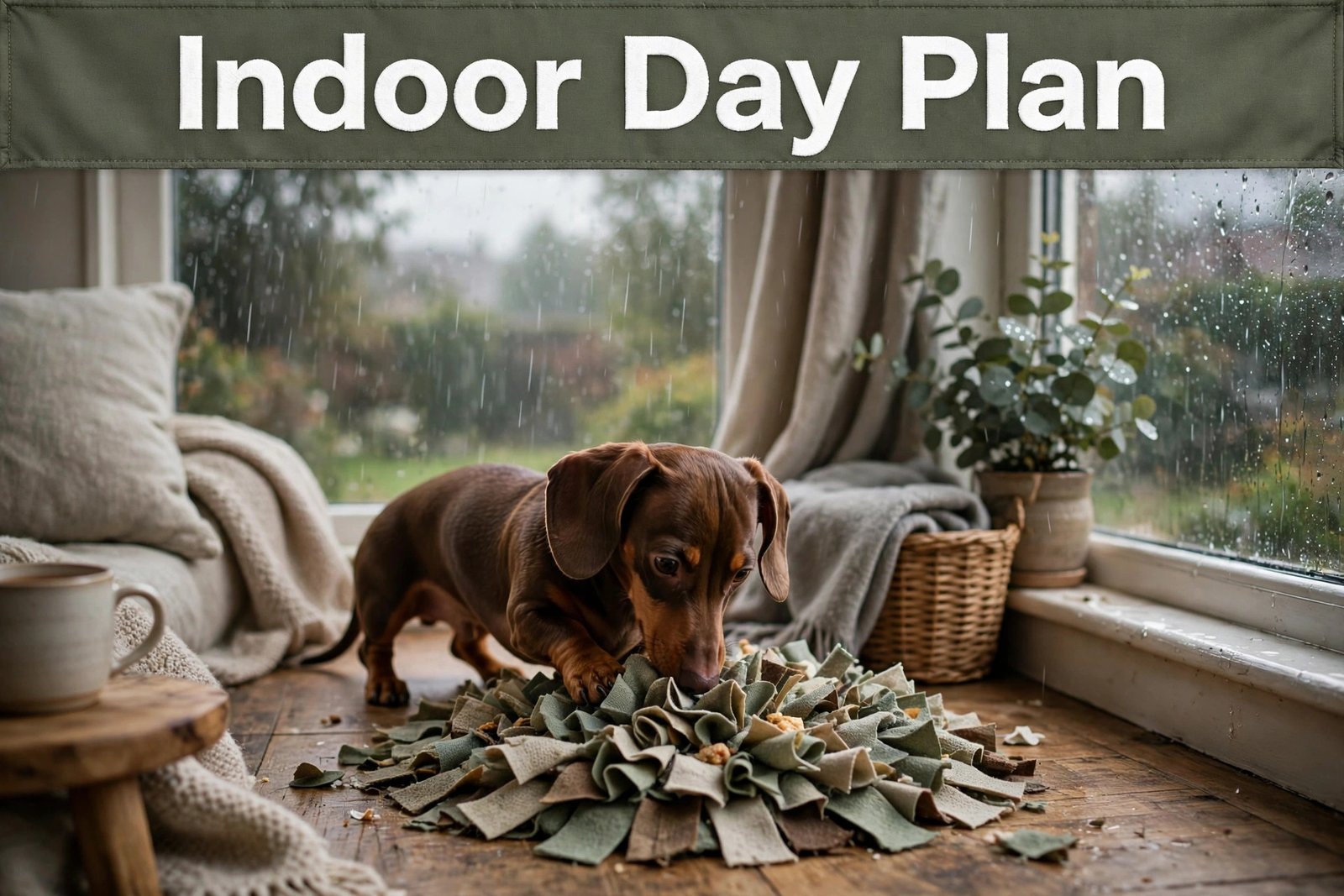
Mental work is the most valuable tool on an indoor day, because it tires a dog without tiring its back. Sniffing games are the easiest start: scatter kibble on a rug, hide treats in boxes with open flaps, or lay a short treat trail along a hallway. Let the dog work at its own pace, and make hides easier if the dog becomes frustrated.
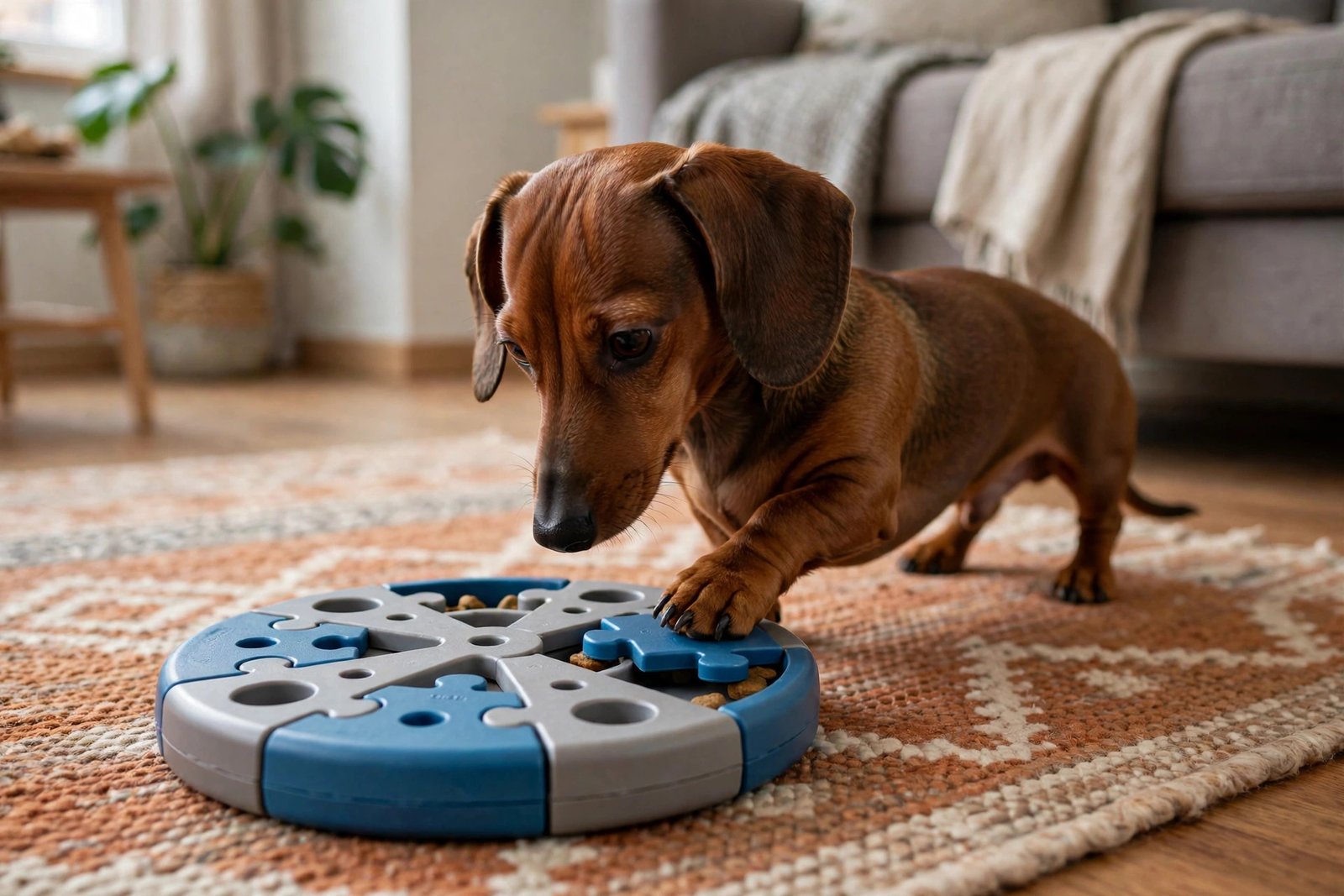
Puzzle toys and food toys extend the same idea. A slow feeder for one meal, a treat-dispensing toy rolled gently on the floor, or a lick mat with a thin smear of wet food all keep a dog busy for ten to twenty minutes without running. Rotate two or three toys across the day so interest stays high, and supervise new toys until the dog uses them safely.
Calm training sessions give mental work and strengthen routine. A few minutes of known cues, such as sit, down, touch, and settle, with small rewards and a relaxed pace, counts as activity for a dog. Keep sessions short, end with an easy success, and avoid cues that ask for jumping, spinning, or standing on hind legs.
Novelty helps too, in small doses. A new scent on a cloth, a cardboard box to explore, a different rug to sniff, or a toy that has been put away for a week can all refresh a familiar indoor day. Introduce one novelty at a time, watch the dog’s reaction, and remove anything that causes stress or rough play.
Count mental-work rewards within the daily food portion. Using part of the daily kibble for sniffing games and puzzles, rather than adding extra treats, keeps weight steady on days when outdoor activity is low. Weight control matters more, not less, on indoor days, because the dog is burning less energy than usual.
4. Rest, Routine, and Toileting on Indoor Days
Rest is not wasted time on an indoor day, it is part of the plan. A dog that rests well between activity blocks will stay calmer and move more freely than a dog that is kept busy all day. Provide a low, warm bed away from traffic and noise, and protect rest periods from visitors, play, and household bustle.
Keep a structured day: morning toileting and a short indoor movement block, breakfast through a slow feeder or puzzle, a rest period, a midday sniffing game and hallway walk, lunch or a small activity, an afternoon rest, an evening calm game, and a final toileting break. The exact times matter less than the pattern, which should feel familiar to the dog.
Toileting needs attention on indoor days, especially for apartment dogs. A short outdoor toileting walk, even in bad weather, is usually still needed, and it should be kept short, calm, and on a safe surface. If outdoor access is impossible for a day, use the indoor toileting arrangement the dog already knows, and do not introduce a new one during an already unusual day.
Feeding on indoor days should stay measured and on schedule. Do not add extra food because the dog seems bored, and do not skip meals because the dog missed a walk. A consistent portion, served calmly, helps the dog settle, while extra food adds weight without adding comfort.
For a full daily framework, the guide to a Dachshund back care daily routine for apartments covers meals, rest, movement, and play as one system. Indoor days use the same framework, with outdoor blocks replaced by indoor equivalents.
5. When Short Days Become a Pattern: Adjusting With Vet Help
One short day is normal. A week of short days, or a pattern where walks keep getting shorter, deserves a closer look. Ask whether the reason is weather, schedule, or the dog itself. If the dog is choosing shorter walks, hesitating at the door, or stiffening after walks, that pattern may signal a change worth discussing with a veterinarian.
Talk to a veterinarian about a long-term indoor plan if short days are frequent. Ask how much daily movement the dog needs, which indoor exercises are safe, and how to balance rest and activity over weeks. A veterinarian can set a tailored plan that accounts for age, weight, and any history of stiffness, and can advise when a short day should become a rest day and when it should become a veterinary visit.
Adjust the home for a pattern of indoor days, not just for one day. Permanent runners, a dedicated indoor play area on a rug, a set of rotating puzzle toys, and a consistent daily schedule all make repeated indoor days easier. A home set up for indoor days is also a home set up for senior dogs, recovery periods, and bad-weather seasons.
Watch weight closely during a pattern of short days, because less outdoor activity with the same food portion leads to gradual weight gain. Weigh the dog regularly, adjust portions with veterinary guidance, and count all treats. Weight gain during a quiet period is common and reversible if caught early, but it adds load to a back that is already moving less.
Finally, keep perspective. A dog that has calm indoor days, gentle movement, mental work, good rest, and regular veterinary contact is well cared for, even if walks are short. The goal is not a perfect outdoor routine, it is a steady daily life that protects a long back in whatever conditions the day brings.

Indoor Day Checklist
| Block | What to do | Keep it calm by |
|---|---|---|
| Morning | Short toileting walk, gentle hallway walk | Slow pace, rug surface |
| Breakfast | Slow feeder or puzzle toy | Measured portion, quiet corner |
| Midday | Sniffing game, short training | Easy hides, short session |
| Afternoon | Rest, then gentle movement | Protected rest spot |
| Evening | Calm game, final toileting | End while dog is calm |
Common Mistakes
- Replacing a missed walk with intense indoor fetch or chase.
- Keeping a dog still all day, then allowing a wild evening burst.
- Adding extra food because the dog seems bored indoors.
- Using exercises a veterinarian has not approved for the individual dog.
- Playing on smooth floors where the dog slides on every turn.
- Ignoring stiffness that appears after several quiet days.
When to Call Your Vet
Contact a veterinarian promptly if the dog shows pain, yelping when lifted or touched, a hunched back, wobbliness, weakness in the legs, dragging paws, loss of bladder or bowel control, sudden reluctance to move, or any sudden change in movement, appetite, or toileting. This article gives general information only and is not a diagnosis. A veterinarian can examine the dog, ask about recent activity and indoor routine, and advise on examination or care. Do not attempt home treatment for suspected back pain, and avoid stairs, jumping, and active play until veterinary advice has been received if signs are present. A second reason to call a veterinarian is a pattern of shortening walks or increasing stiffness over days or weeks, because a pattern deserves veterinary judgment even without a sudden crisis.
Pin This: Indoor Day Checklist
- Replace walks with gentle indoor movement, not intense play.
- Use sniffing games, puzzles, and calm training across the day.
- Keep meals measured and on schedule.
- Protect rest periods from noise and visitors.
- Move gently every few hours instead of lying still all day.
- Watch for stiffness after quiet days.
- Ask a veterinarian if short days become a pattern.
Frequently Asked Questions
Is it okay for a Dachshund to miss a walk for a day?
Yes, a single missed walk is fine when it is replaced with gentle indoor movement, mental work, and rest. A pattern of missed walks deserves a plan and veterinary input.
What indoor exercise is safest for a Dachshund’s back?
Slow hallway walks, gentle veterinarian-approved exercises, and calm sniffing games are safest. Avoid running, jumping, and fast play indoors.
Should I feed less on indoor days?
Portions should follow veterinary guidance and activity level, with treats counted in the daily total. Do not guess at reductions without advice, especially for puppies or senior dogs.
How do I stop evening restlessness on indoor days?
Spread calm activity across the day in short blocks, protect rest periods, and end the day with a calm game while the dog is still settled.
When does a short-walk pattern need a vet visit?
When walks keep shortening because the dog hesitates, stiffens, or seems sore, or when stiffness increases over days, call a veterinarian rather than waiting.
Conclusion
Dachshund back care on short walk indoor days is about calm replacement, not intense compensation. Plan one gentle indoor block for the next short day, and build the routine from there.



One Comment