

Dachshund Cold-Weather Back Stiffness Routine Guide
Quick Answer
- Cold weather can make a Dachshund’s back feel stiff, especially in the morning, after rest, or after a walk on cold, wet ground.
- Keep the rest area warm and draught-free, use a coat outdoors, and warm up slowly with calm indoor movement before a walk.
- Use ramps and lifting instead of stairs and jumping, and keep walks short, flat, and on a lead in winter.
- Stiffness that lasts, worsens, or comes with pain, weakness, or reluctance to move needs veterinary advice.
Contents
- 1. Why Cold Weather Stiffens a Dachshund’s Back
- 2. Warming the Home: Bed, Floor, and Rest Area
- 3. Winter Walks: Coats, Warm-Ups, and Short Routes
- 4. Gentle Indoor Movement on Cold Days
- 5. Tracking Stiffness and Knowing When to Get Help
- Cold-Weather Routine Comparison Checklist
- Common Mistakes
- When to Call Your Vet
- Pin This: Cold-Weather Back Stiffness Checklist
- Frequently Asked Questions
- Conclusion
Many Dachshund owners notice the same pattern each winter: the dog rises slowly in the morning, moves stiffly for the first few minutes, and hesitates at the door when cold air comes in. Cold alone does not cause disc disease, but it can make muscles tighten, joints feel sore, and an already sensitive back feel worse. A simple winter routine can reduce that morning stiffness and keep cold days comfortable.
This guide explains why cold weather affects a Dachshund’s back, how to warm the home and the rest area, how to plan winter walks, what gentle indoor movement helps, and how to tell normal winter stiffness from a problem that needs a veterinarian. It is general information, not a diagnosis, and any new or worsening pain should be checked by a veterinarian.
1. Why Cold Weather Stiffens a Dachshund’s Back
Muscles tighten in the cold. When a Dachshund lies still overnight in a cool room, the muscles along the spine cool and shorten, so the first steps in the morning feel stiff and slow. Movement usually warms them and loosens them within a few minutes, which is why many dogs improve after a short, calm walk around the flat. Stiffness that fades quickly with gentle movement is common, but stiffness that lasts all day, or grows worse over days, is a different matter.
Cold, damp ground adds to the problem. Wet paws, cold bellies close to the ground, and slippery pavements make a low-bodied dog work harder to stay upright, and a slip can jar the spine. Dachshunds also face a higher disc risk than many breeds, and general information from the Animal Medical Center on intervertebral disc disease explains why back pain, weakness, or wobbliness in this breed deserves attention rather than being dismissed as old age or cold weather. Knowing that background helps owners act early instead of waiting.
Age and past back trouble make winter stiffness more likely. An older Dachshund, or one that has had a back episode before, may need more time to warm up and more help with stairs and furniture. That does not mean winter must be miserable. A warm bed, a coat, shorter walks, and calm indoor movement usually make a clear difference within a week, and the change is easy to track once the routine is in place.
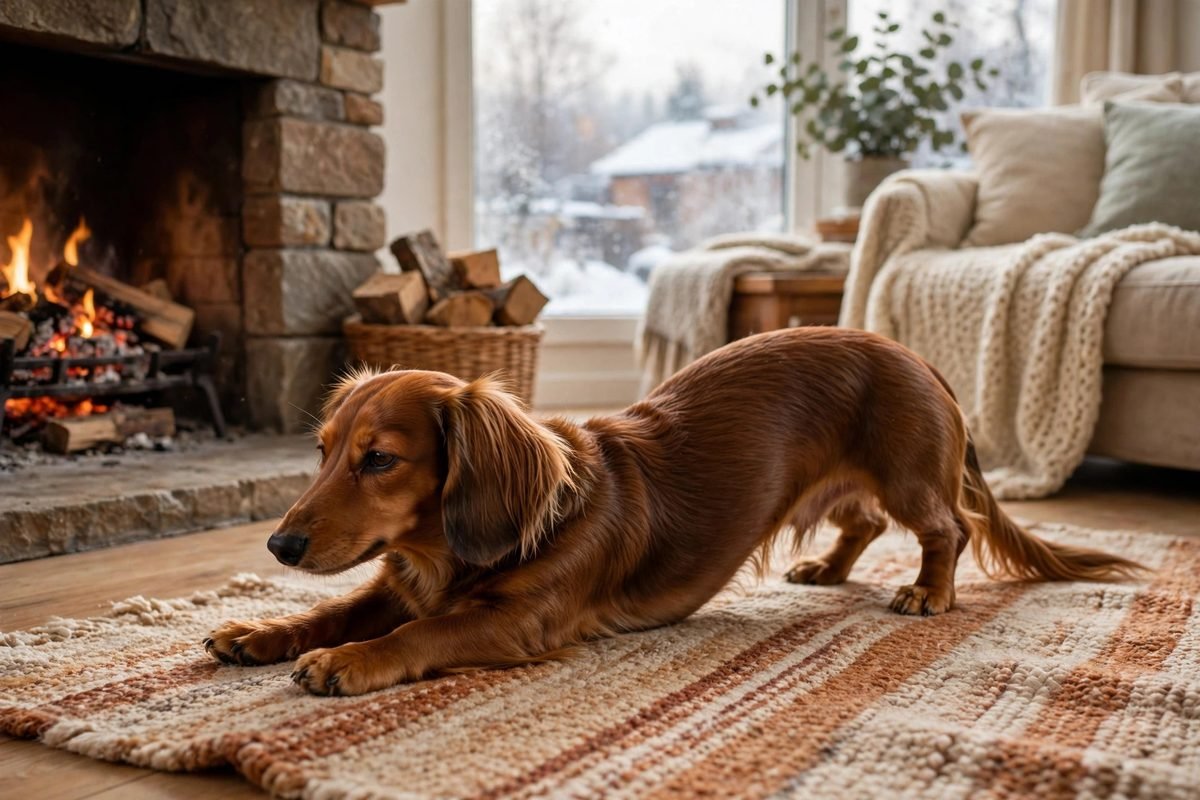
2. Warming the Home: Bed, Floor, and Rest Area
Start with the bed. Move it away from cold windows, exterior doors, and draughty hallways, and add a warm blanket that the dog can burrow into. A bed raised slightly off a cold floor, with a non-slip mat underneath, stays warmer than a thin bed placed directly on tiles or wood. In the morning, the dog should be able to step from a warm bed onto a warm surface, not onto an icy floor, so place a rug or mat beside the bed for those first stiff steps.
Check the whole flat for cold spots. Hard floors in kitchens and hallways feel cold under paws and bellies, and a Dachshund’s low body means more contact with that cold surface. Rugs, runners, and non-slip mats along the usual routes give warmth and grip at the same time, and they reduce the chance of a slip that could strain the back. Keep the rest area at a steady, comfortable temperature rather than letting it swing between hot and cold, and avoid placing the bed next to a radiator, where one side overheats while the other stays cold.
Evening warmth matters too. A short, calm period near the family before bed, with a blanket and a quiet chew, helps muscles stay loose overnight. Avoid late-night excitement, rough play, or a cold balcony trip just before sleep. The guide to a winter health routine for apartments covers seasonal care in more detail, and the same principles apply here: warmth, dryness, and a predictable routine protect a sensitive back through the coldest months.
3. Winter Walks: Coats, Warm-Ups, and Short Routes
Warm up indoors before going out. A few minutes of calm walking around the flat, gentle standing and stretching, and a slow start help stiff muscles loosen before they meet cold air. Do not carry a stiff dog straight from a warm bed into freezing air and expect it to walk normally. Give it time, keep the first minutes slow, and watch how it moves. If it stays hunched or reluctant after a few minutes, cut the walk short and try again later.
Use a well-fitting coat on cold, wet, or windy days. A coat that covers the back and belly keeps the spine and muscles warmer, and it should fit without pulling, rubbing, or restricting leg movement. Put the coat on indoors, before the cold hits, and remove it when the dog comes back inside so it does not overheat. Dry the paws and belly with a towel after every winter walk, and check for ice, salt, or grit between the toes, because sore paws change how a dog walks and can strain its back.
Keep winter walks short, flat, and on a lead. Choose routes without icy slopes, deep snow, or slippery steps, and avoid letting the dog jump off kerbs or climb snow banks. A short lead gives control near traffic and ice, and a harness spreads pressure across the chest rather than pulling on the neck. The guide to back care on short-walk indoor days shows how to balance limited outdoor time with calm indoor activity, which is exactly the balance winter demands.

4. Gentle Indoor Movement on Cold Days
On very cold days, indoor movement replaces part of the walk. Slow walking from room to room, gentle turns, and standing on a non-slip surface keep muscles moving without the cold or the slip risk. Scatter a few pieces of kibble on the floor for a calm sniffing game, or use a puzzle feeder, so the dog moves its nose and body slowly rather than sprinting. Keep all play at floor level, with no jumping for toys, no tug games that twist the spine, and no chasing around furniture.
Short sessions work best. Five to ten minutes of calm indoor activity, two or three times a day, usually helps more than one long, exciting session. Watch the dog during and after each session: it should move more freely afterwards, not more stiffly. If stiffness increases, shorten the next session and give the dog a warm rest. A warm blanket after activity, and a quiet rest in a warm spot, help muscles recover from the effort without cooling too quickly.
Do not try home massage, stretching, or heat treatment unless a veterinarian has shown you how. Well-meant handling can hurt a painful back, and heat applied to an inflamed area can make things worse. Gentle, ordinary movement is the safe option at home. If the dog seems to enjoy a light rub along its sides while lying calmly, keep it brief and stop at once if the dog flinches, tenses, or moves away.
5. Tracking Stiffness and Knowing When to Get Help
Track stiffness the same way each day. Note the time it takes the dog to move freely in the morning, how it walks after a rest, and whether cold days are worse than mild days. A simple notebook entry, such as the date, the weather, and a short note on movement, is enough. Over two weeks, a pattern usually appears: many dogs are stiff for a few minutes and then fine, while a smaller number stay stiff, grow worse, or start to avoid movement altogether.
That pattern is what a veterinarian needs. Bring the notes to the visit, and describe exactly what you see: how long stiffness lasts, whether it affects one side or the whole body, and whether pain, yelping, or reluctance to jump or climb has appeared. Cornell’s information on chondrodystrophy and disc disease notes the breed’s disc risk, so a veterinarian will take new back signs seriously and can advise on examination, pain relief, rest, or further tests. Do not wait for a routine appointment if the dog suddenly cannot walk, seems in severe pain, or loses bladder control.
Use the tracking to adjust the routine, not to diagnose. If mild days are fine and cold mornings are stiff, extra warmth and a slower warm-up may be enough. If stiffness appears on mild days too, or lasts longer each week, the routine alone is not solving the problem, and veterinary advice is the next step. Keep the changes you make small and one at a time, so you can tell what helped.

Cold-Weather Routine Comparison Checklist
| Winter step | Best for | Limit to watch |
|---|---|---|
| Warm bed and rugs | Morning stiffness | Keep bed away from radiators |
| Coat and short flat walks | Cold, wet days | Dry paws and belly after each walk |
| Calm indoor movement | Very cold days | Keep play at floor level |
| Daily stiffness notes | Spotting a worsening pattern | Share notes with the vet |
Common Mistakes
- Carrying a stiff dog straight into freezing air with no warm-up.
- Letting the dog jump off kerbs, snow banks, or furniture in winter.
- Skipping the coat, then walking far on cold, wet ground.
- Using slippery floors with no rugs or non-slip mats.
- Trying home massage or heat on a painful back without vet advice.
- Ignoring stiffness that lasts all day or grows worse each week.
- Replacing walks with long, exciting indoor play that twists the spine.
When to Call Your Vet
Contact a veterinarian promptly for stiffness that lasts all day, worsens over days, or comes with pain, yelping, weakness, wobbliness, reluctance to move, or loss of bladder or bowel control. This article gives general information only and does not diagnose any condition. A veterinarian can examine the dog and advise on pain relief, rest, examination, or further tests. Do not delay veterinary help while trying home care for a serious problem, and seek emergency help at once for collapse, severe pain, or loss of movement. A veterinarian should also be consulted if winter stiffness does not improve with warmth, shorter walks, and calm indoor movement.
Pin This: Cold-Weather Back Stiffness Checklist
- Warm the bed and add rugs on cold floors.
- Warm up indoors before every winter walk.
- Use a fitting coat and dry paws after walks.
- Keep walks short, flat, and on a lead.
- Use calm indoor movement on very cold days.
- Keep play at floor level; no jumping or tugging.
- Note morning stiffness daily and share it with the vet.
Frequently Asked Questions
Is morning stiffness in winter normal for a Dachshund?
Brief stiffness that fades within a few minutes of gentle movement is common in cold weather, especially in older dogs. Stiffness that lasts all day, worsens, or comes with pain is not normal and should be checked by a veterinarian.
Should a Dachshund wear a coat in winter?
Yes, on cold, wet, or windy days a well-fitting coat that covers the back and belly helps keep muscles warm. It should fit without pulling or restricting movement, and it should be removed indoors so the dog does not overheat.
How long should a winter walk be?
Shorter than a summer walk, on flat ground, with a slow warm-up indoors first. The exact length depends on the dog, the temperature, and how it moves, so watch the dog and cut the walk short if it stays stiff or reluctant.
Can I use a hot water bottle for a stiff back?
Do not apply heat, hot water bottles, or warming pads to a dog’s back unless a veterinarian has advised it. Heat can worsen inflammation, and a dog may burn itself. Warmth from a blanket, a warm room, and gentle movement is the safe option at home.
When does winter stiffness need a vet visit?
When it lasts all day, grows worse over days or weeks, comes with pain or weakness, or stops the dog from moving normally. Bring your daily notes, so the veterinarian can see the pattern and decide on examination or treatment.
Conclusion
A cold-weather back stiffness routine works when the home stays warm, walks start with a slow indoor warm-up, coats and short flat routes protect the dog outdoors, and calm indoor movement fills the coldest days. Track stiffness daily, and call your veterinarian promptly if it lasts, worsens, or comes with pain.






One Comment