
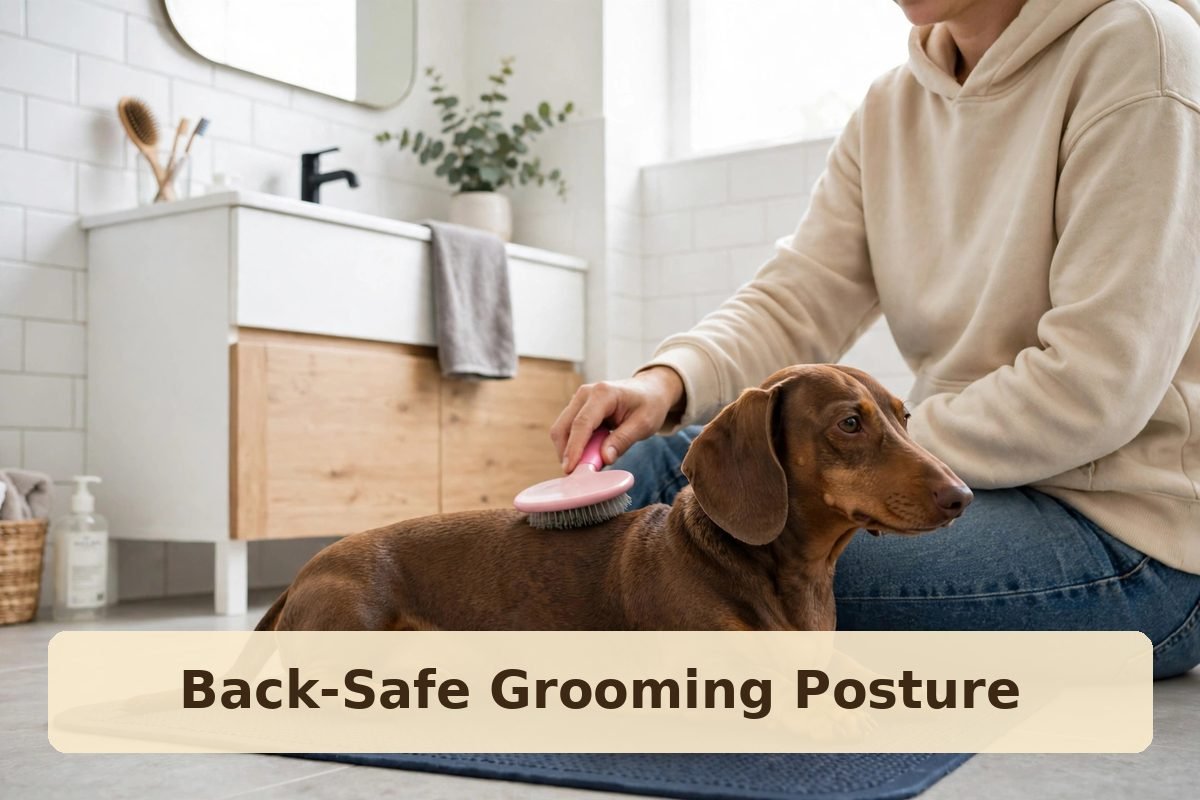
Dachshund Back-Safe Grooming Posture at Home: Guide
Quick Answer
- Back-safe grooming keeps a Dachshund’s spine level, supported, and still, with short sessions on a low, non-slip surface.
- Lift with two hands, keep the back horizontal, and never dangle the dog, twist it, or stand it on a high table without support.
- Brush in short, gentle strokes, work in small sections, and stop at once if the dog flinches, yelps, or tries to move away.
- Grooming is not a treatment for back pain; pain, weakness, or reluctance to be touched needs veterinary advice.
Contents
- 1. Why Grooming Posture Matters for a Dachshund’s Back
- 2. Setting Up a Low, Safe Grooming Area
- 3. Lifting Onto the Grooming Surface Safely
- 4. Brushing, Combing, and Checking the Coat
- 5. Nails, Ears, and Finishing Without Strain
- Grooming Posture Comparison Checklist
- Common Mistakes
- When to Call Your Vet
- Pin This: Back-Safe Grooming Posture Checklist
- Frequently Asked Questions
- Conclusion
Grooming looks harmless, yet it is one of the easiest ways to strain a Dachshund’s back at home. The dog is lifted onto a table, turned, stretched, and held still while a brush pulls at its coat, and a wriggle at the wrong moment can twist the spine. A back-safe grooming posture, with a low surface, a level lift, and short, calm sessions, keeps routine care comfortable instead of risky.
This guide explains why grooming posture matters, how to set up a safe grooming area, how to lift a Dachshund onto it, how to brush and check the coat without strain, and how to finish nails and ears calmly. It is general information for routine grooming, not veterinary advice, and any sign of pain should be checked by a veterinarian.
1. Why Grooming Posture Matters for a Dachshund’s Back
A Dachshund’s long spine is supported by discs that can be strained by twisting, bending, or sudden movement. During grooming, a dog that is lifted by its front legs, held dangling, rolled onto its side, or allowed to jump off a table puts those discs under exactly that kind of strain. Even a healthy dog can be hurt by a single awkward lift, and a dog with a sensitive back is at greater risk. Keeping the spine level and supported throughout grooming removes most of that risk.
Grooming also lasts longer than most owners expect. Brushing, checking the coat, cleaning ears, and trimming nails can take twenty minutes or more, and a dog standing on a slippery, high surface for that long will tire, shift its weight, and wriggle. Tired muscles support the spine less well, so a long session on a poor surface is riskier than a short session on a good one. Short sessions, with breaks, protect both the dog and the owner.
The dog’s own posture matters too. A Dachshund that stands hunched, sits awkwardly, or keeps shifting its weight may already be uncomfortable, and grooming through that discomfort can make it worse. General information from the Animal Medical Center on intervertebral disc disease explains why back pain and movement changes in this breed deserve attention, and a grooming session is a good time to notice early signs, such as flinching when touched along the back, rather than a time to push through them.

2. Setting Up a Low, Safe Grooming Area
Choose a low, stable surface, such as a low table, a sturdy bench, or a mat on the floor. Floor-level grooming is the safest option for most owners, because there is no height to fall from and no lift is needed at all. If you use a table, it should be low enough to lift the dog onto it easily, wide enough for the dog to stand and turn without stepping off the edge, and covered with a non-slip mat so the dog’s paws do not slide. Never groom on a wet, slippery, or wobbly surface.
Gather everything before the dog arrives: a soft brush, a comb, towels, ear cleaning supplies if your veterinarian has advised them, nail clippers, and treats for calm breaks. Reaching across a dog for a forgotten tool, or leaving it alone on a table while you fetch something, invites a jump or a fall. Keep the area warm, dry, and quiet, with no other pets or children running past, and keep the session to ten minutes at first, building up only if the dog stays calm and comfortable.
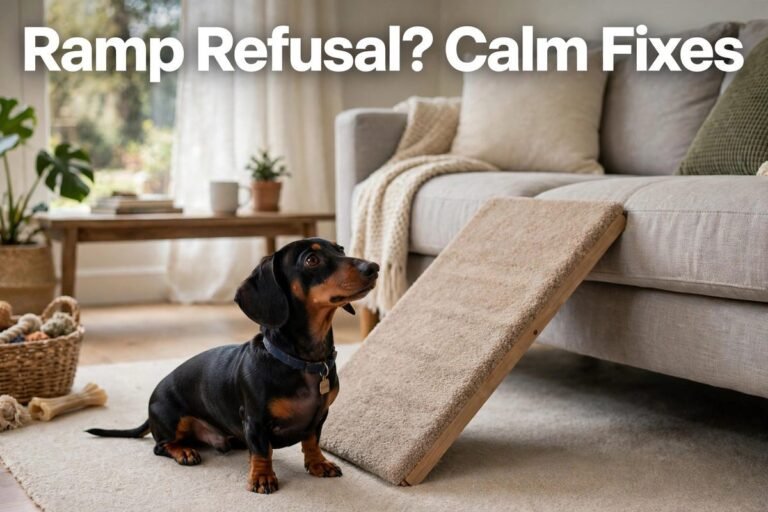
Place a ramp or a step beside a table if the dog is used to one, but do not force a dog to climb during grooming. Many owners find floor grooming simpler and safer, with the dog lying on a non-slip mat and the owner sitting beside it. The guide to bathing without straining the back uses the same low, supported approach, and the same principles carry over to brushing, combing, and drying.
3. Lifting Onto the Grooming Surface Safely
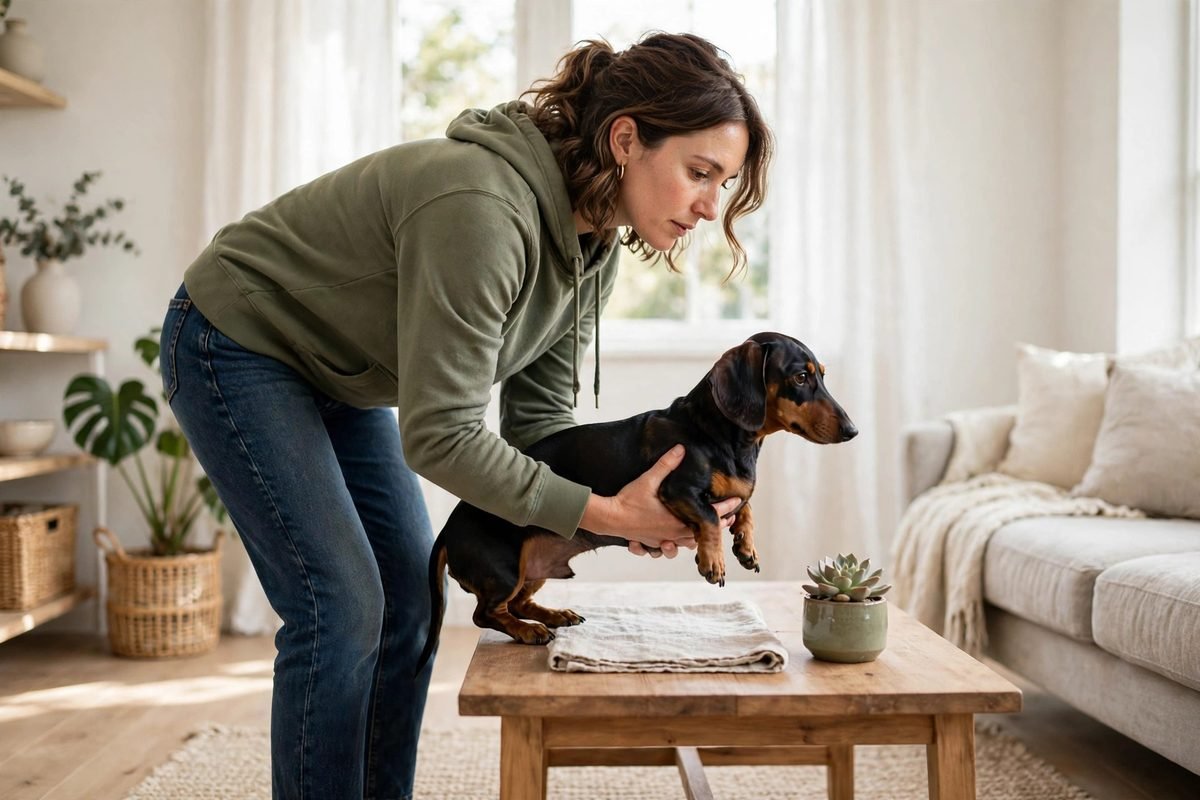
If the dog must be lifted, use two hands and keep the back level. One hand supports the chest, the other supports the hindquarters, and the spine stays horizontal from floor to table. Do not lift by the front legs, do not pick the dog up by its belly, and do not let the back end dangle while you carry it. Move slowly, keep the dog close to your body, and set it down gently with all four paws on the surface before letting go.
Ask for help if the dog is heavy, wriggly, or in pain. One person can lift while the other steadies the table and guides the dog, and that teamwork is far safer than a rushed solo lift. If the dog resists being lifted, do not force it. Groom on the floor instead, or postpone the session and try again when the dog is calm. A dog that struggles during a lift is telling you it is frightened or uncomfortable, and forcing the lift risks both a fall and a back injury.
Once the dog is on the surface, keep one hand near it at all times, especially if the surface is raised. Never leave a dog alone on a table, even for a few seconds, because a jump off a table is a common cause of back injury. If you need both hands for a task, such as trimming a nail, ask a helper to steady the dog, or move the dog to the floor for that step. Safety matters more than finishing the session in one go.
4. Brushing, Combing, and Checking the Coat
Brush in short, gentle strokes, following the direction of the coat, and work in small sections rather than pulling the brush across the whole body at once. Start at the neck and shoulders, move slowly along the sides, and finish with the belly and legs, where the skin is more sensitive. Use a soft brush for short coats and a gentle comb for longer coats, and stop if the brush catches on a mat. Pulling a mat free hurts and can make the dog twist suddenly, so work mats apart slowly with your fingers, or ask a groomer or veterinarian for help.
Keep the dog’s body supported while you brush. A dog standing on four paws, with its weight even, is in the safest posture. Avoid rolling the dog onto its side or back to reach the belly, and avoid pulling a leg out to the side to brush it. Instead, lift one paw briefly, brush that area, and set the paw down again. If the dog lies down during brushing, let it rest in that position and brush what you can reach, rather than making it stand again.
Use grooming as a calm health check. While brushing, look for lumps, sores, red skin, parasites, or areas where the dog flinches when touched. Note anything unusual, with the date, and mention it at the next vet visit. The guide to coat and skin care at home covers what to look for in more detail, and a regular, gentle grooming routine makes small changes easier to spot early. Keep the session calm, praise the dog quietly, and end with a treat and a rest.
5. Nails, Ears, and Finishing Without Strain
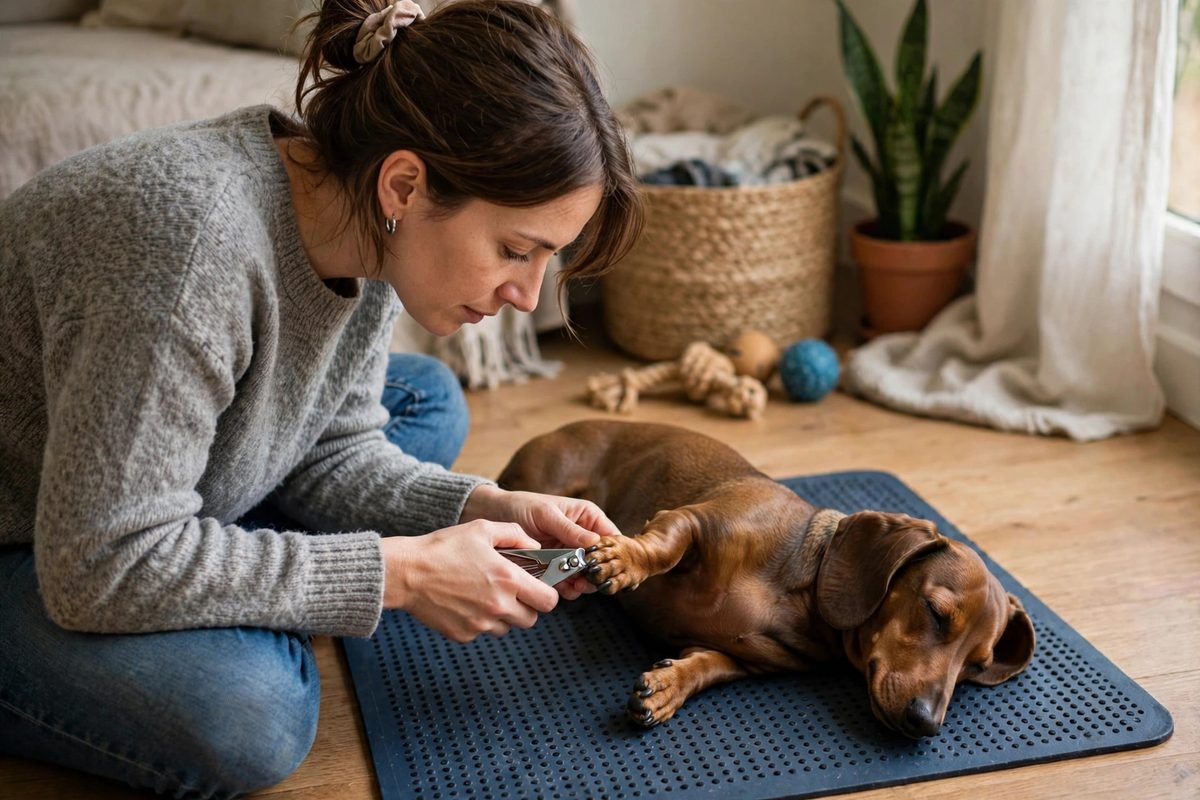
Nail care needs the dog to stay still, so keep it brief and low. Work on the floor or a low surface, lift one paw at a time, and trim only the tip of each nail, avoiding the quick, which is the sensitive inner part. If the dog pulls away, stop and try again later rather than holding the leg firmly and forcing the trim. Many owners trim a few nails at a time over several days, which is far safer than a long, stressful session that ends with a wriggling dog and a twisted back.
Ear checks should be gentle and brief. Lift the ear flap, look inside for redness, discharge, or an unusual smell, and clean only if your veterinarian has shown you how and advised a suitable product. Do not push cotton buds or cloths deep into the ear, and do not hold the dog’s head still by force. If the dog shakes its head, flinches, or cries when an ear is touched, stop and contact your veterinarian, because ear pain can be a sign of infection or another problem that needs treatment.
Finish by lowering the dog back to the floor with the same two-hand, level lift used at the start, or by guiding it down a ramp if it is used to one. Never let the dog jump off a table, even a low one. Offer water, a quiet rest, and a small treat, and put the grooming tools away so the dog is not encouraged to keep playing with them. Cornell’s information on chondrodystrophy and disc disease notes the breed’s disc risk, so any pain, weakness, or reluctance to move after grooming should be noted and checked promptly rather than dismissed as tiredness.
Grooming Posture Comparison Checklist
| Grooming approach | Best for | Limit to watch |
|---|---|---|
| Floor-level grooming | Most owners and dogs | Needs a non-slip mat |
| Low table with mat | Longer sessions | Never leave the dog alone on it |
| Short sessions with breaks | Nervous or stiff dogs | Stop if the dog flinches |
| Helper steadying the dog | Nails and tricky steps | Keep the back level throughout |
Common Mistakes
- Lifting by the front legs or letting the back dangle.
- Grooming on a high, slippery, or wobbly table.
- Leaving the dog alone on a raised surface.
- Pulling mats free or brushing hard against the coat.
- Rolling the dog onto its side or back to reach the belly.
- Forcing nail trims when the dog pulls away.
- Letting the dog jump off the table at the end.
When to Call Your Vet
Contact a veterinarian promptly if a Dachshund shows pain, flinching, or yelping when touched along the back, reluctance to be groomed, weakness, wobbliness, or a new lump, sore, or skin change that does not heal. This article gives general information only and does not diagnose any condition. A veterinarian can examine the dog and advise on grooming, pain relief, or further tests. Do not delay veterinary help while trying home care for a serious problem, and seek emergency help at once for severe pain, weakness, or loss of movement. A veterinarian should also be consulted if grooming regularly causes pain or distress, because the routine may need to change.
Pin This: Back-Safe Grooming Posture Checklist
- Groom on the floor or a low, non-slip surface.
- Lift with two hands, keeping the back level.
- Never leave the dog alone on a table.
- Brush gently, in small sections.
- Stop at once if the dog flinches or yelps.
- Trim a few nails at a time, on the floor.
- Lower the dog down; never let it jump off.
Frequently Asked Questions
Is it safer to groom a Dachshund on the floor?
Yes, for most owners floor grooming is safest, because there is no height to fall from and often no lift is needed. Use a non-slip mat, sit beside the dog, and keep sessions short and calm.
How do I lift a Dachshund onto a grooming table?
Use two hands, one under the chest and one under the hindquarters, keeping the back level. Move slowly, keep the dog close to your body, and set it down gently with all four paws on the surface before letting go.
How long should a grooming session last?
Ten minutes is a good start, with breaks if the dog becomes restless. Longer sessions tire the dog and make wriggling more likely, so split nails, ears, and brushing across several short sessions if needed.
What if my Dachshund will not stay still for grooming?
Stop, give the dog a rest, and try again later with a shorter session. Forcing a wriggling dog risks a fall or a back injury. If the dog always resists grooming, ask your veterinarian or a professional groomer for advice.
Can grooming reveal back problems?
Yes. Flinching when touched along the back, reluctance to be lifted, or a hunched posture during grooming can be early signs of discomfort. Note what you see, with the date, and mention it at the next vet visit.
Conclusion
Back-safe grooming works when the surface is low and non-slip, the lift keeps the back level, sessions stay short and calm, and the dog is never left alone on a table or allowed to jump off. Groom gently, watch for pain, and call your veterinarian promptly if grooming regularly causes distress.



One Comment