
Dachshund After the Vet Visit: Calm Home Routine Guide
Quick Answer
- After a vet visit, give a Dachshund a calm rest spot, fresh water, and a quiet evening, and follow the vet’s medicine and feeding instructions exactly.
- Give every dose on time, finish the full course, and never share medicine between dogs or stop a course early because the dog looks better.
- Watch appetite, stools, energy, and the reason for the visit for 24 to 48 hours, and write down anything that changes.
- Contact the vet clinic if the dog worsens, refuses food and water, vomits repeatedly, or shows the warning signs the vet listed.
Contents
- 1. The First Hours Home: Rest, Water, and Calm
- 2. Medicine at Home: Doses, Timing, and Safe Storage
- 3. Food, Water, and Toilet After the Visit
- 4. Watching for Changes in the First 48 Hours
- 5. Follow-Up Checks and the Next Appointment
- After the Vet Visit Home Checklist
- Common Mistakes
- When to Call Your Vet
- Pin This: After the Vet Visit Checklist
- Frequently Asked Questions
- Conclusion
A vet visit is tiring for a small dog: the car, the waiting room, strange smells, handling, and perhaps an injection or a blood test. Coming home should feel like relief, not a second event. A calm evening, a familiar bed, and a clear plan for medicine and checks help the dog settle and help the owner spot problems early, while the visit is still fresh in mind.
This guide explains the home routine after a vet visit for a Dachshund, from the first hours home to medicine, food, and follow-up checks. It is general information about home care after a vet visit, not veterinary advice and not a diagnosis. The vet’s own instructions always come first, and anything unclear should be checked with the clinic, not guessed at home. When the vet’s advice and this guide differ, the vet’s advice wins.
1. The First Hours Home: Rest, Water, and Calm
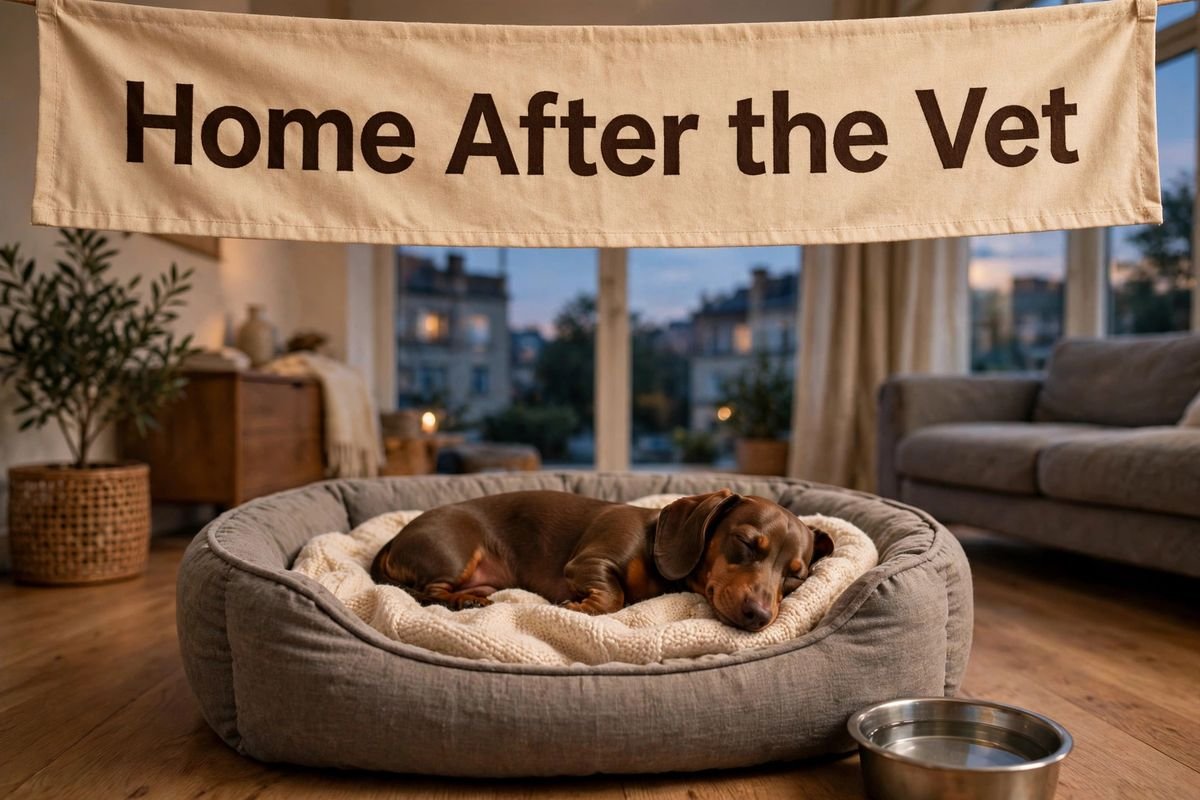
Let the dog rest as soon as it comes home. Set up the usual bed or blanket in a quiet corner, offer fresh water, and keep the house calm for the rest of the day. Skip visitors, baths, and long play sessions, and keep other pets from crowding the dog. A short, gentle toilet walk on the lead is enough, and the dog can go back to its bed straight after. Rest is part of the treatment, especially after a vaccine, a blood test, or a visit for back pain.
Watch the dog quietly without hovering. Some dogs sleep for hours after a visit, and that is normal, while others pace or seem unsettled for a while. Both settle with time and quiet. Keep the dog warm if the weather is cold, because a tired dog chills faster, and keep the bed away from draughts and busy doorways. If the vet gave a specific rest instruction, such as crate rest or no stairs, follow it exactly, because rest protects the back while it recovers.
Do not expect the dog to act normally at once. A dog that is quiet, eats less, or sleeps more on the first evening is usually just tired, but a dog that worsens, hides, cries, or refuses water needs a call to the clinic. Write down the time the dog came home, what the vet did, and any instructions given, while they are fresh, because that note is the reference for the next two days. The guide to keeping a Dachshund back symptom diary for vet visits explains how to record signs clearly, and the same habit works for any visit, not just back problems.

2. Medicine at Home: Doses, Timing, and Safe Storage
Give medicine exactly as the vet prescribed: the right dose, at the right time, for the full course. Read the label on every bottle and packet before the first dose, and check whether the medicine goes with food or on an empty stomach. A dose given with food when it should be given without can work less well, and a dose given without food when it needs food can upset the stomach, so the label matters as much as the dose.
Set a simple system so no dose is missed or doubled. Write the dose times on a card on the fridge, set phone alarms, and tick each dose off as it is given. If a dose is missed, do not double the next one unless the vet or the label says so; call the clinic for advice instead. If the dog spits out a tablet, do not guess whether it swallowed enough; ask the clinic whether to repeat the dose. Keep a note of any side effects, such as vomiting, loose stools, or sleepiness, with the time they started.
Store medicine safely and out of reach of children and other pets. Keep it in its original packaging, at the temperature the label states, and never share a dog’s medicine with another dog, even one with the same problem, because doses differ by weight and condition. Finish the full course even if the dog looks better after two days, because stopping early can let the problem return. When the course ends, return leftover medicine to the clinic or dispose of it as the clinic advises, and never keep it for a future illness.

3. Food, Water, and Toilet After the Visit
Offer a small meal at the usual time, unless the vet said otherwise. Some dogs eat normally after a visit, while others need a smaller, lighter meal first. If the vet advised fasting or a bland diet, follow that exactly, and do not offer treats or table scraps on top of it. Fresh water should always be available, and the water bowl should be close to the resting spot so the dog does not have to walk far to drink.
Watch the first toilet trips after the visit. Note whether the dog passes urine and stools normally, and whether the stools are firm, soft, or loose. A single loose stool after a stressful visit is common, but repeated diarrhoea, blood in the stools, or no urine for many hours needs a call to the clinic. Keep the toilet routine gentle: short lead walks, no stairs or jumping where possible, and a calm route the dog knows well.
Keep the feeding routine steady for the next two days. Same food, same amount, same times, with treats kept tiny, so any change in appetite or digestion is easy to spot. If the dog refuses food for more than a day, or refuses food and water together, contact the clinic rather than waiting. A veterinarian can advise whether the loss of appetite is a normal tired response or a sign that something needs checking. The Animal Medical Center’s information on intervertebral disc disease in dogs explains why rest and careful handling matter so much for this breed’s back, and a calm home routine after a visit is part of that care.

4. Watching for Changes in the First 48 Hours
The first 48 hours are the watching window. Check the reason for the visit first: if the dog went in for a sore back, watch how it walks, stands, and climbs; if it went in for itchy skin, watch the scratching; if it went in for a stomach upset, watch the stools and appetite. A slow, steady improvement is the expected pattern, and small ups and downs within it are normal. Write down what is better, what is the same, and what is worse each morning and evening.
Watch for the warning signs the vet listed, and for general red flags. Vomiting more than once, diarrhoea that continues, swelling at an injection site, a wound that opens or smells, bleeding, weakness, wobbliness, or a dog that will not stand all deserve a call to the clinic. After a vaccine, a small, soft lump at the injection site can appear and usually fades, but a large, hot, or painful swelling needs checking. Do not wait for the follow-up appointment if the dog is clearly getting worse.
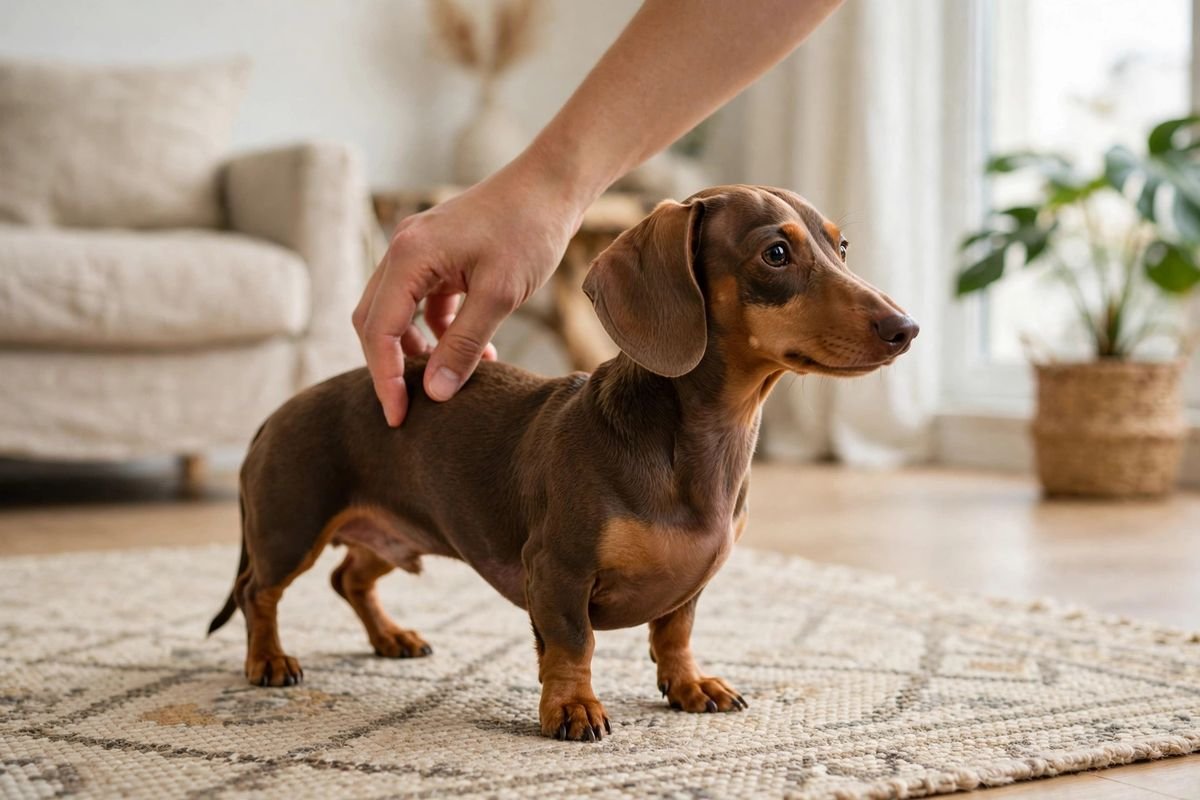
Keep the dog’s routine gentle during the watching window. Short walks, no rough play, no stairs or jumping if the vet advised rest, and a calm home. Cornell’s information on intervertebral disc disease describes how back problems in this breed can change over days, so a dog that was seen for back pain deserves close watching at home, with any new weakness or wobbliness reported to the clinic the same day. A short daily note of energy, appetite, stools, and movement gives the veterinarian a clear picture at the follow-up, far better than a memory of a worrying weekend.
5. Follow-Up Checks and the Next Appointment
Book the follow-up before leaving the clinic, or call the next morning if it was not booked. A follow-up is not a formality: it is when the veterinarian checks whether the treatment worked, whether the dose needs changing, and whether further tests are needed. Put the date on the calendar and in a phone reminder, and bring the medicine packets, the home notes, and the list of questions to the appointment.
Prepare questions in advance, while the home routine is fresh. What should the dog be doing by the follow-up date? What signs mean the treatment is working? What signs mean calling sooner? What activity is allowed, and when can normal walks resume? The guide to questions to ask your vet about Dachshund back health lists useful questions for back-related visits, and the same habit of writing questions down before the appointment works for any visit. A short written list means nothing important is forgotten in the consulting room.
After the follow-up, update the home record. Note what the vet said, any change in medicine or rest, and the date of the next check. Keep all vet paperwork together in one folder, with vaccine dates and medicine names easy to find. Over months, that folder becomes the dog’s health history, and a new veterinarian, or an emergency clinic at night, can read it in minutes. A calm home routine after each visit, a clear record, and a booked follow-up turn one appointment into a plan, rather than a single event that fades from memory.

After the Vet Visit Home Checklist
| Step | What to do | When |
|---|---|---|
| Rest spot ready | Quiet bed, fresh water, calm house | As soon as the dog comes home |
| Write down instructions | Vet advice, rest rules, warning signs | First evening, while fresh |
| Medicine system | Dose times on a card, alarms, tick off | Before the first dose |
| Food and water | Small usual meal, fresh water nearby | First evening |
| Watch 48 hours | Appetite, stools, energy, visit reason | Morning and evening, 2 days |
| Follow-up booked | Date on calendar and phone reminder | Next morning at the latest |
| Questions ready | Written list for the follow-up | Before the appointment |
Common Mistakes
- Skipping rest and letting the dog run and play the same evening.
- Missing doses or doubling a dose after a missed one.
- Stopping medicine early because the dog looks better.
- Sharing medicine between dogs.
- Feeding treats and scraps on top of a vet-advised diet.
- Waiting for the follow-up when the dog is clearly getting worse.
- Arriving at the follow-up without notes or questions.
When to Call Your Vet
Contact the vet clinic if the dog worsens after the visit, refuses food and water, vomits repeatedly, has ongoing diarrhoea or blood in the stools, shows weakness, wobbliness, or back pain, or develops a hot, painful swelling at an injection site. Contact the clinic urgently if the dog collapses, has trouble breathing, or cannot stand. This article gives general information only and does not diagnose any condition. A veterinarian can advise whether a change after a visit is a normal response or a sign that the dog needs to be seen again, and it is always better to call and ask than to wait and worry. Keep the clinic number saved in the phone for nights and weekends.
Pin This: After the Vet Visit Checklist
- Set up a quiet rest spot with water nearby.
- Write down the vet’s instructions the same evening.
- Give every dose on time and finish the course.
- Offer a small usual meal and watch the first stools.
- Check appetite, energy, and movement for 48 hours.
- Book the follow-up and bring your notes.
- Call sooner if the dog gets worse.
Frequently Asked Questions
How long should my Dachshund rest after a vet visit?
Most dogs need a quiet evening after a visit, and dogs seen for back pain or after a procedure may need several days of rest, as the vet advised. Keep walks short, skip rough play, and follow the vet’s rest instructions exactly rather than guessing.
What if a Dachshund refuses food after the vet visit?
A small meal refused on the first evening is often just tiredness, so offer fresh water and try a small meal later. If the dog refuses food for more than a day, or refuses food and water together, contact the clinic for advice.
Can I give a missed dose late?
Do not double the next dose unless the vet or the medicine label says so. Give the missed dose only if the label allows it, and call the clinic for advice if unsure, because the right answer depends on the medicine.
Is a lump after a vaccine normal?
A small, soft lump at the injection site can appear and usually fades over days. A large, hot, painful, or growing swelling, or a dog that seems unwell with it, should be checked by the clinic promptly.
What should I bring to the follow-up appointment?
Bring the medicine packets, the home notes from the first 48 hours, the vet paperwork from the last visit, and a written list of questions. That record lets the veterinarian see exactly how the dog responded at home.
Conclusion
The vet visit does not end at the clinic door. A quiet rest spot, medicine given on time and finished in full, steady food and water, and careful watching for 48 hours turn one appointment into a recovery, and a booked follow-up with written notes keeps the plan moving. When in doubt, call the clinic: a quick question is always better than a worried wait.



2 Comments