
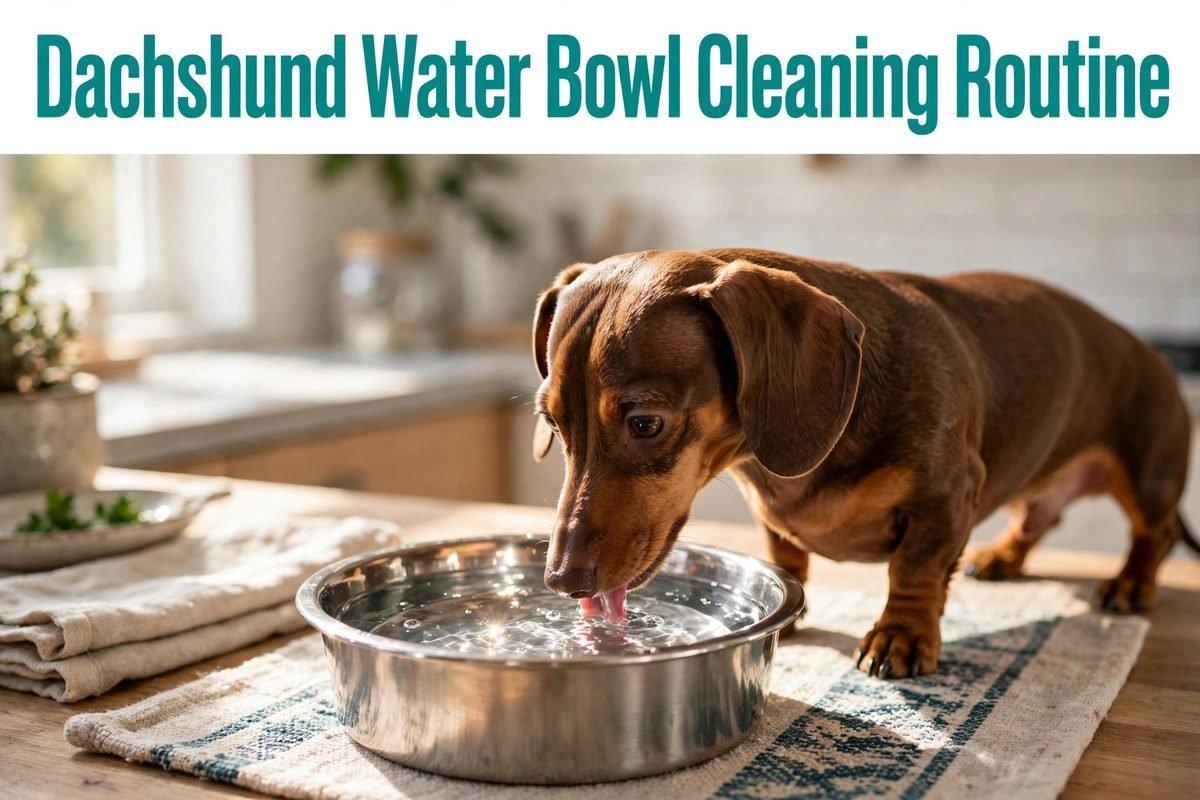
Dachshund Water Bowl Cleaning and Hygiene Routine Guide
Quick Answer
- A water bowl grows a slimy layer called biofilm within a day or two, and that film can hold bacteria, so a bowl needs washing daily, not just refilling.
- Wash the bowl every day with hot water and a little dish soap, scrub the sides and base, rinse well, and dry it before refilling with fresh water.
- Stainless steel or ceramic bowls are easiest to keep clean, because they have smooth, non-porous surfaces, while scratched plastic bowls hold bacteria in the scratches.
- Contact a veterinarian if a Dachshund drinks far more or far less than usual, refuses water, or shows vomiting, diarrhoea, or lethargy alongside a dirty bowl.
Contents
- 1. What Biofilm Is and Why It Matters
- 2. Choosing a Bowl That Stays Clean
- 3. The Daily Wash and Refill Routine
- 4. The Weekly Deep Clean and Bowl Check
- 5. Fresh Water Habits for Apartment Dachshunds
- Water Bowl Comparison Checklist
- Common Mistakes
- When to Call Your Vet
- Pin This: Water Bowl Checklist
- Frequently Asked Questions
- Conclusion
Most owners refill the water bowl far more often than they wash it. The bowl looks clean, the water looks clear, and topping it up feels like enough. But run a finger around the inside of a bowl that has sat for two days, and the truth is obvious: a slippery, slimy film coats the sides, and that film is alive with bacteria. For a small dog that drinks from that bowl all day, a dirty bowl is a daily dose of germs, and it is also a reason some dogs drink less than they should.
This article explains what biofilm is, how to choose a bowl that stays clean, and how to build a simple daily and weekly cleaning routine that fits an apartment household. It is general information only, not a diagnosis, and it does not replace veterinary advice. A dog that suddenly drinks far more or less than usual needs a veterinarian, but a clean bowl is the starting point for healthy drinking habits.
1. What Biofilm Is and Why It Matters
Biofilm is a thin, slimy layer of bacteria and other microbes that sticks to any wet surface, and it starts forming in a water bowl within hours. It feels slippery under a finger, it can look like a faint pink or grey stain on the bowl, and it gives the water a stale smell even when the water looks clear. The bacteria in biofilm are mostly harmless in small amounts, but the film protects them, lets them multiply, and can carry germs from food, saliva, dust, and the dog’s mouth into the water the dog drinks all day.
A dirty bowl can affect a dog in two ways. First, it can add bacteria to the water, which may upset a sensitive stomach, especially in puppies, seniors, or dogs that are already unwell. Second, it can put a dog off drinking: stale-smelling water, a slimy rim, or a bowl that smells of old food is less inviting than fresh water in a clean bowl, and a dog that drinks less is at higher risk of dehydration, constipation, and urinary problems.
Biofilm is not a sign of a bad owner, and it is not visible dirt, which is why so many people miss it. It grows in every bowl, in every home, and the only way to control it is regular washing, not just refilling. A bowl that is topped up without washing gets dirtier every day, because each refill adds fresh water to the same film, and the film keeps growing. The fix is simple and cheap: wash the bowl, every day, with hot water and soap, and the film never gets a chance to build up.

2. Choosing a Bowl That Stays Clean
Stainless steel is the easiest bowl to keep clean. It is smooth, non-porous, and hard to scratch, so bacteria have nowhere to hide, and it can go in the dishwasher for a thorough clean. A heavy stainless steel bowl also stays put on the floor, which matters for a Dachshund that pushes its bowl around while drinking.
Ceramic is the next best choice, and it suits owners who want a heavier, quieter bowl. Glazed ceramic is smooth and easy to wash, and a heavy ceramic bowl is hard for a dog to tip over. The drawback is that ceramic can chip or crack if dropped, and a chip exposes a rough, porous surface that holds bacteria, so a chipped ceramic bowl should be replaced. Check the glaze regularly, especially around the rim, and throw the bowl away if the glaze is cracked or the bowl is chipped.
Plastic bowls are the hardest to keep clean, and they are best avoided for daily water. Plastic scratches easily, and each scratch is a groove where bacteria can hide from washing, so a plastic bowl can look clean while still holding germs. Some dogs also develop irritation around the mouth from plastic, and a chewed plastic bowl is worse still. If a plastic bowl is the only option, replace it often, at the first sign of scratches or chewing, and wash it daily. The no-spill water bowl guide for Dachshunds covers bowl shapes and spill-proof designs that suit apartment floors, and the same guide helps with choosing a bowl that is easy to lift, wash, and refill.
3. The Daily Wash and Refill Routine
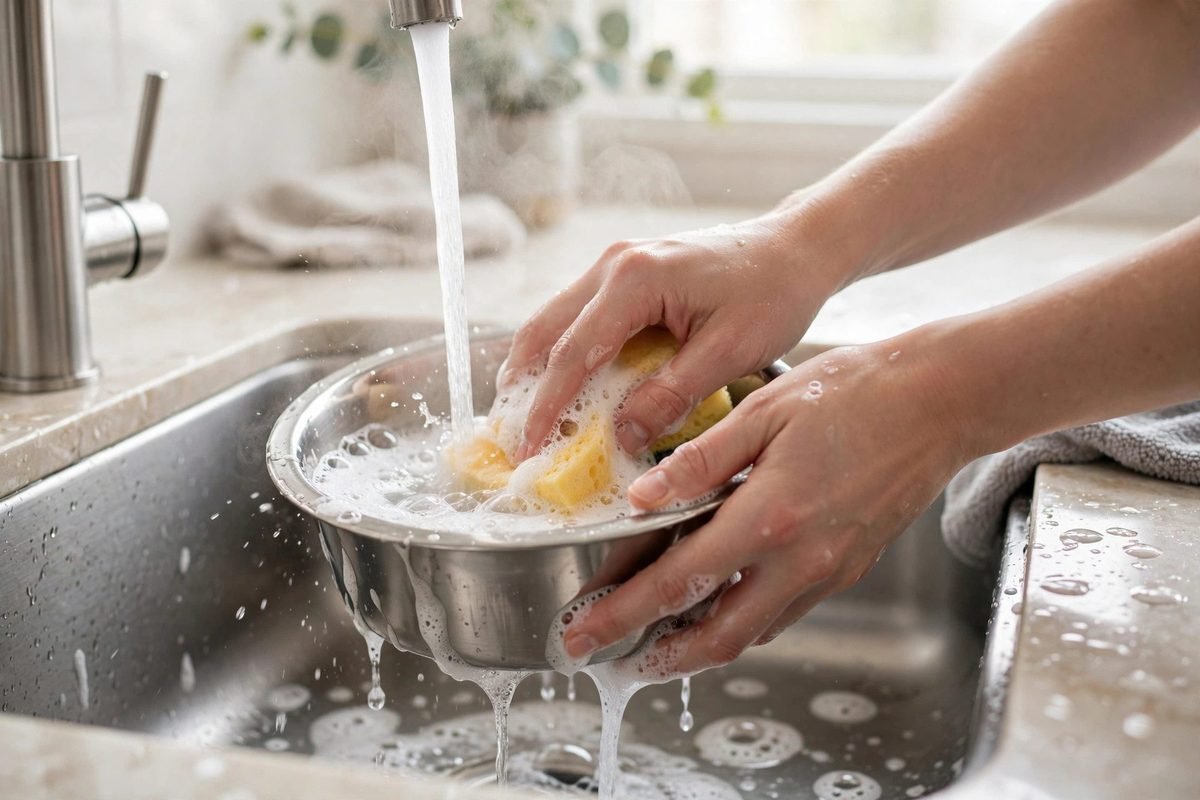
The daily routine takes two minutes, and it fits naturally into the morning or evening kitchen routine. Tip the old water out, wash the bowl in hot water with a little dish soap, scrub the inside with a sponge or a brush, paying attention to the waterline and the base, where biofilm builds first, then rinse well under running water until no soap remains, and dry the bowl with a clean cloth or let it air dry before refilling. A bowl that is washed daily never develops a thick film, so the scrub is light and quick, not a hard chore.
Refill with fresh, cool tap water, and fill the bowl to a level the dog can drink from comfortably without straining its neck or splashing water everywhere. A raised bowl can help some Dachshunds drink at a comfortable height, and the guide to hydration and water routine for apartments covers water intake, bowl placement, and raised feeders in more detail. Change the water at least once a day, and more often in hot weather or after a walk, when the dog has drunk a lot or the water has warmed up.
Keep a second bowl on hand, so one can be washed while the other is in use, and so a dirty bowl never has to wait. Two bowls also help in a household with more than one room where the dog spends time: a bowl in the living room and a bowl in the kitchen means the dog never has to walk far for water, and both bowls get washed on the same daily routine. A spare bowl is also useful when one is in the dishwasher, or when a guest dog visits, so there is always a clean bowl ready to fill.
4. The Weekly Deep Clean and Bowl Check
Once a week, give the bowls a deeper clean than the daily wash. Run stainless steel bowls through the dishwasher on a hot cycle, or soak them in hot water with a little white vinegar for ten minutes, then scrub, rinse, and dry. For ceramic bowls, a hot wash with dish soap and a thorough scrub is enough, and a vinegar soak once a week helps remove limescale and stains. Never use bleach or harsh cleaners on a dog bowl, because residue can harm a dog, and always rinse until the water runs clear and no smell of cleaner remains.
Use the weekly clean as a bowl check. Run a finger around the inside and look for scratches, chips, cracks, or a rough patch that does not come clean, and replace any bowl that is damaged. Wash the mat or tray weekly too, and let it dry fully before putting the bowl back.
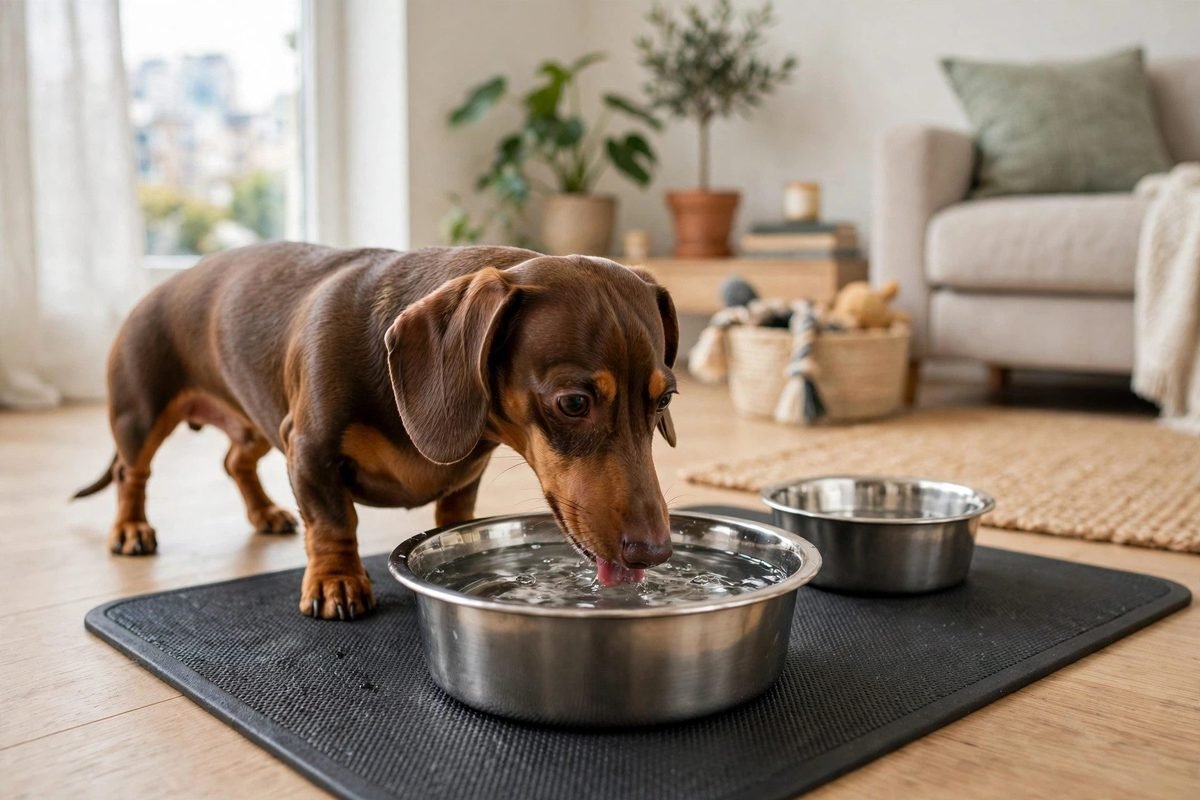
Also check where the bowl sits. A bowl next to the food bowl gets food in it, a bowl in direct sunlight warms up and grows algae faster, and a bowl in a busy walkway gets knocked over and kicked. The best spot is a quiet corner on a non-slip mat, away from the food bowl, out of direct sun, where the dog can drink calmly without being stepped on. A stable, clean spot helps a Dachshund drink at a comfortable height and posture, and a dog that drinks comfortably is less likely to strain its neck or back. The Animal Medical Center explains intervertebral disc disease in dogs, and a long-backed breed benefits from every small reduction in awkward bending and twisting.
5. Fresh Water Habits for Apartment Dachshunds
Fresh water is not just about the bowl, it is about the habit. Offer water in the morning, after walks, after play, and in the evening, and check the bowl at each of those times, not just once a day. A Dachshund that has just come in from a walk, or that has been playing, will drink more, and a bowl that is empty or stale at that moment is a missed chance.
Watch how much the dog drinks, because a change in drinking is a useful health signal. Most healthy Dachshunds drink a modest amount each day, and the exact amount depends on size, food, weather, and activity, so the owner should learn what is normal for this dog rather than comparing with another dog. A dog that suddenly drinks much more than usual, empties its bowl repeatedly, or starts asking for water at night may need a veterinarian, because increased thirst can be a sign of several health problems. A dog that drinks far less than usual, or refuses water, also needs watching, especially in hot weather.
Keep water available at night too, in a small bowl near the dog’s bed, so a thirsty dog does not have to wait until morning. A night bowl should be small, stable, and on a mat, so it does not spill on the bed or the floor, and it should be washed with the same daily routine as the main bowl. Clean water, offered often, in a clean bowl, is one of the simplest gifts an owner can give a small dog.
Water Bowl Comparison Checklist
| Bowl type | Cleaning | Limit to watch |
|---|---|---|
| Stainless steel | Easy, dishwasher safe, smooth surface | Light bowls slide, choose a heavy base |
| Ceramic, glazed | Easy while glaze is intact | Chips expose porous surface, replace it |
| Plastic | Hard, scratches hide bacteria | Replace often, avoid for daily use |
| No-spill design | Varies, check seams and valves | Clean all parts, not just the top |
| Automatic fountain | Needs filter changes and full cleaning | Follow the maker’s cleaning schedule |
Common Mistakes
- Refilling the bowl without washing it.
- Washing only when the bowl looks dirty.
- Using a scratched plastic bowl for daily water.
- Keeping a chipped ceramic bowl in use.
- Using bleach or harsh cleaners on a dog bowl.
- Placing the bowl in direct sun or next to the food bowl.
- Forgetting the mat and the area under the bowl.
When to Call Your Vet
Contact a veterinarian if a Dachshund suddenly drinks much more or much less than usual, refuses water, or shows vomiting, diarrhoea, lethargy, or loss of appetite alongside a change in drinking. Contact a veterinarian also if the dog has a sore mouth, bad breath, or swelling around the lips that could come from a dirty or damaged bowl. This article gives general information only and does not diagnose any condition. A veterinarian can examine the dog, check for dehydration or other problems, and advise on water intake for that individual dog. Do not delay veterinary help for a dog that is dehydrated, refuses water in hot weather, or cannot keep water down.
Pin This: Water Bowl Checklist
- Wash the bowl daily with hot water and soap.
- Scrub the waterline and base, rinse well, dry it.
- Refill with fresh, cool water at least once a day.
- Use stainless steel or glazed ceramic, not scratched plastic.
- Deep clean weekly, and replace damaged bowls.
- Keep the bowl in a quiet, shaded spot on a mat.
- Watch drinking habits, and call a vet for sudden changes.
Frequently Asked Questions
How often should I wash my dog’s water bowl?
Every day, with hot water and a little dish soap, scrubbing the sides and base, then rinsing well and drying before refilling. A quick daily wash stops biofilm building up, and a deeper clean once a week, in the dishwasher or with a vinegar soak, keeps the bowl fresh.
What is the slimy film in my dog’s water bowl?
It is biofilm, a thin layer of bacteria that sticks to wet surfaces within hours. It feels slippery, it can look pink or grey, and it makes the water smell stale. It grows in every bowl, and the only fix is regular washing, not just refilling the water.
Are stainless steel bowls better than plastic?
Yes, for daily use. Stainless steel is smooth, non-porous, and hard to scratch, so bacteria have nowhere to hide, and it can go in the dishwasher. Plastic scratches easily, and each scratch holds bacteria, so a plastic bowl can look clean while still carrying germs.
Can I use bleach to clean a dog bowl?
No, bleach and harsh cleaners can leave residue that harms a dog. Use hot water and a little dish soap for daily washing, and a white vinegar soak once a week for a deeper clean, rinsing well until no smell of cleaner remains.
Why is my Dachshund drinking less water?
It may be the bowl: stale water, a slimy film, or a bowl in a noisy or sunny spot can put a dog off drinking. Wash the bowl, refill with fresh cool water, and move it to a quiet, shaded spot. If drinking stays low, or the dog seems unwell, contact a veterinarian.
Conclusion
A clean water bowl is a two-minute daily habit with a real payoff: fresh water a Dachshund actually wants to drink, no slimy biofilm building up, and a daily chance to notice how much the dog is drinking. Wash the bowl every day, deep clean it weekly, choose steel or ceramic over scratched plastic, and call a veterinarian if drinking changes suddenly. Clean water, in a clean bowl, every day, is one of the simplest parts of good Dachshund care.






2 Comments