
Dachshund Barking During a Family Gathering at Home
Quick Answer
- A family gathering is a crowd, not one visitor: many voices, many smells, food on every table, children running, and the front door opening again and again, which keeps a Dachshund on alert for hours.
- Give the dog a quiet room with a chew before the first guest arrives, and let the dog join the party only for short, calm visits.
- Tell guests the rule before they arrive: ignore the dog, no food from the table, and no chasing or picking up the dog.
- Contact a veterinarian if the dog shakes, hides, will not eat, or shows signs of pain or distress after a busy gathering.
Contents
- 1. Why a Crowd at Home Triggers Barking
- 2. Setting Up a Quiet Room Before the Party
- 3. Greeting Guests Without a Barking Rush
- 4. Food, Children, and Noise During the Gathering
- 5. After the Party: Helping the Dog Settle Again
- Family Gathering Barking Comparison Checklist
- Common Mistakes
- When to Call Your Vet
- Pin This: Family Gathering Checklist
- Frequently Asked Questions
- Conclusion
A family gathering is the hardest test a small flat can give a Dachshund. One visitor at the door is a single event the dog can get used to, but a party is a crowd: the doorbell rings again and again, new voices fill the hallway, the kitchen smells of food, children run from room to room, and music or talking keeps the noise level high for hours. A dog that copes well with one guest can bark non-stop at a party, because there is no quiet moment to settle, and every new arrival starts the excitement again. This article is about a crowd at home, a family gathering or a party, which is different from one guest staying overnight, and it gives a plan that fits a normal family celebration in a small flat. It is general information only, not a diagnosis, and a dog that shakes, hides, or will not eat after a party needs a veterinarian, not a new rule.
1. Why a Crowd at Home Triggers Barking
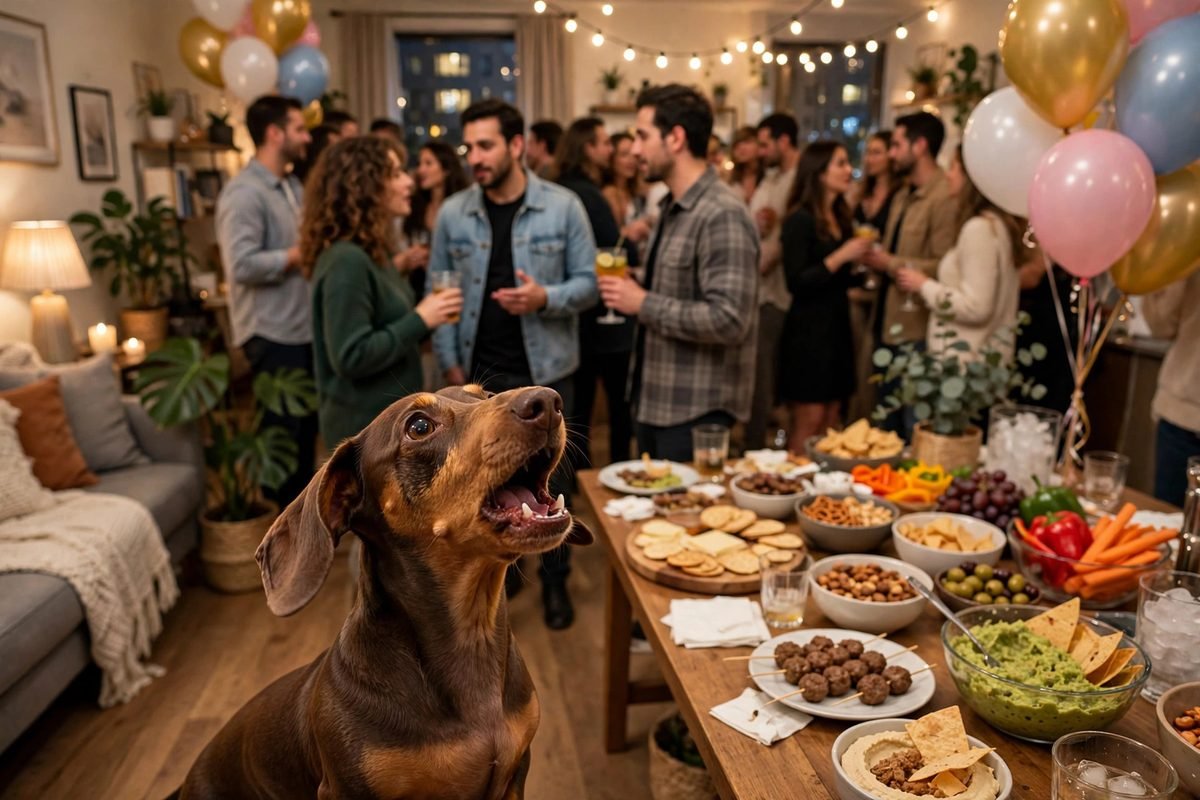
Dachshunds are watchful by nature, and a crowd gives them too much to watch. Each guest brings a new smell, a new voice, and a new way of moving, and the dog has to decide, again and again, whether each new person is safe. The front door is the worst spot, because every arrival is a surprise, and the dog hears footsteps in the hallway before the door even opens. By the third or fourth arrival, the dog is already tired and excited at the same time, which is why the barking often gets worse as the party goes on, instead of better.
Food and noise make the crowd harder still. A party means food on low tables, plates passed from hand to hand, and smells that pull a food-loving dog toward every guest. Children add running, shouting, and sudden movement, which excites a small dog and can make it bark at legs and feet. Music, laughter, and many people talking at once fill the flat with sound, and a dog that cannot hear its owner clearly feels less safe. None of this means the dog is badly behaved or dislikes family. It means the dog is over its limit, and a dog over its limit barks, because barking is the only way it can say the house is too busy.
2. Setting Up a Quiet Room Before the Party
Choose the quiet room before the first guest arrives, and set it up as the dog’s party base. A spare bedroom or a quiet corner of the bedroom works best, away from the front door and the kitchen, with the dog’s bed, a familiar blanket, water, and a long-lasting chew. Put a sign on the door if needed, so guests know the room is the dog’s rest place, and keep the door closed or half closed, so the dog can rest without the noise of the party. The dog should know the room before the party, so set it up the day before and let the dog rest there with a chew.
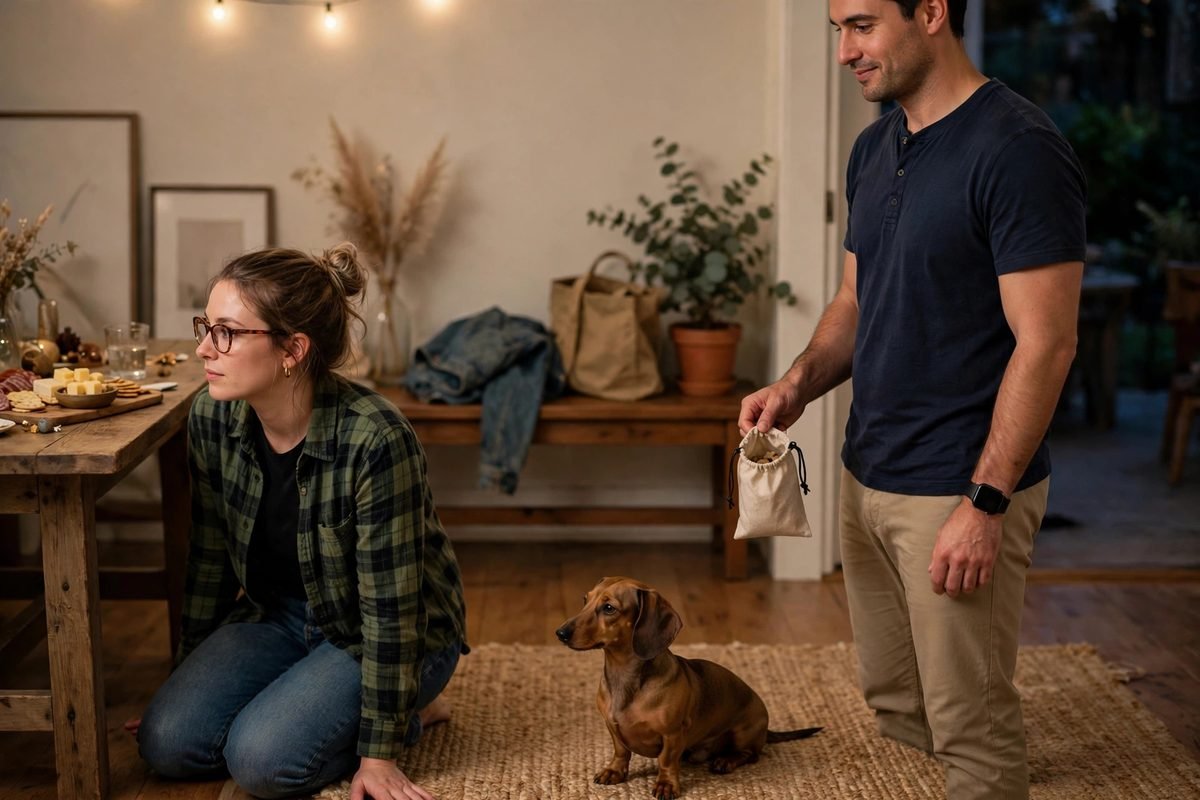
Tell guests the rules before they arrive, in a short message, not in a long speech at the door. Ask them to ignore the dog when they come in, to keep food away from the dog, and not to pick the dog up or chase it. Most guests are glad to know, because they do not want to be the reason the dog barks all evening. The guide to a calm greeting routine for visitors covers the same first-minute rule of ignoring the dog and rewarding quiet behavior, and the same rule works at a party, because every guest is a new greeting, and every greeting needs the same calm start.
3. Greeting Guests Without a Barking Rush
Plan the greeting for the first guests, because the first five minutes set the pattern for the whole party. Keep the dog in its quiet room while the first guests arrive and settle, and let the dog join the party only after the noise has dropped. Bring the dog out on a lead, walk it past the guests at a distance, and reward quiet behavior with a small treat. If the dog barks, guide it back to the quiet room calmly, and try again in ten minutes, because a dog that is given a break learns that the party is not a punishment, and a dog that is forced to stay in the crowd learns only to bark louder.
Stagger the arrivals if the party allows it, and ask the noisiest guests to come a little later, after the dog has had a calm greeting with the first few people. A party that starts with two quiet guests and builds up slowly is far easier for a dog than a party where ten people arrive at the door at the same time. The guide to calm behavior when a guest stays overnight uses the same idea of a short first meeting and a safe distance, and the same care helps at a party, because a crowd is many first meetings in one evening, and each one needs to start calmly.
4. Food, Children, and Noise During the Gathering
Food is the biggest trigger at a party, because it is everywhere, and guests will feed the dog if they are not told not to. Put food on high tables, keep plates away from the dog’s reach, and tell guests clearly that the dog must not be fed from the table. Give the dog its own food puzzle or long-lasting chew in its quiet room, so it has something to do while the family eats. A dog that is busy with a chew is a dog that is not barking at plates, and a dog that gets a scrap from a guest will bark at every guest for the rest of the evening, hoping for another one.
Noise is the third trigger, and it needs a simple plan. Keep music at a low volume in the room where the dog rests, close the door of the quiet room halfway, and keep the noisiest games, such as party games with shouting, in a room away from the dog. If the party will go late, plan a short break for the dog halfway through, such as a quiet walk around the block or a rest in the quiet room with a fresh chew. A dog that is given a break will cope better afterwards than a dog that is expected to lie still through five hours of noise. Disc degeneration in short-legged breeds can begin in the first year of life, so lift the dog carefully and use a ramp or steps for the sofa and the bed, because a tired dog that jumps down from furniture to escape a crowd can hurt its back.
5. After the Party: Helping the Dog Settle Again
After the last guest leaves, give the dog a calm wind-down, not a sudden return to normal. Take the dog for a short, quiet walk around the block, let it sniff and toilet, and then settle it in its usual bed with fresh water. Keep the house quiet for the rest of the evening, and avoid starting a new game or a training session, because the dog is tired, and a tired dog needs rest, not more excitement. Many dogs sleep for hours after a party, and that is normal, because a crowd is hard work for a small dog.
Family Gathering Barking Comparison Checklist
| Approach | Best for | Limit to watch |
|---|---|---|
| Quiet room with a chew, dog rests there | Big parties, long evenings | Check on the dog every half hour |
| Short visits to the party on a lead | Dogs that like people in small doses | Keep visits under ten minutes |
| Guests ignore the dog on arrival | Every guest, every party | Tell guests before they arrive |
| Food puzzle in the quiet room | Meal times during the party | Keep plates out of the dog’s reach |
| Short walk halfway through the party | Long gatherings | Keep the walk quiet and short |
Common Mistakes
- Keeping the dog in the middle of the crowd for the whole party.
- Letting guests feed the dog from the table to stop the barking.
- Letting children chase the dog or pick it up without warning.
- Scolding the dog while it is barking at guests.
- Skipping the dog’s normal meal and walk because the party is busy.
- Expecting the dog to cope with ten arrivals at the door at once.
- Starting a new game or training session right after the party ends.
When to Call Your Vet
Contact a veterinarian if the dog shakes, hides, will not eat, vomits, has diarrhoea, or shows signs of pain after a busy gathering, and seek urgent help if the dog collapses, cannot breathe normally, or shows sudden weakness in the back legs. Contact a veterinarian also if the dog is stiff, slow to move, or cries when picked up the day after a party, because a long-backed breed can hurt its back while jumping off furniture or rushing around a crowded room. This article gives general information only and does not diagnose any condition. A veterinarian can check for pain, anxiety, or a health problem, and advise whether a calmer routine, a training plan, or a health check is the right next step for that individual dog. Do not delay veterinary help for a dog that is clearly distressed or in pain.
Pin This: Family Gathering Checklist
- Set up a quiet room with bed, water, and a chew before the party.
- Tell guests before they arrive: ignore the dog, no table food.
- Keep the dog in its quiet room while the first guests arrive.
- Short visits to the party on a lead, then back to rest.
- Give the dog a food puzzle while the family eats.
- Children sit down and let the dog come to them.
- Short quiet walk after the party, then rest.
Frequently Asked Questions
Why does a Dachshund bark more as a party goes on?
Each new arrival starts the excitement again, and the dog gets tired as the noise and the food smells build up. A tired dog has less self-control, so the barking gets worse, not better, and a break in the quiet room is the best fix.
Should the dog stay in the quiet room for the whole party?
For a big or noisy party, yes, that is often the kindest choice, with short visits to the party on a lead. A dog that rests in a quiet room and joins the party for ten calm minutes is happier than a dog that barks in the crowd for hours.
How can guests help a barking Dachshund at a party?
Guests help most by ignoring the dog when they arrive, by keeping food away from the dog, and by sitting down and letting the dog come to them. A guest who bends down, reaches out, or picks the dog up makes the barking worse.
What if children at the party keep chasing the dog?
Give the children a simple job, such as putting the dog’s chew in the quiet room, and ask them to sit on the sofa and let the dog come to them. If the chasing keeps happening, keep the dog in its quiet room with the door closed, because the dog’s safety comes first.
How long does it take a Dachshund to settle after a party?
Most dogs settle with a short quiet walk and a night of rest, but a dog that was very stressed may need a quiet day with no visitors. Contact a veterinarian if the dog will not eat, hides, or is stiff and slow to move the next day.
Conclusion
A family gathering is a crowd, and a crowd is hard work for a small dog that watches everything at foot level. A quiet room set up before the party, guests who know the rules, short calm visits on a lead, a chew while the family eats, and a quiet wind-down after the last guest leaves will turn a barking party into a calm one. This article is general information only, not a diagnosis, and a dog that shakes, hides, or shows signs of pain after a gathering needs a veterinarian. Keep the plan short, calm, and the same for every party, and the dog will learn that a house full of family is safe.
One Comment