

Dachshund Upset Stomach: Vomiting Care at Home Guide
Quick Answer
When a Dachshund has an upset stomach and vomits once or twice but stays bright, alert, and interested in water, a short period of stomach rest at home is often the first step. Remove food for a few hours, offer small sips of fresh water, and then reintroduce small amounts of plain, easy-to-digest food over the next day.
Table of Contents
- 1. What Counts as an Upset Stomach in a Dachshund
- 2. Stomach Rest at Home, Step by Step
- 3. Gentle Refeeding After Vomiting
- 4. What to Watch: Vomit, Stool, Energy, and Hydration
- 5. Preventing the Next Upset Stomach
- Watch or Call: A Simple Checklist
- Common Mistakes
- When to Call Your Vet
- FAQs
- Conclusion
1. What Counts as an Upset Stomach in a Dachshund
An upset stomach is a broad term that covers nausea, vomiting, loss of appetite, gurgling sounds from the belly, and soft stool. A single episode of vomiting after a dog has eaten too fast, swallowed a piece of table food, or picked up something on a walk is common, and many dogs recover quickly. Repeated vomiting, vomiting that brings up blood or material that looks like coffee grounds, a swollen or tense belly, and vomiting paired with diarrhoea are different situations that need prompt veterinary attention. Age matters too: a puppy, a senior Dachshund, or a dog with an existing health condition has less reserve than a healthy adult, so the same symptom carries more weight in those dogs.
Common causes of a mild upset stomach include a sudden change of food, eating too much at once, eating food that is rich or fatty, scavenging on a walk, stress from a change in routine, and mild stomach irritation after a new treat. A Dachshund that has eaten a foreign object, a toxic food, or a large amount of something unusual needs a veterinarian rather than home care. The same applies when vomiting follows an injury, a fall, or a blow to the belly, because the back and the abdomen are closely connected in this long-bodied breed. Disc degeneration in short-legged breeds can begin in the first year of life, so back pain and stomach signs can appear together, and a dog that is hunched, reluctant to move, or crying when touched should be assessed by a veterinarian rather than managed at home.
Before deciding on home care, take a calm look at the whole dog. Is the dog alert and responsive, or dull and withdrawn? Is the nose and mouth normal, or are the gums pale, dry, or sticky? Can the dog stand and walk normally, or does it hunch, tremble, or refuse to move? Has the dog eaten anything unusual in the last day, and has anything changed in the home, such as a new food, a new treat, a visitor, or a house move? Writing down the answers, including the time of each vomit and what came up, gives the veterinarian useful information if a call becomes necessary. A simple note on the phone or on paper is enough, and it also helps an owner notice whether the episode is improving or getting worse.

2. Stomach Rest at Home, Step by Step
Stomach rest means giving the digestive system a short break. For a healthy adult Dachshund that has vomited once or twice, this usually means removing food for a few hours while keeping fresh water available in small amounts. A common approach is to withhold food for about four to six hours, then offer a small amount of water. When the dog keeps water down for an hour or two, a small amount of plain food can follow. The exact timing depends on the dog, and a veterinarian can confirm the right length of rest for a particular dog, especially when the dog is young, old, or living with another condition.
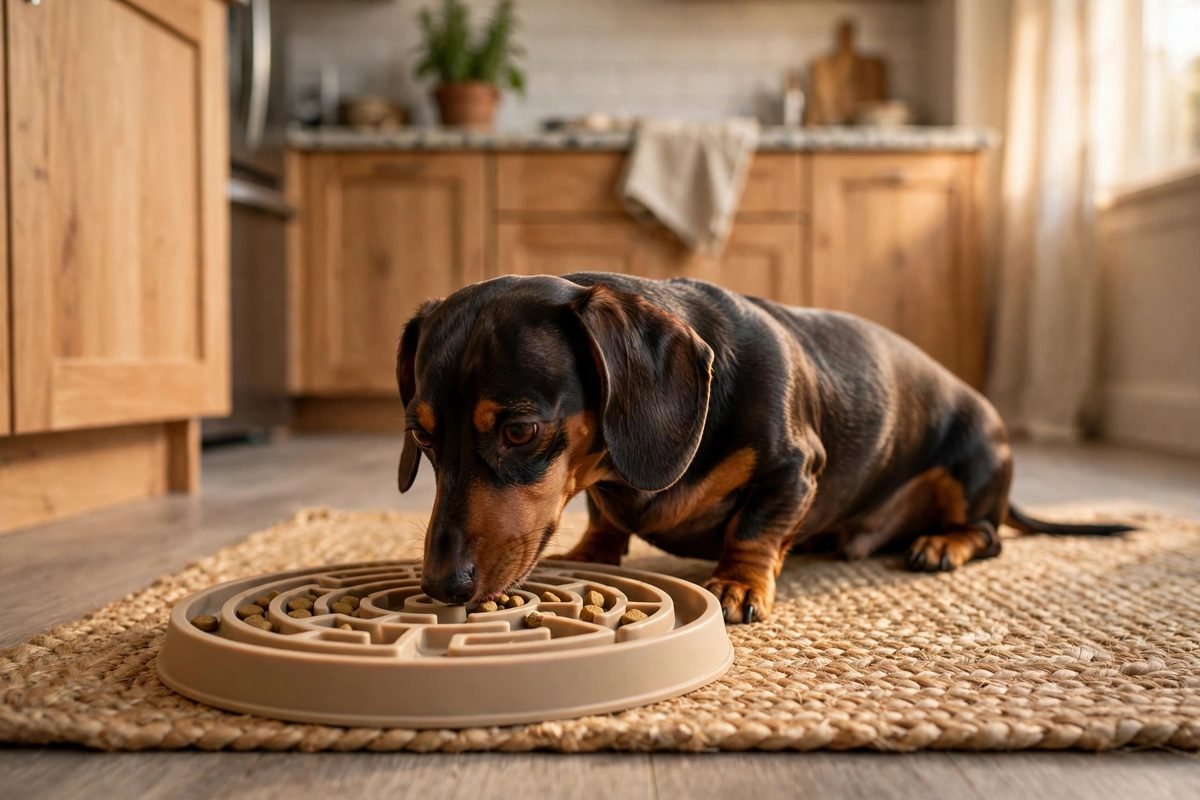
Water needs care during stomach rest. Offer small sips rather than a full bowl, because a large drink can trigger another vomit in a sensitive stomach. A few laps every twenty to thirty minutes is a good rhythm, and ice cubes can help a dog that drinks too fast. Keep the water bowl clean and place it where the dog can reach it without jumping or climbing. A raised feeder or a bowl placed at a comfortable height can help a Dachshund drink without straining the neck and back. When the dog refuses water entirely, or drinks and then vomits the water straight back up, that is a sign to call the veterinarian, because dehydration can develop quickly in a small dog.
3. Gentle Refeeding After Vomiting
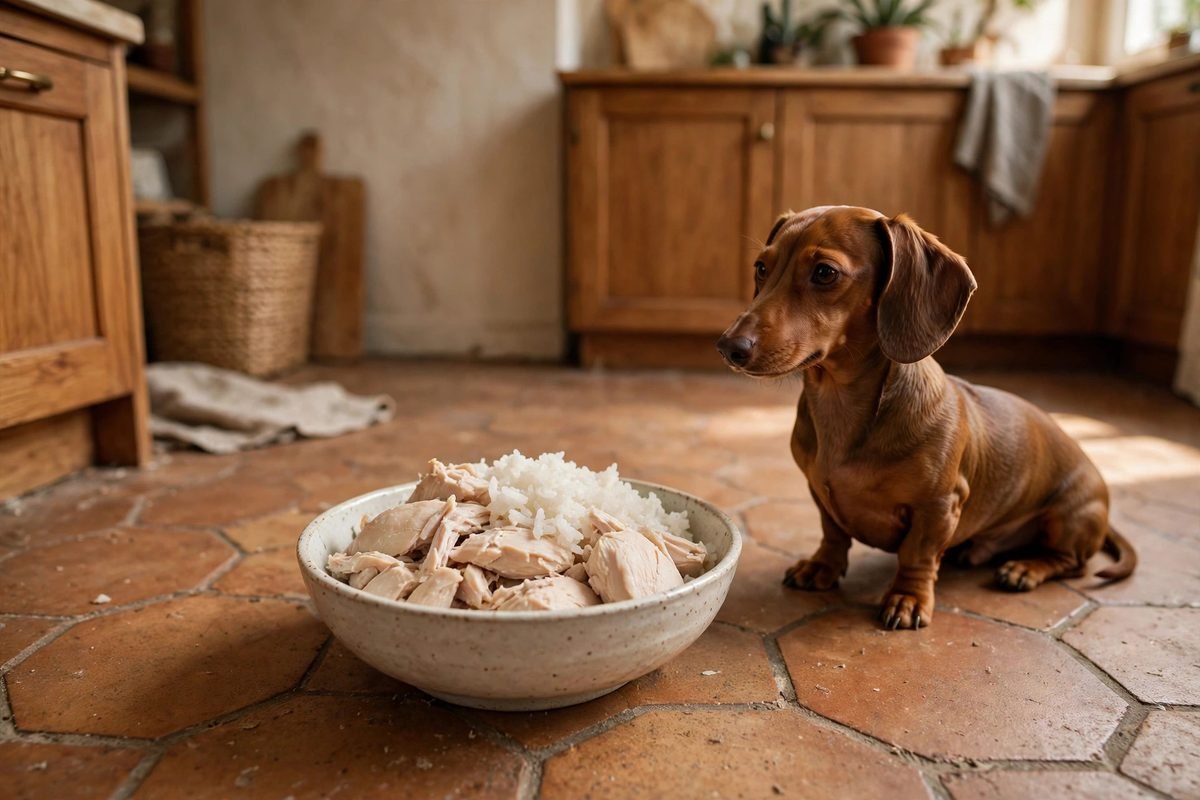
Refeeding should be slow, plain, and small. After a few hours of stomach rest with no further vomiting, offer a tablespoon or two of a bland, easy-to-digest food. Plain boiled chicken without skin or bones, plain boiled white rice, plain boiled potato, or plain canned pumpkin without added sugar or spice are common choices, and a veterinarian can confirm which option suits a particular dog. The portion should be far smaller than a normal meal, roughly a quarter of the usual amount, and it should be served at room temperature rather than hot or cold. When the dog keeps that small portion down for two to three hours, another small portion can follow, and the amount can grow gradually over the next day.
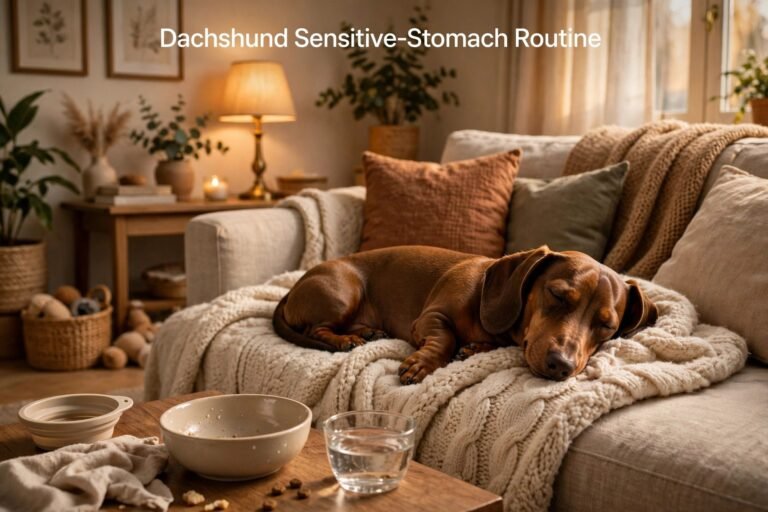
Over the following twenty-four to forty-eight hours, increase the portion size step by step while reducing the bland food and returning to the regular diet. A gradual mix works well: start with mostly bland food and a little regular food, then shift the balance over several meals until the dog is back on the usual diet. Rushing this stage is one of the most common reasons a stomach upset returns, because a full meal too soon can overwhelm a stomach that has only just settled. When the dog vomits again during refeeding, return to a short rest period and then restart with an even smaller portion, and call the veterinarian when vomiting repeats more than once during refeeding. For dogs that have repeated digestive trouble, the sensitive stomach routine offers a longer-term approach that pairs well with these short-term steps.
Keep a simple feeding record during recovery. Note the time of each small meal, what was offered, how much was eaten, and whether it stayed down. Note water intake too, and note the time and appearance of any stool. This record helps an owner see a pattern, such as steady improvement or a slow slide backward, and it gives the veterinarian clear facts instead of a vague memory. The record also helps with the next section, because the stool, the energy level, and the hydration of the dog are the three best guides to whether recovery is on track. For more detail on reading stool, the guide to a stool check at home explains what is normal and what deserves a call.
4. What to Watch: Vomit, Stool, Energy, and Hydration
Energy and mood are the third guide. A dog that is resting more than usual but still responds to its name, wags, and walks to the door is recovering. A dog that lies flat, will not lift its head, hides away, trembles, or cries when touched is not recovering and needs a veterinarian. Watch for signs of back pain too, because a Dachshund with a sore back may hunch, walk stiffly, or refuse stairs and jumping, and back trouble can reduce appetite and cause vomiting in some dogs. The Animal Medical Center explains intervertebral disc disease in dogs in its pet health library, and Cornell University also publishes guidance on intervertebral disc disease, which is worth reading for any owner of a long-backed breed.
Hydration is the fourth guide, and the easiest to check at home. Lift the lip and look at the gums: they should be pink and moist, not pale, white, or dry and sticky. Press a fingertip gently on the gum and watch the colour return within about two seconds. Pinch the skin gently at the back of the neck and watch it fall back into place; skin that stays tented suggests dehydration. Dry gums, sunken eyes, a dry nose that stays dry, and very dark or very little urine are all warning signs. A dog that cannot keep water down for more than a few hours, or that has vomited several times and refuses water, needs a veterinarian the same day.
5. Preventing the Next Upset Stomach
Prevention starts with food. Feed a consistent diet, measure portions, and change food gradually over a week rather than all at once. Introduce a new food by mixing a small amount into the old food and increasing the new share day by day, watching the stool and appetite at each step. Avoid rich, fatty, and spicy table food, and keep chocolate, onions, garlic, grapes, raisins, xylitol, and bones out of reach, because these can cause serious harm in dogs. Store food in a sealed container, keep bins closed, and clear plates promptly so a curious Dachshund cannot scavenge.
Walks and the home environment play a part too. Keep the dog on a lead in areas where rubbish, dropped food, or animal waste may be present, and teach a reliable leave-it cue so the dog does not swallow unknown items. Check the apartment for hazards such as cleaning products, medicines, and small objects that a Dachshund could chew and swallow. A dog that scavenges often may need a basket muzzle on walks while training continues, and a veterinarian or a qualified trainer can advise on the right approach for a particular dog.
Watch or Call: A Simple Checklist
| Sign | Watch at home | Call the veterinarian |
|---|---|---|
| Vomiting | Once or twice, then stops | Repeats, or cannot keep water down |
| Vomit appearance | Food, yellow liquid, white foam | Blood, coffee-ground material, foul smell |
| Stool | One soft motion, then firms up | Blood, black tarry stool, watery diarrhoea |
| Appetite | Returns gradually with small meals | Refuses all food for more than a day |
| Energy | Resting more, still responsive | Flat, hiding, trembling, crying when touched |
| Hydration | Pink moist gums, drinking small sips | Dry pale gums, skin stays tented, no urine |
| Belly | Soft and comfortable | Swollen, hard, or painful to touch |
Common Mistakes
One common mistake is feeding a full meal too soon after vomiting, which often brings the vomiting back. Another is offering rich food, such as fatty meat or a new treat, as a comfort, because rich food is harder to digest and can prolong the upset. A third mistake is giving human medicine without veterinary advice, which can be dangerous for a small dog.
When to Call Your Vet
Call a veterinarian the same day when vomiting repeats more than two or three times, when the dog cannot keep water down, when blood appears in vomit or stool, when the belly is swollen or painful, when the dog is weak, confused, or in pain, or when a puppy, a senior dog, or a dog with a known health condition is affected. Seek urgent care when the dog retches without producing vomit and the belly looks swollen, when the dog collapses, or when the dog has eaten something toxic or a foreign object. A veterinarian can assess hydration, check for pain, run tests when needed, and advise on fluids, food, and medicine for that particular dog. The word veterinarian matters here: only a veterinarian can diagnose the cause of vomiting, and a phone call is a reasonable first step even when the owner is unsure whether a visit is needed.
FAQs
How long should a Dachshund rest its stomach after vomiting?
For a healthy adult dog that vomited once or twice, a few hours without food is a common starting point, often about four to six hours, with small sips of water during that time. The right length depends on the dog, so a veterinarian should confirm the plan for a puppy, a senior dog, or a dog with another health condition. When vomiting repeats during the rest period, call the veterinarian rather than extending the fast at home.
What bland food is best after a Dachshund vomits?
Plain boiled chicken without skin or bones, plain boiled white rice, plain boiled potato, and plain canned pumpkin without added sugar or spice are common bland options. Serve a small portion at room temperature, about a quarter of a normal meal, and increase gradually over the next day. A veterinarian can confirm which option suits a particular dog, especially when the dog has a food sensitivity or another condition.
Is yellow vomit in a Dachshund a cause for worry?
Yellow vomit is often bile, which appears when the stomach is empty, and a single episode may follow a missed meal or a long gap between meals. Repeated yellow vomiting, vomiting paired with diarrhoea, blood, lethargy, or a painful belly is different and needs a veterinarian. Keeping a regular feeding schedule can reduce bile vomiting in some dogs, and a veterinarian can advise when the pattern keeps repeating.
Should a vomiting Dachshund still be walked?
Short, calm toilet trips on a lead are enough while the stomach settles. Avoid long walks, stairs, jumping, and boisterous play until the dog is eating small meals, drinking normally, and passing normal stool. Carry the dog up and down stairs where possible, and keep the walk gentle and brief so the dog can rest at home.
When is vomiting an emergency in a Dachshund?
Vomiting becomes an emergency when the dog retches without producing anything and the belly looks swollen, when blood is present, when the dog collapses or cannot stand, when the dog has eaten something toxic or a foreign object, or when vomiting is paired with severe pain, confusion, or very pale gums. In those situations, seek veterinary care immediately rather than waiting to see whether the episode settles.
Conclusion
An upset stomach and vomiting can be frightening, yet a calm, step-by-step approach helps most mild episodes settle. Rest the stomach for a few hours, offer small sips of water, refeed slowly with plain food, and watch the vomit, the stool, the energy, and the hydration.
This article is for general information only and is not a diagnosis. When a Dachshund is vomiting, unwell, or the owner is unsure, a veterinarian should be consulted for advice about that individual dog.
Pin This: Save this guide to your Dachshund care board on Pinterest so the stomach-rest steps and the warning-sign checklist are easy to find the next time a tummy upset appears.



2 Comments