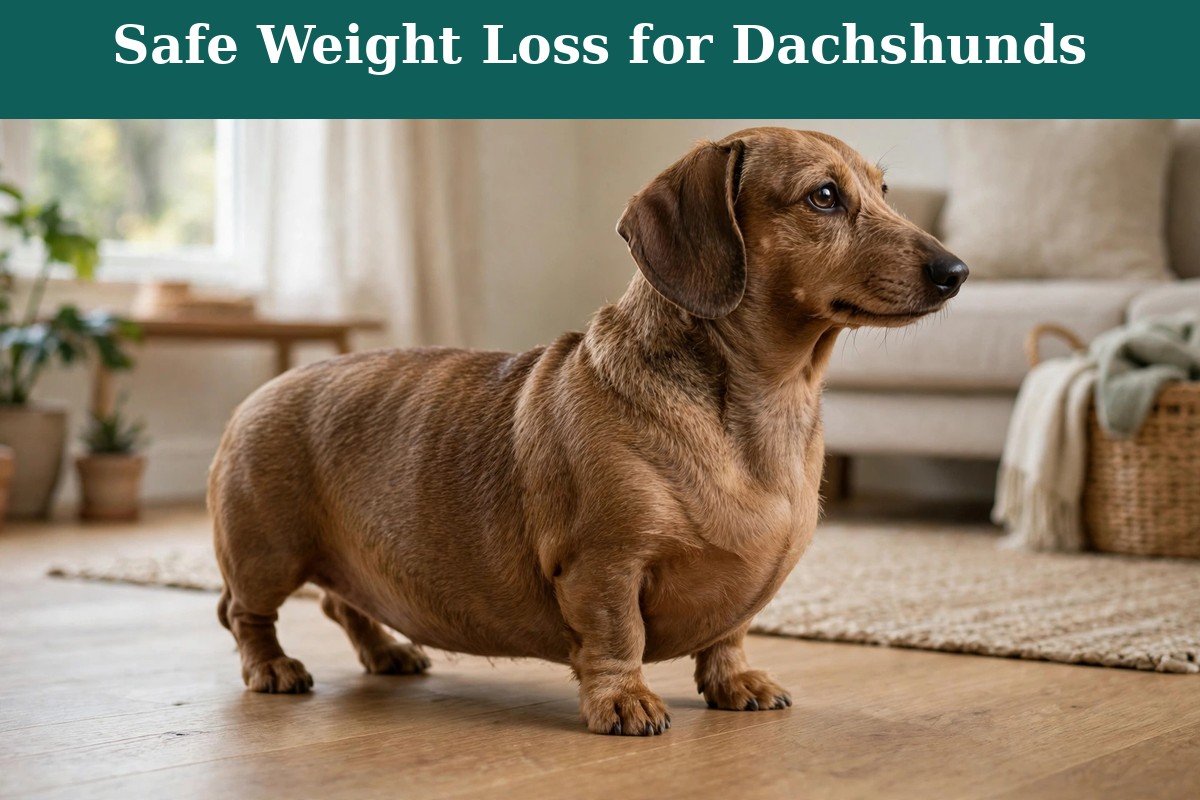
Safe Weight Loss That Protects Your Dachshund’s Back
Quick Answer
- Extra weight loads a Dachshund’s long spine with every step, so even a small amount of extra weight makes the back work harder all day.
- Safe weight loss is slow and steady: measured meals, fewer treats, and gentle daily walks, with a vet check before you start.
- Weigh the dog every week, write the weight down, and change only one thing at a time so you can see what works.
- Never starve a dog, skip meals, or rush the loss: a hungry, weak dog is more likely to slip, fall, or strain its back.
- Contact a veterinarian if the dog loses weight too fast, refuses food, or shows stiffness, limping, or weakness in the back legs.
Contents
- 1. Why Extra Weight Hurts a Dachshund’s Back
- 2. Starting Safely: The Vet Check and the Target
- 3. Measured Meals and Smarter Treats
- 4. Gentle Movement That Burns Energy Safely
- 5. Tracking Progress and Keeping the Weight Off
- Safe Weight Loss Checklist: What to Do and When
- Common Mistakes
- When to Call Your Vet
- Pin This: Safe Weight Loss Checklist
- Frequently Asked Questions
- Conclusion
1. Why Extra Weight Hurts a Dachshund’s Back
A Dachshund’s spine is long, its legs are short, and its belly hangs low, so extra weight does not sit evenly the way it does on a taller dog. Extra weight around the belly pulls down on the middle of the spine with every step, and the back has to work harder just to hold the body level. Stairs, jumping, and even getting up from a bed all become harder, and the dog moves less, which leads to more weight. It is a slow circle, and it often starts with a few extra treats a day that nobody counts.
Extra weight also changes how the dog moves. A heavy dog takes shorter steps, shifts its weight forward, and tires sooner, and tired legs are clumsy legs: a tired dog is more likely to slip on a smooth floor, stumble on a step, or land badly from a small jump. Disc degeneration in short-legged breeds can begin in the first year of life, so weight is not a cosmetic issue for this breed; it is a back care issue, and keeping the weight steady is one of the most useful things an owner can do. The guide to how extra weight strains the back explains the load in more detail, and it is worth reading before starting any weight loss routine.
The good news is that a small loss makes a real difference. For a dog that weighs ten kilograms, losing half a kilogram is five percent of its body weight, and that is a real reduction in the load on the spine. Measured meals, fewer treats, and a gentle daily walk are usually enough, and the dog will move more easily within a few weeks.

2. Starting Safely: The Vet Check and the Target
Before changing anything, take the dog to a veterinarian. A vet check rules out the problems that can look like simple weight gain: a thyroid problem, a sore back that has made the dog move less, or a medicine that has changed the appetite. The vet can weigh the dog, feel the ribs and the waist, and set a target weight that suits this dog, not a number from a chart. A safe rate for most dogs is one to two percent of body weight per month, and the vet can confirm what is safe for this dog.
Learn to check the dog’s shape at home. Run a hand along the ribs: you should be able to feel the ribs under a thin layer of fat, without pressing hard. Look at the dog from above: there should be a waist behind the ribs, a gentle narrowing before the hips. Look at the dog from the side: the belly should tuck up from the chest toward the back legs, not hang in a straight line. If the ribs are hard to feel, the waist is gone, and the belly hangs low, the dog is carrying extra weight. Write the starting weight and the target weight down, and keep the note where the food is kept, so everyone in the home sees it.
Agree the plan with the whole household before it starts. Weight loss fails most often because one person measures the food carefully while another person slips the dog treats all day. Decide together how much food the dog gets, what the treats are, and who feeds the dog.
3. Measured Meals and Smarter Treats
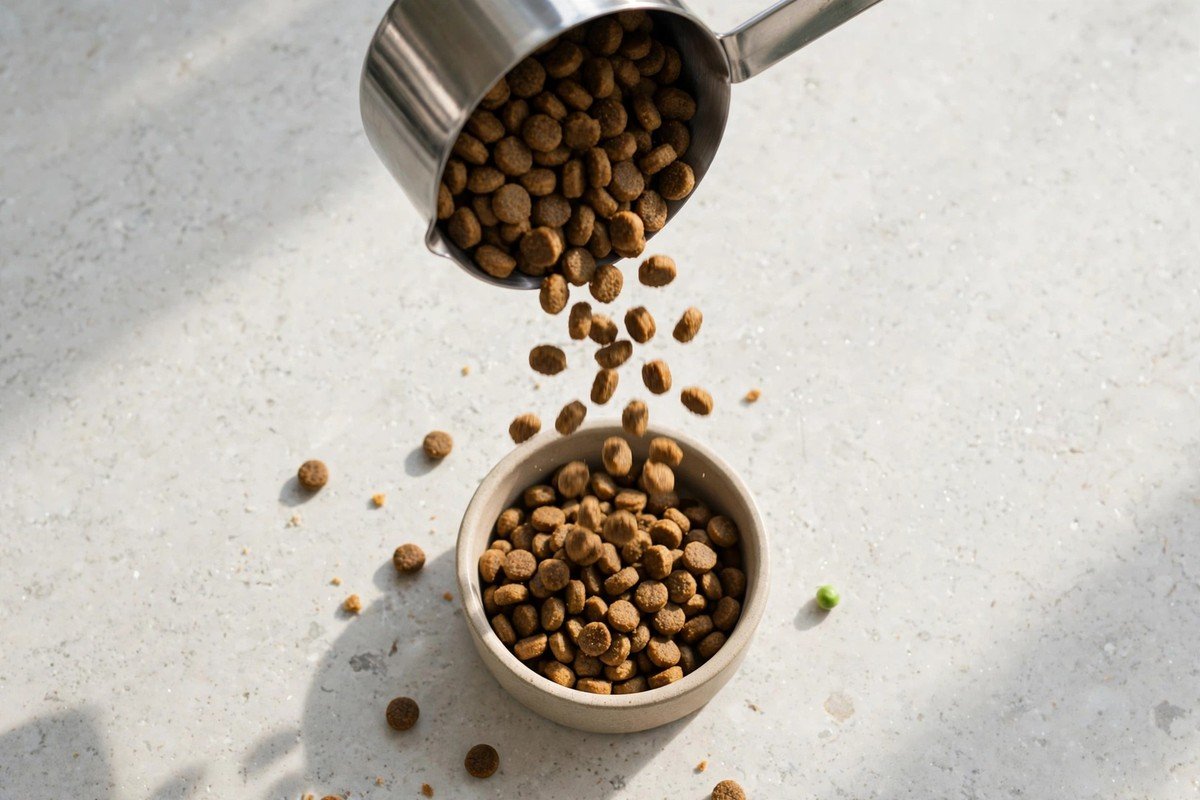
Measured meals are the heart of safe weight loss. Use a measuring cup or a kitchen scale, and feed the same amount at the same times every day, split into two meals. Do not guess the amount, and do not fill the bowl by eye: a small extra scoop every day adds up to a large extra amount over a month. Feed the dog’s normal food, in a smaller measured amount, rather than switching to a new food at the same time as cutting the amount, because two changes at once make it hard to tell what is working. If the vet advises a different food, change it slowly over a week, mixing the new food in a little at a time.
Treats need the same care as meals. A treat should be no bigger than a pea, and the total treats for the day should stay a small share of the day’s food. The slow feeder bowl guide for weight control explains how a feeder that makes the dog eat slowly can help a dog feel full on a smaller meal, and a slow feeder is a simple tool that helps many dogs. Swap food treats for other rewards where you can: a short game, a sniff walk, a belly rub, or a piece of the dog’s own measured kibble given as a treat. Keep a treat jar with the day’s treats counted out each morning, so the treats run out when the day’s share is gone.
Watch the begging, because begging is where most weight loss plans fail. A Dachshund that has learned to beg at the table will keep begging, and the hardest part of the routine is not the measuring but the saying no. Do not feed from the table, and do not let guests feed the dog. A dog that is fed on time, in measured amounts, and kept busy while the family eats will beg less within a week or two.
4. Gentle Movement That Burns Energy Safely
Movement helps weight loss, but it has to suit a dog that is carrying extra weight and may already have a sore back. Start with short, flat walks, twice a day, on a loose lead, letting the dog sniff and set its own pace. Ten minutes at a time is a good start, building up slowly by a few minutes each week as the dog gets fitter. Keep the walks on flat ground, avoid stairs and steep slopes, and do not ask a heavy dog to run, jump, or climb. A dog that walks calmly and comes home tired but moving well is getting the right amount of exercise.
Add gentle play at home, low to the ground. Rolling a ball along the floor, a sniffing game with a few pieces of kibble hidden in a towel, and a slow wander around the garden all burn energy without loading the spine. Short play sessions through the day are better than one long session, because a heavy dog tires quickly, and a tired dog is a clumsy dog. Rest matters too: a dog that has walked and played needs a quiet rest in its bed, and a dog that is rested will move better on the next walk. Do not exercise a dog that is limping, stiff, or reluctant to move; keep it quiet and ask a veterinarian instead.
Build the routine up slowly, a little at a time. Add five minutes to the walk each week, not each day, and watch how the dog moves the next morning. A dog that is slow to rise the morning after a longer walk needs the walk shortened again, and that is not a failure: it is the routine finding the right level for this dog.
5. Tracking Progress and Keeping the Weight Off
Weigh the dog every week, on the same scale, at the same time of day, and write the weight down. A weekly weigh-in is often enough to see the trend, and it is frequent enough to catch a problem early. A safe loss is slow: one to two percent of body weight per month, so a ten-kilogram dog loses around a hundred to two hundred grams a month. If the weight is not moving after three or four weeks, do not cut the food again on your own; go back to the vet and check the amount, the treats, and whether someone in the home is feeding extra. Small, steady losses add up, and a dog that loses weight slowly keeps it off.
When the dog reaches its target weight, the work is not over; keeping the weight off is the real routine. Keep measuring the food, keep the treats counted, and keep the daily walks, because the habits that took the weight off are the habits that keep it off. Weigh the dog once a month after the target is reached, and act early if the weight creeps up again. The Cornell guide to chondrodystrophy and intervertebral disc disease explains the breed background that makes steady weight so important for this breed.

Safe Weight Loss Checklist: What to Do and When
| When | What to Do | What to Watch For |
|---|---|---|
| Before starting | Vet check; target weight; measure the food amount | Health problem ruled out; target agreed |
| Every meal | Measured food, twice a day; no table food | Dog eats calmly; no begging at the table |
| Every day | Counted treats; two short, flat walks; gentle play | Dog moves well; no limping or stiffness |
| Every week | Weigh the dog; write the weight down | Slow, steady loss; no sudden drop |
| At target weight | Keep measuring; monthly weigh-ins; act on small rises | Weight stays steady; dog moves easily |
The table is a routine to follow every day, in the same order, every time. A routine followed every time keeps the weight off, because the owner knows what steady looks like.
Common Mistakes
- Cutting the food sharply, or skipping meals, instead of reducing the amount slowly with a vet’s guidance.
- Measuring the food carefully but forgetting to count the treats, the table scraps, and the food from guests.
- Switching to a new food and cutting the amount at the same time, so nobody knows what worked.
- Exercising a heavy dog too hard, with running, jumping, or long walks on steep ground.
- Weighing the dog every day and changing the food after every small rise or fall, instead of watching the weekly trend.
- Feeding the dog from the table, because the begging is hard to resist, and undoing the whole day’s care.
- Stopping the routine the moment the target weight is reached, and letting the weight creep back on.
- Starting a weight loss routine without a vet check, and missing a health problem behind the weight gain.
When to Call Your Vet
Contact a veterinarian before starting any weight loss routine, and again if the dog loses weight too fast, refuses food, or shows stiffness, limping, or weakness in the back legs. Contact a veterinarian urgently if the dog cannot move its back legs, loses bladder control, or is in severe pain. A veterinarian can weigh the dog, set a safe target, and adjust the food amount if the weight is not moving, and the Animal Medical Center guide to intervertebral disc disease in dogs explains the signs that need prompt attention. The DachsLife study, published in 2015, looked at disc disease in Dachshunds, and its findings are a reminder that steady weight is one of the simplest ways to protect a long back. This article gives general information only and is not a diagnosis.
Pin This: Safe Weight Loss Checklist
- Get a vet check and a target weight before you start.
- Measure every meal; count every treat.
- Swap table scraps for play, sniff walks, and praise.
- Two short, flat walks a day; build up slowly.
- Weigh weekly; aim for a slow, steady loss.
- Keep measuring food after the target weight is reached.
Frequently Asked Questions
How fast should a Dachshund lose weight?
Slowly: around one to two percent of body weight per month is safe for most dogs. A ten-kilogram dog loses about a hundred to two hundred grams a month. Faster loss can leave a dog weak and hungry, and a weak dog is more likely to slip or strain its back. Ask your vet what rate suits your dog.
Should I change my Dachshund’s food to lose weight?
Often, feeding the normal food in a smaller measured amount is enough, and changing the food at the same time as cutting the amount makes it hard to tell what worked. If your vet advises a different food, change it slowly over a week. Measure every meal with a cup or a scale, and count the treats as part of the day’s food.
How much exercise does an overweight Dachshund need?
Start with two short, flat walks of about ten minutes each, plus gentle low play at home, and build up by a few minutes each week. Avoid running, jumping, stairs, and steep slopes until the dog is fitter. A dog that comes home tired but moving well is getting the right amount.
Why is my Dachshund always hungry on a diet?
A smaller meal can leave a dog feeling hungry, and that is normal at first. A slow feeder bowl and food split into two meals can help, but ask your vet before adding anything to the bowl. Keep the dog busy with sniff games and play, so food is not the only fun in the day.
What if the weight is not coming off?
Check the treats first: treats, table scraps, and food from guests are the usual cause. If the food is truly measured and the weight still does not move after three or four weeks, go back to the vet. The vet can check the amount, the food, and whether a health problem is behind the weight.
Conclusion
Safe weight loss for a Dachshund is slow, steady, and simple: a vet check and a target, measured meals, counted treats, two short flat walks a day, and a weekly weigh-in. The dog that loses weight slowly moves more easily, plays for longer, and gives its long back the lightest load its owner can offer.