
Dachshund Back Care After a Vet Visit: Calm Home Guide
Quick Answer
- Dachshund back care after a vet visit starts with rest: a quiet room, a soft bed on the floor, and no stairs, jumping, or long walks for the first day.
- Lift the dog with one hand under the chest and one under the hips, keeping the back level, in and out of the carrier and the car.
- Offer water and a small meal once the dog is settled, and watch how it moves, eats, and rests through the evening.
- Do a gentle next-day check: watch the dog rise, walk a few steps indoors, and note any stiffness, yelping, or reluctance to move.
- Contact a veterinarian if pain, weakness, or a refusal to move lasts, or if any new sign appears after the visit.
Contents
- 1. Why a Vet Visit Can Leave a Dachshund’s Back Sore
- 2. The Trip Home: Carrier, Car, and Lifting Without Strain
- 3. Setting Up a Calm Rest Spot for the First Evening
- 4. The Next-Day Check: Movement, Appetite, and Comfort
- 5. Easing Back Into Normal Days After the Visit
- After the Vet Visit Checklist: First 24 Hours
- Common Mistakes
- When to Call Your Vet
- Pin This: Back Care After a Vet Visit
- Frequently Asked Questions
- Conclusion
1. Why a Vet Visit Can Leave a Dachshund’s Back Sore
Dachshund back care after a vet visit matters because a clinic trip is a long day for a small, long-backed dog. The dog waits in a strange room, stands on a slippery exam table, gets handled, turned, and lifted by people it does not know, and then travels home in a car. Each part is small on its own, yet together they can leave the muscles along the spine tired and tender, especially if the back was already sore before the visit. A dog that walks into the clinic stiffly often walks out more so, and the first hours at home set the tone for how fast it settles.
The exam itself can add to the soreness. A veterinarian needs to feel along the spine, check how the legs move, and sometimes lift the dog onto a table to see it clearly. That handling is needed, and it is gentle, but it still asks the back to move in ways it would not choose on its own. Disc degeneration in short-legged breeds can begin in the first year of life, so a young Dachshund can already have a spine that reacts to a long, handled day. The soreness after a visit is usually short-lived, and rest is what lets it fade.
Travel adds its own load. A car ride with sharp turns, sudden stops, and a carrier that slides across the seat can jolt a dog that is already tender. A dog that braces against the motion holds its back stiff for the whole trip, and that stiff hold can leave it sore for hours after. The ride home is the first chance to protect the back, and a steady drive, a secure carrier, and a calm voice do more than most owners expect. The home routine after a vet visit covers the wider evening pattern, and back care fits inside it as the quietest part.

2. The Trip Home: Carrier, Car, and Lifting Without Strain
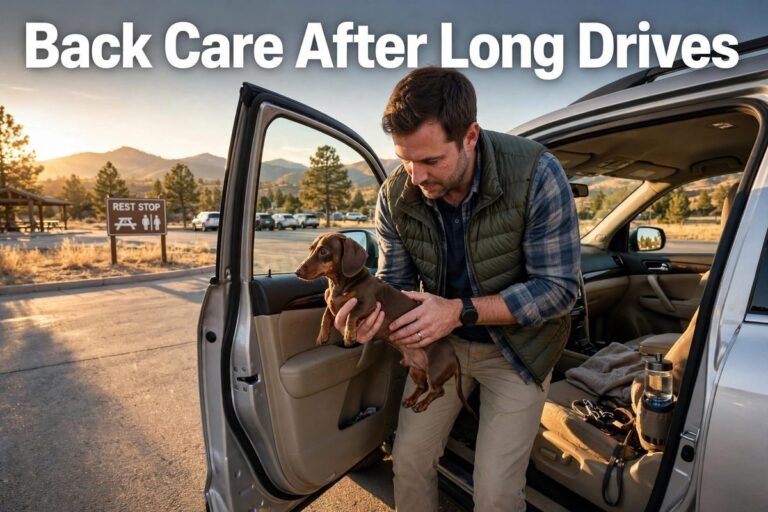
Lifting is the moment where most back strain happens, so it deserves a slow, planned move. Place one hand under the chest, just behind the front legs, and the other hand under the hips, just in front of the back legs. Lift straight up, keeping the back level, with no dangling front or back end and no twisting of the body. Hold the dog close to the body, so the weight sits against the chest rather than hanging from the arms. Set the dog down the same way, in reverse, with all four paws landing together on a flat surface.
The carrier should be ready before the dog is lifted. Open it on the floor, with the door facing the dog, and a soft blanket inside that smells like home. Slide the dog in level, back end first if that is easier, and close the door gently once the dog is settled. The carrier should be large enough for the dog to lie down and turn around, but not so large that the dog slides from side to side on every turn. A carrier that is wedged in place on the car seat, or held steady with a seat belt around it, stays still while the car moves.
In the car, drive as if a sleeping dog were on the seat. Take turns slowly, brake early, and avoid sudden stops. Keep the radio low and the windows closed enough that no cold draft blows across the carrier. Talk in a calm voice, and do not reach into the carrier to lift the dog out at every red light. When home, carry the carrier inside before opening it, and lift the dog out onto the floor, not onto a couch or a bed. One level lift, from carrier to floor, is the safest finish to the trip.
3. Setting Up a Calm Rest Spot for the First Evening
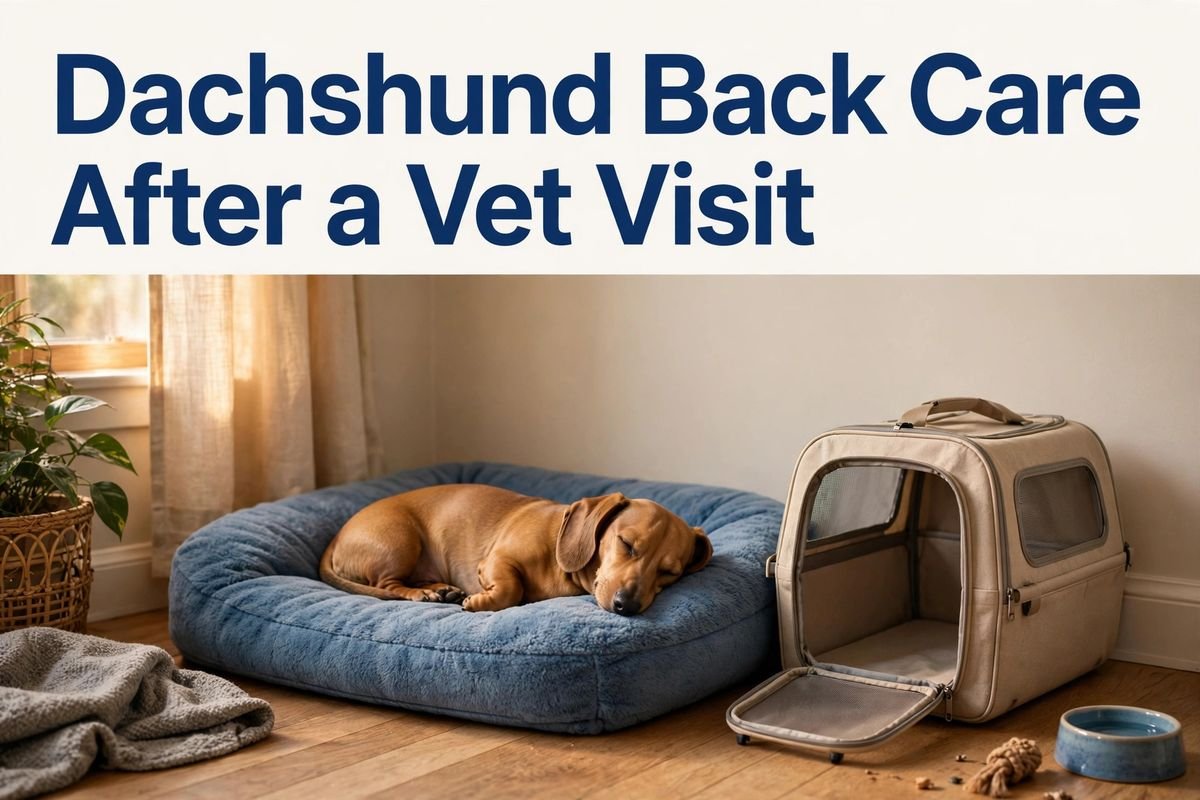
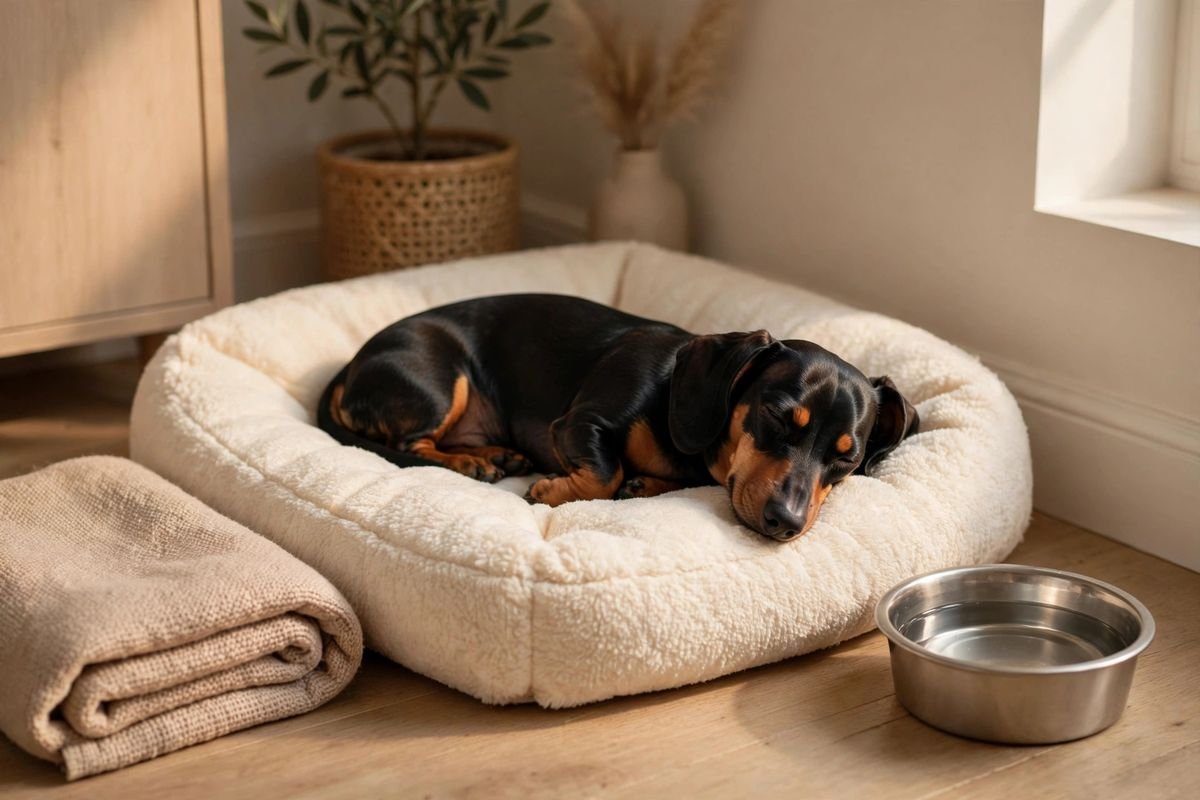
The rest spot should be ready before the dog comes home. Choose a quiet corner of a lived-in room, away from stairs, doorways, and the path other people walk through. Put a soft bed on the floor, with a blanket the dog can burrow under, and a water bowl within a few steps, so the dog does not have to cross the room to drink. The room should feel warm, not hot, and the light should be soft. A dog that can see its owner nearby will settle faster than a dog left alone in a cold, empty room.
Keep the evening quiet. No visitors, no loud television, and no other pets crowding the rest spot. Offer water as soon as the dog is settled, and offer a small meal a little later, once the dog has had time to rest and the stress of the trip has faded. Some dogs eat right away, and some wait an hour or two, and both are normal after a clinic day. The vet-advised rest routine for back recovery follows the same calm pattern for the first evening. Do not offer a large meal to make up for a missed one, and do not offer treats that ask the dog to jump or stretch for them. Food on the floor, at the dog’s level, is the kindest choice.
4. The Next-Day Check: Movement, Appetite, and Comfort
The next morning gives the clearest picture of how the back is doing. Watch the dog rise from its bed before doing anything else: a dog that stretches, stands in one smooth motion, and walks to the door at a normal pace has settled well. A dog that rises slowly, sits for a moment before standing, takes short careful steps, or pauses at the doorway is still sore, and the day should stay quiet. Note what the owner sees, in a few words, so the pattern is clear if the clinic needs to be called.
Follow the rise with a short, flat walk indoors. Let the dog wander to the water bowl and back, at its own pace, on a level floor. Watch the back: it should stay level, with all four legs moving evenly. A back that arches, a belly that tucks up, or a dog that stops and sits down after a few steps are signs to note. Do not ask the dog to climb stairs, jump down a step, or go for a walk outside until the indoor movement looks normal. A light touch along the back, with a flat palm and slow, even pressure, can confirm what the eyes see, and the check should stop at once if the dog flinches.
Appetite and toileting complete the check. A dog that eats its normal breakfast, drinks water, and toilets normally is recovering well. A dog that refuses food, drinks very little, or strains to toilet may still be sore, or may be reacting to the visit in another way. Keep the notes together: movement, appetite, water, and rest, all in one place. If the dog is worse in the morning than it was the night before, that is the moment to call the clinic, rather than waiting another day to see if it passes.
5. Easing Back Into Normal Days After the Visit
A dog that wakes up loose the next morning can return to its normal routine in small steps. Start with a short, flat walk outside, on a loose leash, at the dog’s own pace. Keep it to five or ten minutes, on level ground, with no stairs and no running. A dog that is still stiff should stay on indoor rest for another day, with short indoor walks only, until the morning rise looks normal.
Reintroduce play slowly. A rolling ball on the floor, a snuffle mat, or a slow food puzzle gives the dog movement without loading the back. Avoid high fetch, tug games that pull the neck, and any game that asks the dog to jump or twist for the first few days. The dog will show when it is ready for more: the trot gets smoother, the back stays level, and the dog asks for the game with energy rather than hesitation. Let the dog set the pace for the return, and keep each step small enough that a sore morning would be a surprise, not a pattern.

After the Vet Visit Checklist: First 24 Hours
| When | What to Do | What to Watch For |
|---|---|---|
| Trip home | Lift level, chest and hips supported; carrier secure in the car | No yelping on lifting; dog settles in the carrier |
| First evening | Quiet room; soft bed on the floor; water and a small meal | Calm breathing; dog shifts position while resting |
| Overnight | Keep the room warm; no stairs or jumping | Dog rests; no crying out when moving |
| Next morning | Watch the rise; short flat walk indoors; light touch check | Smooth rise; level back; normal appetite |
| Next day | Short flat walk outside if movement looks normal | Steady trot; no stiffness returning |
The checklist works best when it is followed in the same order every time. A routine followed every time makes it easy to spot the day something changes, because the owner knows what a normal recovery looks like.
Common Mistakes
- Lifting the dog by the front legs only, or by the scruff, so the back end dangles and the spine hangs.
- Carrying the dog up the stairs or onto the couch straight after the trip home, instead of setting it down on the floor.
- Letting the carrier slide around on the car seat, so the dog braces and stiffens for the whole ride.
- Offering a large meal right away, or treats that ask the dog to jump or stretch for them.
- Going straight out for a long walk the next morning, before watching how the dog rises and moves indoors.
- Pressing hard on the spine during the next-day check, or trying to stretch the dog, instead of using a light touch.
- Assuming one quiet evening fixes everything, and missing a dog that is worse the next morning.
- Waiting days to call the clinic when the dog is clearly more sore than it was before the visit.
When to Call Your Vet
Contact a veterinarian if the dog is more sore the day after the visit than it was before, or if the dog yelps when lifted, flinches when the back is touched, refuses food or water, or shows weakness in the back legs. Contact a veterinarian urgently if the dog cannot move its back legs, loses bladder control, or is in severe pain. A veterinarian can examine the dog and advise whether the rest routine needs to change, and the Animal Medical Center guide to intervertebral disc disease in dogs explains the signs that need prompt attention. The Cornell guide to intervertebral disc disease notes that the condition ranges from mild pain to paralysis, which is why early contact matters. The Cornell guide to chondrodystrophy and intervertebral disc disease explains the breed background behind that caution. This article gives general information only and is not a diagnosis.
Pin This: Back Care After a Vet Visit
- Lift level, one hand under the chest and one under the hips.
- Keep the carrier secure and drive slowly on the trip home.
- Set up a quiet rest spot on the floor, with water close by.
- Watch the dog rise the next morning before any walk outside.
- Return to normal walks in small steps over two or three days.
- Call a veterinarian if the dog is worse the next day.
Frequently Asked Questions
Why is my Dachshund sore after a vet visit?
A clinic day means waiting, standing on an exam table, handling, and a car ride, and each part can leave the muscles along a long back tired and tender. The soreness is usually short-lived and fades with a quiet evening of rest on a soft bed.
How should I lift my Dachshund after a vet visit?
Place one hand under the chest and one under the hips, lift straight up with the back level, and hold the dog close to the body. Never lift by the front legs only, and set the dog down with all four paws landing together on a flat surface.
Should my Dachshund rest all day after a vet visit?
A quiet first evening is a good idea, with short indoor walks to drink and toilet only. If the dog rises smoothly the next morning, a short flat walk outside can follow, and the normal routine can return over two or three days.
What should I check the next morning?
Watch the dog rise, walk a few steps indoors, and note appetite, water, and toileting. A smooth rise, a level back, and a normal breakfast mean the dog has settled well, while a slow rise or a refusal to move means the day should stay quiet.
When should I call the clinic again?
Call if the dog is more sore the next day than before the visit, yelps when lifted, refuses food or water, or shows weakness in the back legs. Call urgently if the dog cannot move its back legs or is in severe pain.
Conclusion
A vet visit is a long day for a Dachshund’s back, and a calm evening of rest, level lifting, and a careful next-day check is what lets it settle. The next step is to set up the quiet rest spot before the next visit, so the dog comes home to a soft bed on the floor and a calm room.




One Comment