

Dachshund Food for Itchy Skin: Diet Clues and Care
Quick Answer
- Dachshund food for itchy skin starts with watching the pattern: when the itching began, what changed in the bowl, and where on the body the dog scratches.
- Food is only one possible cause of itchy skin. Fleas, dry air, pollen, and contact with a new shampoo or bedding can cause the same signs.
- Keep a simple food log for two weeks: every meal, treat, and table scrap, plus a daily note on scratching, licking, and redness.
- Change only one thing at a time, and give each change at least two weeks before judging it.
- Ask a veterinarian if the itching lasts more than a week or two, if the skin breaks, or if the dog scratches through the night.
Contents
- 1. How Food Can Show Up in a Dachshund’s Skin
- 2. Diet Clues: What to Look For in the Bowl
- 3. Checking the Diet at Home, Step by Step
- 4. Other Causes of Itchy Skin Worth Knowing
- 5. When Itchy Skin Needs a Veterinarian
- Dachshund Food for Itchy Skin: Daily Food Log
- Common Mistakes
- When to Call Your Vet
- Pin This: Itchy Skin Food Log
- Frequently Asked Questions
- Conclusion
1. How Food Can Show Up in a Dachshund’s Skin
Dachshund food for itchy skin is a question owners ask when the scratching will not stop. Food can play a role in itchy skin, because what a dog eats affects the skin from the inside: a diet that does not suit the dog can leave the skin dry and the paws, belly, and ears itchy. The itching often shows up in the same places again and again — the paws chewed after a meal, the belly scratched at night, the ears shaken after eating.
It helps to know the difference between a food problem and a food allergy, because the two are not the same. A food allergy is a reaction of the immune system to something in the food. A food sensitivity is milder: a food that does not agree with the dog, leaving loose stools, gas, or itchy skin. Only a veterinarian can tell the two apart, and guessing at home can waste weeks. The food allergies versus a sensitive stomach explains the difference in more detail, and it is worth reading before changing the dog’s food.
Timing gives the first clue. If the itching started within a week or two of a new food, treat, or chew, the bowl is a good place to look first. If it comes and goes with the seasons, or starts after a walk in long grass, the cause may be outside the bowl. If it is worst at night, the bedding or a new laundry product may be part of the story. The first step is not to change the food. The first step is to watch, and to write down what the watching shows.

2. Diet Clues: What to Look For in the Bowl
The bowl holds more clues than most owners expect. Start with the label: read the ingredient list on the food the dog eats now, and write down the first five ingredients. The first ingredients make up most of the food. Do not judge a food by one ingredient alone, and do not switch foods on the basis of a single ingredient on a label. The label is a clue, not a verdict, and a veterinarian can help read it for this dog.
Treats and table scraps are the hidden part of the diet. A dog that eats a plain, steady food but gets a different treat from every visitor, a chew from a new bag each week, and scraps from the dinner table is eating a different diet every day. Any one of those extras can be the thing that does not agree with the dog. Count them anyway: every treat, every chew, every scrap, in the food log, for two weeks. The log often shows a pattern the owner missed, like itching that flares on the days a certain treat is given.
Feeding habits matter as much as the food itself. A dog that eats too much, or that eats at random times, can have an upset stomach that shows up as itchy skin, because a gut that is never settled leaves the skin unsettled too. Measured meals, twice a day, at the same times, give the dog a steady routine and make the food log easy to keep. Fresh water, changed daily, matters too: a dog that drinks little may have dry skin that itches for a reason that has nothing to do with food. The allergy signs, itching, ears, and food clues cover the signs that point toward food, and the ones that point somewhere else.
3. Checking the Diet at Home, Step by Step
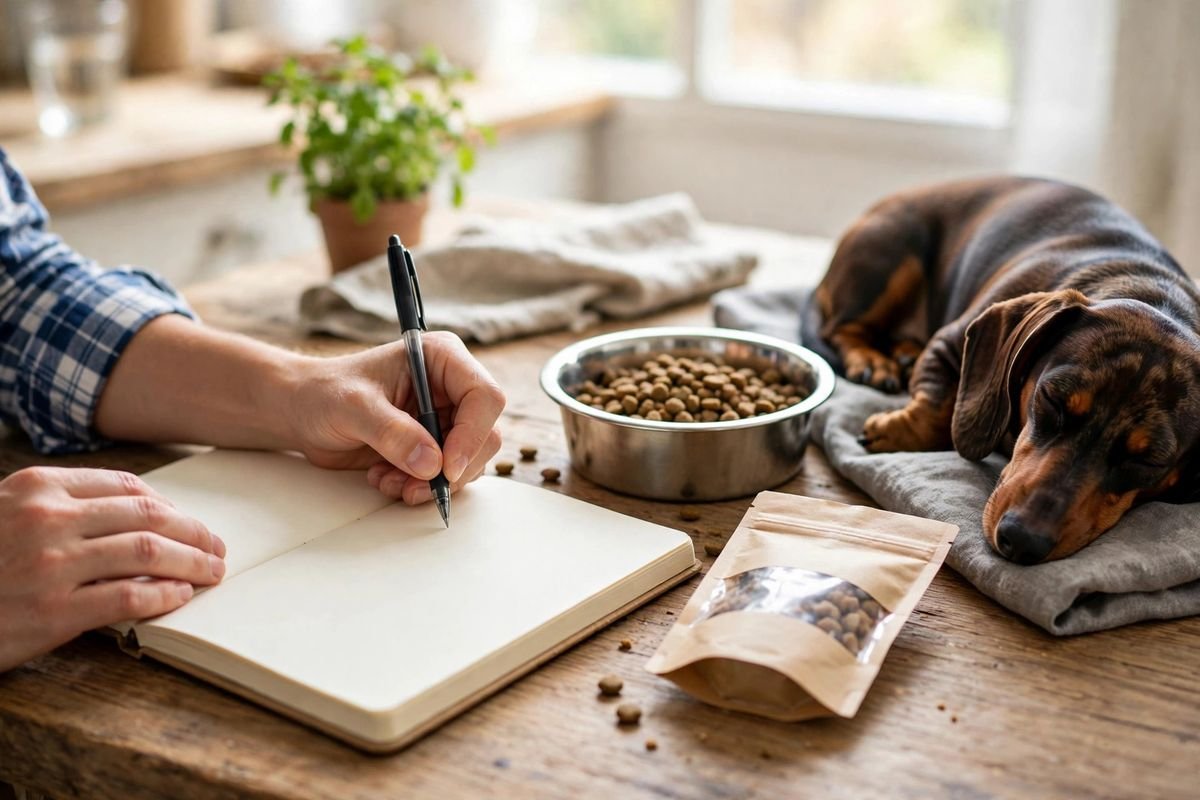
A food check at home works best as a slow, one-change-at-a-time test, not a sudden overhaul. Step one is the food log: for two weeks, write down every meal, treat, and chew, with the time, and a daily note on scratching, licking, redness, and ear shaking. Use a notebook or a phone note, and keep it by the food bin so it is filled in at feeding time, not from memory at night. Two weeks of notes show the pattern: which days are itchy, and what the dog ate on those days.
Step two is to cut the extras. For two weeks, stop all treats, chews, and table scraps, and feed only the regular food and water. If the itching fades, one of the extras was likely part of the problem, and the extras can be added back one at a time, one per week, to see which one brings the itching back. If the itching does not change at all, the extras were probably not the cause, and the food itself is the next thing to discuss with a veterinarian. Do not change the main food on a guess: a sudden switch to a new food can upset the stomach and muddy the results of the test.
Step three is to keep the routine steady while the test runs. Same food, same times, same amounts, same water bowl, same bedding, same shampoo. A test with five changes at once proves nothing, because no one can tell which change did the work. A test with one change at a time takes patience, and it is the only kind that gives a clear answer. If the itching gets worse during the test, or the skin breaks, stop the test and ask a veterinarian. A food check is a way to gather clues, not a treatment, and it should never replace a vet visit when the skin is getting worse.
4. Other Causes of Itchy Skin Worth Knowing
Food gets the blame for itchy skin more often than it deserves, because the bowl is the easiest thing to change. Fleas are the most common cause of itching in dogs, and a single flea bite can set off days of scratching. Check the skin with a fine comb, and look for small dark specks near the tail and the belly. A veterinarian can advise on flea control that suits this dog, and on how to check whether fleas are part of the problem. Do not assume the dog is flea-free because no fleas are seen: fleas hide well, and the signs are often the only clue.
Seasonal and contact causes are next. Pollen, dust, and grass can itch a dog’s paws and belly, especially after a walk in long grass or a roll on a lawn. A new shampoo, a new laundry product on the bedding, or a new cleaning spray on the floor can itch the skin where the dog lies. Dry winter air dries the skin, and a dog that sleeps on a cold floor or near a heater may scratch more in winter for that reason alone. A quick rinse of the paws after a walk, and a wash of the bedding in a plain, unscented product, are simple steps that help while the cause is being sorted out.
Ears deserve their own look. A Dachshund that shakes its head, scratches its ears, and has red or smelly ears may have an ear problem, not a food problem, and ear problems need a veterinarian. Do not put anything into the ear at home, and do not try to clean deep inside it. A veterinarian can look inside the ear, check for infection or mites, and advise on cleaning and care. Itchy ears that come with itchy skin are a strong reason to ask a veterinarian, because the two signs together narrow the list of causes.
5. When Itchy Skin Needs a Veterinarian
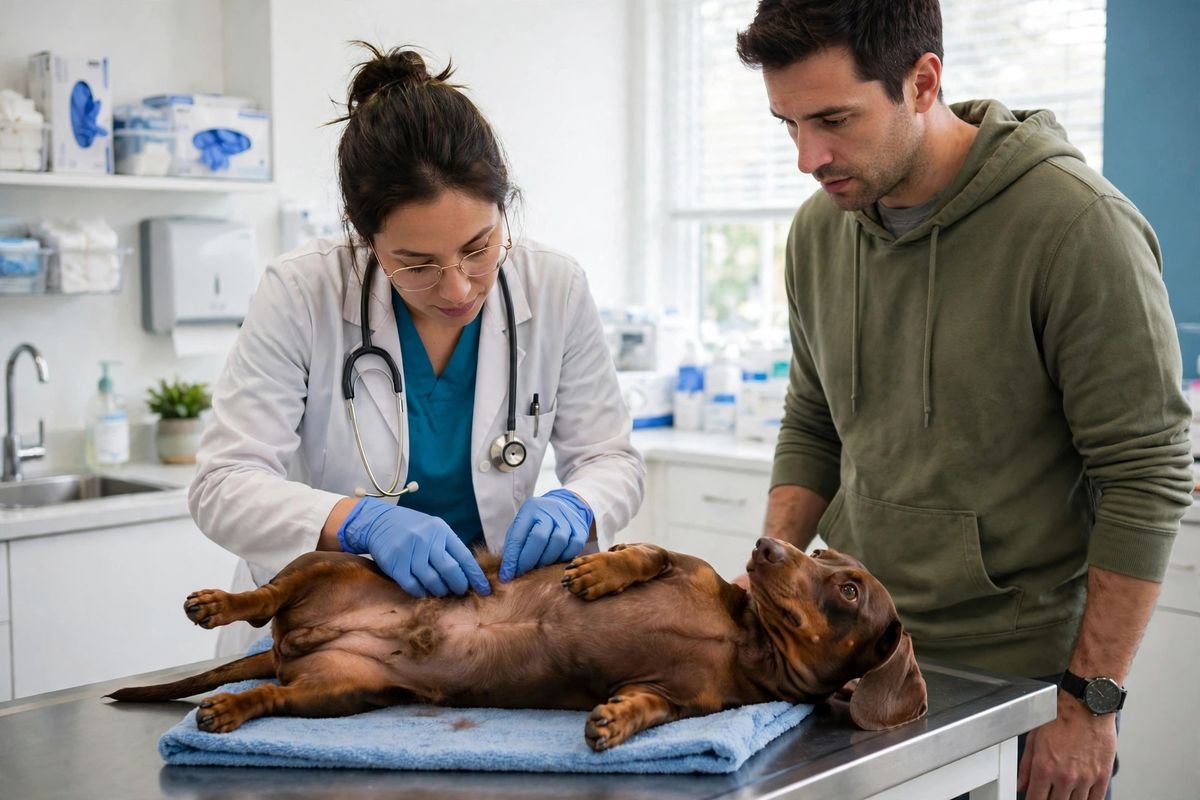
Itchy skin needs a veterinarian when it lasts, when it spreads, or when the skin itself is damaged. A week or two of mild scratching with healthy skin can be watched at home with a food log. Scratching that goes on for more than two weeks, that keeps the dog awake at night, or that spreads to new parts of the body needs a veterinarian’s exam. So does any skin that is broken, bleeding, oozing, or smelly, and any ear that is red, swollen, or painful. These are signs the skin needs more than a food change.
Bring the food log to the appointment. A log that shows two weeks of meals, treats, and itching gives the veterinarian a clear picture in minutes, and it turns a vague complaint into a story with dates and details. Bring the food bag or a photo of the label too, so the veterinarian can read the ingredients. Bring a list of everything the dog eats, including treats, chews, and scraps, and a note of any shampoo, bedding, or cleaning product that changed recently. The more the veterinarian knows, the faster the cause can be narrowed down.
A veterinarian may suggest a food trial, a skin test, or a change in flea control, and may check the ears and the skin under a light. A food trial is a planned test, not a guess: it usually means one food, and only that food, for several weeks, with no treats or scraps at all. It takes patience, and it works only if everyone in the home follows the same rule. Ask the veterinarian how long the trial should run and what to watch for.
Dachshund Food for Itchy Skin: Daily Food Log
| Day | What to Write Down | What It Shows |
|---|---|---|
| Every meal | Food name, amount, time | The steady base diet |
| Every treat | Treat or chew name, time, who gave it | Hidden extras that may trigger itching |
| Every scrap | Table food, even a small bite | Foods outside the regular diet |
| Scratching | Where, how often, time of day | Pattern: paws, belly, ears, night or day |
| Skin check | Redness, dry patches, broken skin | Whether the skin is getting worse |
| Other changes | New shampoo, bedding, walks in long grass | Causes outside the bowl |
A log kept for two weeks, filled in at feeding time, shows the pattern that memory misses. Bring the log to the vet visit.
Common Mistakes
- Changing the food, the treats, and the shampoo all at once, so no one can tell which change helped.
- Switching to a new food on a guess, without a food log or a veterinarian’s advice.
- Forgetting to log treats and table scraps, which are often the real trigger.
- Judging a food change after two days, instead of giving it two weeks.
- Assuming every itch is a food problem, and missing fleas or an ear infection.
- Feeding a new food for one meal and then going back, which upsets the stomach and muddies the test.
- Letting visitors hand out treats during a food test, so the test never really runs.
- Waiting months to call a veterinarian while the skin breaks and the dog scratches at night.
When to Call Your Vet
Contact a veterinarian if the itching lasts more than a week or two, if the skin is broken, bleeding, oozing, or smelly, if the dog scratches through the night, or if the ears are red, swollen, or painful. Contact a veterinarian urgently if the dog’s face swells, if it has trouble breathing, or if it is in severe pain. A veterinarian can examine the skin and ears, look at the food log, and advise on the next step. This article gives general information only and is not a diagnosis.
Pin This: Itchy Skin Food Log
- Log every meal, treat, chew, and scrap for two weeks.
- Note where the dog scratches, and at what time of day.
- Change only one thing at a time, and wait two weeks.
- Cut the extras first, before changing the main food.
- Check for fleas and look at the ears too.
- Call a veterinarian if the itching lasts more than two weeks.
Frequently Asked Questions
Can food really cause itchy skin in a Dachshund?
Yes, food can play a role, but it is only one possible cause. Fleas, pollen, contact with a new shampoo, and ear problems can cause the same itching. A food log and a veterinarian’s exam are the way to sort out which cause fits this dog.
How long should I track food before changing anything?
Two weeks of notes, filled in at feeding time, is a good start. The log shows which days are itchy and what the dog ate on those days. Change only one thing at a time after that, and give each change two weeks.
What should I do if my Dachshund scratches its paws after every meal?
Write it down: the time, the food, and the treats given that day. Cut the extras for two weeks and see if the pattern fades. If the paws stay itchy, or the skin breaks, ask a veterinarian.
Should I switch to a different food right away?
Not on a guess. A sudden switch can upset the stomach and muddy the test. Start with a food log, cut the treats and scraps, and ask a veterinarian about a planned food trial if the itching lasts.
When is itchy skin an emergency?
A swollen face, trouble breathing, or severe pain needs a veterinarian at once. Broken, bleeding, or smelly skin, and red or painful ears, need a vet visit soon, even if they are not an emergency.
Conclusion
Dachshund food for itchy skin is a detective job, not a quick fix: log every meal and treat for two weeks, change one thing at a time, and check fleas, ears, and bedding along the way. The next step is simple — start the food log today, and bring it to the vet if the itching lasts more than two weeks.






2 Comments