Dachshund Reverse Sneezing: Sounds, Steps, and Vet Signs
Quick Answer
- Dachshund reverse sneezing is a sudden burst of loud, snorting breaths in through the nose, often with the neck stretched out and the elbows held wide. Most episodes last under a minute and stop on their own.
- Stay calm, keep the dog still, and gently stroke the throat or briefly cover one nostril to encourage a swallow. Do not shout, shake the dog, or push anything into the nose or mouth.
- Common triggers include dust, pollen, strong scents, excitement, pulling on a collar, drinking too fast, and a sudden change from cold air to a warm room.
- A cough sounds different: it comes from the chest and pushes air out, while reverse sneezing pulls air in through the nose in fast, repeated snorts.
- Call a veterinarian if episodes happen often, last more than a few minutes, come with gagging, vomiting, trouble breathing, or discharge from the nose.
Contents
- 1. What Dachshund Reverse Sneezing Sounds Like
- 2. Reverse Sneezing or a Cough: Telling Them Apart
- 3. What to Do During an Episode at Home
- 4. Common Triggers and How to Reduce Them
- 5. When Reverse Sneezing Needs a Veterinarian
- Dachshund Reverse Sneezing: Episode Log
- Common Mistakes
- When to Call Your Vet
- Pin This: Reverse Sneezing at Home
- Frequently Asked Questions
- Conclusion
1. What Dachshund Reverse Sneezing Sounds Like
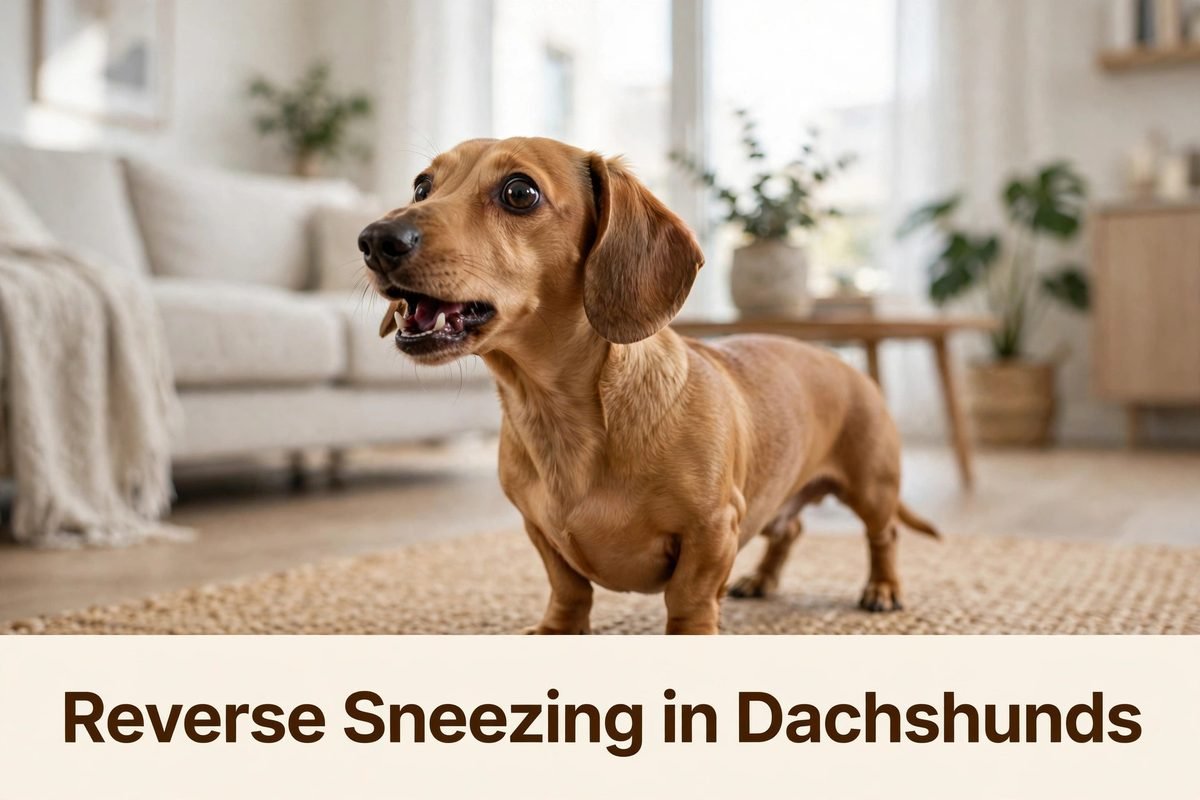
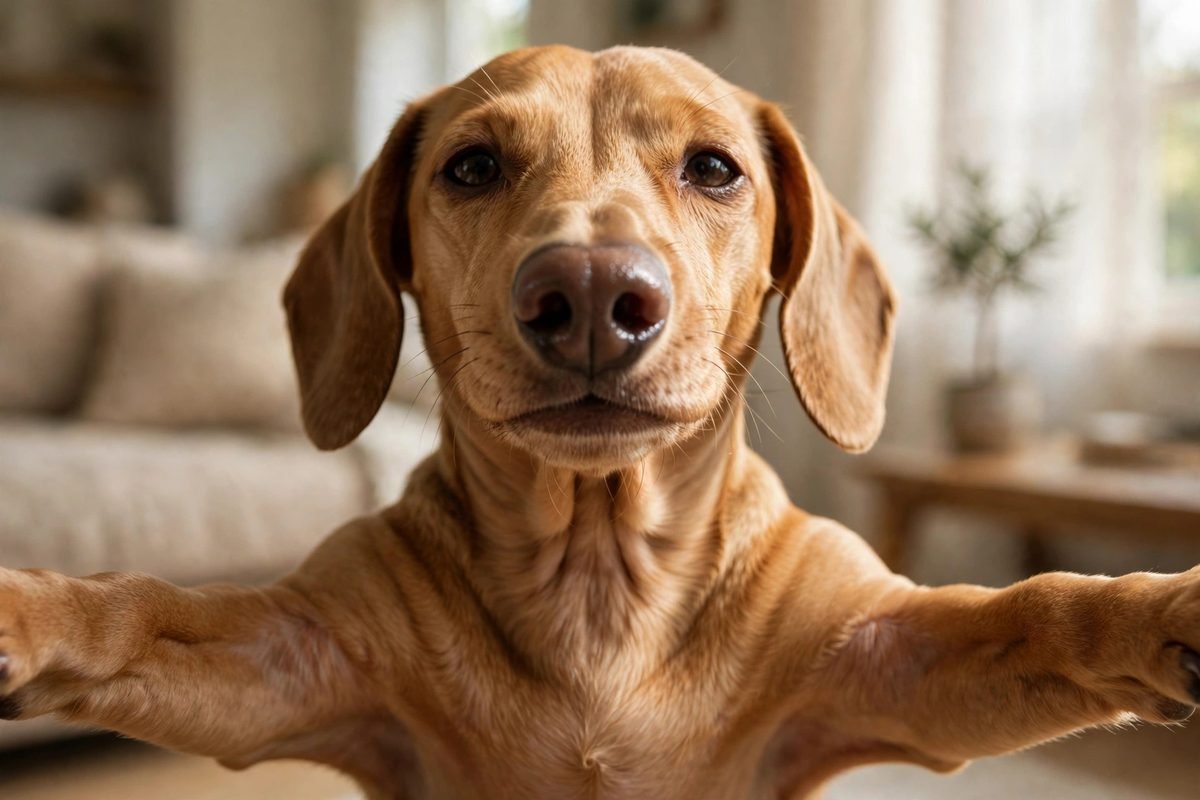
Dachshund reverse sneezing sounds like a fast series of loud snorts or honks, as if the dog is trying to sneeze inward instead of outward. The sound comes in bursts: several quick, noisy breaths in through the nose, one after another, while the dog stands still with its neck stretched forward and its elbows held out from the body. The eyes may look wide, and the dog may seem startled by the noise it is making. The whole episode usually lasts from a few seconds to under a minute, and then the dog shakes itself, swallows, and carries on as if nothing happened.
The first time an owner hears it, the sound can be frightening, because it looks and sounds like choking. The difference is that a choking dog cannot breathe, paws at the mouth, and panics, while a dog in a reverse sneezing episode is still breathing, just noisily and in the wrong direction. The dog may stand frozen, but it is taking air in with every snort. Knowing the sound in advance takes the fear out of the moment, and it helps the owner stay calm enough to help instead of making the episode worse by rushing at the dog.
Dachshunds seem to have these episodes more often than many other breeds, and the reason is likely the shape of the head and the long soft palate. A long, low dog with a narrow muzzle and a soft palate that sits close to the airway can find the throat irritated more easily, and that irritation sets off the reflex. Excitement, a dusty room, or a walk in cold air can be enough to start it. The episodes are common enough that most Dachshund owners will hear one sooner or later, and most of them pass without any treatment at all.
2. Reverse Sneezing or a Cough: Telling Them Apart
A cough and reverse sneezing sound different once the owner knows what to listen for. A cough pushes air out of the chest in a harsh, hacking burst, and it often ends with a gag or a retch. The dog’s chest and belly move with each cough, and the sound comes from deep in the throat or chest. Reverse sneezing pulls air in through the nose in rapid snorts, the chest stays fairly still, and the sound comes from the nose and the back of the throat. One pushes air out; the other pulls air in.
The body language differs too. A coughing dog often lowers its head and stretches its neck, then hacks once or twice and stops. A dog in a reverse sneezing episode stands stiff, stretches the neck out, holds the elbows wide, and snorts in a long run of breaths that can last twenty or thirty seconds. A coughing fit may repeat through the day or night, while reverse sneezing usually comes in single short episodes with long calm gaps between them. Watching the direction of the air and the length of the episode is the fastest way to tell the two apart.
Why the difference matters is simple: the two sounds point to different problems and different next steps. Occasional reverse sneezing after excitement or dust is usually harmless, while a cough that keeps coming back, especially at night or after exercise, needs a veterinarian’s exam. A cough with vomiting, fever, or tiredness is a different matter again, and the upset stomach and vomiting guide covers the signs that go with stomach trouble. When in doubt, a short phone video of the episode is the most useful thing an owner can bring to a vet visit, because the sound tells the veterinarian more than any description.
3. What to Do During an Episode at Home
The first step during an episode is to stay calm and keep the dog calm. Move quietly to the dog, speak in a low, steady voice, and keep other pets and children away for a moment. Do not shout, clap, or grab the dog, because excitement and sudden movement can make the throat spasm last longer. The dog is not choking, and it does not need to be shaken or patted hard on the back. Stillness and a calm voice are the best help in the first seconds.
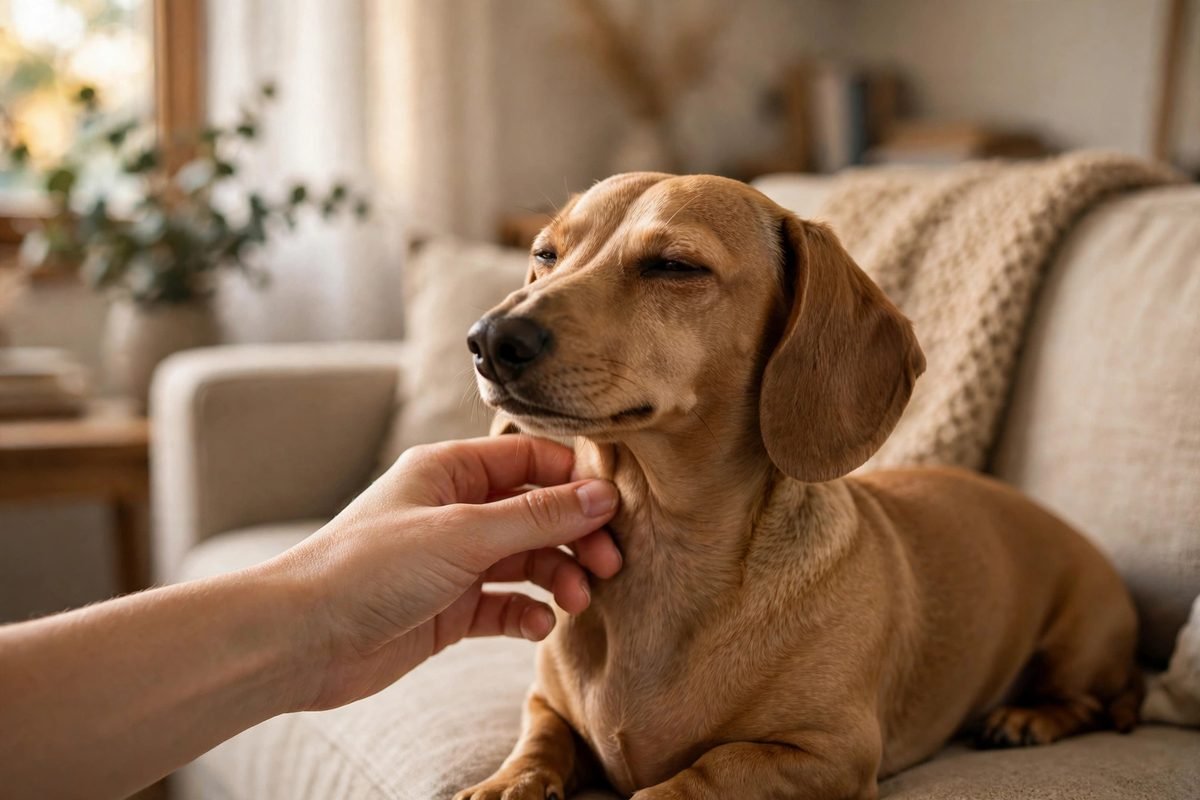
Two gentle moves often end an episode sooner. The first is to stroke the throat lightly, from the chin down toward the chest, which can prompt a swallow that resets the reflex. The second is to cover one nostril briefly with a fingertip for a second or two, which makes the dog swallow and breathe through the mouth instead. Either move can be tried once, gently, and if the episode carries on, simply wait it out. Never put fingers, food, water, or any object into the dog’s mouth or nose during an episode, and never hold the mouth shut.
After the episode ends, let the dog settle for a few minutes before offering water or going back to play. A small drink of water can soothe the throat, but only once the snorting has fully stopped. Note the time, how long the episode lasted, and what happened just before it, because that record shows whether episodes are getting more frequent or starting after the same trigger. The everyday health checklist is a good place to keep that kind of note, so the pattern is easy to show at a vet visit.
4. Common Triggers and How to Reduce Them
Dust and strong scents are the most common triggers inside an apartment. A freshly vacuumed room, a new cleaning spray, a plug-in air freshener, scented candles, or cigarette smoke can all irritate the nose and throat enough to set off an episode. Reducing the triggers starts with the air: vacuum with the dog in another room, use plain, unscented cleaning products where the dog sleeps and eats, and skip air fresheners and strong perfumes near the dog’s bed. A wash of the bedding in a plain, unscented product also helps, because the dog spends hours with its nose pressed into the bed.
Excitement and pulling are the next triggers. A dog that gets very excited at the door, at mealtimes, or when a visitor arrives may start snorting in the middle of the excitement, and a dog that pulls hard against a collar can irritate the throat the same way. A harness that spreads pressure across the chest instead of the neck is kinder on the throat, and a calm greeting routine at the door takes the edge off the excitement. Eating or drinking too fast can set off an episode as well, so a slower pace at the bowl, with smaller portions spread out, is worth trying.
Weather and pollen play a part too. A sudden change from cold outdoor air to a warm room, a windy day with pollen in the air, or a walk through long grass can all start an episode. A short pause in the hallway after a walk, a wipe of the paws and face with a damp cloth, and avoiding long grass on high-pollen days are small steps that reduce the irritation. None of these steps is a treatment for a medical problem, but together they cut down the number of episodes a sensitive Dachshund has in a normal week.
5. When Reverse Sneezing Needs a Veterinarian
Occasional short episodes in an otherwise healthy dog are usually nothing to worry about, but a change in the pattern is a reason to ask a veterinarian. Episodes that happen several times a day, that last more than a few minutes, or that keep coming back for more than a week or two should be checked. So should episodes that come with discharge from one nostril, sneezing with blood, a swollen face, or a change in the sound of the breathing. A veterinarian can look inside the nose and throat, listen to the chest, and check for the things that make reverse sneezing worse.
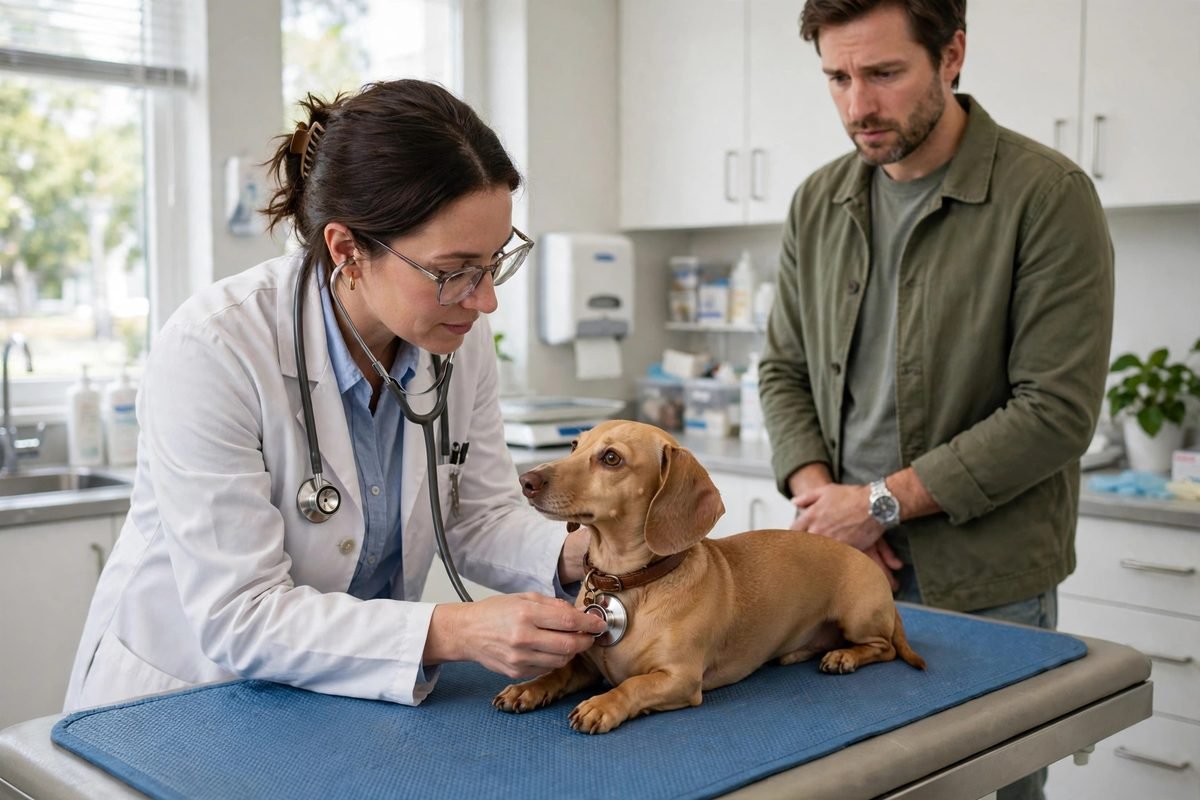
Some causes need a veterinarian because they cannot be seen at home. A foreign body caught in the nose, a growth, an infection, or mites in the nasal passages can all cause repeated reverse sneezing, and none of them can be ruled out by watching alone. A veterinarian may look up the nose with a scope, take a swab, or suggest imaging if the pattern points that way. Bringing the episode log and a phone video of a typical episode makes the visit far more useful, because the veterinarian can see and hear exactly what happens.
A veterinarian can also sort out whether the sound is reverse sneezing at all, or a cough, a collapsing airway, or a heart problem that needs different care. Older dogs and dogs that cough at night, tire easily on walks, or breathe noisily even at rest need a closer look. The aim of the visit is not to stop every snort — most dogs will still have an occasional episode — but to make sure nothing serious is hiding behind a sound that is usually harmless.
Dachshund Reverse Sneezing: Episode Log
| What to Note | How to Record It | Why It Helps |
|---|---|---|
| Date and time | Write the day and the time the episode started | Shows how often episodes happen |
| Length | Count the seconds until the snorting stops | Long episodes need a vet check sooner |
| Trigger | What happened just before: dust, excitement, food, walk | Points to the cause to reduce |
| Other signs | Discharge, gagging, coughing, tiredness | Flags signs that need a veterinarian |
| What helped | Throat stroke, covering one nostril, waiting it out | Shows which calm-down move works |
| Video | Short phone clip of a typical episode | Lets the veterinarian hear the sound |
A log kept for two weeks, with a video clip, gives the veterinarian a clear picture in minutes. Bring both to the appointment.
Common Mistakes
- Panicking and shouting at the dog, which adds excitement and can make the episode last longer.
- Shaking the dog or patting it hard on the back, as if it were choking.
- Pushing fingers, food, or water into the mouth or nose during an episode.
- Holding the mouth shut or covering both nostrils at once.
- Treating every snort as an emergency and rushing to the vet for a single short episode.
- Ignoring episodes that happen several times a day or last for weeks.
- Using strong air fresheners, scented sprays, or smoke near the dog’s bed and bowl.
- Letting the dog pull hard on a collar, which irritates the throat and can set off episodes.
When to Call Your Vet
Contact a veterinarian if episodes happen several times a day, last more than a few minutes, or keep coming back for more than a week or two. Contact a veterinarian urgently if the dog has trouble breathing, turns blue around the gums or tongue, collapses, or cannot stop gagging. Contact a veterinarian soon if there is discharge or blood from the nose, a swollen face, a new cough, or the dog is eating less and seems tired. A veterinarian can examine the nose, throat, and chest and advise on the next step. This article gives general information only and is not a diagnosis.
Pin This: Reverse Sneezing at Home
- Reverse sneezing pulls air in through the nose in fast, loud snorts.
- Stay calm, keep the dog still, and speak in a low, steady voice.
- Gently stroke the throat or briefly cover one nostril to prompt a swallow.
- Never put anything into the mouth or nose, and never hold the mouth shut.
- Note the time, length, and trigger of each episode in a log.
- Call a veterinarian if episodes are frequent, long, or come with other signs.
Frequently Asked Questions
How do I know it is reverse sneezing and not choking?
A dog in a reverse sneezing episode is still breathing, taking fast noisy breaths in through the nose, and the episode stops on its own in under a minute. A choking dog cannot breathe, paws at the mouth, and panics. If the dog cannot breathe at all, contact a veterinarian at once.
How long does a reverse sneezing episode last?
Most episodes last from a few seconds to under a minute. An episode that lasts more than a few minutes, or one that keeps repeating without a break, needs a veterinarian’s advice.
Can I stop an episode by covering my Dachshund’s nose?
Covering one nostril briefly for a second or two can prompt a swallow that ends the episode, and gently stroking the throat can do the same. Never cover both nostrils, and never hold the mouth shut. If the episode carries on, wait it out calmly.
Why does my Dachshund reverse sneeze after drinking water?
Drinking too fast can irritate the throat and set off the reflex, especially if the dog gulps water after a walk or in excitement. A slower pace at the bowl and a calm pause before drinking often reduce these episodes.
When should reverse sneezing worry me?
Worry when episodes happen several times a day, last more than a few minutes, or come with discharge, blood from the nose, coughing, trouble breathing, or tiredness. Those signs need a veterinarian’s exam.
Conclusion
Dachshund reverse sneezing sounds alarming, but most episodes are short, harmless, and over in under a minute. Stay calm, keep the dog still, try a gentle throat stroke, and log the time, length, and trigger. The next step is simple — record the next episode on video and in a log, and show both to a veterinarian if the pattern changes.