How to Train a Dachshund Puppy Not to Bark
Quick Answer
- How to train a dachshund puppy not to bark starts early, with short, gentle sessions and rewards for quiet moments.
- Teach a quiet cue in a calm room first, then practise it with easy sounds before real visitors or the doorbell.
- Socialise the puppy slowly with new people, sounds, and places, keeping each meeting short and positive.
- Keep a steady daily routine of sleep, meals, play, and short walks, because a tired or overtired puppy barks more.
- Ask a veterinarian if barking comes with signs of pain, illness, or distress that does not ease with calm training.
Contents
- 1. Why Puppies Bark and What It Means
- 2. Start With a Quiet Cue and Tiny Rewards
- 3. Socialise Slowly: People, Sounds, and Places
- 4. Teach Calm Greetings and Short Alone Time
- 5. Build a Puppy Routine That Keeps Barking Low
- Puppy Training Checklist: First Eight Weeks of Practice
- Common Mistakes
- When to Call Your Vet
- Pin This: Train a Dachshund Puppy Not to Bark
- Frequently Asked Questions
- Conclusion
1. Why Puppies Bark and What It Means
A Dachshund puppy barks because the world is new, and barking is one of the few tools it has. A new sound, a stranger at the door, a dog across the street, or a toy that rolls away can all start a barking bout. How to train a dachshund puppy not to bark begins with reading those barks: a sharp bark at a sound is often surprise or alert, a high bark during play is often excitement, and a repeated bark when a person leaves the room is often a call for company. The bark itself is normal, and the training goal is not silence all day, but a puppy that can settle again quickly.
Puppies also bark more when they are tired, hungry, or overexcited. A puppy that has played hard for an hour without a nap may bark at the smallest sound, because tired puppies lose the ability to settle. A puppy that has missed a meal may bark beside the food bowl, and a puppy that has been awake too long may bark at its own shadow. This is why the daily routine matters as much as the training sessions: a puppy that sleeps enough, eats on time, and plays in short bursts has a much better chance of staying calm.
The first months are the best time to shape barking habits, because the puppy is learning what works. If barking at the door brings a person running, the puppy learns that barking works. If barking at a visitor brings a treat for staying quiet, the puppy learns that quiet works. Every reaction from the household is a lesson, so the training starts with the people in the home as much as with the puppy. Calm voices, steady routines, and quick rewards for quiet moments teach the puppy faster than any single session.
2. Start With a Quiet Cue and Tiny Rewards
Teach the quiet cue before the puppy meets the hard triggers. Choose one short word, such as “quiet”, and use it the same way every time. In a calm room, wait for a natural quiet moment, say the word once in a soft voice, and offer a tiny treat. Repeat this a few times in a session of three to five minutes, then stop while the puppy is still keen. The puppy learns that the word and the quiet moment go together, and that lesson is the base for all later training.
Next, practise the cue with a very small sound. Ask someone in the home to tap a door softly or to drop a book on a rug in another room. When the puppy looks toward the sound without barking, say the cue word and offer a treat. If the puppy barks once, wait for the pause, say the word, and reward the pause. Keep the sound soft and the distance long, because a loud sound or a close trigger pushes a young puppy past the point where it can learn. End the session after a few good pauses.
Use tiny, soft treats that the puppy can eat in a second, and keep them in a pocket or a jar near the training spot. The reward must arrive within a second or two of the quiet moment, or the puppy will not connect the treat with being quiet. Mix treats with calm praise and a slow stroke, so the puppy learns that a quiet voice and gentle touch are also rewards. Say the cue word once, not over and over, because repeating it while the puppy barks teaches the puppy to ignore it.
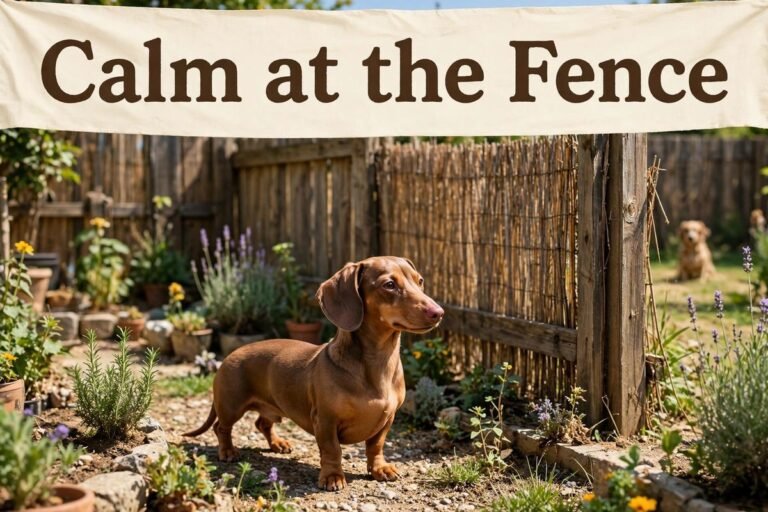
Practise the cue at different times of day, in different rooms, so the puppy learns that “quiet” means the same thing everywhere. A cue that only works in the kitchen is not yet a trained cue. Move the practice to the hallway, then to the living room, then near the front door, always keeping the trigger easy. A puppy that can stay quiet for a soft knock in three rooms is ready for a real doorbell at a distance, with a treat ready.
3. Socialise Slowly: People, Sounds, and Places
Socialisation is the slow, gentle meeting of new things, and it is one of the strongest tools against barking. A puppy that has met many kinds of people, heard many household sounds, and visited calm new places is less likely to bark at every new thing. Start with easy meetings: one calm visitor at a time, sitting down, letting the puppy approach in its own time. Reward the puppy for a calm sniff or a quiet sit near the visitor, and keep the visit short.
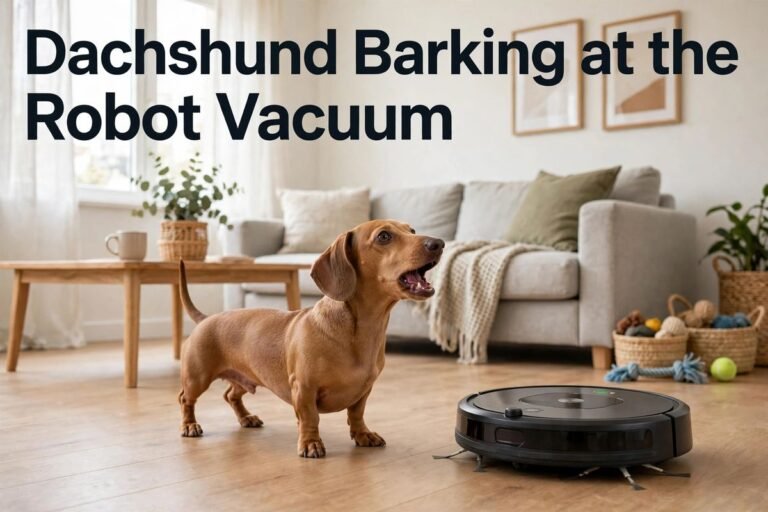
Introduce sounds a little at a time. Play a recording of traffic, a vacuum, or a doorbell at a very low volume while the puppy plays or eats, and reward calm behaviour. Raise the volume slightly over days, never in one jump. Let the puppy hear the washing machine, the kettle, and the television at normal levels while it rests nearby. A puppy that hears these sounds every day stops treating them as alarms, and that calm carries over to the real sounds outside.
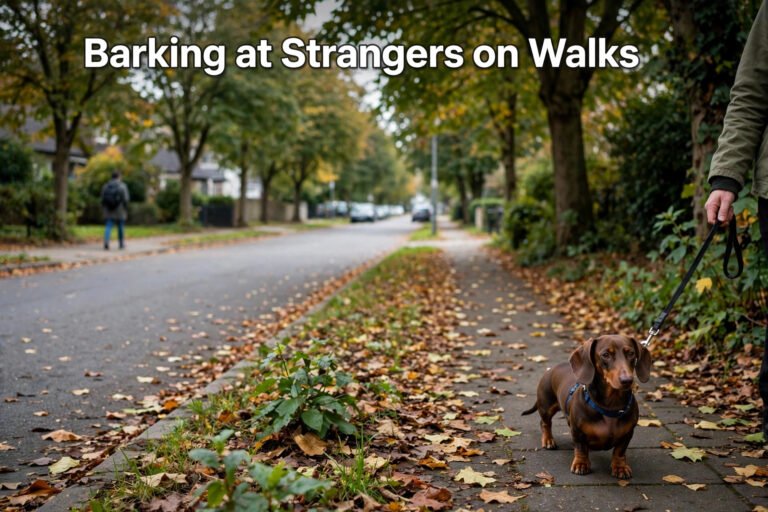
Take the puppy to calm new places in short trips. A quiet street, a friend’s garden, or a calm corner of a park gives the puppy new sights and smells without too much at once. Let the puppy watch people and dogs from a distance, and reward quiet watching with a treat. Keep trips to ten or fifteen minutes at first, and head home before the puppy gets tired or overwhelmed. A puppy that is carried home asleep has had enough for one day.
4. Teach Calm Greetings and Short Alone Time
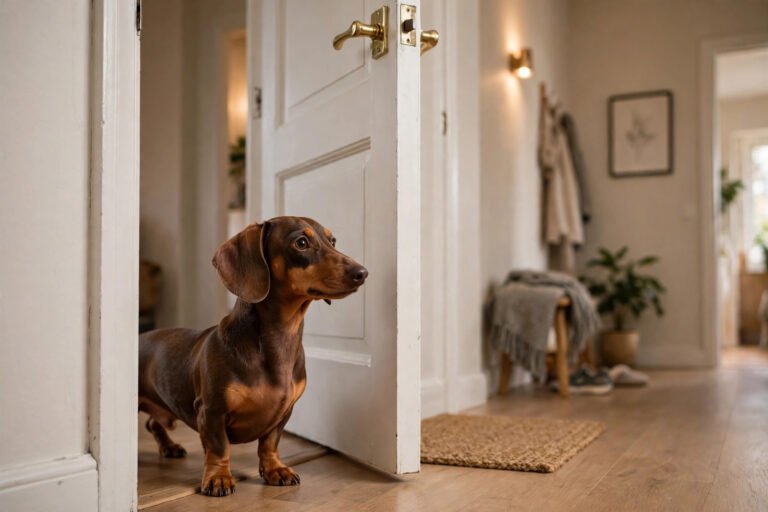
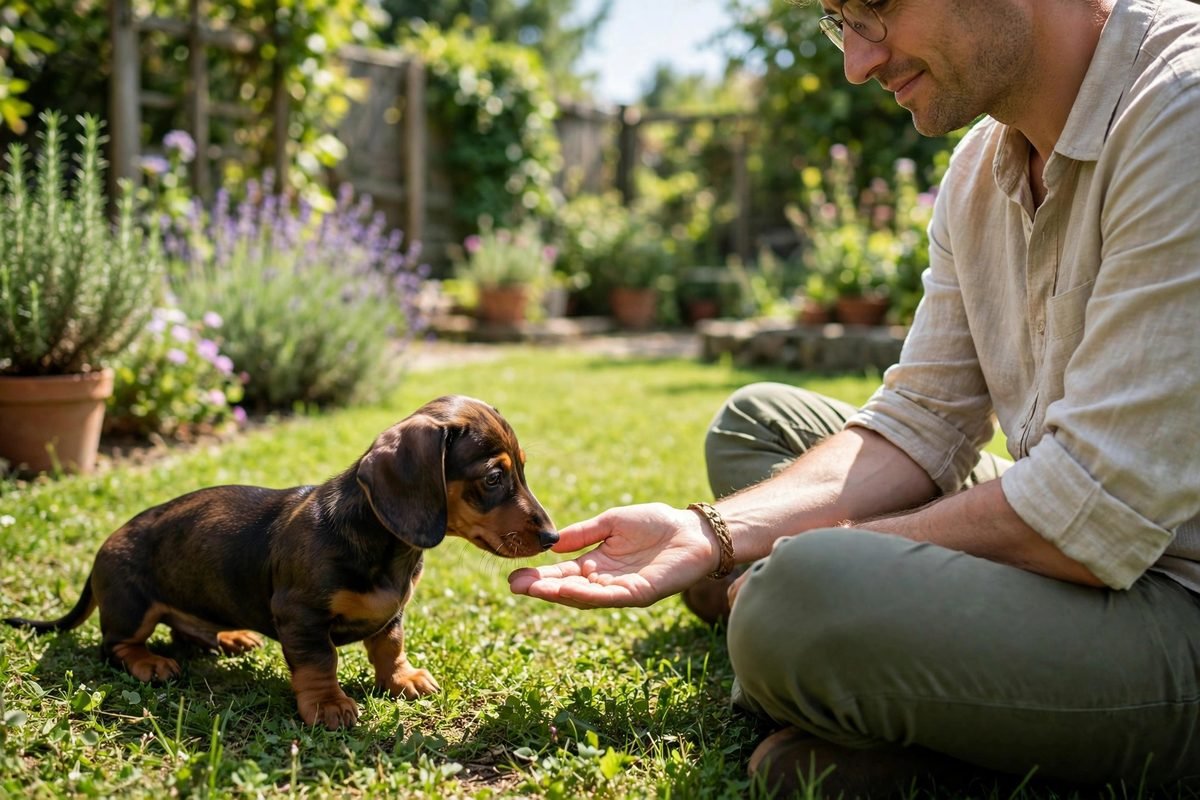
Visitors are a common trigger for puppy barking, so calm greetings deserve their own practice. Before a visitor arrives, put the puppy on a lead or behind a baby gate, with a chew to settle it. Ask the visitor to come in calmly, without bending over the puppy or speaking in a high, excited voice. When the puppy is quiet, let it approach the visitor for a sniff, and reward the calm greeting with a treat. The calm greeting routine gives a fuller version of this practice for homes where visitors are the main trigger.
Keep greetings short at first. A puppy that greets calmly for thirty seconds has done well, and the visitor can then sit down while the puppy settles on its bed with a chew. If the puppy starts barking again, move it calmly to its resting spot, wait for a pause, and reward the quiet. Do not pick the puppy up during a barking bout, because being lifted in the middle of excitement can make the barking worse. A calm spot on the floor, with something to chew, is a better place to settle.
Short alone time is another skill to teach early, in tiny steps. Start by stepping out of the room for a few seconds while the puppy has a chew, then come back calmly before the puppy barks. Build up to a minute, then a few minutes, always returning before the barking starts. Keep departures and returns low key: no long goodbye, no excited hello. The calm leaving routine covers the longer version of this practice for puppies that bark when left alone.
Give the puppy a safe resting spot for alone time, with a bed, a blanket, and a chew. A puppy that has a favourite spot settles faster than one left in the middle of a busy room. Leave a worn piece of clothing nearby, so the puppy has a familiar scent, and keep the room calm and warm. If the puppy barks when left alone despite short practice, go back to shorter absences, and ask a veterinarian for advice if the barking comes with heavy panting, drooling, or escape attempts.
5. Build a Puppy Routine That Keeps Barking Low
A steady daily routine is the quiet backbone of puppy barking training. Puppies need far more sleep than adult dogs, often eighteen to twenty hours a day, and a puppy that is kept awake too long barks more and learns less. Build the day around sleep: a short play session, then a nap; a short walk, then a nap; a meal, then a nap. A puppy that naps in a quiet crate or bed wakes up calm and ready to learn, while a puppy that is kept going all day becomes overtired and noisy.
Meals, play, and walks should happen at roughly the same times each day. Feed the puppy its meals on a steady schedule, and keep play sessions short, about ten minutes, with a calm wind-down at the end. A short walk with plenty of sniffing tires the mind, and sniffing is one of the best calm-down tools for a young puppy. Let the puppy stop and sniff as much as it likes, and keep the walk short enough that the puppy comes home settled, not wired.
Plan for the noisiest times of day. If the post arrives at the same time each morning, keep the puppy in its resting spot with a chew for those minutes. If children pass the house after school, close the curtains for that half hour. If visitors are coming, have the lead, the treats, and the chew ready before the doorbell rings. Planning for noisy times gives the puppy a fair chance to stay calm while the training catches up, and it keeps the household calm too.
Keep a simple daily note for the first month. Write down how many barking bouts happened, what triggered them, and how long they lasted. The note shows whether the barking is getting shorter and less frequent, and it shows which times of day are hardest. Share the note with a veterinarian at the next visit if the barking is not improving, because the pattern in the note helps the veterinarian see what is happening at home.

Puppy Training Checklist: First Eight Weeks of Practice
| Week | What to Practise | Sign It Is Working |
|---|---|---|
| Weeks 1-2 | Quiet cue in a calm room; tiny treats for pauses | Puppy pauses and looks for a treat |
| Weeks 3-4 | Soft sounds at a distance; one calm visitor at a time | Puppy notices sounds without long barking |
| Weeks 5-6 | Calm greetings; short alone time with a chew | Puppy settles on its bed after greeting |
| Weeks 7-8 | Real doorbell at a distance; new places in short trips | Barking bouts get shorter each week |
Common Mistakes
- Shouting at a barking puppy, which sounds like joining in and makes the barking louder.
- Repeating the cue word many times while the puppy is barking.
- Keeping a puppy awake too long, so it gets overtired and barks at everything.
- Letting every visitor pick the puppy up and excite it at the door.
- Forcing a frightened puppy to meet strangers up close.
- Skipping practice for days, then expecting the puppy to remember the cue.
- Rewarding barking with attention, food, or a toy right after a barking bout.
When to Call Your Vet
Contact a veterinarian if a puppy starts barking suddenly after being quiet, if barking comes with signs of pain, limping, loss of appetite, vomiting, or changes in sleep or toileting. Contact a veterinarian if barking when left alone comes with heavy panting, drooling, escape attempts, or injury, because those signs may point to distress that needs a closer look. A veterinarian can check the puppy for pain or illness, review the routine and the training notes, and suggest next steps if the barking does not improve with steady practice. This article gives general information only and is not a diagnosis.
Pin This: Train a Dachshund Puppy Not to Bark
- Teach a quiet cue in a calm room with tiny treats.
- Socialise slowly with people, sounds, and places.
- Practise calm greetings and short alone time.
- Keep a steady routine with plenty of sleep and short play.
- Reward quiet moments all day, not only in sessions.
- Call a veterinarian if barking comes with signs of pain or distress.
Frequently Asked Questions
When should quiet training start for a Dachshund puppy?
Quiet training can start as soon as the puppy settles into the home, with three to five minute sessions in a calm room. Early, gentle practice shapes habits before barking becomes a fixed pattern.
How much sleep does a barking puppy need?
A young puppy often needs eighteen to twenty hours of sleep a day. A puppy that barks a lot may be overtired, so a quiet nap in a calm spot often helps more than extra play.
Should visitors pick up a barking puppy?
No, picking up a puppy during a barking bout can add excitement and make the barking worse. Ask visitors to stay calm, let the puppy approach for a sniff, and reward a quiet greeting.
Can a puppy learn a quiet cue in one week?
A puppy can learn the first steps of a quiet cue in a week, but steady quiet with real triggers takes several weeks of short daily practice. Keep sessions short and reward every quiet pause.
What if the puppy only barks when left alone?
Start with absences of a few seconds, return before the puppy barks, and build up slowly with a chew in a safe resting spot. If barking comes with panting, drooling, or escape attempts, ask a veterinarian for advice.
Conclusion
How to train a dachshund puppy not to bark comes down to an early quiet cue, slow socialisation, calm greetings, short alone time, and a steady routine with plenty of sleep. Start this week with one calm room, one cue word, and tiny treats for every quiet pause.