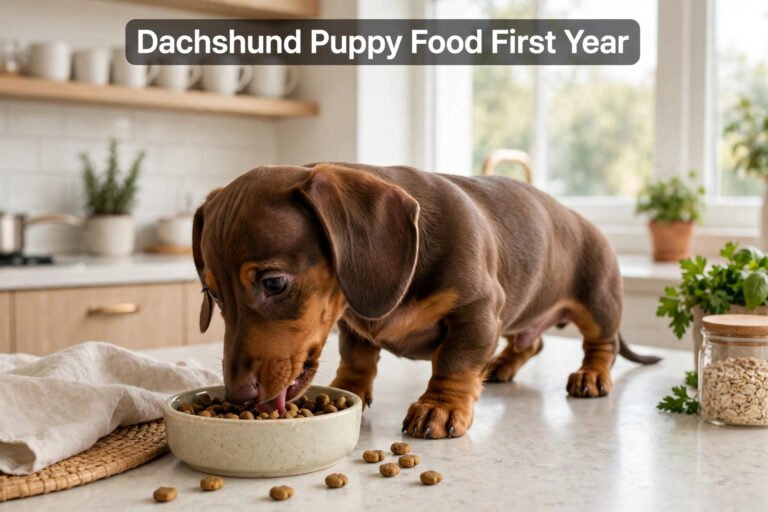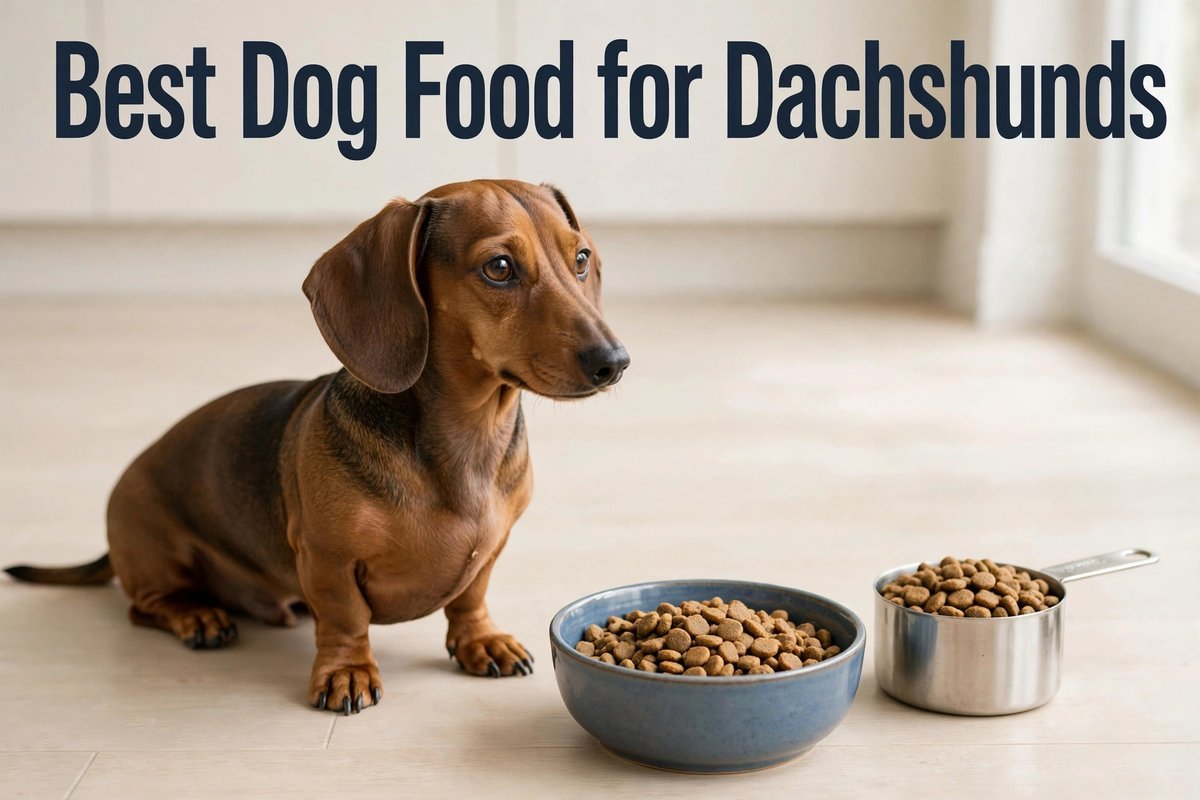
Best Dog Food for Dachshunds
Quick Answer
- Best dog food for dachshunds is a complete and balanced food made for a small dog, with a named animal protein first, a clear feeding guide, and a portion that keeps the waist visible from above.
- Choose wet food, dry food, or a mix of both based on teeth, appetite, and the feeding routine at home, not on packaging claims alone.
- Pick a life-stage formula that matches the age of the dog: puppy food for a growing puppy, adult food for an adult dog, and a senior formula for an older dog.
- Read the label before buying, and look for a statement that the food is complete and balanced, plus the feeding amounts for the weight of the dog.
- Measure every meal with a cup or a scale, keep treats to a small share of the daily food, and ask a veterinarian about a change of food when the dog has a health condition.
Contents
- 1. What Makes a Food Right for a Dachshund
- 2. Wet Food, Dry Food, or a Mix of Both
- 3. Feeding by Life Stage: Puppy, Adult, and Senior
- 4. Reading the Label Before Buying
- 5. Portions, Weight Control, and the Daily Routine
- Choosing the Right Food: Comparison Table
- Common Mistakes
- When to Call Your Vet
- Pin This: Choosing the Best Dog Food for Dachshunds
- Frequently Asked Questions
- Conclusion
1. What Makes a Food Right for a Dachshund
Best dog food for dachshunds starts with fit, not with a famous name on the bag. A Dachshund is a small dog with a long body, a fast metabolism for its size, and a strong appetite, so the food needs to suit a small stomach, a small mouth, and a daily routine in a home where the dog moves less than a large dog in a yard. The right food is one that is complete and balanced for the age of the dog, easy to chew, easy to measure, and easy to keep at the same amount every day. When those basics are right, the rest of the choice becomes much simpler, and the dog can stay at a steady weight with a regular routine.
A complete and balanced food contains the protein, fat, vitamins, and minerals a dog needs each day, in the right balance for its life stage. Look for that wording on the label, because it tells the buyer that the food was made to be the whole diet, not a snack or a topper. A named animal protein as the first ingredient, such as chicken, turkey, lamb, or fish, is a useful sign, and the rest of the label should list foods that are easy to recognise, such as rice, oats, sweet potato, carrots, or peas. A long list of fillers, vague terms such as meat meal with no animal named, and a strong smell of artificial flavouring are reasons to keep looking at other options on the shelf.
Small kibble size matters for a Dachshund, because a small mouth and a short jaw make large, hard pieces harder to chew. A dog that swallows kibble whole may rush through meals, and a dog that struggles to chew may leave food in the bowl. Kibble made for small breeds is usually smaller and easier to crunch, and it also makes measuring simpler, because a small scoop gives a more exact portion. For a dog with sore teeth or a missing tooth, a softer food or a kibble softened with a little warm water can be easier to eat, and the feeding routine should change with the teeth, not against them.
2. Wet Food, Dry Food, or a Mix of Both
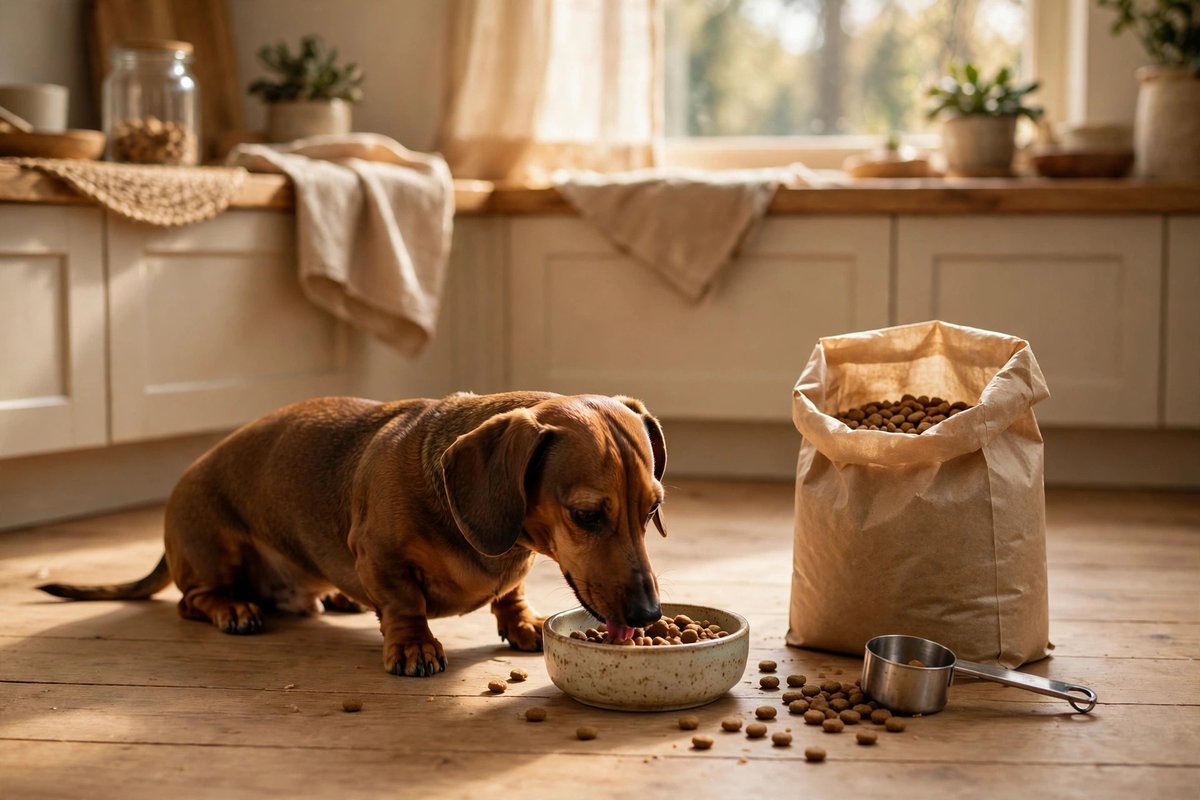
Wet food and dry food both can be part of the best dog food for dachshunds, and the choice depends on the dog, the teeth, and the routine at home. Wet food is soft, moist, and often easier to smell, so a picky eater or an older dog with sore teeth may eat it more willingly. Dry food is crunchy, easy to store, easy to measure, and easy to carry on a walk or a trip, and the crunch can help keep the teeth cleaner between brushings. Neither type is right for every dog, and the best choice is the one the dog eats well, digests well, and keeps at a steady weight.
Wet food has a high water content, which means a can or a pouch holds fewer calories per spoon than the same spoon of dry food. That can help a dog that needs to feel full without taking in too much energy, and it can help a dog that drinks little water during the day. Wet food also softens quickly, so a dog that eats fast may finish a wet meal in seconds, and a dog that leaves wet food in the bowl will find it dries out and loses its smell. Opened wet food needs to be covered and kept cold, and the bowl needs washing after every meal, because wet food left at room temperature can spoil and attract flies in warm weather.
3. Feeding by Life Stage: Puppy, Adult, and Senior
Best dog food for dachshunds changes with age, because a puppy, an adult dog, and a senior dog need different amounts of energy and different balances of nutrients. A puppy grows fast in the first year, and the food needs to support that growth with enough protein, fat, and minerals for bones and muscles, in small meals through the day. An adult dog needs a steady food that holds weight and energy without adding extra fat. A senior dog may move less, chew less easily, and need a food that is easier to digest, with a portion that matches a quieter day. Using the right life-stage food is one of the simplest ways to get the balance right.
A Dachshund puppy usually eats three to four small meals a day in the early months, then moves to three meals, then to two meals as it grows. Puppy food is made for that growth, with smaller kibble, more energy per cup, and a balance that supports bones that are still forming. The puppy should be weighed often, and the portion should be checked against the feeding guide for the current weight, not the weight from a month ago. A puppy that grows too fast, or gains too much weight too early, carries extra load on a young back, so the portion should be measured, not poured freely from the bag. Treats for a puppy should be tiny, soft, and counted as part of the daily food.
An adult Dachshund usually eats two meals a day, morning and evening, at the same times each day. Adult food gives a steady balance for a dog that has finished growing, and the portion should match the activity of the day. A dog that walks twice a day and plays indoors needs a little more than a dog that rests most of the day, and the portion should change with the seasons too, because a cold winter walk uses more energy than a short summer walk. The feeding schedule for apartments with portions and timing sets out a simple two-meal routine that fits a small home, and it works well alongside a life-stage food. Keep the two meals at the same times, and keep the bowl in the same quiet spot, so the dog learns when food arrives and settles between meals.

4. Reading the Label Before Buying
Reading the label is the most useful skill for choosing the best dog food for dachshunds, because the label tells the buyer what is inside the bag, how much to feed, and whether the food is complete for the age of the dog. Start with the statement that the food is complete and balanced, and check which life stage it names. A food that says complete and balanced for adult dogs is not the same as a food made for puppies, and a food made for all life stages should still be checked against the age and weight of the dog at home. The guide to reading a Dachshund food label before buying walks through the same label step by step, and it is a useful check before the first bag is opened.
The ingredient list is ordered by weight, so the first few items make up most of the food. A named animal protein first, such as chicken, turkey, lamb, or fish, is a good sign, followed by a carbohydrate such as rice, oats, barley, or sweet potato. Vegetables such as carrots, peas, or pumpkin add fibre and texture, and a named fat such as chicken fat or fish oil adds energy and helps the coat. A label that starts with a vague term, such as meat and animal derivatives, or that lists many fillers before any named protein, is harder to trust, and a label with a long list of artificial colours and flavours is a reason to look at another bag.
5. Portions, Weight Control, and the Daily Routine
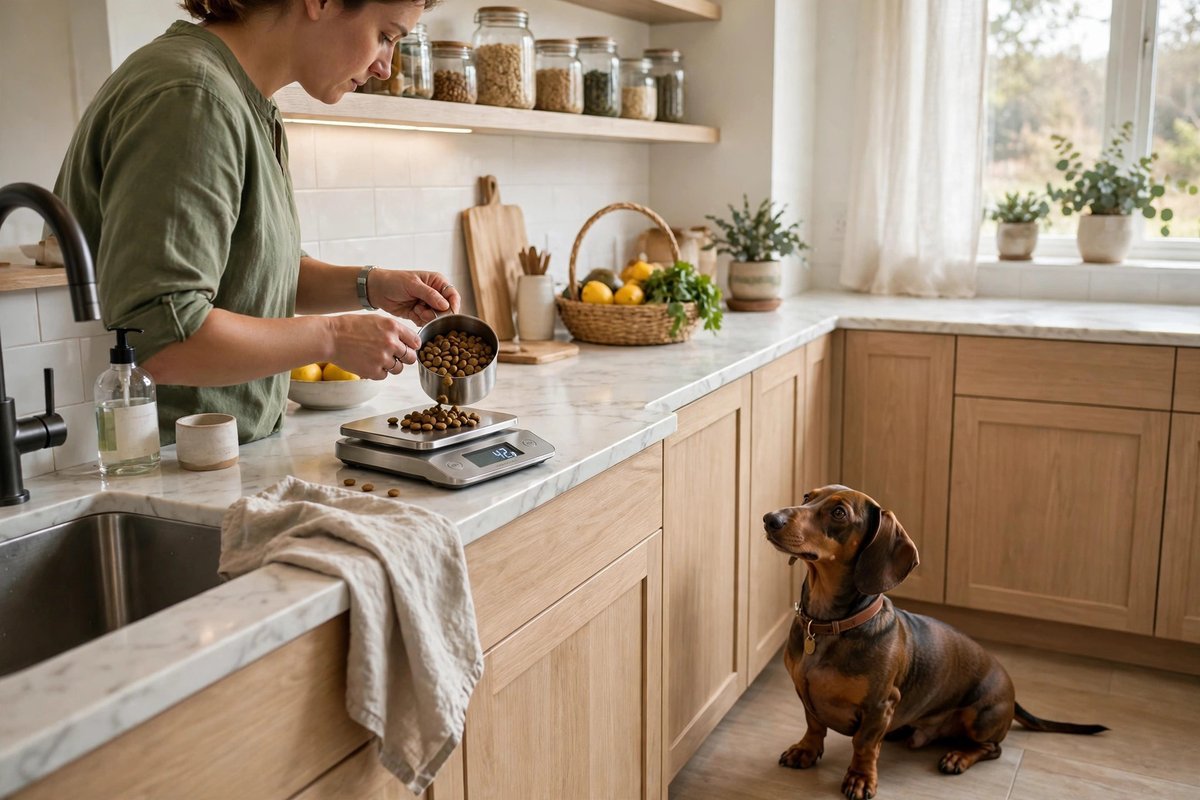
Portions are where the best dog food for dachshunds succeeds or fails at home, because even a good food can add weight when the portion is too large. Measure every meal with a measuring cup or a kitchen scale, and use the same cup every day, so the amount stays the same. A scoop from a mug, a handful from the bag, or a guess at the bowl can be a third more than the right amount, and a third extra every day adds up to a large gain over a month. Write the daily amount on the bag, or on a card on the fridge, so every person in the home feeds the same amount.
Weight control starts with the eyes and the hands, not with a scale alone. Look at the dog from above: the waist should narrow behind the ribs, and the belly should tuck up when seen from the side. Feel the ribs with flat fingers: they should be easy to feel under a thin layer of fat, without pressing hard, and without standing out sharply. Weigh the dog every two weeks on the same scale, at the same time of day, and write the number down. A gain of a small amount each week is a warning, and a loss of a small amount each week is a warning too, because a steady weight is the goal.
Choosing the Right Food: Comparison Table
| Food Type | Best For | Watch Out For |
|---|---|---|
| Dry food, small breed | Easy measuring, storage, and puzzle feeding | Dog may drink less; check water intake |
| Wet food | Picky eaters and dogs with sore teeth | Spoils fast once opened; keep cold |
| Mix of wet and dry | Taste plus easy measuring | Count the total; do not add wet on top of a full dry portion |
| Puppy formula | Growth in the first year | Measure often; weight changes fast |
| Adult formula | Steady weight and energy | Match the portion to daily activity |
| Senior formula | Older dogs, softer texture, easier digestion | Change slowly; watch weight every two weeks |
Common Mistakes
- Feeding by eye instead of measuring, so the portion grows a little every week.
- Adding wet food on top of a full dry portion instead of counting the total meal.
- Choosing a food by the picture on the front instead of the label and the feeding guide.
- Feeding a puppy food to an adult dog, or an adult food to a puppy, for months at a time.
- Changing foods suddenly, then changing again when the stomach is upset.
- Counting treats as free extras instead of part of the daily food.
- Leaving a full bowl down all day, so the dog grazes and the portion is never known.
- Ignoring a lost waist or a steady weight gain and hoping it will fix itself.
When to Call Your Vet
Contact a veterinarian if the dog refuses food for more than a day, loses weight without a change in food, gains weight despite a measured portion, has loose stools for more than two days after a food change, vomits often, or shows itchy skin, a sore mouth, or trouble chewing. Contact a veterinarian urgently if the dog cannot eat or drink, is very weak, has blood in the stool or vomit, or has a swollen belly. A veterinarian can check the weight, the teeth, and the body condition, and can advise on a food that suits a health condition, a sensitive stomach, or a senior dog. This article gives general information only and is not a diagnosis.
Pin This: Choosing the Best Dog Food for Dachshunds
- Pick a complete and balanced food made for a small dog and the right life stage.
- Choose wet, dry, or a mix based on teeth, appetite, and the routine at home.
- Read the label: named protein first, clear feeding guide, and a best-before date.
- Measure every meal, keep treats small, and watch the waist from above.
- Change foods slowly over seven to ten days and ask a veterinarian when in doubt.
Frequently Asked Questions
What is the best dog food for dachshunds?
Best dog food for dachshunds is a complete and balanced food made for a small dog and the right life stage. The best choice is the food the dog eats well, digests well, and keeps at a steady weight.
Is wet food or dry food better for a Dachshund?
Both can work well. Wet food is softer and often easier for a picky eater or a dog with sore teeth. A mix of both is a common choice, as long as the total meal is counted.
How much food should a Dachshund eat each day?
Start with the feeding guide on the bag for the weight of the dog. Measure the food, watch the waist and the weight for two weeks, and adjust in small steps.
Should a Dachshund eat puppy food, adult food, or senior food?
Use puppy food while the dog is growing, adult food once growth is finished, and a senior formula when the dog is older. Change life-stage foods slowly, over seven to ten days, and watch the weight during the change.
How should a Dachshund be changed to a new food safely?
Mix a little of the new food with the old food, and increase the new food a little each day over seven to ten days. If loose stools last more than two days, go back to the old food and ask a veterinarian.
Conclusion
Choosing food for a Dachshund is a steady job: a balanced food for the right age, a measured portion, and a regular check of the waist and the weight. Pick one good food, read its label, and measure it every day.