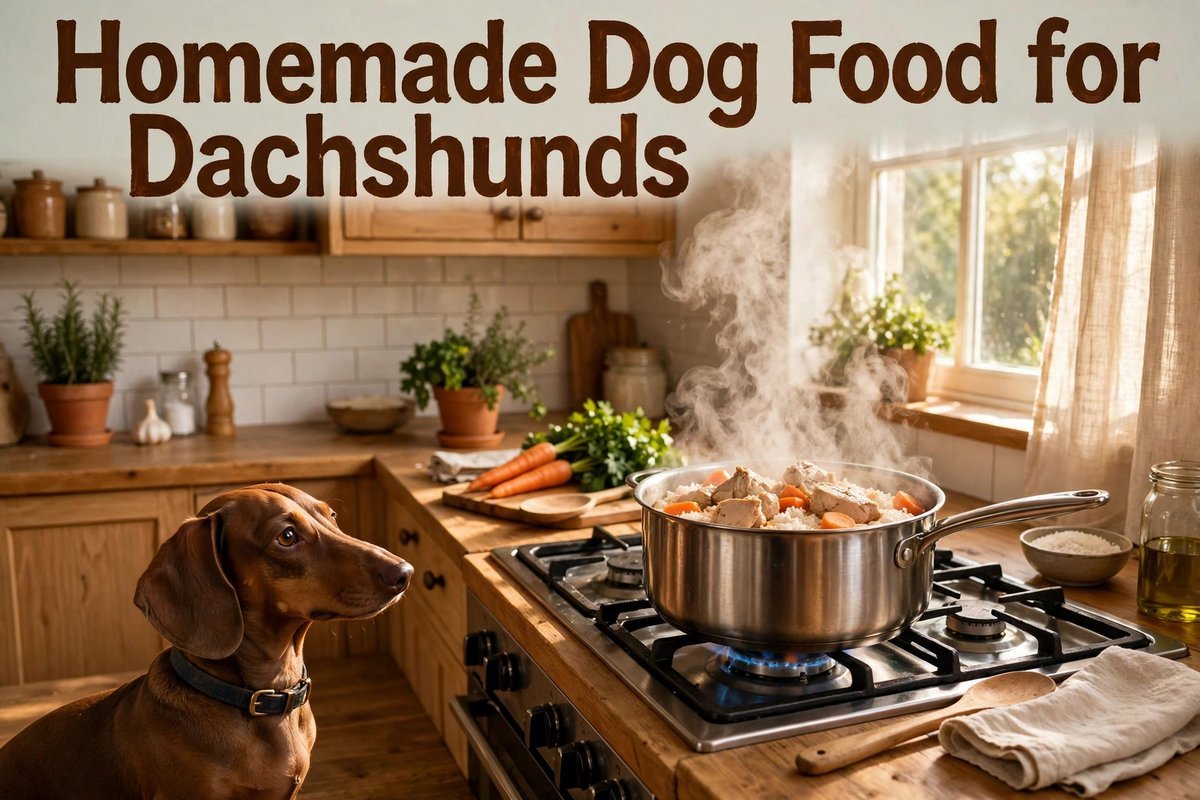
Homemade Dog Food for Dachshunds
Quick Answer
- Homemade dog food for dachshunds can work well when each meal has a protein, a cooked carbohydrate, vegetables, a little healthy fat, and a balanced supplement plan agreed with a veterinarian.
- Cook plain food with no onion, garlic, grapes, raisins, chocolate, xylitol, bones, or rich sauces, and keep seasoning out of the dog bowl.
- Use a simple recipe, the same ingredients, and measured portions, and change one thing at a time so the stomach can settle.
- Feed two measured meals a day, keep treats small, and watch the waist, the stool, and the coat over two to three weeks.
- Ask a veterinarian before starting home cooking, and ask again if the dog has a health condition, is a puppy, is pregnant, or is losing weight.
Contents
- 1. Why Cook at Home, and When to Think Twice
- 2. What a Balanced Homemade Meal Looks Like
- 3. Simple Recipes for a Dachshund Week
- 4. Foods to Avoid and Safe Everyday Choices
- 5. Portions, Storage, and the Daily Routine
- Homemade Meal Checklist
- Common Mistakes
- When to Call Your Vet
- Pin This: Homemade Dog Food for Dachshunds
- Frequently Asked Questions
- Conclusion
1. Why Cook at Home, and When to Think Twice
Homemade dog food for dachshunds appeals to many owners for a simple reason: the food in the bowl is easy to see. Plain cooked chicken, rice, carrots, and pumpkin are foods the owner can recognise, and a dog that eats them willingly can make home cooking feel like the kindest choice. A home-cooked meal can suit a dog that refuses dry food, a dog with a sensitive stomach, or a dog that needs a softer texture, and it lets the owner control the ingredients, the salt, and the portion, one meal at a time. For a small dog in an apartment, that control can be a real help.
Home cooking also has a risk that is easy to miss: a meal that looks healthy can still be unbalanced over weeks and months. A bowl of chicken and rice alone, for example, is gentle on the stomach, but it lacks the calcium, vitamins, and minerals a dog needs every day, and a dog fed on that bowl for months can develop a gap in its diet that does not show at once. A balanced homemade diet needs more than a protein and a carbohydrate. It needs a plan for minerals, a plan for vitamins, and a portion that matches the weight and the activity of the dog, and that plan is best agreed with a veterinarian before home cooking becomes the daily diet.
Think twice before starting home cooking if the dog is a puppy, is pregnant, is nursing, has a health condition, or is underweight. A puppy grows fast, and a gap in calcium or in energy can affect growth in a way that is hard to undo later. A dog with a sensitive stomach, itchy skin, or a sore mouth may need a special diet, and a homemade recipe that is not planned for that condition can make the problem worse. A dog that is losing weight needs a check first, not a new recipe, because the weight loss may have a cause that food alone cannot fix. In each of these cases, a veterinarian can advise whether home cooking suits the dog, and what the recipe should include.
2. What a Balanced Homemade Meal Looks Like
Homemade dog food for dachshunds needs five parts in the bowl: a protein, a cooked carbohydrate, vegetables, a little healthy fat, and a balanced supplement plan. The protein builds and repairs muscle, the carbohydrate gives steady energy, the vegetables add fibre and texture, the fat adds energy and helps the coat, and the supplement plan fills the gaps that plain food alone cannot fill, such as calcium and certain vitamins. A meal that has all five parts, in the right amounts, is a balanced meal. A meal that has only two or three parts may be fine for a day, but it is not a diet for weeks and months.
Protein is the main part of the meal, and it should be plain, cooked, and lean. Chicken, turkey, lean beef, lamb, or fish are common choices, and they should be cooked without skin, bones, or rich sauces. A small Dachshund needs a modest amount of protein at each meal, not a large pile, because the rest of the bowl has work to do too. Remove all bones before serving, because cooked bones can splinter, and raw bones can crack teeth. Cut the meat into small pieces, so a small mouth can chew it easily, and mix it through the rest of the meal, so the dog eats the whole bowl, not just the meat on top.
3. Simple Recipes for a Dachshund Week
Homemade dog food for dachshunds works best with a small set of simple recipes, repeated through the week, rather than a new recipe every night. A simple recipe is easy to shop for, easy to cook, easy to portion, and easy to judge, because the owner knows exactly what went into the bowl. Choose two or three recipes, cook them in batches, and rotate them through the week, so the dog gets a little variety without a daily change. Keep the ingredients the same each time, and change one thing at a time if a change is needed, so the stomach can settle and the owner can see what suits the dog.
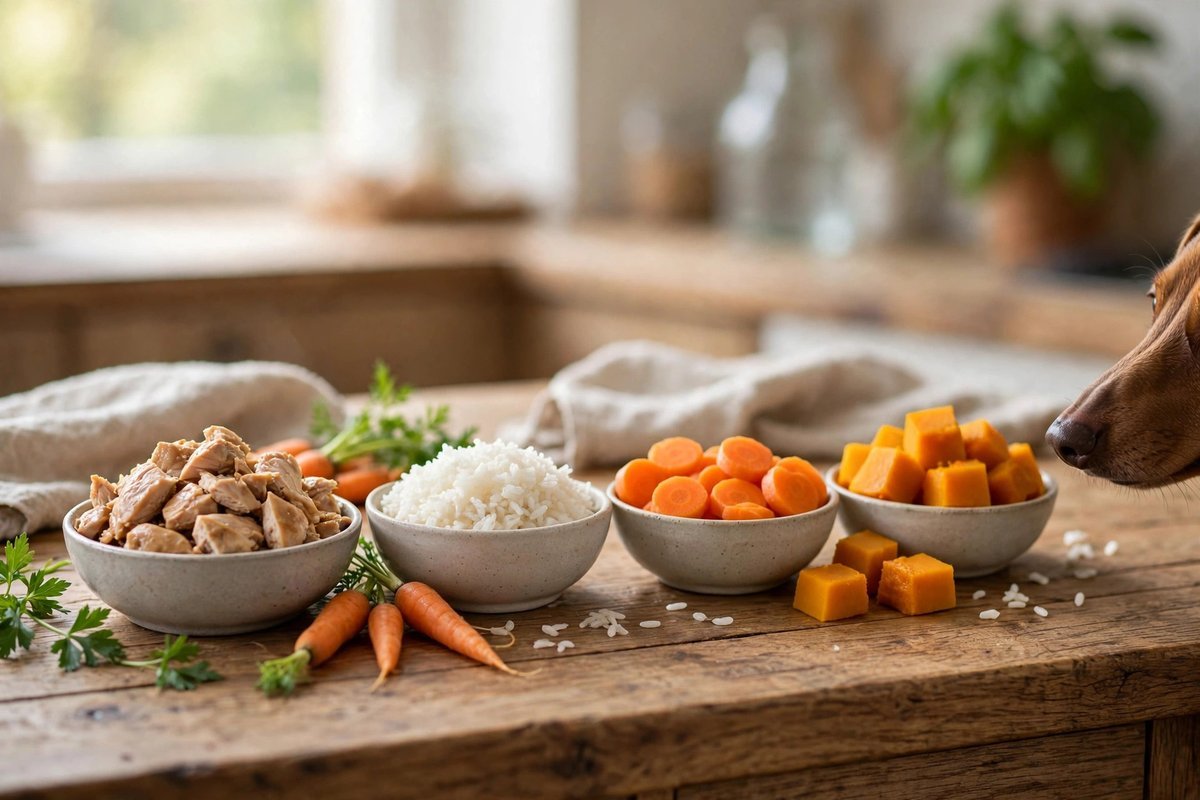
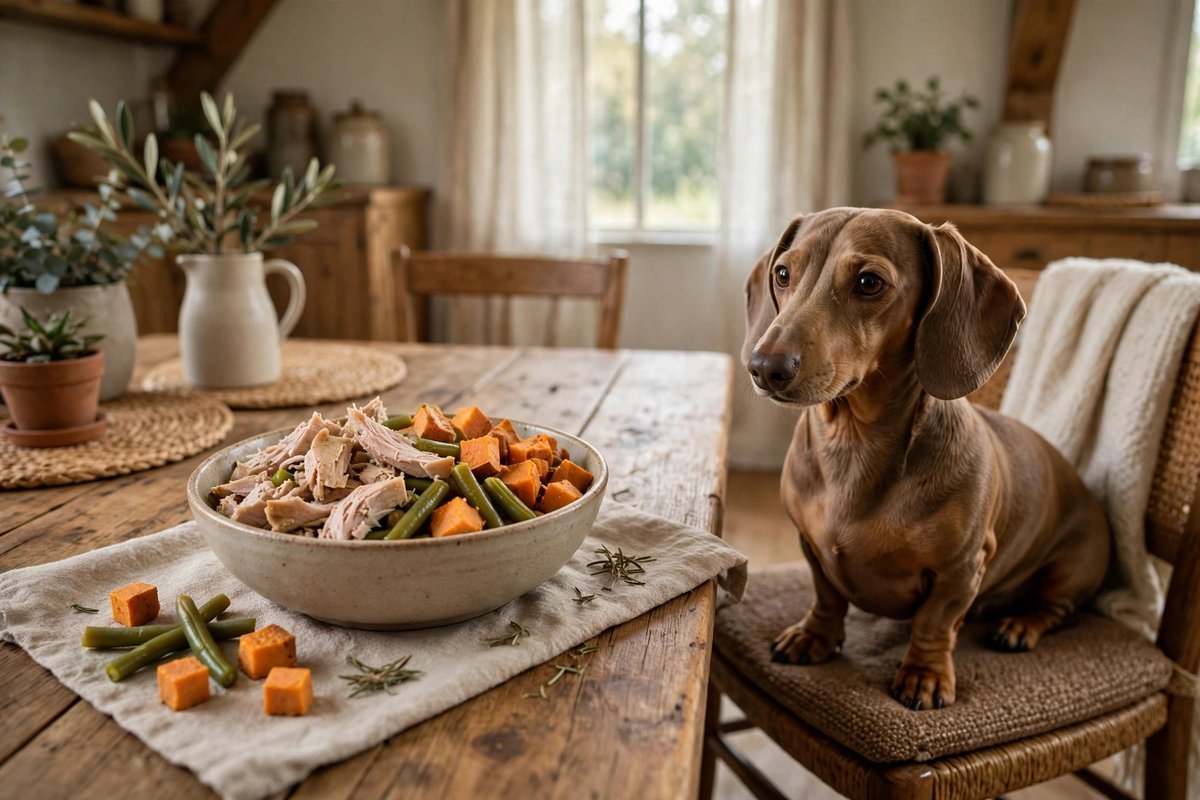
A first recipe is chicken, rice, and carrots. Cook plain chicken breast or thigh without skin or bones, cook rice in water until soft, and cook carrots until soft, then chop everything small and mix it together. The bowl should be roughly half protein and carbohydrate, with vegetables mixed through, and a little healthy fat added as agreed with a veterinarian. Let the food cool to room temperature before serving, and serve it in two measured meals a day. This recipe is gentle, easy to digest, and easy to repeat, and it suits many Dachshunds as a starting recipe for home cooking.
4. Foods to Avoid and Safe Everyday Choices
Foods to avoid are the most important part of homemade dog food for dachshunds, because some common kitchen foods are unsafe for dogs, even in small amounts. Onion, garlic, leeks, and chives can harm red blood cells, and they should never go into the dog bowl, even cooked. Grapes and raisins can harm the kidneys, and they should never be given as a treat. Chocolate, cocoa, coffee, and tea contain substances that are unsafe for dogs, and they should be kept out of reach. Xylitol, a sweetener found in some sugar-free gum, sweets, and peanut butter, is very unsafe for dogs, so check the label of any peanut butter before using it as a treat.
Cooked bones, raw bones, and bones from the table should never be given to a Dachshund, because cooked bones can splinter and raw bones can crack teeth or cause a blockage. Fatty meat, skin, gravy, and dripping can upset the stomach and cause a sore belly, and rich sauces, spicy food, and salty food should be kept out of the dog bowl. Alcohol is unsafe for dogs in any amount, and macadamia nuts, walnuts, and mouldy food should also be avoided. A dog that has eaten any of these foods should be watched closely, and a veterinarian should be called for advice, especially if the dog vomits, seems weak, or refuses food.
Safe everyday choices are plain, simple, and easy to recognise. Plain cooked chicken, turkey, lean beef, lamb, and fish are safe proteins when cooked without bones, skin, or sauce. Plain cooked rice, oats, barley, sweet potato, and potato are safe carbohydrates when cooked soft and served plain. Cooked carrots, green beans, peas, pumpkin, courgette, and broccoli in small amounts are safe vegetables when cooked soft and served plain. A small piece of apple without seeds, a few blueberries, or a small piece of banana can work as a treat, and a small piece of plain cooked egg can work as a protein topper. The safe foods guide with everyday choices gives a longer list of plain foods that suit a Dachshund, and it is a useful check before a new ingredient is tried.
5. Portions, Storage, and the Daily Routine
Portions for homemade dog food for dachshunds need measuring, because a home-cooked meal is easy to over-serve. Use a kitchen scale or a measuring cup, and weigh the daily amount each morning, then split it into two meals. A small Dachshund needs a modest amount at each meal, and the amount should be written down, so every person in the home feeds the same portion. A scoop from a large spoon, a guess at the bowl, or a pile that looks right can be a third more than the right amount, and a third extra every day adds weight over a month. Start with a portion agreed with a veterinarian, watch the weight for two weeks, and adjust in small steps.
Weight control with home cooking follows the same signs as with any food. Look at the dog from above: the waist should narrow behind the ribs, and the belly should tuck up when seen from the side. Feel the ribs with flat fingers: they should be easy to feel under a thin layer of fat, without pressing hard, and without standing out sharply. Weigh the dog every two weeks on the same scale, at the same time of day, and write the number down. A gain of a small amount each week means the portion is too large, and a loss of a small amount each week means the portion is too small, or the recipe needs a check with a veterinarian.
An older Dachshund needs extra care with portions and texture. A senior dog may move less, chew more slowly, and need a softer meal, with a smaller portion that matches a quieter day. The guide to feeding an older Dachshund in an apartment sets out a calm two-meal routine for a senior dog, with a raised bowl if bending is hard, and water close by. A senior dog on home cooking should be weighed every two weeks, because an older dog can lose weight quickly if the portion is too small, or if the recipe is too light. A softer texture, smaller pieces, and a warm meal can help a senior dog eat willingly.
Homemade Meal Checklist
| Step | What to Do | What to Check |
|---|---|---|
| Plan | Agree the recipe and supplement plan with a veterinarian | Protein, carbohydrate, vegetables, fat, and supplements all included |
| Cook | Cook plain, no onion, garlic, salt, or sauce; remove all bones | Meat cooked through; vegetables soft; food cooled before serving |
| Portion | Weigh the daily amount; split into two meals | Waist visible from above; ribs easy to feel |
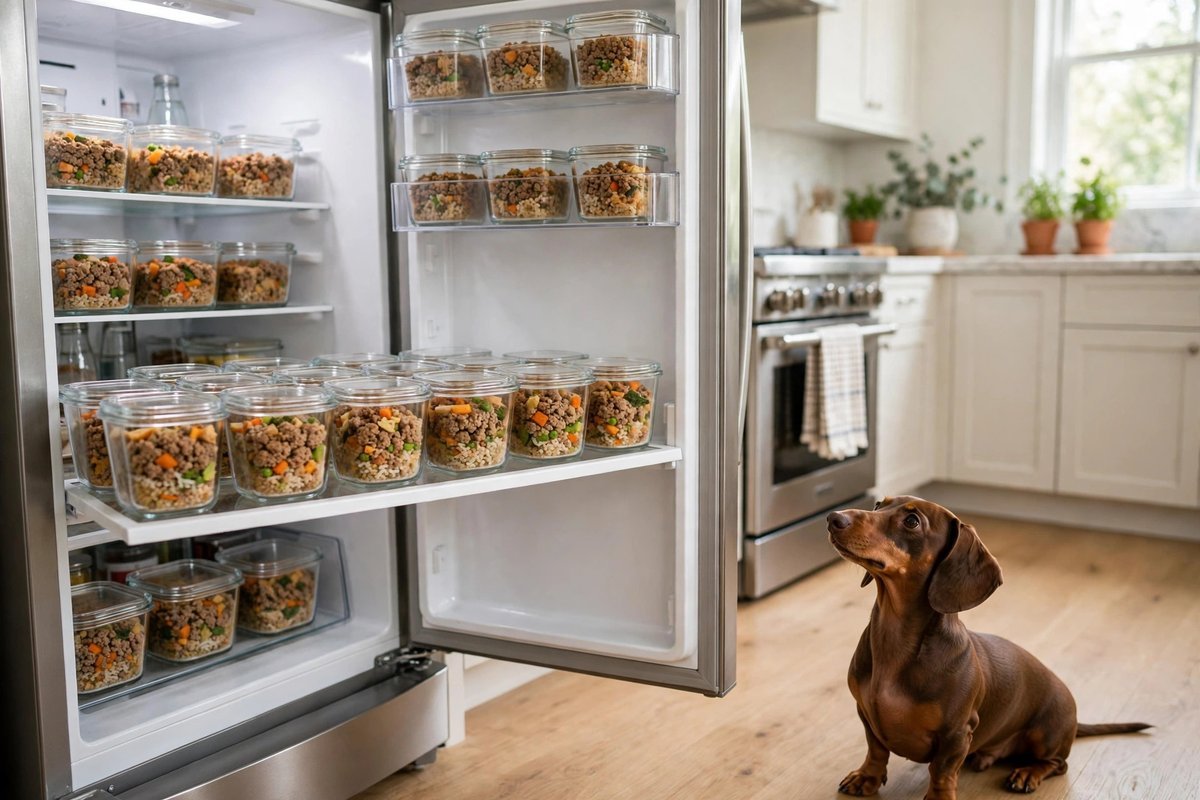
| Store | Sealed containers, kept cold, used within two to three days | Date on each container; stale food thrown away |
| Watch | Note appetite, stool, coat, and weight for two to three weeks | Steady weight; firm stool; willing eating |
Common Mistakes
- Cooking only chicken and rice for months, with no plan for calcium and vitamins.
- Adding onion, garlic, gravy, or rich fat to the dog bowl from the table.
- Feeding by eye instead of weighing the daily portion.
- Changing the recipe every night, so the stomach never settles.
- Keeping cooked food for a week, or leaving it at room temperature for hours.
- Adding human vitamins or extra calcium by guesswork.
- Giving cooked bones, or bones from the table, as a chew.
- Starting home cooking for a puppy or a sick dog without asking a veterinarian first.
When to Call Your Vet
Contact a veterinarian before starting home cooking if the dog is a puppy, is pregnant, is nursing, has a health condition, or is losing weight, and contact a veterinarian again if the dog refuses home-cooked food for more than a day, loses weight on a homemade diet, has loose stools for more than two days, vomits often, or shows itchy skin, a sore mouth, or trouble chewing. Contact a veterinarian urgently if the dog has eaten onion, garlic, grapes, raisins, chocolate, or xylitol, cannot eat or drink, is very weak, has blood in the stool or vomit, or has a swollen belly. A veterinarian can check the weight, the teeth, and the recipe, and can advise on a supplement plan that suits the dog. This article gives general information only and is not a diagnosis.
Pin This: Homemade Dog Food for Dachshunds
- Build each meal from protein, cooked carbohydrate, vegetables, a little fat, and a supplement plan agreed with a veterinarian.
- Keep onion, garlic, grapes, raisins, chocolate, xylitol, and bones out of the bowl.
- Use two or three simple recipes, cook in batches, and change one thing at a time.
- Weigh every portion, feed two meals a day, and store cooked food cold for two to three days.
- Watch the weight, stool, and coat, and ask a veterinarian when in doubt.
Frequently Asked Questions
Is homemade dog food for dachshunds healthy?
Homemade dog food for dachshunds can be healthy when each meal is balanced, with a protein, a cooked carbohydrate, vegetables, a little fat, and a supplement plan agreed with a veterinarian.
What should go in homemade food for a Dachshund?
Use plain cooked meat such as chicken or turkey, a cooked carbohydrate such as rice or sweet potato, cooked vegetables such as carrots or green beans, a little healthy fat, and a supplement plan agreed with a veterinarian. Keep the food plain, with no onion, garlic, salt, or sauce.
What foods should a Dachshund never eat?
Never give onion, garlic, grapes, raisins, chocolate, xylitol, cooked bones, or rich fatty food. Keep these foods out of reach, and call a veterinarian for advice if the dog eats any of them.
How much homemade food should a Dachshund eat each day?
Start with a portion agreed with a veterinarian, weigh it each day, and split it into two meals. Watch the waist and the weight for two weeks, and adjust in small steps until the weight holds steady.
Can homemade food be fed to a senior Dachshund?
Yes, with care. A senior dog may need a softer texture, smaller pieces, and a smaller portion that matches a quieter day. Agree the recipe with a veterinarian, weigh the dog every two weeks, and ask for advice if the weight falls.
Conclusion
Home cooking for a Dachshund is a steady, simple job: a balanced recipe agreed with a veterinarian, plain ingredients, measured portions, safe storage, and a calm daily routine. Cook one good recipe well, watch the dog for two to three weeks, and let the weight, the stool, and the appetite show whether the plan suits them.