Dachshund Dog Apparel Guide
Quick Answer
- Sausage dog apparel fits best when the long body is measured first: back from neck to tail base, chest at its widest point, and neck where a collar sits.
- Choose soft, stretchy fabrics for everyday layers and a water-resistant outer layer for rain, with a belly panel that stays clear of the legs.
- Clothes help most in cold wind, steady rain, and after a bath, while a warm, dry Dachshund at home often needs no layer at all.
- Check the fit each time: two fingers should slide under the chest band, the back should lie flat, and the dog should walk, sit, and lie down freely.
- Remove clothing for sleep, wash it often, and contact a veterinarian if skin under a garment looks red, sore, or itchy.
Contents
- 1. Measuring for a Long Body and a Deep Chest
- 2. Fabrics That Suit Dachshund Skin and Weather
- 3. Coats, Sweaters and Rain Layers for Everyday Walks
- 4. Dressing for Cold, Rain and After Bath Time
- 5. Fit Checks, Comfort Signs and Care at Home
- Apparel Comparison: Which Layer for Which Day
- Common Mistakes
- When to Call Your Vet
- Pin This: Sausage Dog Apparel Guide
- Frequently Asked Questions
- Conclusion
1. Measuring for a Long Body and a Deep Chest
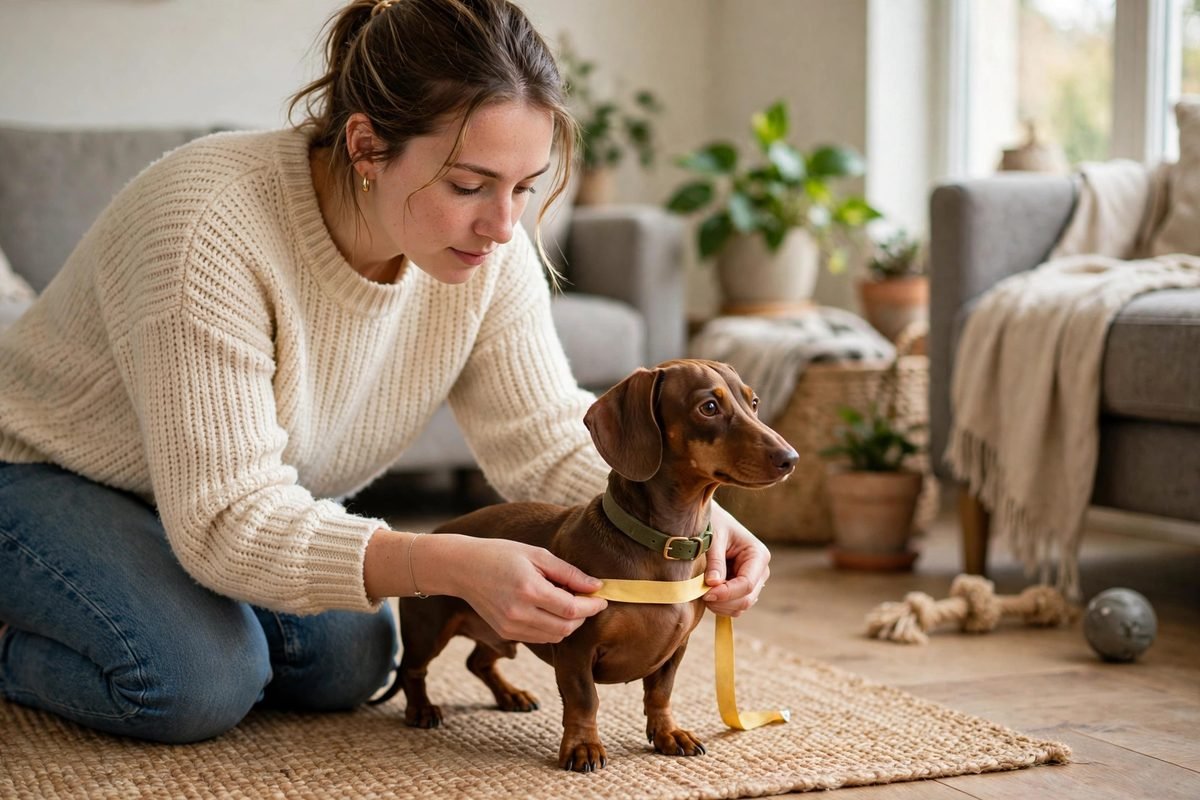
A Dachshund body breaks the usual size rules, and that is why sausage dog apparel needs measuring before buying. The back is long, the chest is deep, and the legs are short, so a garment sized by weight alone can fit the chest and still pull short across the back, or fit the back and hang loose around the neck. A soft tape measure, a calm few minutes, and three numbers solve most of the problem before any order is placed. Measure while the dog stands on a flat floor, with the head level and the body relaxed, and write each number down right away.
Start with the back length, from the base of the neck where a collar sits to the base of the tail. Keep the tape along the top of the back without pressing it into the coat, and let the dog stand in a normal posture. This number decides whether a sweater covers the long back or stops halfway along it, leaving the lower back exposed to cold air. Next, measure the chest at its widest point, just behind the front legs, with the tape snug but not tight. A chest band that is too tight limits movement, while one that is too loose lets the garment slide sideways during a walk. Finish with the neck, measured where a collar sits, with room for two fingers under the tape.
2. Fabrics That Suit Dachshund Skin and Weather
Fabric decides whether sausage dog apparel feels like a soft layer or an itch the dog wants to shake off. Soft cotton blends, fleece, and knit fabrics suit most Dachshunds for everyday wear, because they move with the body and breathe enough for a short walk. A smooth lining matters as much as the outer fabric, since the lining sits against the coat and the skin for the whole walk, and a rough seam or a scratchy label can rub the same spot with every step. Turn a new garment inside out before the first wear and run a finger along the seams, the neck edge, and the leg openings, looking for stiff stitching or a hard tag that should be removed.
Stretch is the second quality to look for, because a long-backed dog bends, turns, and settles into a curled rest many times a day. A fabric with a little give follows the back when the dog walks, sits, and lies down, while a stiff fabric pulls at the shoulders or rides up toward the neck. Knit sweaters and soft fleece offer that give naturally, and many coat fabrics add a stretch panel across the chest or along the belly for the same reason. Hold the fabric at both edges and pull gently to feel how much it gives, then let it spring back, because a fabric that stays stretched out will soon hang loose and lose its shape.
3. Coats, Sweaters and Rain Layers for Everyday Walks
Everyday sausage dog apparel falls into three broad groups, and each one suits a different kind of day. A sweater warms the long back on a cool, dry day, a coat adds a windproof outer layer when the air turns sharp, and a rain layer keeps the back dry when drizzle starts halfway through a walk. The simplest wardrobe covers all three without filling a drawer: one soft sweater for cool days, one warm coat for cold wind, and one light rain layer for wet weather. A dog that walks every day in a cold climate may use all three in a single week, while a dog in a mild climate may reach for the sweater most often and keep the rain layer ready by the door.
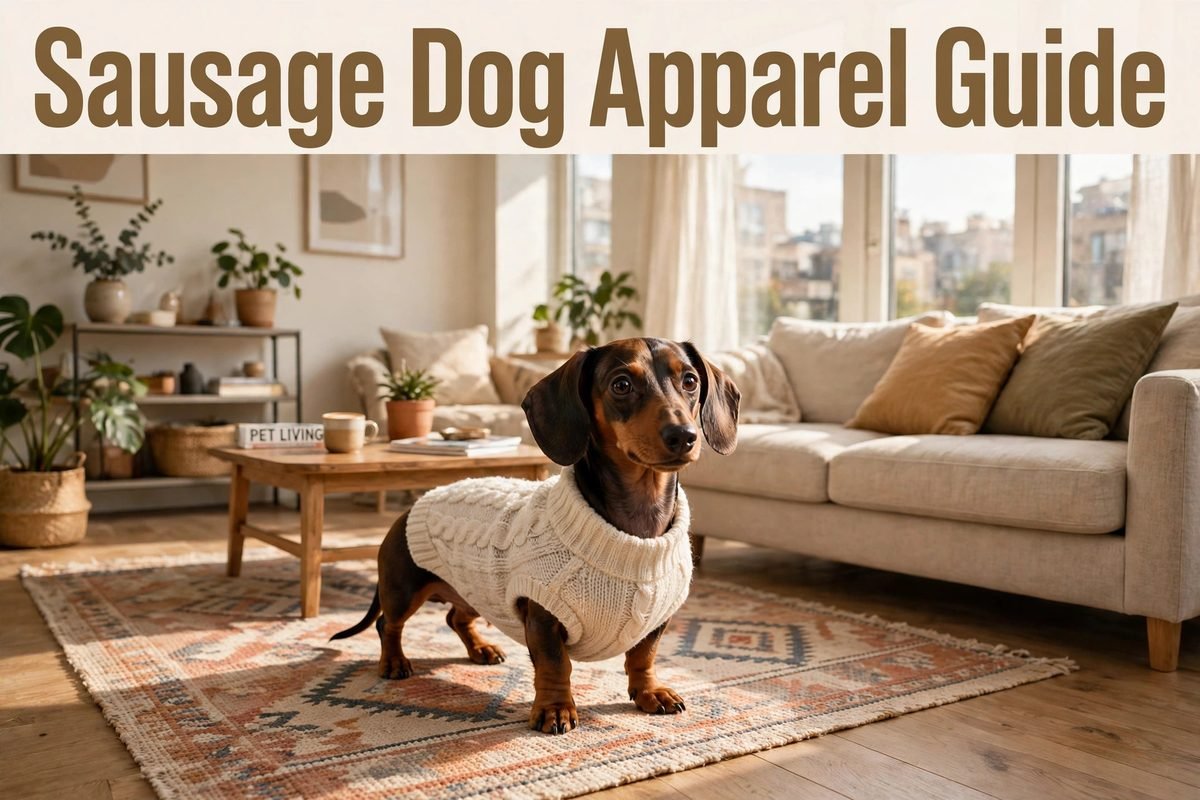
A good sweater sits flat along the back from neck to tail base, with leg openings that leave the front legs free to move and a belly panel that ends before the back legs. The neck should sit close without pressing on the throat, and the chest band should stay in place when the dog trots, rather than sliding to one side. A sweater that rides up over the back during a walk is too short, and one that bunches around the shoulders is too long in the body, so both signs point back to the back-length number from the tape measure. Sleeves suit some dogs and bother others, so a sleeveless sweater often works better for a Dachshund that dislikes fabric around its short legs.
A coat adds structure, and structure needs a careful fit around the chest and the harness. The raincoat and winter coat guide explains how a coat should cover the back without blocking the legs, and the same check applies here: the coat should close neatly along the belly, the back panel should stay flat, and the harness opening should line up with the leash clip so the leash does not pull the coat sideways. A coat with a high collar protects the neck from wind, yet the collar should fold down easily when the dog moves indoors. Reflective trim along the sides helps the dog stay visible on a dull evening walk.
4. Dressing for Cold, Rain and After Bath Time
Cold weather asks for warmth in layers rather than one heavy garment, because a Dachshund warms up as it walks and cools down again when it stops to sniff. A soft sweater under a windproof coat gives warmth that can be adjusted, with the coat coming off indoors and the sweater staying on for a cool hallway. The winter jumper and sweater guide covers how a sweater should fit a long back in cold weather, and the same idea guides a layered outfit: each layer should lie flat, none should bunch under the next, and the outer layer should close without pulling the inner layer out of place. On a very cold day, a fleece lining adds warmth without bulk, and a belly panel that covers the chest helps, since the chest sits low and catches cold air from the ground.
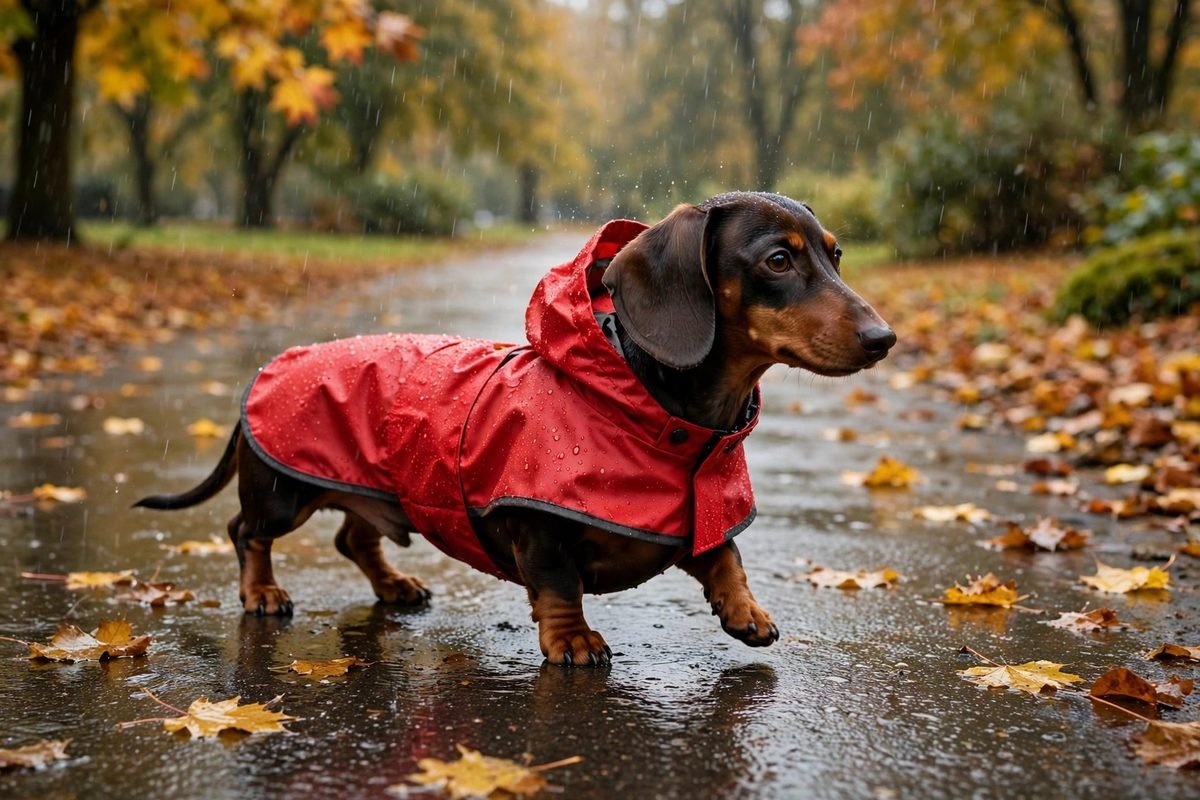
Rain calls for a different order of priorities, with dryness first and warmth second. A water-resistant shell over a light sweater keeps the back dry while the sweater holds a little warmth underneath, yet the combination should stay light enough for the dog to walk freely. Check the belly panel after a wet walk, because rain splashes upward from paws and puddles, and a panel that is too short leaves the belly wet while the back stays dry. Dry the dog with a towel when the walk ends, then remove the wet layer right away, since a damp garment left on a dog cools the body instead of warming it. A dry sweater after a rainy walk feels far better than a wet coat left on for comfort that never arrives.
5. Fit Checks, Comfort Signs and Care at Home
A fit check takes less than a minute and belongs in the routine every time sausage dog apparel goes on. Slide two fingers under the chest band and under the neck edge, watch the dog walk a few steps across the room, and ask the dog to sit and lie down. A good fit lets all three moves happen without pulling, bunching, or a change in the way the dog walks. The back panel should lie flat from neck to tail, the belly strap should sit level, and the leg openings should stay clear of the front legs. If the dog freezes, walks stiffly, or tries to bite at the fabric, the garment may be too tight, too long, or rubbing in one spot, and a check of the seams and the size will usually find the cause.
Comfort signs show in the body, not only in the fit numbers. A comfortable dog moves freely, wags its tail, sniffs the ground, and settles into a rest without fussing at the garment. A dog that keeps stopping, scratching at its sides, or lying down mid-walk may be telling its owner that the fabric itches, the band presses, or the layer is too warm. Heat is easy to miss on a mild day, because a coat that felt right at the start of a walk can feel too warm after ten minutes of steady movement, and panting, slowing down, or seeking shade are signs to remove a layer. Cold shows the other way, with a tucked tail, a hunched back, or a dog that hurries toward home.
Care at home keeps sausage dog apparel soft, clean, and ready for the next walk. Wash garments often, because a sweater worn every day picks up mud, rain, and skin oils that stiffen the fabric and irritate the skin underneath. Use a gentle detergent, skip strong scents when the dog has sensitive skin, and rinse well so no soap stays in the fibers. Dry flat when the label asks for it, since hanging a wet sweater stretches the knit and changes the fit, while a coat dries well hung in a ventilated spot away from direct heat. Keep a spare sweater clean and dry, so a muddy walk never means a damp garment goes back on the dog the next morning.
Apparel Comparison: Which Layer for Which Day
| Layer | Best For | Fit Check | Care Note |
|---|---|---|---|
| Soft sweater | Cool, dry days and indoor warmth after a walk | Back panel flat, neck close but not tight | Machine wash gentle, dry flat |
| Warm coat | Cold wind and frosty mornings | Belly strap level, harness opening lined up | Hang to dry, check clips each season |
| Rain layer | Drizzle and steady rain on everyday walks | Belly panel covers chest, legs stay free | Rinse mud off, hang to dry fully |
| Fleece lining | Extra warmth under a coat on very cold days | Lies flat under outer layer, no bunching | Wash often, keep free of lint |
| Light layer after bath | Short warmth while a damp coat dries | Loose enough for air to move | Remove once coat feels dry |
Common Mistakes
- Buying by weight alone and skipping the back, chest, and neck measurements.
- Choosing a sweater that is too short, so the lower back stays exposed to cold air.
- Leaving a wet coat or rain layer on the dog after the walk has ended.
- Picking a heavy sweater for a rainy day, when it will soak up water and stay wet.
- Using a coat with a harness opening that does not line up, so the leash pulls the coat sideways.
- Keeping clothing on for sleep, when the dog should rest free and cool in its bed.
- Ignoring scratching or rubbing under a garment and wearing the same item again the next day.
When to Call Your Vet
Contact a veterinarian if skin under a garment looks red, sore, or itchy, if a rash spreads, or if the dog keeps scratching one spot after the clothing is removed. Contact a veterinarian promptly if the dog limps, cries when lifted, refuses to walk, or shows weakness in the back legs after wearing a new garment, since a tight band or a bad fit can hide a separate problem that needs checking. A veterinarian can check the skin, the fit, and the way the dog moves, and can advise whether clothing should be paused while the skin settles. Bring the garment to the visit when possible, so the fit and the fabric can be checked together with the dog. This article gives general information only and is not a diagnosis.
Pin This: Sausage Dog Apparel Guide
- Measure back, chest, and neck before choosing any garment.
- Pick soft, stretchy fabrics with smooth seams and no scratchy tags.
- Keep a sweater, a warm coat, and a rain layer ready for different days.
- Layer for cold, use a shell for rain, and remove wet clothes after a walk.
- Check the fit every time, wash garments often, and remove them for sleep.
- Contact a veterinarian if skin under clothing looks red, sore, or itchy.
Frequently Asked Questions
Does a Dachshund need clothes in everyday weather?
Not every day, and not every Dachshund. Sausage dog apparel helps most in cold wind, steady rain, and after a bath, while a warm, dry dog at home often needs no layer. Watch the dog: shivering, a tucked tail, or hurrying home suggest a layer would help.
How should sausage dog apparel fit around the chest?
The chest band should be snug enough to stay in place and loose enough for two fingers to slide underneath. A band that presses the ribs or slides sideways during a walk needs adjusting or a different size.
What fabric suits a Dachshund with sensitive skin?
Soft cotton blends and smooth fleece usually suit sensitive skin, with flat seams and no scratchy tags. Wash new garments before the first long wear, rinse well, and remove the item if redness or itching appears.
Can a Dachshund wear a sweater under a raincoat?
Yes, when both layers lie flat and the outer layer still closes without pulling. A light sweater under a water-resistant shell gives warmth and dryness together, yet the combination should stay light enough for free movement.
Should a Dachshund sleep in a sweater?
No, clothing should come off for sleep. A warm bed and a blanket to burrow under keep a resting dog comfortable, while a garment left on overnight can rub the skin and trap heat.
Conclusion
The right layer makes an ordinary walk warmer, drier, and easier, and fit matters more than style. Measure the long back, choose soft fabrics, keep a sweater, a coat, and a rain layer ready, and check comfort on every walk.