
How Long Do Dachshunds Live
Quick Answer
- How long do dachshunds live is a question with no single fixed answer, because lifespan varies with size, weight, back health, and daily care.
- Dachshunds are a small breed with a long back, and back health shapes how comfortable the later years feel.
- A lean body, gentle daily movement, a ramp for the sofa and bed, and regular vet visits support a longer, more comfortable life.
- Watch for early back signs such as yelping when lifted, a hunched back, reluctance to jump, and weakness in the back legs.
- Contact a veterinarian promptly if back signs appear, because early attention gives the dog the best chance of a comfortable recovery.
Contents
- 1. What Shapes How Long a Dachshund Lives
- 2. The Long Back and Why It Matters Over Time
- 3. Weight, Food, and the Load on the Spine
- 4. Daily Movement, Rest, and the Home Setup
- 5. Senior Years: Comfort, Routine, and Vet Care
- Lifespan Factors at a Glance
- Common Mistakes
- When to Call Your Vet
- Pin This: How Long Do Dachshunds Live
- Frequently Asked Questions
- Conclusion
1. What Shapes How Long a Dachshund Lives
How long do dachshunds live depends on more than a calendar. A Dachshund is a small dog with a long body and short legs, and that shape brings both strengths and care needs. A Dachshund kept lean, active in a gentle way, and close to regular vet care has a good base for a long life, so the question is best answered by looking at the factors an owner can shape.
Genetics sets the starting point: a Dachshund inherits its build, its coat, and its tendency toward certain health problems. What an owner can change is the daily load on the body — food, gentle movement, home layout, and how quickly a problem is noticed. A dog that stays at a healthy weight, moves every day, and sleeps on a supportive bed puts less strain on its spine and joints.
The first year of life matters more than many owners expect. A puppy grows quickly, and the spine, muscles, and bones all develop together during that time. Disc degeneration in short-legged breeds can begin in the first year of life, so gentle handling starts early, not only in old age. A puppy that is lifted level, kept off high furniture without a ramp, and given short, calm play sessions builds good habits that last. Early vet visits also matter, because a veterinarian can check growth, weight, and movement while the dog is still young.
Daily care is the quiet part of a long life. Fresh water, measured food, a calm home, and a regular routine all add up over months and years. A steady routine also makes change easy to spot: a sudden change in appetite, movement, or mood stands out, and noticing it early is one of the most useful things an owner can do. The guide to senior Dachshund back signs versus normal aging helps owners tell slow aging from a problem that needs attention.
2. The Long Back and Why It Matters Over Time
The long back is the defining feature of a Dachshund, and the part that needs the most care over a lifetime. The spine is a chain of bones with soft discs between them, cushioning every step, turn, and rise from lying down. In a long-backed, short-legged breed, the discs work hard with every move, and over time they can lose some cushioning, bringing stiffness, pain, or weakness.
Intervertebral disc disease, often shortened to IVDD, is the back condition most Dachshund owners hear about. It happens when a disc in the spine bulges or bursts and presses on the spinal cord or the nerves around it, and the signs can range from mild pain to weakness in the back legs. The Animal Medical Center guide to intervertebral disc disease in dogs explains the signs and the range of severity. Knowing those signs early matters, because a dog seen promptly has more options.
Chondrodystrophy is the term for the type of growth that gives Dachshunds their short legs and long back, and it is linked to early disc changes. The Cornell guide to chondrodystrophy and intervertebral disc disease explains how that growth pattern relates to disc disease. This does not mean every Dachshund will develop a serious back problem. It means the back deserves steady, gentle care across the whole life, from puppyhood through the senior years, rather than only after a problem appears.
Back health is not only about avoiding one bad moment. It is about the small loads that repeat every day: the jump off the sofa, the twist on a slippery floor, the scramble up the stairs, the extra weight carried on every step. A ramp, a non-slip rug, a level lift, and a lean body do not remove every risk, but they lower the daily load on the spine in a way that adds up over years.
3. Weight, Food, and the Load on the Spine
Weight is one of the clearest factors an owner can control, and it matters directly for the back. Every extra gram adds load to the spine with each step and each rise from lying down. A lean Dachshund moves more freely, rises more easily, and puts less strain on its discs and joints. Keeping a Dachshund lean means measuring food, limiting treats, and checking the body shape often.
A simple body check takes less than a minute. Look at the dog from above: the waist should narrow gently behind the ribs. Feel the ribs with a flat hand: they should be easy to feel under a thin layer of fat, without pressing hard. From the side, the belly should tuck up behind the ribs rather than hanging low. If the ribs are hard to feel, or the waist has disappeared, the dog is carrying extra weight. A veterinarian can confirm the target weight and suggest a feeding amount.
Food routines work best when they are steady. Feed measured meals at the same times each day, rather than leaving food down all day or topping up the bowl by eye. Use a measuring cup or a kitchen scale, and count treats as part of the daily food, not as extras on top of it. Training treats can be small pieces of the daily food, or small low-fat treats given one at a time. A food diary for a week often shows where extra food creeps in: a biscuit from one family member, a scrap from the table, a chew given out of habit.
Weight changes slowly, and that is normal. A dog that loses weight over several weeks is on a safer path than a dog put on a sudden strict diet, which can leave it hungry and restless. A slow, steady plan, checked with a veterinarian, is easier to hold over months, and the payoff is a dog that moves more easily and rises from its bed with less effort.
4. Daily Movement, Rest, and the Home Setup
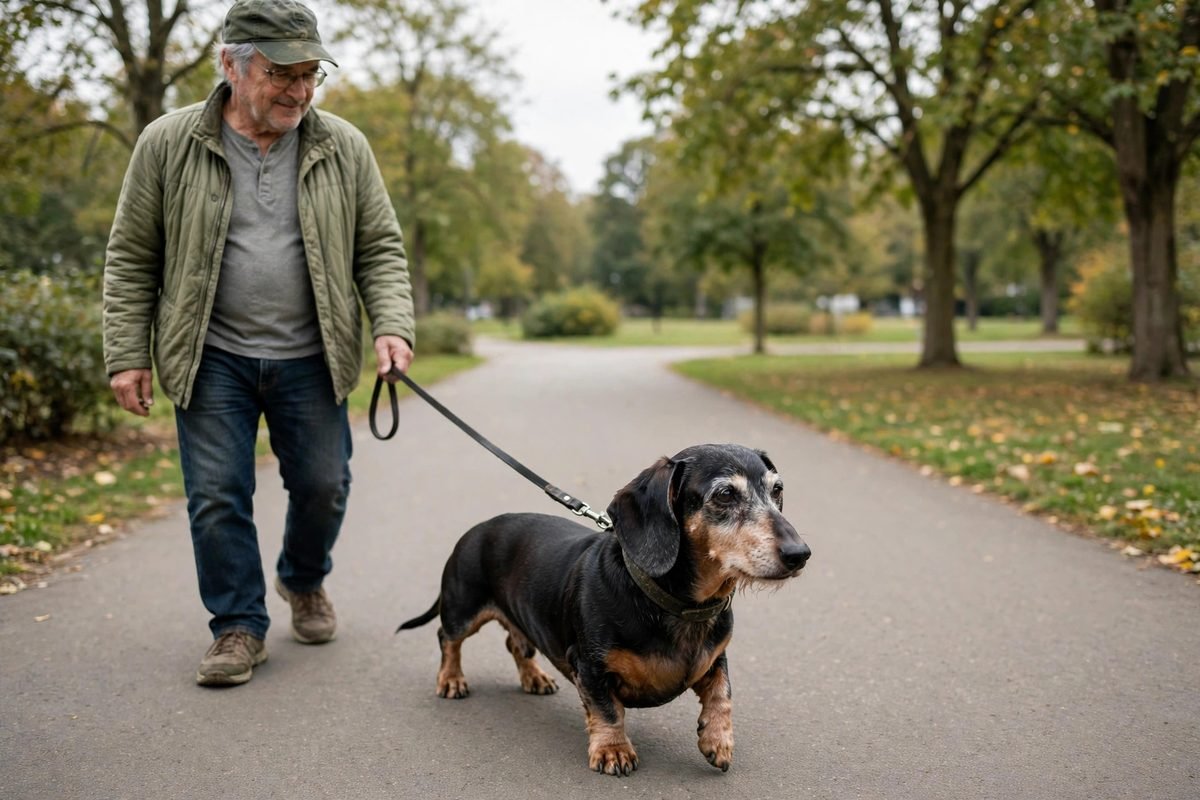
Daily movement keeps a Dachshund supple, yet the type of movement matters as much as the amount. Short, regular walks on flat ground, at a steady pace, suit a long back far better than long, tiring outings or bursts of wild play. A walk of twenty to thirty minutes, split into two shorter walks if needed, gives the muscles along the spine steady work without tiring them. Sniffing walks count as real movement: the dog moves slowly and keeps its back level.
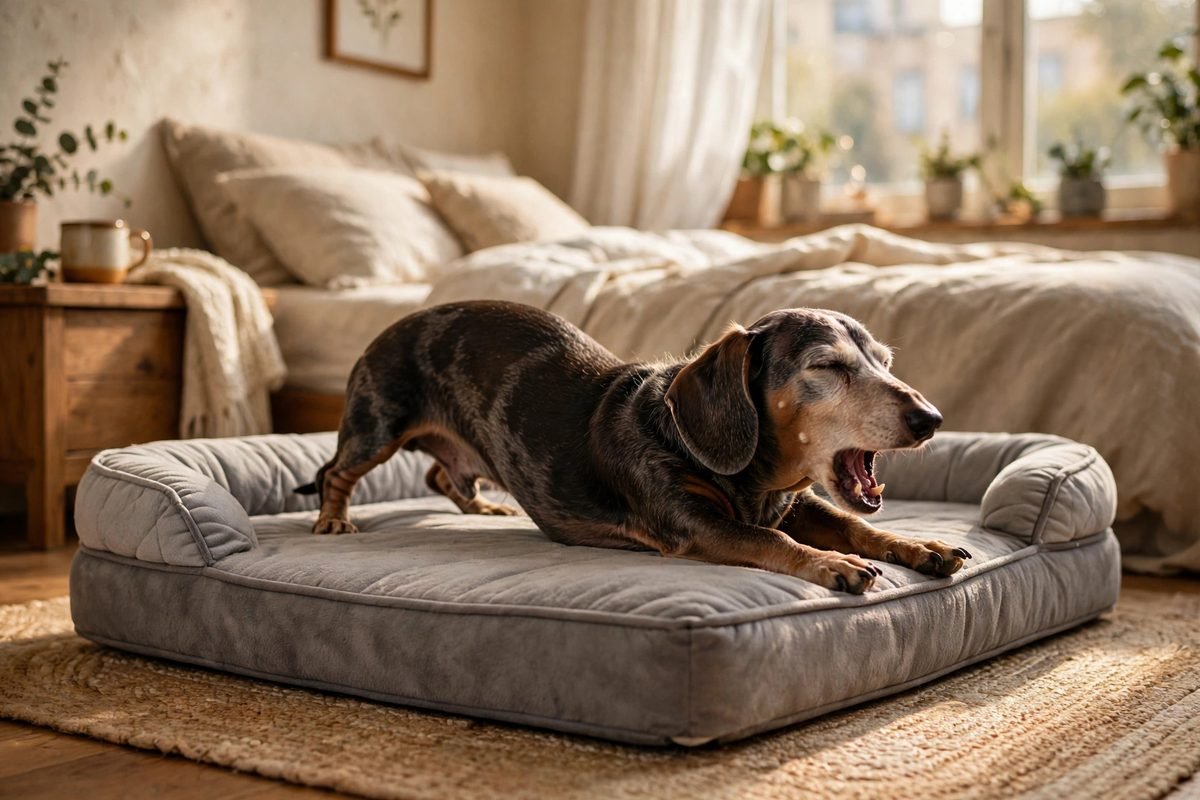
Rest is the other half of movement. A Dachshund needs a warm, supportive bed on the floor, away from drafts and cold tile, where it can stretch out fully. Sleep is when muscles recover, and a dog that sleeps well moves better the next day. A bed that is too soft lets the back sag, while a bed that is too thin offers no cushion on a hard floor. A firm, supportive bed with a blanket to burrow under suits most Dachshunds, and the bed should stay in the same quiet spot so the dog can settle quickly.
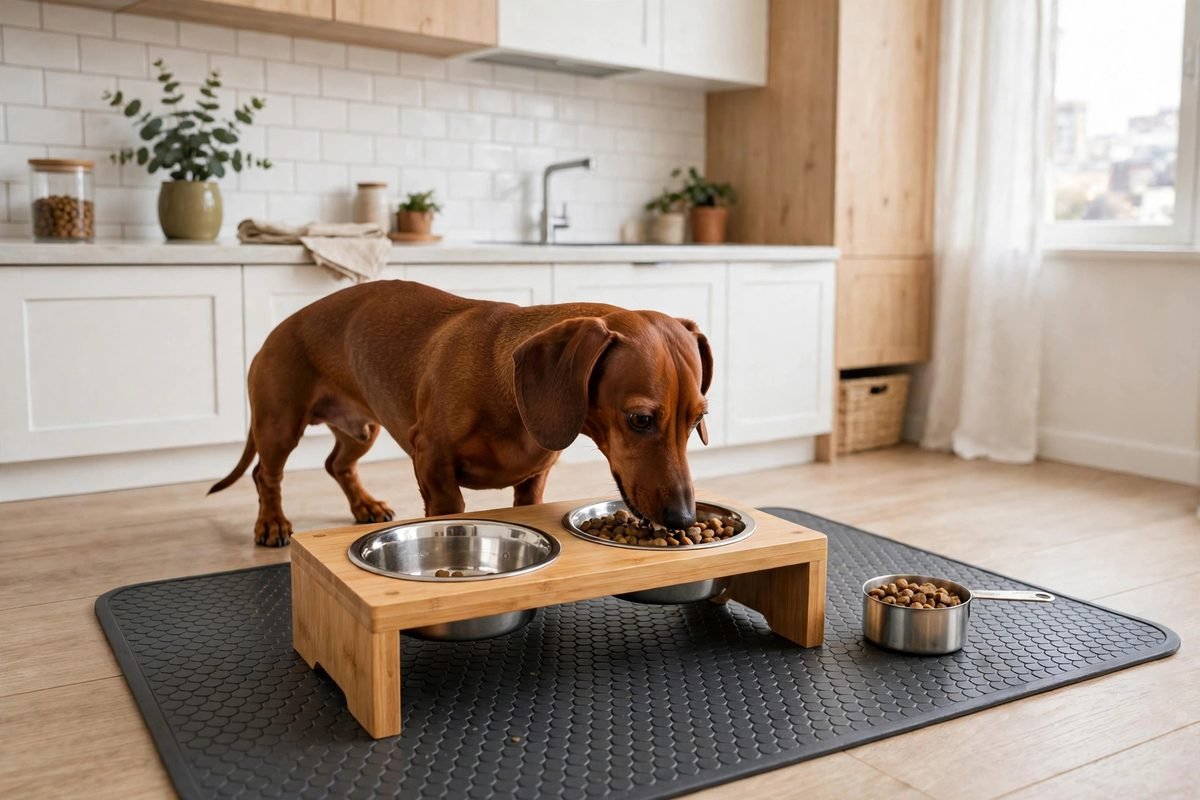
The home setup shapes the back every day. A ramp to the sofa and the bed removes the repeated jump up and down, and a non-slip rug on smooth floors stops the scramble that twists the spine. A raised feeder lets the dog eat without stretching its neck down to the floor, and a harness spreads pressure across the chest instead of the neck. A sturdy ramp, a few rugs, and a well-fitting harness cover most of the daily risks in an apartment.
Play at home should stay low and level. Games on the floor, gentle tug with a soft toy, and sniffing games suit a Dachshund far better than fetch down a hallway or jumping for a toy held high. Keep play sessions short, and end them before the dog tires, because a tired dog moves with less control. After play, let the dog rest on its bed with water close by.
5. Senior Years: Comfort, Routine, and Vet Care
The senior years bring slower mornings, shorter walks, and longer naps, and those changes are normal. A senior Dachshund may rise more slowly, pause before the first step, or prefer a shorter route. What matters is the pattern across weeks: a dog that is slowly steady is aging, while a dog that is getting worse week by week needs a vet check. A short diary line each day shows the pattern more clearly than memory alone.
Comfort becomes more important with age. A heated bed or a warming pad on a low setting can ease a stiff back on cold mornings, and a rug from the bed to the door keeps the first steps warm. Shorter, more frequent outings suit a senior dog better than one long walk, and a ramp becomes more important, not less, as the legs weaken. A veterinarian can suggest a feeding amount that fits a slower, older body without adding weight.
Regular vet visits are the backbone of senior care. A check every six months lets a veterinarian track weight, teeth, movement, and pain, and catch small changes before they grow. Bring the diary to each visit, and mention any change, even a small one. A veterinarian can suggest pain relief, rest, or further checks when needed. Never give a dog human pain medicine, because many human medicines are unsafe for dogs.
The senior years are also a time for gentle choices. Let the dog choose its pace on walks, choose its resting spot, and choose when to play. A dog that is allowed to move at its own speed stays calmer and more confident, and calm movement is kinder to the back. Keep the routine steady, keep the home warm and safe, and keep in touch with the veterinarian.
Lifespan Factors at a Glance
| Factor | What Helps | What to Watch |
|---|---|---|
| Weight | Measured meals, counted treats, regular body checks | Ribs hard to feel, waist gone, belly hanging low |
| Back health | Ramp, rugs, level lifting, gentle walks | Yelping, hunching, reluctance to move |
| Movement | Short flat walks, sniffing walks, floor play | Tiring quickly, sitting mid-walk, lagging behind |
| Rest | Warm supportive bed, quiet spot, blanket | Pacing at night, circling before lying down |
| Vet care | Regular checks, diary notes, prompt calls | Worsening signs, weakness, loss of appetite |
Common Mistakes
- Feeding by eye instead of measuring, so extra weight builds up slowly and unnoticed.
- Letting the dog jump off the sofa and the bed every day, adding a repeated jolt to the spine.
- Skipping the ramp because the dog seems fine, then starting only after a problem appears.
- Making walks long and fast on the weekend to make up for quiet weekdays.
- Ignoring early back signs such as a yelp when lifted or a hunched back.
- Giving human pain medicine at home instead of calling a veterinarian.
- Waiting for a yearly vet visit when signs are getting worse week by week.
When to Call Your Vet
Contact a veterinarian if the dog yelps when lifted or touched, holds its back hunched, refuses to jump or climb, drags its back legs, or shows weakness, wobbliness, or a loss of bladder control. Contact a veterinarian urgently if the dog cannot move its back legs, is in severe pain, or cannot pass urine. A veterinarian can examine the spine, check movement and pain, and explain the next steps, and the Cornell guide to intervertebral disc disease notes that the condition ranges from mild pain to paralysis, which is why early contact matters. The seven early signs of IVDD every Dachshund owner should know gives a clear list to check against at home. This article gives general information only and is not a diagnosis.
Pin This: How Long Do Dachshunds Live
- How long do dachshunds live depends on weight, back health, and daily care.
- Keep the dog lean with measured meals and counted treats.
- Use a ramp, rugs, and level lifting to lower the daily load on the spine.
- Walk short and flat every day, and let the dog rest in a warm bed.
- Watch for early back signs and call a veterinarian promptly.
- Keep vet checks regular, especially in the senior years.
Frequently Asked Questions
How long do dachshunds live on average?
There is no single fixed number, because lifespan varies with size, weight, back health, and daily care. A lean Dachshund with gentle daily movement, a back-safe home, and regular vet care has the best base for a long life.
Do miniature Dachshunds live longer than standard Dachshunds?
Size alone does not decide lifespan. Weight, back health, and daily care matter more than the label miniature or standard, so the same care rules apply to both.
Does back disease shorten a Dachshund’s life?
Back disease can shorten the comfortable years if it is ignored, because pain and weakness limit movement and rest. Early attention from a veterinarian, rest when advised, and a back-safe home help the dog stay comfortable for longer.
What is the best way to help a Dachshund live longer?
Keep the dog lean, walk short and flat every day, use a ramp and rugs at home, lift level, and keep vet visits regular. Small steady habits over years matter more than any single change.
When should a senior Dachshund see the vet?
A senior Dachshund should see a veterinarian at least every six months, and sooner if signs change. Bring a short diary of movement, appetite, and sleep so the pattern is clear at the visit.
Conclusion
How long do dachshunds live is shaped day by day, in the bowl, on the walk, and in the home. Keep the dog lean, protect the long back, and stay close to the veterinarian, and the years ahead have the best chance of being comfortable ones.