Dachshund Separation Anxiety Barking: Calm Leaving Routine
Coming home to neighbours complaining, or watching a camera show your Dachshund barking the whole time you are out, is heartbreaking. A mini Dachshund in an apartment can become very attached to its people, and being alone can feel stressful. Separation barking is not the same as boredom barking, and it needs a gentler, slower approach. A calm leaving routine, built in small steps, can help many dogs feel safer alone, and it can also protect your neighbours and your dog’s wellbeing.
Separation barking vs boredom barking
Boredom barking often happens at random times, stops when the dog is tired or entertained, and may be linked to lack of exercise or enrichment. Separation barking usually starts soon after you leave, continues for much of the time you are away, and may come with other signs of distress, such as pacing, panting, drooling, scratching at the door, toileting indoors despite being house-trained, or refusing food and toys. A dog with separation distress may also follow you from room to room, become anxious when you pick up keys, or greet you in a very intense way when you return. Keeping a simple log, or a short camera check, can help you see the pattern, but do not rely on guesswork alone. This article is general information only, not a diagnosis. If distress is severe, a veterinarian or qualified behaviour professional can help you understand what is happening and create a safe plan.
Calm leaving routine (short departures, no big goodbye, safe space)
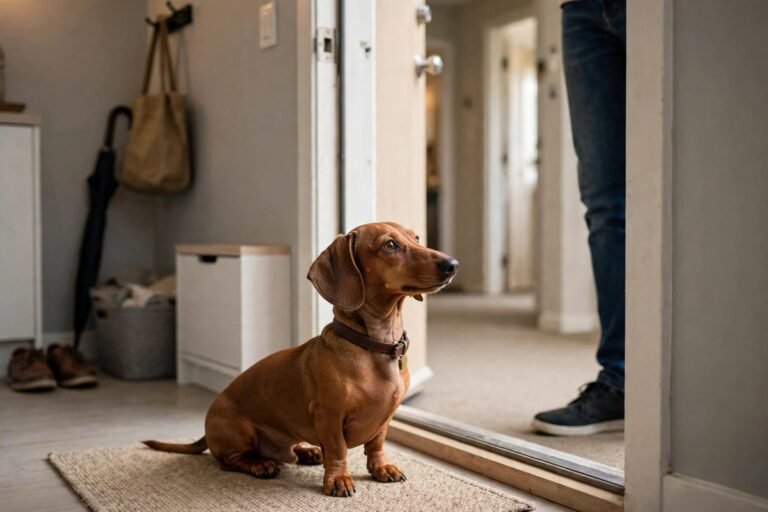
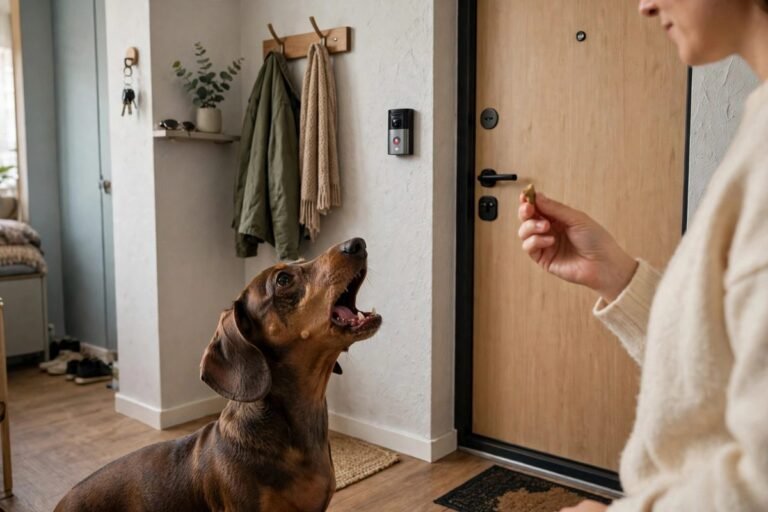
Start with very short departures that your Dachshund can cope with, even if that is just stepping outside the door for a few seconds and returning calmly. Gradually increase the time only when your dog stays relatively calm. Avoid big, emotional goodbyes, because they can signal that leaving is a major event. Instead, keep departures and arrivals low-key: a calm word, a treat in a safe space, and no fuss for the first minute after you return. Create a safe space away from the front door, with a comfortable bed, water, and familiar smells. Practise the routine at different times of day, and vary your leaving cues, such as picking up keys and then sitting down again, so keys alone do not trigger panic. In an apartment, practise during the day, not late at night, and let neighbours know you are working on it. Never punish barking after you return, because your dog will not connect the punishment with the earlier barking, and it can increase anxiety.
Enrichment while away
Enrichment can help, but it is not a cure for true separation anxiety on its own. A safe chew, a food puzzle, or a snuffle mat can give your Dachshund a calm activity at the start of your absence. Rotate enrichment so it stays interesting, and make sure any food is counted in the daily amount to avoid weight gain, which can strain a Dachshund back. A short walk and a toilet break before you leave can help your dog settle, and soft background sound can mask hallway noises. Avoid leaving a dog alone for very long periods while you are still training, and arrange a trusted visitor or dog sitter if you must be away for a long day. The goal is to build confidence slowly, not to test how long your dog can cope. If enrichment is ignored completely when you leave, that can be a clue that anxiety, not boredom, is the main issue.
When to ask a vet/behaviour professional (severe distress, self-harm, no improvement)
Seek professional help promptly if your Dachshund shows severe distress, injures itself trying to escape, damages itself by chewing paws or tail, stops eating, or shows no improvement after several weeks of gradual practice. Also seek advice promptly if you notice concerning symptoms such as back pain, wobbliness, or sudden weakness, because a dog in pain may bark or behave differently, and pain should be checked by a vet promptly. A veterinarian can rule out pain or medical causes, and a behaviour professional can design a gradual desensitisation plan suited to your apartment and your dog. This is general information only, not a diagnosis, and it does not replace veterinary advice. With patience, short departures, a calm routine, and professional support when needed, many apartment Dachshunds learn that being alone is safe, and that their person will return.