
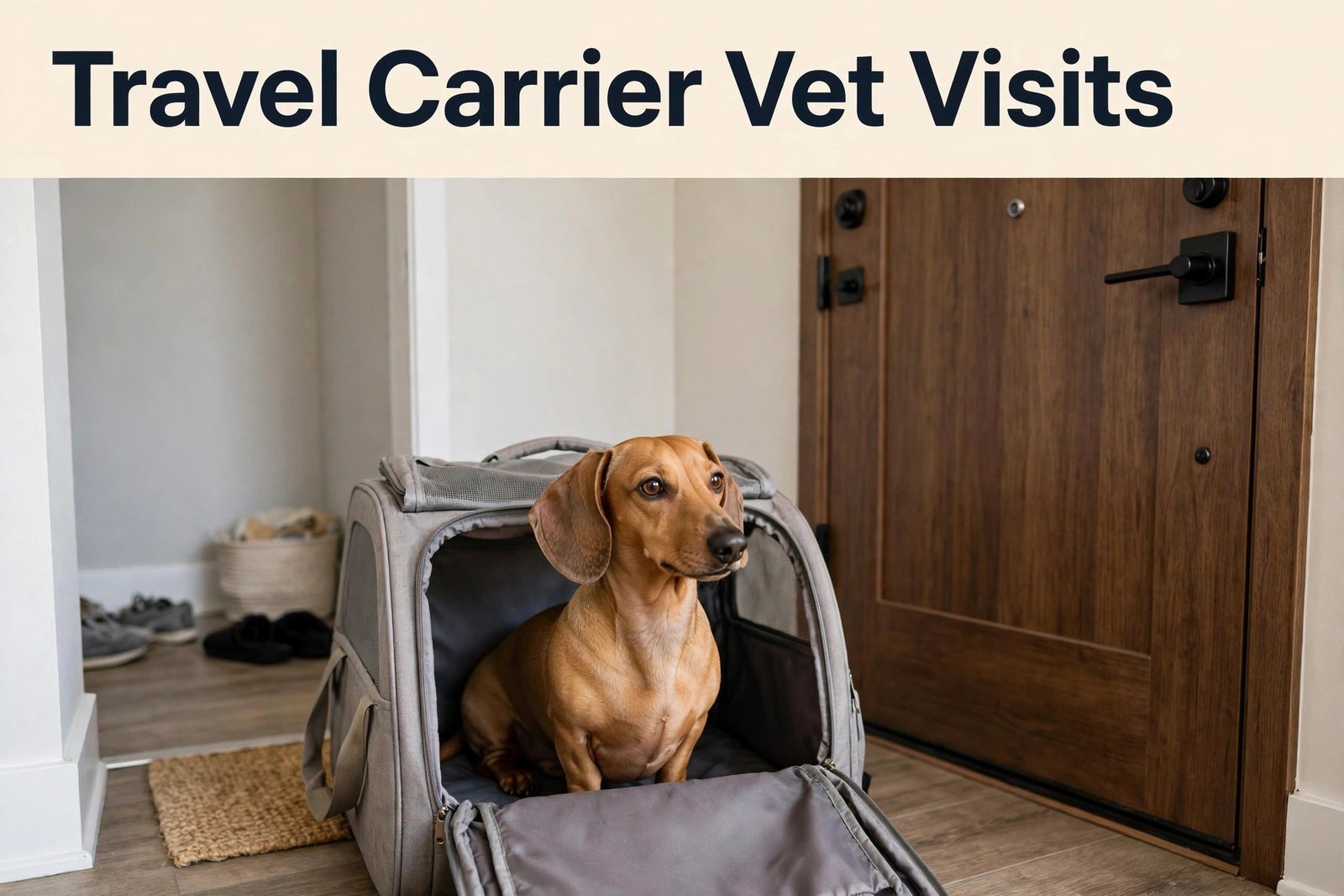
Dachshund Travel Carrier for Vet Visits Made Simple
Quick Answer
- A Dachshund travel carrier should allow the dog to stand, turn, and lie down comfortably, without excess space that allows sliding during travel.
- Choose strong ventilation, a secure latch, a sturdy base, and an entry that does not require lifting the dog through a narrow top opening.
- Introduce the carrier at home for weeks before a vet visit, with short, calm sessions and a familiar blanket inside.
- Secure the carrier in the car, keep trips short at first, and check zippers, latches, and straps before every journey.
Contents
- 1. Why a Carrier Helps at Vet Visits
- 2. Size, Shape, and Comfort for a Long Body
- 3. Ventilation, Entry, Latches, and Base
- 4. Car Safety, Apartment Storage, and Cleaning
- 5. Calm Carrier Training Before the First Trip
- Travel Carrier Comparison Checklist
- Common Mistakes
- When to Call Your Vet
- Pin This: Travel Carrier Checklist
- Frequently Asked Questions
- Conclusion
A vet visit starts long before the examination room. It starts with getting a Dachshund out of an apartment, down a hallway, into a car or taxi, and through a busy waiting room. Each stage adds noise, movement, and handling. A good travel carrier turns that sequence into a familiar, contained routine. The dog has a defined space, a familiar scent, and a barrier from other animals, loud sounds, and sudden movement.
This guide explains how to choose a travel carrier for vet visits and apartment life. It covers size for a long body, ventilation, entry style, car safety, storage, and the training steps that help a dog enter the carrier calmly. The focus is practical: a carrier that fits the dog, fits the car, fits the apartment, and gets used without a struggle on the day of a visit.
1. Why a Carrier Helps at Vet Visits
A carrier gives a Dachshund a predictable space in an unpredictable environment. Waiting rooms contain other dogs, unfamiliar people, slippery floors, and sudden sounds. A dog held in arms may wriggle, jump, or twist, which is hard to control in a crowded room. A carrier keeps the dog contained, reduces unwanted contact with other animals, and gives the handler both hands free for doors, paperwork, and payment.
A carrier also helps with safe handling. Veterinary staff can open a carrier in a controlled way, rather than lifting a nervous dog from arms or from a slippery floor. A dog that enters a carrier calmly at home is more likely to stay calm during examination, because the carrier itself is already familiar. That familiarity does not remove stress completely, but it removes one new challenge from a stressful day.
Back safety is part of the picture. Lifting a long-backed dog awkwardly, especially from a high surface or while the dog is twisting, is a risk that a carrier can reduce when used well. The dog should be guided in and out at a low height, with support under the chest and hindquarters during any lift, rather than lifted by the front legs or the scruff. A carrier with a wide, low entry makes that handling easier.
General background on disc disease helps explain why calm handling matters. The Animal Medical Center explains intervertebral disc disease in dogs, including signs that need veterinary attention. Cornell information on intervertebral disc disease covers the condition in dogs as well. A carrier is not a medical treatment. It is a transport and handling aid, used alongside veterinary advice and sensible daily routines.

2. Size, Shape, and Comfort for a Long Body
Size is the first check, and length matters more for a Dachshund than height alone. Measure the dog from nose to base of tail while standing, and measure height from floor to top of head or ears, whichever is higher in a natural standing position. Add room to turn and to lie down with legs extended, but avoid a carrier so large that the dog slides from side to side during braking or turning.
Shape matters for apartment and car use. A rectangular carrier usually gives the most usable floor space and stacks or stores more easily than a round design. A carrier with a flat, firm base helps the dog balance during travel, while a soft, sagging base makes standing harder. Check the internal floor dimensions, not only the external size, because thick walls and padding reduce usable space.
Comfort comes from the inside setup. A thin, washable pad or familiar blanket gives grip and scent familiarity, without raising the dog so high that headroom disappears. Avoid loose bedding that bunches under the dog or blocks ventilation. If the dog chews bedding, choose a simple, durable pad and check it after every trip.
Weight and handling matter for the person carrying the carrier. A carrier with a balanced handle, a shoulder strap, or both is easier to carry down apartment stairs and through parking areas. Test the loaded weight at home, with the dog inside for a short, supervised period, before relying on it for a real trip. A carrier that is hard to carry will be set down awkwardly, which defeats the purpose of safe transport.
3. Ventilation, Entry, Latches, and Base
Ventilation should come from more than one side, so air flows even when the carrier sits against a car seat or a wall. Mesh panels help, but check that the mesh is strong, taut, and securely attached. A carrier that relies on a single small vent can become warm and stuffy in a car, especially on a hot day. Never leave a dog in a parked car, and keep the car temperature comfortable before loading.
Entry style decides how calm loading will be. A front door that opens wide, or a front plus side opening, allows the dog to walk in at ground level. A top-loading carrier can help for a dog that refuses a front door, but it should still allow a low, supported lift, not a drop from height. Avoid an entry so narrow that the dog must twist or duck sharply to enter, because that twisting is exactly what careful handling tries to avoid.
Latches and zippers are safety features, not minor details. Zippers should run smoothly, close fully, and include a locking clip or cover that a dog cannot nose open. Hard carriers should have latches that engage with a clear click and cannot be bumped open by a bag in the car. Test every closure before purchase and before every trip, and retire a carrier with a broken zipper, cracked latch, or torn mesh.
The base should be firm, non-slip, and easy to clean. A removable, washable base pad helps after accidents or muddy trips. Check that the base does not flex under the dog, and that the carrier sits level on a car seat or floor without rocking. A carrier that tips during braking will frighten the dog and make future trips harder.

4. Car Safety, Apartment Storage, and Cleaning
Secure the carrier in the car on every trip. Place it on a flat surface, use a seat belt or a securing strap where the carrier design allows, and prevent sliding with a non-slip mat if needed. Follow the carrier guidance for car use, and avoid placing a carrier on a high, unsecured seat where it could fall during braking. Keep the carrier out of direct sun through a window, and keep the car cool before loading.
For apartment storage, a carrier should fold flat or fit in a defined spot without blocking a hallway. Soft carriers often fold flat, while hard carriers need a dedicated shelf, closet floor, or car trunk space. Keep the carrier accessible, not buried behind seasonal items, because a carrier that is hard to reach will be replaced by carrying the dog in arms on a rushed morning.
Cleaning is part of carrier safety. Accidents, mud, and hair build up quickly, and a dirty carrier can smell stressful to the dog. Choose materials that wipe clean or machine wash where stated, and dry the carrier fully before folding or storing it. Check seams, zippers, and mesh during cleaning, and replace worn parts or the whole carrier when damage appears.
Also plan for the waiting room. A carrier with a privacy cover, a familiar blanket, and a calm placement away from other animals helps the dog settle. Bring water for after the visit where the veterinarian advises it, and keep the carrier closed until staff advise otherwise. A calm waiting routine starts with a carrier the dog already knows.
5. Calm Carrier Training Before the First Trip
Start training at home, weeks before a vet visit if possible. Leave the carrier open in a living area, with a familiar blanket and a few treats inside. Let the dog explore without closing the door. Reward calm entry, sniffing, and resting inside, and keep sessions short. The carrier should become part of the furniture, not a signal that a stressful trip is about to start.
Next, practice closing the door for a few seconds, then opening it again before the dog becomes restless. Gradually increase the closed time, always ending while the dog is calm. Then practice lifting the carrier a short distance inside the home, placing it down gently, and opening the door. Each step should be repeated until it feels routine, not rushed.
Then add short car practice. Place the secured carrier in the car, sit with the dog for a few minutes with the engine off, and then take a very short drive around the block. Return home, open the carrier calmly, and finish with a quiet reward. Short, uneventful trips teach the dog that a carrier journey does not always end with an examination.
On vet day, keep the routine the same. Use the familiar blanket, the same loading steps, and a calm voice. Avoid feeding a large meal immediately before travel if the dog tends to feel unwell in cars, and ask the veterinary team about timing for food and water if unsure. After the visit, allow a calm rest at home, and clean the carrier before the next use. A harness routine also supports safe handling outside the carrier, and the guide on harness versus collar for Dachshunds explains why a harness is often the steadier choice for walks after a carrier trip. The wider apartment setup, including carriers and ramps, is covered in the guide to Dachshund apartment essentials.

Travel Carrier Comparison Checklist
| Check | What to look for | Red flag |
|---|---|---|
| Size | Stand, turn, lie down; no excess sliding room | Dog cannot turn or slides in transit |
| Ventilation | Airflow from more than one side | Single small vent, stuffy interior |
| Entry | Wide, low, walk-in entry | Narrow opening requiring twisting |
| Closures | Smooth zippers, locking latches | Zipper that sticks or opens easily |
| Base | Firm, non-slip, washable | Sagging or rocking base |
| Car fit | Secures flat, does not slide | Tips or slides during braking |
| Storage | Folds flat or fits a set spot | Blocks hallway, hard to reach |
Common Mistakes
- Buying a carrier by appearance without measuring length and internal floor space.
- Introducing the carrier only on vet day, when stress is already high.
- Leaving the carrier unsecured in the car, where it can slide or tip.
- Using a carrier with a broken zipper, cracked latch, or torn mesh.
- Lifting the dog awkwardly into a top opening instead of guiding a low, supported entry.
- Storing a dirty or damp carrier folded, which damages seams and smell.
When to Call Your Vet
Contact a veterinarian promptly if the dog shows pain, yelping when handled, reluctance to move, a hunched back, wobbliness, weakness in the legs, vomiting or distress during travel, or any sudden change after a trip. This article gives general information only and does not diagnose any condition. A veterinarian can examine the dog, advise on travel timing, and discuss handling or medication questions where relevant. Do not delay a needed visit because carrier training is incomplete; ask the veterinary team for handling advice for that visit.
Pin This: Travel Carrier Checklist
- Measure nose to tail base and standing height before buying.
- Check ventilation, entry width, latches, and base firmness.
- Secure the carrier flat in the car on every trip.
- Leave the carrier open at home with a familiar blanket.
- Practice closed-door time, lifting, and short car trips.
- Clean and inspect zippers and mesh after every trip.
- Keep the same calm routine on vet day.
Frequently Asked Questions
What size carrier does a Dachshund need?
Measure length and height, then choose a carrier that allows standing, turning, and lying down without excess sliding space. Check internal floor dimensions, not only external size.
Is a soft or hard carrier better for vet visits?
Both can work. Soft carriers often fold flat and are lighter, while hard carriers give a firmer base and stronger structure. Choose based on car fit, storage, and how calmly the dog enters.
How long before a vet visit should training start?
Start as early as possible, ideally weeks ahead. Leave the carrier open at home, practice short closed-door sessions, and add short car trips before the real visit.
Should the carrier be secured in the car?
Yes. Place it flat, secure it where the design allows, and prevent sliding or tipping during braking. Never leave a dog in a parked car.
What if the dog refuses to enter the carrier?
Go back to an earlier step. Leave the door open, use a familiar blanket, keep sessions short, and end while the dog is calm. Ask the veterinary team for handling advice if a visit cannot wait.
Conclusion
A Dachshund travel carrier is a practical tool for vet visits and apartment life when it fits the dog, secures in the car, and feels familiar before travel day. Measure carefully, check ventilation and closures, store the carrier where it stays accessible, and train in small steps. That routine makes vet trips calmer for the dog and easier for the handler.





4 Comments