
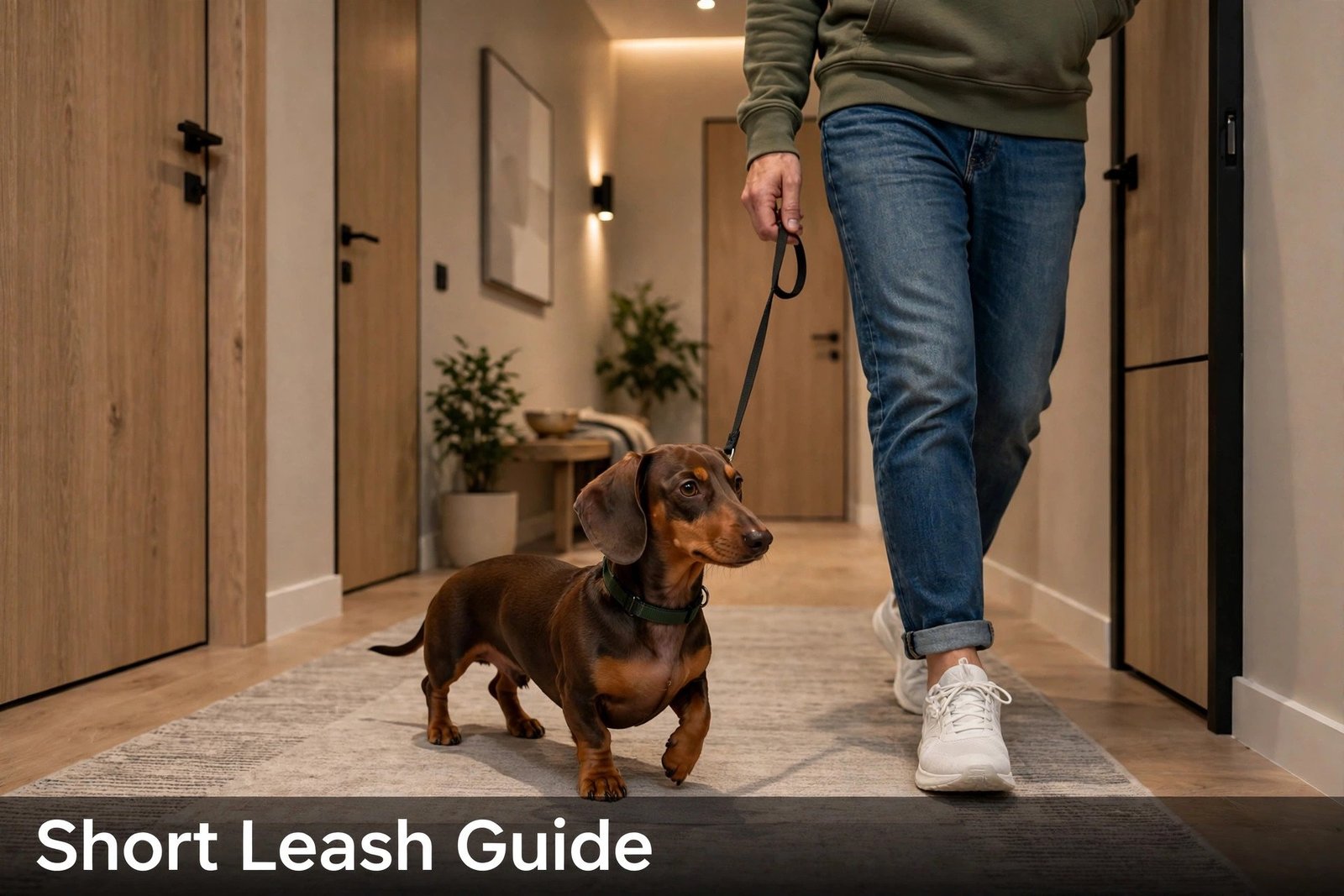
Dachshund Short Leash Guide for Apartment Walks That Work
Quick Answer
- A short leash gives a Dachshund enough freedom to walk and sniff, while keeping the dog close enough to guide safely through hallways, lobbies, and busy streets.
- Choose a fixed-length leash, not a retractable leash, for apartment walks, and pair it with a well-fitted harness rather than a collar alone.
- Hold the leash loosely, with a relaxed arm, and guide with body position and calm cues, not by pulling, jerking, or dragging the dog.
- Practice short, calm walks indoors and in quiet areas first, then build up to busier routes as the dog learns to walk steadily beside you.
Contents
- 1. Why Leash Length Matters for a Dachshund
- 2. Short Leashes vs Retractable Leashes
- 3. Length, Material, Handle, and Harness Fit
- 4. Holding, Handling, and Calm Walking Technique
- 5. Apartment Routes, Distractions, and Daily Practice
- Short Leash Comparison Checklist
- Common Mistakes
- When to Call Your Vet
- Pin This: Short Leash Checklist
- Frequently Asked Questions
- Conclusion
Apartment walks start before the front door. There is a hallway, a lift or stairs, a lobby, a car park, and a pavement, all before any real walking begins. In those tight, busy spaces, a long leash becomes a tangle, a trip hazard, and a loss of control. A short leash keeps the dog close, the route clear, and the walk calm, from the apartment door to the park and back again.
This guide explains how to choose and use a short leash for a Dachshund in an apartment. It covers leash types, length, materials, harness fit, handling technique, and daily practice, with clear limits on what a leash can do. A leash is a safety and guidance tool. It does not train a dog by itself, and it does not replace training, socialization, or veterinary advice about back health and exercise.
1. Why Leash Length Matters for a Dachshund
Leash length decides how much freedom the dog has, and how quickly the owner can respond. A very long leash lets a Dachshund run ahead around corners, approach other dogs or people without warning, and tangle around legs, furniture, or lift doors. In an apartment building, that freedom creates risks that a short leash avoids: a dog darting into a lift, a stairwell, or a road while the owner is still several meters behind.
A short leash keeps the dog within arm’s reach, which matters for a small, low dog that drivers, cyclists, and other walkers may not see quickly. It also helps the owner guide the dog past distractions, such as other dogs, food on the ground, or open doors, without a struggle. The dog still gets to walk, sniff, and explore, but within a distance where guidance is possible.
Back health is part of the picture. A dog that lunges to the end of a long leash, then jerks to a stop, places sudden strain on the neck, spine, and harness. A short leash, held loosely with a harness, reduces those sudden stops, because the dog learns the walking distance and the owner can guide before a lunge builds momentum. The Animal Medical Center explains intervertebral disc disease in dogs, including signs that need veterinary attention. Cornell information on chondrodystrophy and intervertebral disc disease describes added disc risk in this breed group. A short leash does not prevent disc disease, but calm, controlled walking supports the wider routine of weight control and sensible exercise.
Harness choice works with leash length. A harness spreads pressure across the chest and shoulders, while a collar alone concentrates pressure on the neck, especially when a dog pulls. The guide to harness versus collar for Dachshunds explains why a harness is often the steadier choice, and a short leash paired with a harness gives the calmest, safest combination for apartment walks.

2. Short Leashes vs Retractable Leashes
A fixed short leash has one length, chosen by the owner, and it does not change during the walk. That consistency helps the dog learn where it is expected to walk, and it helps the owner judge distance in tight spaces. A fixed leash also gives a clear, immediate connection: when the owner stops, the dog feels the stop right away, without a spring mechanism taking up slack first.
A retractable leash, by contrast, extends and retracts with a spring, and its length changes constantly. That variability makes it hard for a dog to learn a consistent walking distance, and hard for an owner to control the dog quickly in a hallway, lift, or road crossing. Retractable leashes can also tangle around legs, other dogs, and furniture, and the thin cord can cause friction injuries if it wraps around a leg or hand.
For apartment walks, a fixed short leash is the safer everyday choice. It suits hallways, lobbies, lifts, car parks, and busy pavements, where control matters more than freedom. A longer leash can still be useful in a safe, open area, such as an enclosed park or a quiet field, where the dog can explore with more room. Use the right leash for the place: short for buildings and streets, longer only where it is safe and legal to do so.
Some owners use a short leash with a second handle near the clip, sometimes called a traffic handle. That handle lets the owner hold the dog very close for a few seconds, such as at a road crossing or in a crowded lift, without wrapping the leash around a hand. A traffic handle is a useful feature, but it should be used briefly and calmly, not as a constant tight hold that pulls the dog along.
3. Length, Material, Handle, and Harness Fit
Length for apartment walks is usually short enough to keep the dog beside or just ahead of the owner, without the leash dragging on the ground or tangling around legs. A leash that is too short forces the dog to walk pressed against the owner’s leg, which is uncomfortable and can cause tripping. A leash that is too long for hallways and lobbies defeats the purpose of choosing a short leash. Test length indoors first, walking around furniture and through doorways, before using it on a busy route.
Material affects grip, durability, and comfort. Nylon leashes are light, strong, and easy to wash, but they can cause friction burns if they slide quickly through a hand. Leather leashes soften with use and give a comfortable grip, but they need care to stay supple and should be dried fully after rain. Rope leashes are strong and comfortable to hold, but they can be heavy for a small dog if the rope is thick. Choose a material that is comfortable to hold for the length of a normal walk, and that can be washed or wiped clean.
Handle design matters more than it first appears. A padded handle reduces friction on longer walks, while a plain loop handle suits short walks and gives a secure grip. Check that the handle fits the hand comfortably, without forcing fingers into an awkward position, and that it does not slip when wet. A handle that hurts the hand will soon be held loosely, which reduces control.
Harness fit must be checked with the leash attached. The harness should sit snugly around the chest, with room for two fingers under straps, without shifting, twisting, or pressing on the neck. Attach the leash to the back clip for everyday walking, unless a trainer or veterinarian advises a front clip for a specific reason. Check the clip itself: it should close firmly, move freely, and not catch on fur. A clip that sticks, rusts, or opens easily should be replaced, because a leash is only as safe as its weakest link.

4. Holding, Handling, and Calm Walking Technique
Hold the leash loosely, with a relaxed arm and a soft grip, so the dog feels guidance, not constant tension. A tight leash teaches a dog to pull against pressure, because pulling becomes the normal feeling of walking. A loose leash, with slack that only tightens briefly for guidance, teaches the dog that walking beside the owner is the comfortable option. Keep the hand at waist height, not raised high or dragging low, and avoid wrapping the leash around the hand, which can cause injury if the dog lunges.
Guide with body position and calm cues, not by pulling. Slow down, stop, or change direction when the dog pulls, and reward the dog when it returns to a loose leash and walks beside you. Use a calm voice and a consistent cue, such as the dog’s name or a short word, before changing direction, so the dog learns to check in with you. Keep early sessions short and positive, and end while the dog is walking calmly, not after a struggle.
When the dog pulls toward something, do not jerk the leash. A jerk can injure the neck and back, frighten the dog, and make pulling worse over time. Instead, stop, wait for slack, and guide the dog away or past the distraction at a distance it can handle. If the dog cannot pass a distraction calmly, increase the distance, cross to the other side of the street, or turn back and try a quieter route. Progress comes from successful, calm passes, not from forced encounters.
Practice loose-leash walking indoors and in quiet areas before tackling busy streets. Walk around the apartment, through hallways at quiet times, and in a calm courtyard, rewarding steady walking beside you. Then add one new challenge at a time: a busier hallway, a lobby with people, a quiet street, and finally a busier pavement. Each step should feel routine before the next one is added.
5. Apartment Routes, Distractions, and Daily Practice
Plan apartment routes with the dog in mind. Choose routes with wide pavements, fewer other dogs at peak times, and places to step aside when needed. Avoid routes with open bins, food stalls, or off-leash dogs if the dog is easily distracted, and keep a consistent route for the first weeks, so the dog learns what to expect. A predictable route builds confidence faster than a different, surprising route every day.
Distractions need a plan, not just a reaction. Other dogs, strangers, cyclists, and hallway sounds all trigger barking or pulling in many Dachshunds. The guide to barking at strangers on walks explains calm walking plans for those encounters, and a short leash supports that plan by keeping the dog close enough to guide and reward. When a distraction appears, increase distance, keep the leash loose, and reward calm behavior, even if calm only means looking and then looking back at you.
Daily practice should be short and regular, rather than long and occasional. Two or three short, calm walks, with loose-leash practice built in, teach more than one long, stressful walk. Between walks, practice harness and leash handling indoors, so putting on the harness and picking up the leash become calm, familiar steps, not signals for excitement. Keep treats small and counted, so training does not upset the daily food plan.
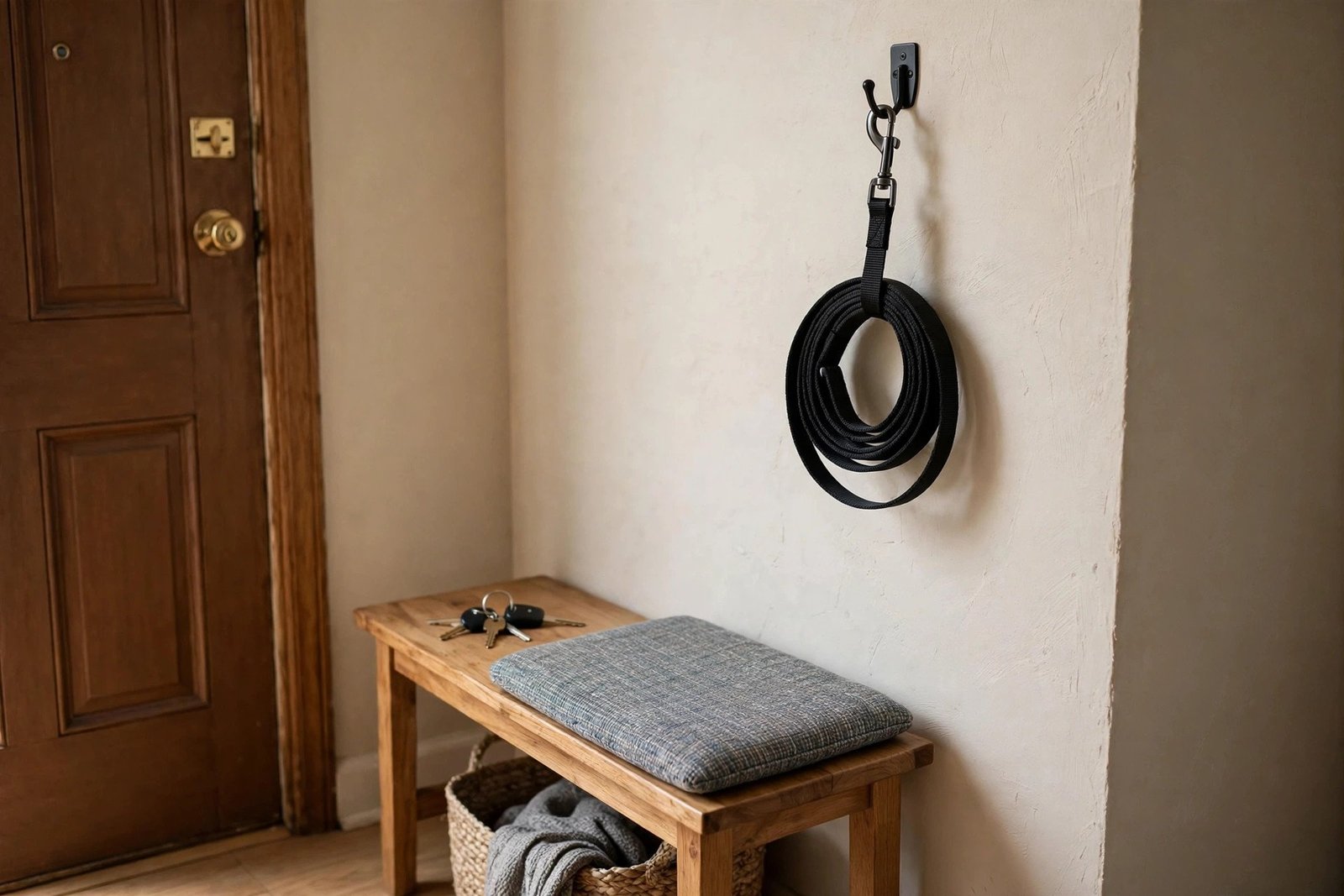
Check the leash and harness regularly, as part of the walking routine. Look for frayed stitching, worn handles, rusted clips, and harness straps that have stretched or slipped. Wash the leash when it becomes dirty or stiff, and dry it fully before the next walk. Replace any leash or harness that no longer holds firmly, because a failure on a busy street is far worse than a replacement at home.
Short Leash Comparison Checklist
| Check | What to look for | Red flag |
|---|---|---|
| Length | Dog beside or just ahead, no dragging | Tangles in hallways, dog far ahead |
| Type | Fixed length for buildings and streets | Retractable leash in lifts or crossings |
| Material | Comfortable grip, easy to clean | Friction burns, stiff or heavy rope |
| Handle | Padded or secure loop, fits hand | Slips when wet, hurts the hand |
| Harness fit | Snug, two fingers under straps | Shifts, twists, presses on neck |
| Clip | Firm close, moves freely | Sticks, rusts, or opens easily |
Common Mistakes
- Using a retractable leash in hallways, lifts, and road crossings.
- Holding the leash constantly tight, so pulling becomes normal.
- Jerking the leash to correct pulling, which risks neck and back injury.
- Attaching a short leash to a collar alone for a pulling dog.
- Wrapping the leash around a hand, which can injure the hand on a lunge.
- Skipping regular checks for frayed stitching, worn handles, or rusted clips.
When to Call Your Vet
Contact a veterinarian promptly if the dog shows coughing, choking, or gagging on walks, pain, yelping, or reluctance to walk, a hunched back, wobbliness, weakness in the legs, or any sudden change in movement or appetite. This article gives general information only and does not diagnose any condition. A veterinarian can examine the neck, back, and harness fit, and advise on walking, exercise, and training. Do not keep walking a dog that is clearly in pain, and do not use leash corrections on a dog with a suspected back problem.
Pin This: Short Leash Checklist
- Choose a fixed short leash for apartment walks.
- Pair it with a well-fitted harness, not a collar alone.
- Hold the leash loosely, with a relaxed arm.
- Guide with position and calm cues, never jerks.
- Practice indoors and in quiet areas first.
- Plan routes with space to step aside from distractions.
- Check leash, handle, clip, and harness every week.
Frequently Asked Questions
How short should a short leash be?
Short enough to keep the dog beside or just ahead, without dragging or tangling in hallways. Test indoors first, walking through doorways and around furniture, before using it on a busy route.
Is a retractable leash ever suitable?
It can suit safe, open areas, such as an enclosed park or a quiet field, where distance is safe. For hallways, lifts, lobbies, and streets, a fixed short leash gives better control.
Should a short leash attach to a collar or a harness?
A harness is usually the steadier choice for a Dachshund, because it spreads pressure across the chest. A collar alone concentrates pressure on the neck when a dog pulls.
What if the dog keeps pulling on a short leash?
Stop, wait for slack, and reward calm walking beside you. Shorten practice sessions, choose quieter routes, and build up gradually, rather than pulling back or jerking the leash.
How often should a leash be replaced?
Check it weekly for fraying, worn handles, and rusted clips, and replace it when any part no longer holds firmly. A leash that fails on a busy street is far worse than a replacement at home.
Conclusion
A Dachshund short leash guide for apartment walks comes down to a simple combination: a fixed short leash, a well-fitted harness, a loose hold, and calm, regular practice on predictable routes. That routine keeps walks safer in tight, busy spaces, and steadier walking supports the exercise and toileting habits that matter every day.




3 Comments