
Dachshund Dental Treats and Chews: Safe Guide at Home
Quick Answer
- Dachshund dental treats and chews can help with chewing and fresher breath, but they are not a replacement for brushing.
- Choose a chew sized for a small dog, soft enough to dent with a thumbnail, and easy to digest.
- Avoid very hard chews, cooked bones, and anything that splinters or breaks into sharp pieces.
- Offer a dental treat or chew a few times a week, not every day, and always watch the dog while it chews.
- Ask a veterinarian about any chew that causes vomiting, diarrhea, or a broken tooth, and about what suits this dog.
Contents
- 1. Why Dental Treats and Chews Need Careful Choosing
- 2. What Makes a Dental Treat or Chew Safe for a Dachshund
- 3. What to Avoid: Hard Chews, Bones, and Common Risks
- 4. How Often to Offer Dental Treats and Chews
- 5. A Dental Treat Routine That Fits Daily Brushing
- Dachshund Dental Treats and Chews: Safety Checklist
- Common Mistakes
- When to Call Your Vet
- Pin This: Dental Treat Checklist
- Frequently Asked Questions
- Conclusion
1. Why Dental Treats and Chews Need Careful Choosing
Dachshund dental treats and chews are popular because they look like an easy answer: give the dog something to chew, and the teeth get cleaner. Chewing does help. It rubs the surface of the teeth, works the jaw, and gives a small dog a job to do. But a chew is only as good as its size, its hardness, and how the dog handles it. A chew that is too hard can crack a tooth. A chew that is too small can be swallowed whole. A chew that does not agree with the dog can upset the stomach. Choosing well matters more than choosing often.
Dachshunds have small mouths and crowded teeth, and that shape makes dental care more important, not less. Food and plaque collect in the tight gaps between small teeth, and a dog that never has its teeth checked can build up tartar for years before anyone notices. A dental treat can slow that buildup, but it cannot remove tartar that is already there, and it cannot reach the gum line the way a brush can. Think of a chew as a helper for the teeth, not as the whole dental plan.
The other thing to remember is that every dog chews differently. Some Dachshunds gnaw slowly, working one end of a chew for ten minutes. Others bite hard, snap off big pieces, and try to swallow them. A chew that suits a slow gnawer can be risky for a fast gulper, and a chew that suits an adult can be wrong for a puppy with baby teeth. Watch how the dog chews before deciding whether a chew is right, and change the choice if the dog’s style does not match the chew. Ask a veterinarian if the dog has a broken tooth, sore gums, or a stomach that upsets easily.
2. What Makes a Dental Treat or Chew Safe for a Dachshund
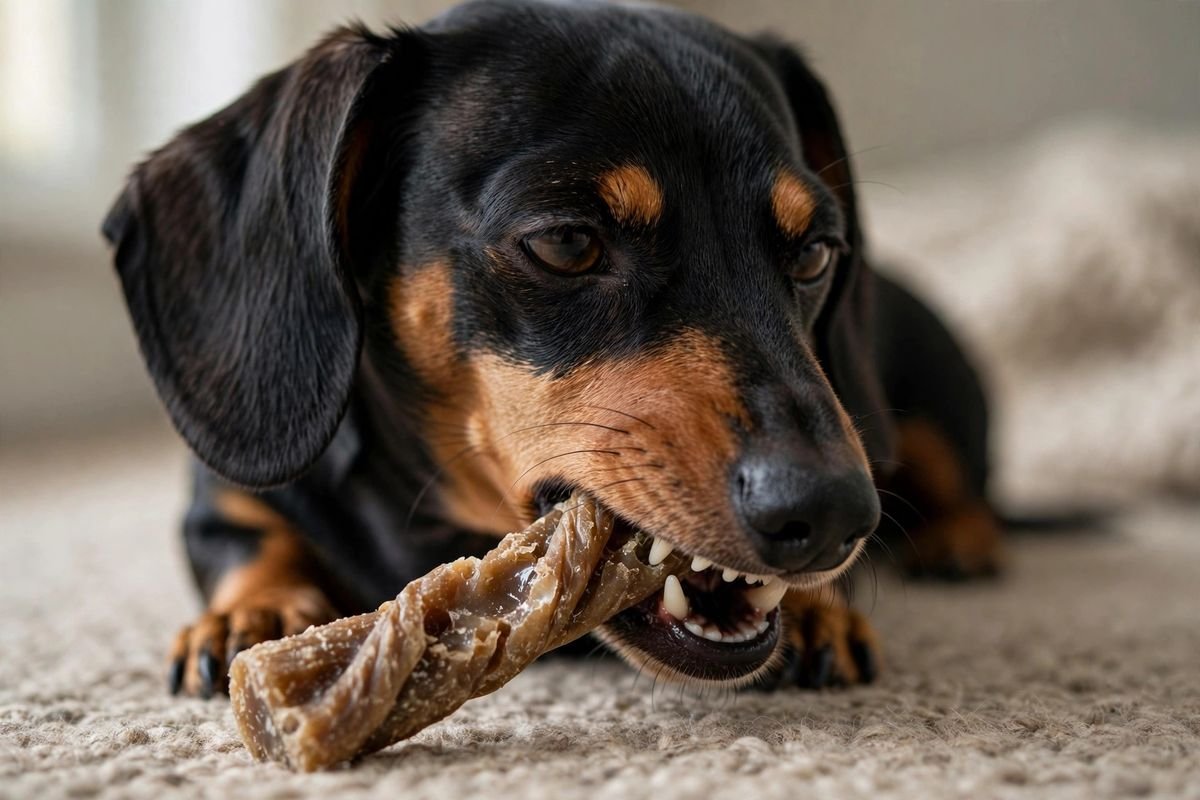
Size comes first. A dental treat or chew for a Dachshund should be made for a small dog, and it should be big enough that the dog cannot fit the whole thing in its mouth at once. A chew that disappears in two bites is not doing any dental work, and a chew that is swallowed whole is a choking risk. Hold the chew next to the dog’s head: it should be longer than the dog’s muzzle, so the dog has to gnaw it rather than gulp it. If the chew is gone in under a minute, it was too small or too soft for this dog.
Hardness comes second, and there is a simple test for it. Press a thumbnail into the chew: if the surface dents a little, the chew is soft enough to give under a tooth. If the thumbnail slides off without leaving a mark, the chew is too hard, and a tooth that bites down on it can crack. Teeth do not heal the way skin heals, and a cracked tooth is a painful problem that needs a veterinarian. The thumbnail test is not a guarantee, but it rules out the hardest chews, which are the ones that cause the most broken teeth.
Digestibility comes third. A chew should break down in the stomach, not sit there in a lump. Chews made from ingredients a dog can digest are a safer bet than chews that pass through whole or break into sharp pieces. Puppies need extra care here: baby teeth are softer than adult teeth, and a puppy’s stomach is more easily upset. The teething and safe chewing guide for puppies covers which chews suit a puppy and which to wait on until the adult teeth arrive. When in doubt about a chew, ask a veterinarian before offering it.
3. What to Avoid: Hard Chews, Bones, and Common Risks
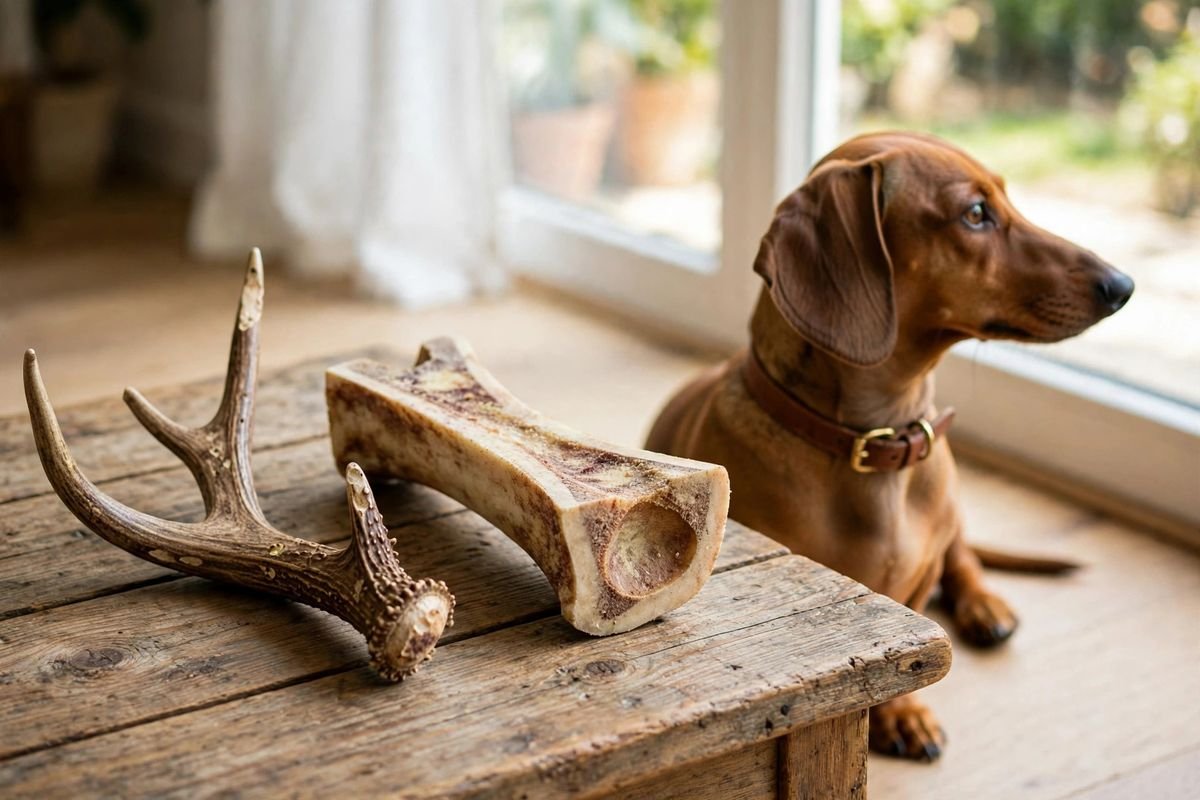
Very hard chews are the biggest risk to a Dachshund’s teeth. Antlers, hard nylon bones, and thick marrow bones are hard enough to crack a tooth, and a cracked tooth can abscess, which is painful and needs a veterinarian. Cooked bones are a different risk: cooking makes bone brittle, so it splinters into sharp pieces that can cut the mouth, throat, or stomach. Raw bones carry their own risks, including broken teeth and bacteria, and they are not a safe swap for a cooked bone. The safest rule is simple: if a chew is too hard to dent with a thumbnail, skip it.
Small, hard treats are another risk, especially for a dog that gulps. A treat that is small enough to swallow whole can lodge in the throat, and a dog that has swallowed a hard treat may cough, gag, or paw at its mouth. Always watch the dog while it chews, and take the chew away when it gets small enough to swallow whole. A chew holder, or a chew given only while the owner is in the same room, keeps a normal chewing session from turning into a scare. Never leave a dog alone with a chew, even one the dog has had a dozen times before.
Watch the stomach as well as the teeth. A new chew can upset a sensitive stomach, and the signs are easy to spot: loose stools, vomiting, gas, or a dog that turns away from food the next day. Stop the chew if any of those signs appear, and go back to the food and treats the dog already handles well. Some chews are high in calories, so they count as food: a big chew every day can add weight, and extra weight adds load to a long spine. If a chew causes trouble twice, it is not the right chew for this dog, and a veterinarian can suggest what to try instead.
4. How Often to Offer Dental Treats and Chews
A few times a week is enough for most Dachshunds. A dental treat offered two or three times a week, on days when brushing happens too, gives the teeth regular chewing without turning treats into a daily habit that adds weight. Daily chews are not needed, and for a dog with a sensitive stomach, daily chews can mean daily loose stools. A routine of a few times a week is easier to keep, easier to watch, and easier to stop if a chew does not agree with the dog.
Time the chew well. Offer it after a meal, not before, so the dog chews slowly instead of gulping it down hungry. Offer it when the owner can stay in the room and watch, not when the owner is heading out the door. A chew given at a calm time, in the dog’s usual rest spot, lasts longer and works the teeth better than one given in a rush. Keep the chew short: ten to fifteen minutes of chewing is plenty, and the chew should be taken away once it is small enough to swallow.
Count the chew as part of the daily food. A dental treat has calories, and a dog that gets a big chew every day plus a full bowl of food will gain weight over time. Cut back the meal a little on chew days, or choose a smaller chew. A kitchen scale or a measuring cup makes the counting easy, and a short note on the fridge — chew on Monday, Wednesday, and Friday — keeps the routine steady. If the dog’s weight starts to climb, the chews are the first thing to cut back, before the meals.
5. A Dental Treat Routine That Fits Daily Brushing
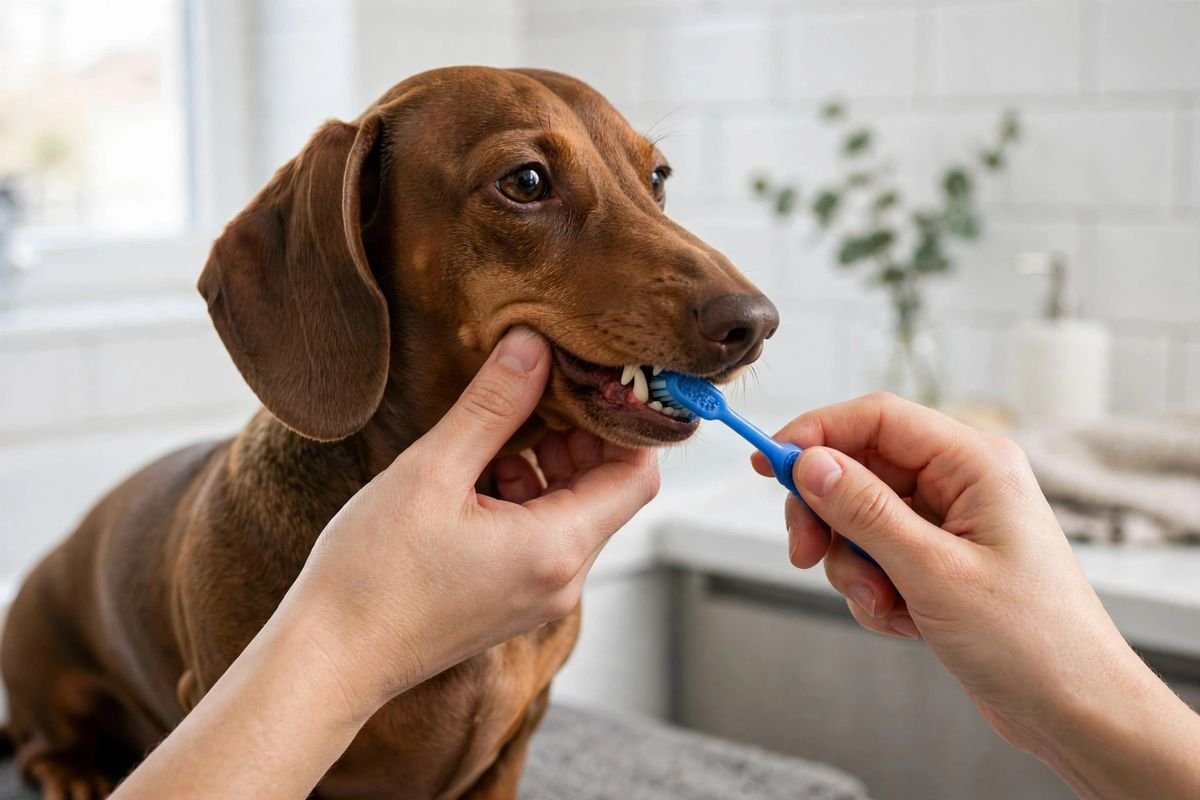
A chew works best as part of a dental routine, not as the routine itself. Brushing is the step that reaches the gum line, where plaque turns into tartar, and a brush used a few times a week does more for the teeth than any chew. The dental care at home brushing routine walks through how to start brushing, what kind of brush and paste to use, and how to make it a calm habit. A dog that is used to a brush will sit still for a minute of brushing, and that minute is worth more than a dozen chews.
A simple weekly pattern ties the pieces together. Brush the teeth three or four times a week, offer a dental chew on two of those days, and check the mouth once a week: lift the lip, look at the gums, and note any redness, swelling, or bad smell. A quick mouth check takes thirty seconds, and it catches problems early, when they are easier to deal with. A dog that is used to having its mouth looked at will let a veterinarian check it too, which makes vet visits easier.
Keep the dental kit in one place, by the food bin or the bathroom sink, so the routine is easy to start. A brush, a tube of paste made for dogs, and a bag of dental treats in one spot means the routine takes two minutes, not ten. Never use toothpaste made for people: it can upset a dog’s stomach, and a dog cannot spit it out. If the dog will not sit for brushing, ask a veterinarian for advice on getting started, and do not force the mouth open. A calm routine that happens most days beats a perfect routine that never happens.
Dachshund Dental Treats and Chews: Safety Checklist
| Check | Safe Sign | Stop and Ask a Vet |
|---|---|---|
| Size | Made for a small dog; longer than the muzzle | Swallowed whole; gone in under a minute |
| Hardness | Thumbnail dents the surface | Too hard to dent; tooth cracked or chipped |
| Chewing style | Slow gnawing; dog stays calm | Gulping; snapping off big pieces |
| Stomach | Normal stools the next day | Vomiting, diarrhea, or refusing food |
| Frequency | Two or three times a week | Daily large chews; weight climbing |
| Supervision | Owner in the room; chew taken away when small | Dog left alone with a chew |
The checklist works best when it is used before buying a new chew, not after a problem. A chew that fails the thumbnail test stays on the shelf.
Common Mistakes
- Choosing a chew by the picture on the bag, instead of checking size and hardness.
- Offering antlers or hard bones that can crack a small dog’s tooth.
- Giving cooked bones, which splinter into sharp pieces.
- Leaving the dog alone with a chew, or letting it chew the last small piece.
- Offering a dental chew every day and counting it as nothing, while the dog gains weight.
- Using a chew as a replacement for brushing, instead of as a helper.
- Using toothpaste made for people, which can upset a dog’s stomach.
- Ignoring a cracked tooth, bad breath, or bleeding gums for months.
When to Call Your Vet
Contact a veterinarian if the dog cracks or chips a tooth, if the gums bleed, swell, or smell bad, if the dog drops food, paws at its mouth, or refuses to chew, or if a chew causes vomiting or diarrhea more than once. Contact a veterinarian urgently if the dog chokes, cannot breathe, or is in severe pain. A veterinarian can check the teeth and gums, advise on safe chews for this dog, and say whether brushing alone is enough. This article gives general information only and is not a diagnosis.
Pin This: Dental Treat Checklist
- Pick a chew made for a small dog, longer than the muzzle.
- Press a thumbnail into the chew: it should dent a little.
- Skip antlers, hard bones, and cooked bones.
- Offer a chew two or three times a week, not daily.
- Always watch the dog while it chews.
- Brush a few times a week; a chew is a helper, not a replacement.
Frequently Asked Questions
Are dental treats enough to keep a Dachshund’s teeth clean?
No. A chew can help rub the tooth surface, but it cannot reach the gum line or remove tartar that is already there. Brushing a few times a week does more for the teeth than any chew, and a chew works best as a helper to brushing.
How do I know if a chew is too hard for my Dachshund?
Press a thumbnail into it. If the surface dents a little, it is soft enough to give under a tooth. If the thumbnail slides off without leaving a mark, the chew is too hard, and it can crack a tooth.
Can puppies have dental treats and chews?
Puppies need softer chews made for baby teeth, and a puppy’s stomach is more easily upset. Check the label for puppy guidance, and ask a veterinarian before offering a new chew to a puppy.
What should I do if my Dachshund swallows a chew whole?
Watch the dog closely for coughing, gagging, vomiting, or a loss of appetite. Call a veterinarian if the dog shows any of those signs, or if it seems distressed. Choose a larger chew next time, and always watch while the dog chews.
How often should I give my Dachshund a dental chew?
Two or three times a week is enough for most Dachshunds. Count the chew as part of the daily food, and cut back the meal a little on chew days so the dog does not gain weight.
Conclusion
Dachshund dental treats and chews work when they are chosen well: the right size, soft enough to dent, offered a few times a week, and always watched. The next step is simple — check the chew in the cupboard with a thumbnail today, and pair it with brushing a few times a week.




One Comment