
Dachshund Flea and Tick Check: Where to Look at Home
Quick Answer
- A Dachshund flea and tick check is a slow, hands-on look through the coat, parting the fur skin by skin, in the warm spots where fleas and ticks hide.
- Check the ears, neck, armpits, belly, groin, tail base, and between the toes, using a fine comb and a white cloth to catch flea dirt.
- Fleas are tiny, dark, fast-moving specks; flea dirt looks like black pepper and turns red-brown on a damp cloth. Ticks are round, grey-brown, and attached to the skin.
- Do not squeeze, burn, or pull a tick off roughly. Use fine-tipped tweezers, grip close to the skin, pull steadily, and clean the spot after.
- Call a veterinarian if the skin is broken, the dog is scratching through the night, or a tick was attached for a long time, or if the dog seems tired or unwell after a bite.
Contents
- 1. Why a Dachshund Flea and Tick Check Matters
- 2. Where Fleas and Ticks Hide on a Dachshund
- 3. How to Do the Check at Home, Step by Step
- 4. What to Do If Fleas or a Tick Is Found
- 5. When a Flea or Tick Problem Needs a Veterinarian
- Dachshund Flea and Tick Check: Weekly Checklist
- Common Mistakes
- When to Call Your Vet
- Pin This: Flea and Tick Check at Home
- Frequently Asked Questions
- Conclusion
1. Why a Dachshund Flea and Tick Check Matters
A Dachshund flea and tick check matters because fleas and ticks are small, quick, and easy to miss, and a single bite can set off days of itching. Fleas are the most common cause of itching in dogs, and a dog can pick them up on a walk, in a park, from another dog, or even from a visitor’s shoes. Ticks wait in long grass, in leaf litter, and on bushes, and they climb onto a passing dog in seconds. A weekly check catches both before a small problem becomes a house-wide one.
Dachshunds are low to the ground, and that low height works against them here. The belly, the legs, and the tail brush through grass and leaf litter on every walk, and that is exactly where ticks wait. The long ears and the folds of skin around the neck give fleas warm, hidden places to settle. A short-legged dog that loves to sniff and burrow through undergrowth picks up more passengers than a tall dog that walks above it all. A regular check is part of the care a low, long dog needs.
The check also protects the home, not just the dog. Fleas missed on the dog can lay eggs in the bedding, the sofa, and the carpet, and the problem then comes back again and again. Ticks missed can stay attached for days, feeding and growing, and can pass on infections. A five-minute check once a week, plus a quick look after walks in long grass, saves weeks of scratching and washing later on.
2. Where Fleas and Ticks Hide on a Dachshund
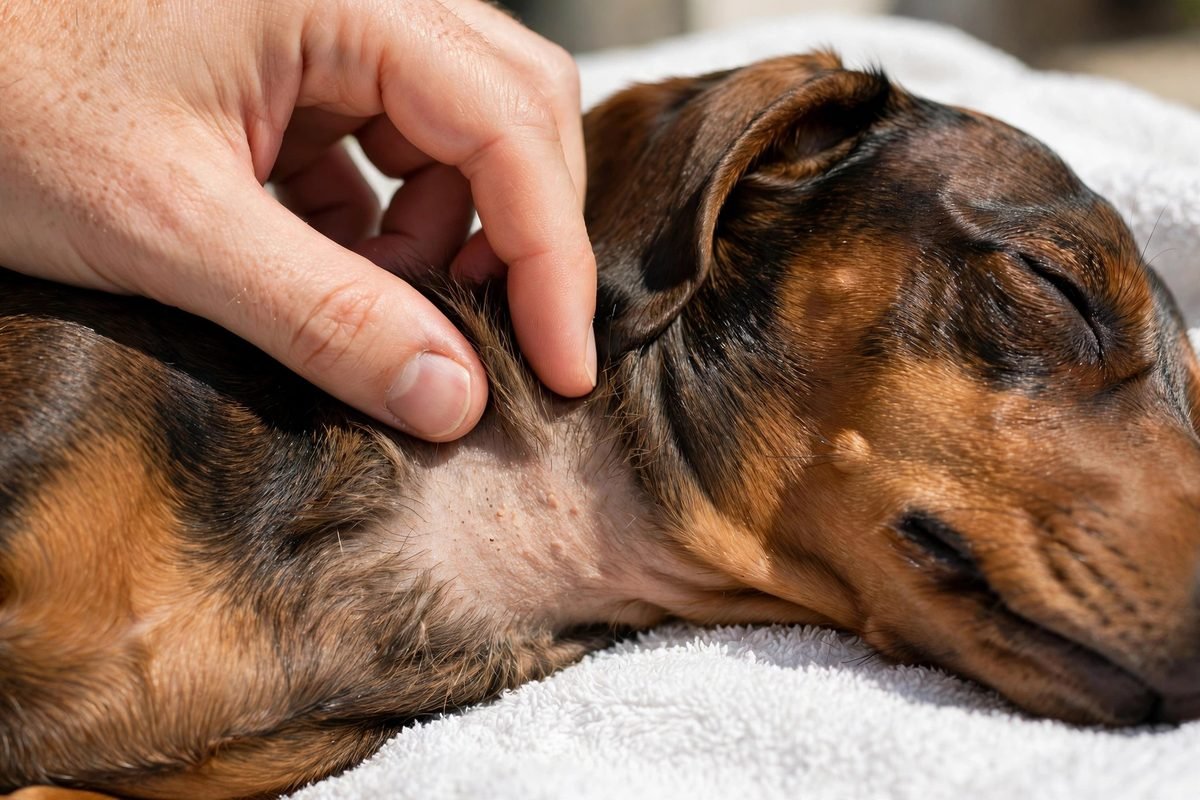
Fleas and ticks both look for warm, thin-skinned, hidden spots, and the map of those spots is the same on most Dachshunds. Start with the ears: inside the ear flap, behind the ear, and around the base of the ear are warm and sheltered. Then the neck and the collar line, where the fur is thick and the skin stays warm. The armpits and the groin come next, where the skin is thin and the legs hide the area from view. The belly, the tail base, and the area under the tail are favourite spots for fleas in particular.
The paws deserve a close look too. Ticks often attach between the toes, where the skin is soft and the dog cannot easily reach to scratch them off. Fleas hide in the fur between the toes and around the ankles, especially on a dog that walks through grass. The back and the sides are less common hiding places, but a thorough check still runs a hand over them, because a heavy flea problem spreads everywhere. Part the fur down to the skin in each spot, and look at the skin itself, not just the top of the coat.
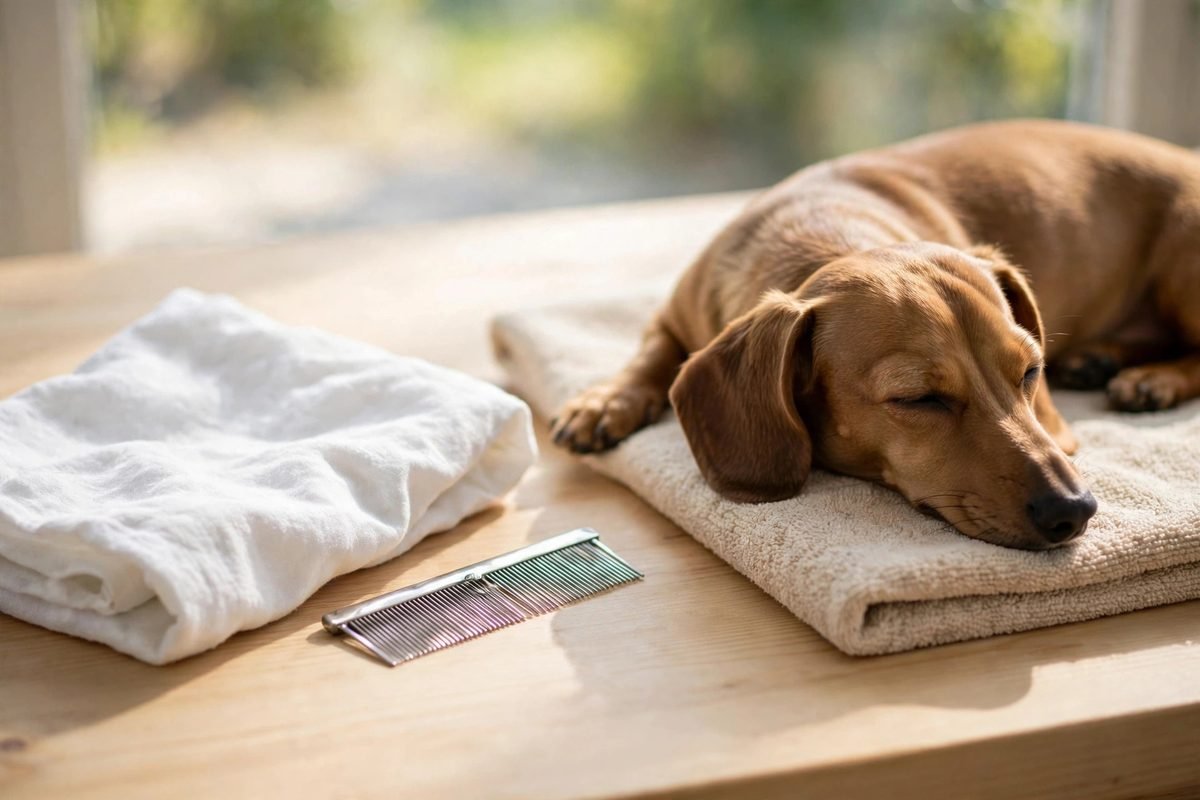
The tools for the check are simple: a fine-toothed flea comb, a white cloth, good light, and a calm dog. The white cloth matters because flea dirt — the tiny black specks fleas leave behind — is hard to see on a dark coat and easy to see on white, and a damp cloth turns it red-brown, because flea dirt is digested blood. The coat and skin care guide covers the brushing routine that goes with this check, and a weekly groom is a good time to do both at once.
3. How to Do the Check at Home, Step by Step
Start with a calm dog in good light, on a white towel or a light-coloured surface. Run a hand slowly over the whole body first, feeling for bumps, scabs, or anything attached to the skin that should not be there. A tick feels like a small, firm bump, sometimes the size of a pea if it has been feeding for a while. Pay attention to any spot the dog flinches from, or any place the dog has been scratching, because the dog often knows where the problem is before the owner does.
Next, work through the hiding spots one by one with the fine comb. Part the fur at the ears, the neck, the armpits, the belly, the groin, and the tail base, and look at the skin in each parting. Comb through the fur over the white cloth, and tap the comb on the cloth after each pass to see what falls out. Black specks that turn red-brown on a damp cloth are flea dirt, and that means fleas are present even if no live flea is seen. Live fleas are tiny, dark, and fast, and they jump away when the fur is parted, so the dirt is often the first real clue.
Finish with the paws and the tail. Spread each toe gently and look between them, check the pads, and run a hand under the tail and around the rear end. Note anything found: where it was, what it looked like, and how many there were. A short note after each check builds a record, and that record shows whether the problem is getting better or worse. If the dog will not sit still, do the check in two short sessions.
4. What to Do If Fleas or a Tick Is Found
If fleas or flea dirt are found, the next step is a veterinarian’s advice on a flea product that suits this dog. Flea products vary by age, weight, and health, and a product made for a large dog can be dangerous for a small Dachshund, so do not borrow a product from another dog or use a product made for a different animal. A veterinarian can advise on a safe treatment, how often to use it, and whether the bedding and the home need washing and vacuuming at the same time. Treating the dog without treating the bedding often fails, because flea eggs in the bed hatch and start the cycle again.
Wash the dog’s bedding, blankets, and any soft toys in hot water, and vacuum the carpet, the sofa, and the dog’s sleeping spots, emptying the vacuum straight away. A bath with the dog’s normal shampoo can wash off some fleas, but a bath alone does not solve a flea problem, and a flea shampoo should only be used on a veterinarian’s advice. Keep checking with the comb every few days while the treatment works. If the itching is severe or the skin is broken, read the food for itchy skin guide, which explains why fleas are the first cause to rule out before changing the food.
If a tick is found, remove it with fine-tipped tweezers. Grip the tick as close to the skin as possible, pull steadily upward without twisting or jerking, and do not squeeze the body of the tick. Clean the bite spot with warm water and a mild antiseptic, wash the hands, and keep the tick in a sealed bag or a jar with the date written on it, in case the veterinarian needs to see it. Watch the bite spot for redness, swelling, or a sore that does not heal, and watch the dog for tiredness, a loss of appetite, or a fever in the days after the bite.
5. When a Flea or Tick Problem Needs a Veterinarian
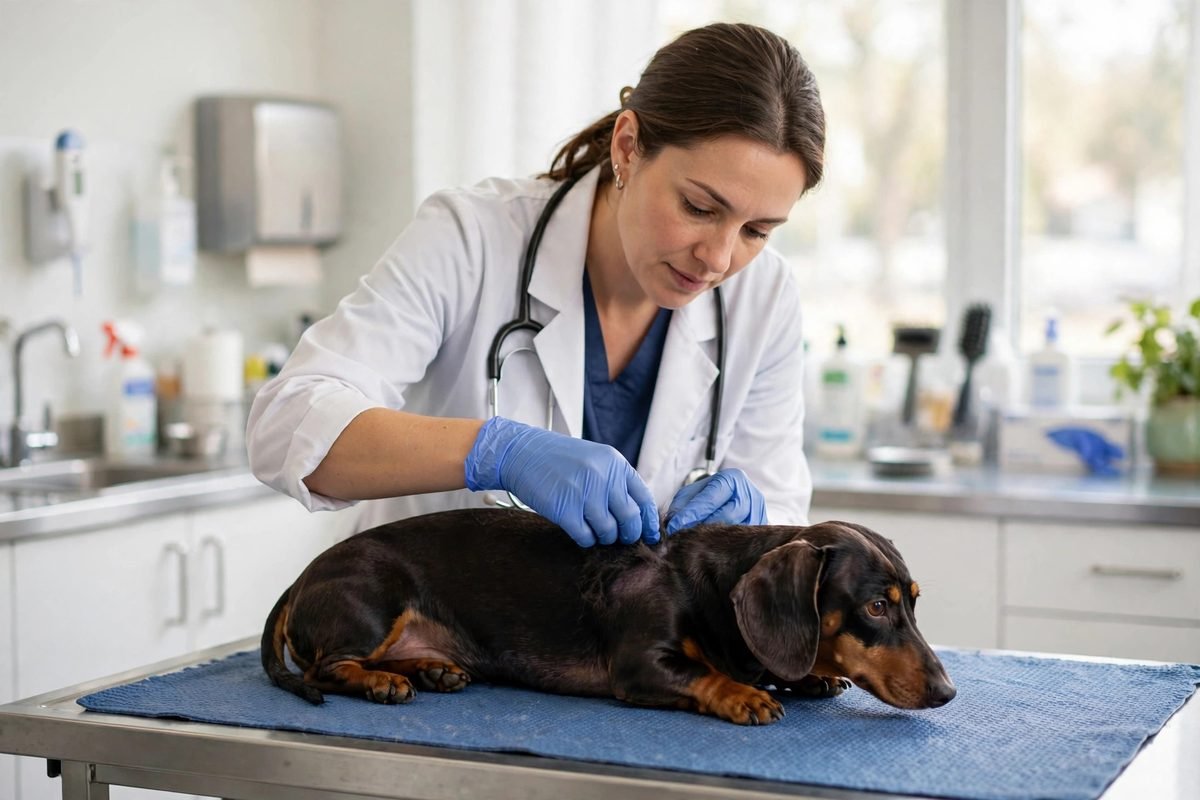
A flea or tick problem needs a veterinarian when the skin is damaged, when the problem keeps coming back, or when the dog seems unwell. Scratching that breaks the skin, raw or bleeding patches, hair loss, or a skin infection all need a veterinarian’s exam, because the skin may need treatment as well as the fleas. A heavy flea problem in a puppy or a small dog can also cause weakness and pale gums, and that needs urgent care. A veterinarian can check the skin, advise on a safe flea product, and treat any infection the scratching has caused.
A tick attached for a long time, a tick removed badly, or a bite that stays red and swollen all need a veterinarian’s advice. So does any dog that becomes tired, loses its appetite, runs a fever, or seems stiff and sore in the days after a tick bite. Ticks can pass on infections that show up slowly, and early care makes a real difference. Bring the tick if it was kept, and note the date it was found.
A veterinarian is also the right person to ask about prevention. Flea and tick prevention is not a one-time fix, and the right product depends on the dog’s age, weight, health, and where it walks. A dog that walks in long grass, woods, or fields needs a different level of protection from a dog that walks on pavements. Ask the veterinarian which product fits this dog, how often to use it, and how to check that it is working. A regular prevention routine, plus the weekly check, is the best way to keep fleas and ticks from coming back.
Dachshund Flea and Tick Check: Weekly Checklist
| Spot to Check | What to Look For | What It Means |
|---|---|---|
| Ears and neck | Dark specks, bumps, redness | Warm hiding spots for fleas and ticks |
| Armpits and groin | Specks, attached ticks, sore skin | Thin skin, easy for ticks to attach |
| Belly and tail base | Flea dirt, scratching, hair loss | Favourite flea spots, easy to see |
| Between the toes | Small attached ticks, redness | Hidden spot, often missed |
| White cloth test | Black specks turning red-brown when damp | Flea dirt means fleas are present |
| After long grass | Quick look at legs, belly, and ears | Ticks climb on in grass and leaf litter |
A five-minute check once a week, plus a quick look after walks in long grass, catches fleas and ticks early.
Common Mistakes
- Checking only the back and sides, and missing the ears, armpits, groin, and toes.
- Looking at the top of the coat instead of parting the fur down to the skin.
- Assuming the dog is flea-free because no live flea was seen, while flea dirt is present.
- Pulling a tick off roughly, twisting it, or squeezing its body.
- Burning a tick with a match or covering it with oil or nail polish.
- Using a flea product made for another dog, a cat, or a larger animal.
- Treating the dog but forgetting to wash the bedding and vacuum the home.
- Changing the food for itchy skin before checking for fleas at all.
When to Call Your Vet
Contact a veterinarian if the skin is broken, bleeding, or infected, if the dog scratches through the night, or if a flea problem keeps coming back after treatment. Contact a veterinarian urgently if a puppy or small dog seems weak or has pale gums, or if the dog becomes tired, loses its appetite, or runs a fever after a tick bite. Contact a veterinarian soon if a tick was attached for a long time, if the bite stays red and swollen, or if the tick was removed badly. A veterinarian can examine the skin, advise on safe flea and tick treatment, and check for infections. This article gives general information only and is not a diagnosis.
Pin This: Flea and Tick Check at Home
- Check ears, neck, armpits, belly, groin, tail base, and toes.
- Part the fur to the skin and comb over a white cloth.
- Black specks that turn red-brown when damp are flea dirt.
- Remove ticks with tweezers, gripping close to the skin.
- Wash bedding and vacuum the home when fleas are found.
- Call a veterinarian if the skin is broken or the dog seems unwell.
Frequently Asked Questions
How do I check my Dachshund for fleas at home?
Part the fur down to the skin in the warm spots — ears, neck, armpits, belly, groin, and tail base — and comb through with a fine comb over a white cloth. Black specks that turn red-brown on a damp cloth are flea dirt, and that means fleas are present even if no live flea is seen.
How often should I check my Dachshund for ticks?
Once a week is a good routine, plus a quick look at the legs, belly, and ears after every walk in long grass, woods, or leaf litter. Ticks climb on in seconds, so the check after the walk matters most.
What is the safest way to remove a tick?
Use fine-tipped tweezers, grip the tick as close to the skin as possible, and pull steadily upward without twisting or jerking. Clean the spot after, wash the hands, and keep the tick in a sealed bag with the date written on it.
Can fleas cause itchy skin even if I never see one?
Yes. Fleas are fast and hide well, and a single flea bite can set off days of scratching. Flea dirt on a white cloth is often the first real clue, and a veterinarian can confirm whether fleas are part of the problem.
When should I call the vet about fleas or ticks?
Call a veterinarian if the skin is broken or infected, if the problem keeps coming back, or if the dog seems tired, loses its appetite, or runs a fever after a tick bite. A tick attached for a long time also needs a veterinarian’s advice.
Conclusion
A Dachshund flea and tick check takes five minutes a week and saves weeks of scratching: part the fur to the skin, check the warm hiding spots, comb over a white cloth, and remove any tick with tweezers. The next step is simple — do the check this week, note what was found, and ask a veterinarian about safe prevention for this dog.